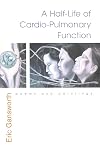
A Half-Life of Cardio-Pulmonary Function: Poems and Paintings
by Eric Gansworth
On This Page
Description
Echoing the muscular rhythms of the heart beat, the poems in this stunning collection alternate between contraction and expansion. Eric Gansworth explores the act of enduring, physically, historically, and culturally. A member of the Haudenosaunee tribe, Gansworth expresses the tensions experienced by members of a marginalized culture struggling to maintain tradition within a much larger dominant culture. With equal measures of humor, wisdom, poignancy, and beauty, Gansworth's poems mine the show more infinite varieties of individual and collective loss and recovery. Fourteen paintings punctuate his poetry, creating an active dialogue between word and image steeped in the tradition of the mythic Haudenosaunee world. A Half-Life of Cardio-Pulmonary Function is the most recent addition to Gansworth's remarkable body of work chronicling the lives of upstate New York's Indian communities. show lessTags
Member Reviews
Poetry, I feel, is something that should be approached with great caution. Its ability to worm its way past all our pre-conceptions, to navigate through defenses which seem so impregnable that we have forgotten to think of them as defenses, make it dangerous. I have never been entirely sure whether this is owing to its fluidity of form - that it is not required to move in a linear fashion - or to the fact that it evokes a response through a process of association whose workings are not always immediately apparent. However that may be, the unsuspecting reader sometimes finds herself in for a surprise...
And so it was that I found myself unexpectedly moved to tears late one evening, staring blindly out the train window at the scenery show more rushing past. There I sat, Eric Gansworth's A Half-Life of Cardio-Pulmonary Function in my lap - a title I don't fully understand, containing poems I don't really understand, written by a man I'll most likely never meet (or understand) - and the tears just started rolling silently down my face. At a complete loss to understand the overwhelming sense of loss and grief rolling through me, the deep sense of connection I suddenly felt, to the larger world, and to a stranger with whom I share little, I did something I have not done in a long time... I picked up a pen and paper, and began furiously scribbling a poem of my own...
Gansworth, a member of the Onondaga nation, writes of life on and off the reservation, of the death of his older brother and the death of John Lennon, and of betrayal - cultural, personal, and bodily - and his words either leap right off the page at me, or seem curiously mute. Like the author, I have no idea what voice trees use to speak to young Mohawk men - I hardly know in what voice the author speaks to me. But when I am able to hear him, I am transfixed. Consider the following excerpt from This Is Also Just to Say:
and though
William Carlos Williams did
not know you or me
or the way I wanted
to give you the world
he knew of the failures
within any life
that we are incapable
of being what we should
be for others
and can only
give away these fragments
of our desires stopping
short again like measuring
spoons falling, catching light,
and shining on
their way down.
Or the following, from Are These the Moments Eastman Was Thinking Of?:
And here you are
fifteen years before
on the nights shortly after you
arrived home, shouting for your rifle
every morning at 3:00 A.M. and on the days
distributing the hats you brought
with you across the world, letting
us play with them but keeping their histories
mute as you pose all of us
our eyes hidden beneath
the brims' shadows on the front
porch and I wonder, if you have
the urge to mail them back
across the world, address
them to that piece
of you left behind in the jungles
(where it rained every day for a year)
that none of us even knows is missing.
Addendum: Six months after writing the review above, I finally stumbled upon an understanding of the strength of my reaction to Gansworth's work. Shortly before picking up this collection, in May of 2008, my childhood home burnt to the ground. Although I hadn't lived in that house for many years, its destruction raised all manner of complicated and contradictory memories and feelings, not least of which was the sense (a persistent theme in my adult life) of my past slipping away from me. It may seem difficult to credit that I didn't make the connection before, but one of Gansworth's poems addresses the fiery destruction of his childhood home, and I cannot believe that this is unrelated to my (at the time) inexplicable feelings of grief, when reading it.
Why did it take me so long to discover this connection? Well, I imagine that I wasn't ready, at the time I was reading A Half-Life of Cardio-Pulmonary Function, to really examine my feelings about the fire that destroyed that beautiful old house on the hill. If you'd asked me then, I probably would have professed (very sincerely) little more than casual sadness. But although I wasn't entirely privy to the contents of my own heart, Gansworth's words still spoke to me, in a language I understood on a deeper level. I've said it before, and I'll say it again: poetry is damn sneaky! It's dangerous! That must be why I read it so infrequently... show less
And so it was that I found myself unexpectedly moved to tears late one evening, staring blindly out the train window at the scenery show more rushing past. There I sat, Eric Gansworth's A Half-Life of Cardio-Pulmonary Function in my lap - a title I don't fully understand, containing poems I don't really understand, written by a man I'll most likely never meet (or understand) - and the tears just started rolling silently down my face. At a complete loss to understand the overwhelming sense of loss and grief rolling through me, the deep sense of connection I suddenly felt, to the larger world, and to a stranger with whom I share little, I did something I have not done in a long time... I picked up a pen and paper, and began furiously scribbling a poem of my own...
Gansworth, a member of the Onondaga nation, writes of life on and off the reservation, of the death of his older brother and the death of John Lennon, and of betrayal - cultural, personal, and bodily - and his words either leap right off the page at me, or seem curiously mute. Like the author, I have no idea what voice trees use to speak to young Mohawk men - I hardly know in what voice the author speaks to me. But when I am able to hear him, I am transfixed. Consider the following excerpt from This Is Also Just to Say:
and though
William Carlos Williams did
not know you or me
or the way I wanted
to give you the world
he knew of the failures
within any life
that we are incapable
of being what we should
be for others
and can only
give away these fragments
of our desires stopping
short again like measuring
spoons falling, catching light,
and shining on
their way down.
Or the following, from Are These the Moments Eastman Was Thinking Of?:
And here you are
fifteen years before
on the nights shortly after you
arrived home, shouting for your rifle
every morning at 3:00 A.M. and on the days
distributing the hats you brought
with you across the world, letting
us play with them but keeping their histories
mute as you pose all of us
our eyes hidden beneath
the brims' shadows on the front
porch and I wonder, if you have
the urge to mail them back
across the world, address
them to that piece
of you left behind in the jungles
(where it rained every day for a year)
that none of us even knows is missing.
Addendum: Six months after writing the review above, I finally stumbled upon an understanding of the strength of my reaction to Gansworth's work. Shortly before picking up this collection, in May of 2008, my childhood home burnt to the ground. Although I hadn't lived in that house for many years, its destruction raised all manner of complicated and contradictory memories and feelings, not least of which was the sense (a persistent theme in my adult life) of my past slipping away from me. It may seem difficult to credit that I didn't make the connection before, but one of Gansworth's poems addresses the fiery destruction of his childhood home, and I cannot believe that this is unrelated to my (at the time) inexplicable feelings of grief, when reading it.
Why did it take me so long to discover this connection? Well, I imagine that I wasn't ready, at the time I was reading A Half-Life of Cardio-Pulmonary Function, to really examine my feelings about the fire that destroyed that beautiful old house on the hill. If you'd asked me then, I probably would have professed (very sincerely) little more than casual sadness. But although I wasn't entirely privy to the contents of my own heart, Gansworth's words still spoke to me, in a language I understood on a deeper level. I've said it before, and I'll say it again: poetry is damn sneaky! It's dangerous! That must be why I read it so infrequently... show less
Members
- Recently Added By
Lists

Top 100 books by Indigenous Masters
134 works; 7 members

Favorite Recent Poetry: 1980-2022
178 works; 70 members

Pleasant Surprises: Books That Exceeded Our Expectations
418 works; 143 members

Books That Made Us Cry
278 works; 145 members
Author Information

14+ Works 1,237 Members
Eric Gansworth, a member of the Onondaga Nation, was born and raised in western New York. The author of seven books, including A Half-Life of Cardio-Pulmonary Function, which was included on the National Book Critics' Cricle's "Good Reads" List for Spring 2008, and Mending Skins, which won the PEN Oakland Award in 2006, Gansworth teaches at show more Canisius College and lives in Niagara Falls, New York. show less
Common Knowledge
- Canonical title
- A Half-Life of Cardio-Pulmonary Function: Poems and Paintings
Classifications
Statistics
- Members
- 8
- Popularity
- 2,504,895
- Reviews
- 1
- Rating
- (5.00)
- Languages
- English
- Media
- Paper, Ebook
- ISBNs
- 2