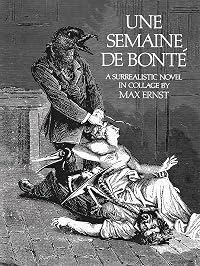
Une Semaine de Bonté
by Max Ernst
On This Page
Description
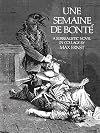
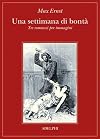
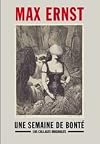
"One of the clandestine classics of our century." -- The New York TimesThis is the legendary collage masterpieces of Max Ernst (b. 1891), one of the leading figures of the surrealistic movement and among the most original artists of the 20th century. From old catalog and pulp novel illustrations, Ernst produced this series of 182 bizarre and darkly humorous collage scenes of classic dreams and erotic fantasies which seem mysteriously to lure the unconscious into view: Stern, proper-looking show more women sprout giant sets of wings, serpents appear in the drawing -room and bed chamber, a baron has the head of a lion, a parlor floor turns to water on which some people can apparently walk while others drown. Une Semaine De Bonté is divided into seven parts, one for each day of the week, with each section illustrating one of Ernst's "seven deadly elements." "Oedipus," "The Court of the Dragon," and "Three Visible Poems" are among the startling episodes of Ernst's week. The Dada and surrealist epigraphs which introduce each section appear in this edition in both French and English. Une Semaine De Bonté first appeared in 1934 in a series of five pamphlets of fewer than 1,000 copies each, and has never been reprinted before this present edition. Previously available only to a few libraries and collectors, this is a major source and great treat for anyone interested in the surrealists and their work, in collage, visual illusion, dream visions, and the interpretations of dreams. show lessTags
Recommendations









Member Reviews
Just the idea of a "Surrealistic Novel in Collage" is enuf for me. Add Ernst's delicate touch & it's even better. Ultimately, though, I have to admit to getting a little bored by the technical uniformity of the prints used - even w/ Ernst's careful recycling.
Darkly comic, with all the visual lyricism of Ernst's exhibited collage works and a large dose of macabre exuberance. The use of altered complete images and similar source material makes the pictures feel more like complete images in themselves than collage, to great uncanny effect. It also transforms the whole into a satire of the equivocal, quotidian attitude to violence and death in popular culture.
The book comes into it's own in the partial and overlapping narratives, the pictures force interpretation on the reader, but the strands of detail and apparent continuities combine and flow in dozens of different ways, loading the mute images to bursting point with different narratives competing for prominence. Is there one lion of show more belfort, or does the leonine face and medal take over the violent and prideful, are the pictures in the house in the court of the dragon (assuming it's the same house) prophesy the future or has this all happened before? Does is this face twisted in shock or anger? Is this figure a woman languishing in orgasmic bliss or a staring corpse? The images play beautifully between self-consistency that demands explanation and evanescent phantasmagoria that render it impossible. show less
The book comes into it's own in the partial and overlapping narratives, the pictures force interpretation on the reader, but the strands of detail and apparent continuities combine and flow in dozens of different ways, loading the mute images to bursting point with different narratives competing for prominence. Is there one lion of show more belfort, or does the leonine face and medal take over the violent and prideful, are the pictures in the house in the court of the dragon (assuming it's the same house) prophesy the future or has this all happened before? Does is this face twisted in shock or anger? Is this figure a woman languishing in orgasmic bliss or a staring corpse? The images play beautifully between self-consistency that demands explanation and evanescent phantasmagoria that render it impossible. show less
Both this novel (ironically titled as " A Week of Kindness") and Ernst's other, more aptly titled novel in collage, "The Hundred Headless Women" are some of the most impressive products to come out of the surrealist movement. Each illustration in the book is carfully arranged to hint at a much larger story.
The book itself is traumatic-- dark, grizzly, sexually overt, the series of illustrations comprising each chapter tell a story, but it's a story that Ernst kindly forces you to close your eyes to right when it seems to be too much. Only, when you open them again you're faced with an entirely new shock. As the reader, you're left to fill in the gaps. The novel resembles a train wreck: you can't help but stare in wonder despite the show more fact that you know you shouldn't be.
What makes the novel so spooky is in the way Ernst blends the seraphic with the mundane. A demon in the form of a very proper victorian woman kisses a man in a parlor where every painting on the wall implies violence. Gentlemen gather in the streets to discuss a gigantic glowing breast while smoking their pipes. The half-man/half-tiger smiles as he shows off the head of a man alongside his war medals. Every image tells a story by itself; the disturbing aspect of the book is that you, the reader, are the sole interpreter. Whatever story you pull from the book is a reflection of you. show less
The book itself is traumatic-- dark, grizzly, sexually overt, the series of illustrations comprising each chapter tell a story, but it's a story that Ernst kindly forces you to close your eyes to right when it seems to be too much. Only, when you open them again you're faced with an entirely new shock. As the reader, you're left to fill in the gaps. The novel resembles a train wreck: you can't help but stare in wonder despite the show more fact that you know you shouldn't be.
What makes the novel so spooky is in the way Ernst blends the seraphic with the mundane. A demon in the form of a very proper victorian woman kisses a man in a parlor where every painting on the wall implies violence. Gentlemen gather in the streets to discuss a gigantic glowing breast while smoking their pipes. The half-man/half-tiger smiles as he shows off the head of a man alongside his war medals. Every image tells a story by itself; the disturbing aspect of the book is that you, the reader, are the sole interpreter. Whatever story you pull from the book is a reflection of you. show less
This work is pure genius!
Max Ernst put together this artist's book using cutouts from various woodcut illustration sources. This is before the days of Adobe Photoshop, yet it looks utterly flawless in its technical execution.
The images of this book are so weird yet captivating and hard to classify. Each chapter of the book follows a day of the week and some sort of theme (mud, water, fire, etc) in the images. What do these images mean? Nobody can give a precise answer and that is part of the appeal of this book.
Also take heed - this can be considered an early graphic novel. Yes, it can be hard to decipher, but these images are clearly meant to be read in sequence.
Overall, Une Semaine De Bonte is quite a creation. Its enigmatic meaning show more is part of its appeal. show less
Max Ernst put together this artist's book using cutouts from various woodcut illustration sources. This is before the days of Adobe Photoshop, yet it looks utterly flawless in its technical execution.
The images of this book are so weird yet captivating and hard to classify. Each chapter of the book follows a day of the week and some sort of theme (mud, water, fire, etc) in the images. What do these images mean? Nobody can give a precise answer and that is part of the appeal of this book.
Also take heed - this can be considered an early graphic novel. Yes, it can be hard to decipher, but these images are clearly meant to be read in sequence.
Overall, Une Semaine De Bonte is quite a creation. Its enigmatic meaning show more is part of its appeal. show less
And this concludes my reading for 2023. I wanted to read all three of Max Ernst's surreal collage novels today, but this one just bowled me over; it's a lot to take in. The imagery is fantastical and grotesque, and only gets moreso as the book goes on.
Divided into seven sections by days of the week, the artist creates a strange, dream-like story without words, using images taken from other sources in collage. Often disturbing, recurring images and themes include human / animal hybrids, violence, sexuality, and death.
As I was looking at this I started to make up captions for the pictures in my mind, some of which I thought were very funny. The great thing about these images is that they're not just weird for the sake of being weird; there seems to be something going on under the surface. I don't know what exactly, but in a strange, inexplicable way this makes sense to me.
As I was looking at this I started to make up captions for the pictures in my mind, some of which I thought were very funny. The great thing about these images is that they're not just weird for the sake of being weird; there seems to be something going on under the surface. I don't know what exactly, but in a strange, inexplicable way this makes sense to me.
At the end of the day, Une Semaine De Bonte is a bit disappointing, as most of the collage pieces herein appear to be minor modifications of the original printed source material that Ernst drew on for his own creations. The ideas are occasionally interesting, but the execution is rough and just plain silly at times. Even granted the technological limitations that Ernst was working with, the ultimate results just aren't that impressive, and show little of the complex visual narratives that he so successfully incorporated into his paintings. The saving graces of this volume are the Second and Third "Visible Poems", which are visually arresting in spite of their short length. If the entire project had been up to the same standard, the work show more as a whole would be entirely more compelling than it actually is. show less
Members
- Recently Added By
Lists

Recommended Comics / Graphic Novels
595 works; 122 members

Five star books
1,755 works; 108 members

Favorite Picture Books
479 works; 160 members

Books Cited in Wasteland by W. Scott Poole
120 works; 1 member
Author Information

120+ Works 1,567 Members
Some Editions
Awards and Honors
Series
Belongs to Publisher Series
Common Knowledge
- Canonical title
- Une Semaine de Bonté
- Alternate titles
- A week of kindness or the seven deadly elements
- Original publication date
- 1934
- Original language
- French
Classifications
Statistics
- Members
- 685
- Popularity
- 41,761
- Reviews
- 10
- Rating
- (4.38)
- Languages
- 7 — Catalan, English, French, German, Italian, Spanish, Turkish
- Media
- Paper
- ISBNs
- 9
- UPCs
- 1
- ASINs
- 3