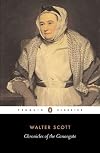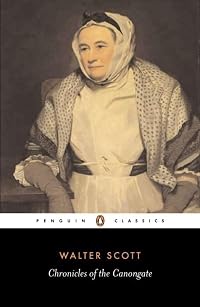
Chronicles of the Canongate, 1st set
by Sir Walter Scott
Waverley Novels (Collections and Selections — Omnibus)
On This Page
Description
Find Out What Scott Really WroteGoing back to the original manuscripts, a team of scholars has uncovered what Scott originally wrote and intended his public to read before errors, misreadings and expurgations crept in during production.The Edinburgh Edition offers you: * A clean, corrected text* Textual histories* Explanatory notes* Verbal changes from the first-edition text* Full glossariesTitle DescriptionChronicles of the Canongate is unique among Scott's works as it is his only show more collection of shorter fiction. It contains his best-known tales, 'The Highland Widow' and 'The Two Drovers', and a third, less well known but of startling originality, 'The Surgeon's Daughter'. The three are set within the framing narrative of Chrystal Croftangry, an old bankrupt with pretensions to literature, who must inevitably be seen as a portrait of the artist facing up to his own insolvency in 1826.Tales in a framework have a long ancestry in European and Oriental literature, and in Chronicles of the Canongate Scott show lessTags
Recommendations

















Member Reviews
The three "tales" — long short stories, or novellas, in modern terms — in this collection have often been published separately, but appear here in their original form, linked together by the persona of Scott's narrator, Chrystal Croftangry, a middle-aged bachelor who has settled in Edinburgh's Canongate district to pursue his antiquarian interests. Croftangry is something of an old bore, so his introduction and linking narratives are a mixed blessing, particularly when we also have Scott's own introduction and that of the editor of the edition we are reading, all providing conflicting explanations of the origins of the tales, but there are some nice bits of description in there as well.
The three tales, "The highland widow", "The show more two drovers" and "The surgeon's daughter" , especially the first two, are very simple in structure, with only two or three main characters, the sort of thing you could summarise in a sentence or two. Scott builds up a careful, almost forensic, analysis of historical context and motivation to show us how rather ordinary people get pushed by circumstances into tragic (even operatic...) situations.
At a psychological level, all three stories are about the destructive effect of notions of pride and honour, but it's perhaps more interesting for modern readers to reflect on the way the stories deal with the relation between Scotland and the outside world in the eighteenth century. A highland warrior astute enough to realise that there's no future in the traditional occupations of tribal warfare and cattle rustling is still unable to adapt to the mechanical discipline of the British army; A drover (cattle being Scotland's other great export, apart from people) can't make sense of the English way of resolving disputes of honour by unarmed combat; A young man seduced by inflated ideas of his own social status destroys himself and his friends by seeking wealth and glory in India instead of following a humdrum but respectable profession in Scotland. Scott isn't blaming one side or the other, in fact he goes to surprising lengths to make us understand both sides of the conflicts involved. The judge in "The two drovers" is almost as sympathetic a character as the drover. Both act in ways that are correct and honourable in the context of the societies in which they live. For all his toryism, Scott seems to be putting forward the classic Enlightenment view of history: societies evolve, and different stages of society have different value systems. show less
The three tales, "The highland widow", "The show more two drovers" and "The surgeon's daughter" , especially the first two, are very simple in structure, with only two or three main characters, the sort of thing you could summarise in a sentence or two. Scott builds up a careful, almost forensic, analysis of historical context and motivation to show us how rather ordinary people get pushed by circumstances into tragic (even operatic...) situations.
At a psychological level, all three stories are about the destructive effect of notions of pride and honour, but it's perhaps more interesting for modern readers to reflect on the way the stories deal with the relation between Scotland and the outside world in the eighteenth century. A highland warrior astute enough to realise that there's no future in the traditional occupations of tribal warfare and cattle rustling is still unable to adapt to the mechanical discipline of the British army; A drover (cattle being Scotland's other great export, apart from people) can't make sense of the English way of resolving disputes of honour by unarmed combat; A young man seduced by inflated ideas of his own social status destroys himself and his friends by seeking wealth and glory in India instead of following a humdrum but respectable profession in Scotland. Scott isn't blaming one side or the other, in fact he goes to surprising lengths to make us understand both sides of the conflicts involved. The judge in "The two drovers" is almost as sympathetic a character as the drover. Both act in ways that are correct and honourable in the context of the societies in which they live. For all his toryism, Scott seems to be putting forward the classic Enlightenment view of history: societies evolve, and different stages of society have different value systems. show less
Ratings
Members
- Recently Added By
Author Information

1,004+ Works 40,643 Members
Some Editions
Series

Belongs to Publisher Series
Work Relationships
Is contained in
The Bride of Lammermoor / A Legend of Montrose / Chronicles of the Canongate by Sir Walter Scott (indirect)
Chronicles of the Canongate / The Bride of Lammermoor / The Keepsake Stories by Sir Walter Scott (indirect)
Chronicles of the Canongate / The Keepsake Stories / The Betrothed / The Talisman by Sir Walter Scott (indirect)
A Legend of Montrose / Chronicles of the Canongate / The Bride of Lammermoor / The Keepsake Stories by Sir Walter Scott
Chronicles of the Canongate / My Aunt Margaret's Mirror / The Tapestried Chamber by Sir Walter Scott
Common Knowledge
- Canonical title
- Chronicles of the Canongate, 1st set
- Original publication date
- 1827
- Disambiguation notice
- The first set/series of Scott's "The Chronicles Of The Canongate" contains "The Highland Widow", "The Two Drovers", and "The Surgeon's Daughter". The second set/series is actually the same work as "The Fair Maid of Perth". ... (show all)Thus, the complete Chronicles of the Cannongate contains "The Highland Widow", "The Two Drovers", "The Surgeon's Daughter", and "The Fair Maid of Perth".
Classifications
Statistics
- Members
- 105
- Popularity
- 307,736
- Reviews
- 1
- Rating
- (3.00)
- Languages
- English, French
- Media
- Paper, Ebook
- ISBNs
- 6
- ASINs
- 4