On This Page
Description
In the village of Aubignane only three inhabitants remain - the blacksmith, a widow and Panturle, the hunter. Soon Panturle is abandoned and begins to lose his mind. But then a woman arrives and life is restored to the village as Panturle plants wheat to produce a second harvest.Tags
Recommendations

















Member Reviews
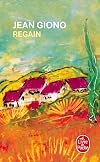
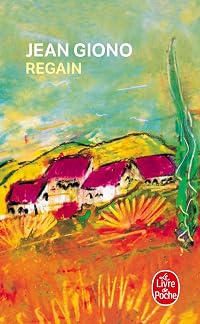
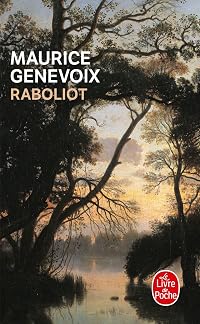
I love the Livre de Poche edition of 1971. I love the descriptions of the wind and the barren plains, the rivers flowing or freezing. The weather determines the lives of the characters, their moods and behaviours. They behave like the animals around them, their instincts come to the surface and overwhelm them. The story is full of sadness too.
I like my copy too. There is a dedication in blue ink at the front, in French, and it sums it all up:
‘A toi mon ami et frère
En esperance
Puisses trouver dans le Livre,
La meme joie que j'ai eprouve
En le lisant
Par ces hommes et femmes, ce ble, cette nature si profondement enracines en terre, j'ai ressenti la simplicite du bonheur. Le bonheur si proche semblant inaccessible
Michel’
I like my copy too. There is a dedication in blue ink at the front, in French, and it sums it all up:
‘A toi mon ami et frère
En esperance
Puisses trouver dans le Livre,
La meme joie que j'ai eprouve
En le lisant
Par ces hommes et femmes, ce ble, cette nature si profondement enracines en terre, j'ai ressenti la simplicite du bonheur. Le bonheur si proche semblant inaccessible
Michel’
A re-greening parable in a similar sort of vein to Giono's famous novella "The man who planted trees", this is the story of how the last remaining inhabitant of a dying hamlet in difficult hill country manages to reverse the trend of rural depopulation. A bit Hardyesque, with a tendency to tell the story indirectly through conversations between peripheral rustic characters, but full of fresh air and great descriptions of the wide-open spaces of Provence. A good book to read when you're housebound, maybe!
I went on holiday to recently. I wanted to take a book by a Provencal writer – came up with this one.
Here is Amazon’s synopsis:
In the only three inhabitants remain - the blacksmith, a widow and Panturle, the hunter. Soon Panturle is abandoned and begins to lose his mind. But then a woman arrives and life is restored to the village as Panturle plants wheat to produce a second harvest.
Yep. That’s pretty much the size of it.
There’s nothing at all surprising here – if the description sounds like the kind of thing you’d enjoy, then you’ll enjoy it. Thankfully Giono has kept it short, so it’s all over pretty quickly: if you’re not enjoying it too much it won’t take long; but then, you’re not missing much if you skip show more it.
So if the destination is obvious, how about the journey? It is written in the pared-down style of a parable. This is a book about humans, and their relationship to the soil, and could have been set in , take your pick. There is nothing particularly Provencal about it; Giono was friends with Pagnol but, in this book at least, shares little of his enthusiasm for local colour. It’s by the numbers, but I wasn’t unmoved – I’ll check him out again. show less
Here is Amazon’s synopsis:
In the only three inhabitants remain - the blacksmith, a widow and Panturle, the hunter. Soon Panturle is abandoned and begins to lose his mind. But then a woman arrives and life is restored to the village as Panturle plants wheat to produce a second harvest.
Yep. That’s pretty much the size of it.
There’s nothing at all surprising here – if the description sounds like the kind of thing you’d enjoy, then you’ll enjoy it. Thankfully Giono has kept it short, so it’s all over pretty quickly: if you’re not enjoying it too much it won’t take long; but then, you’re not missing much if you skip show more it.
So if the destination is obvious, how about the journey? It is written in the pared-down style of a parable. This is a book about humans, and their relationship to the soil, and could have been set in , take your pick. There is nothing particularly Provencal about it; Giono was friends with Pagnol but, in this book at least, shares little of his enthusiasm for local colour. It’s by the numbers, but I wasn’t unmoved – I’ll check him out again. show less
Merveilleuse langue! belle histoire; ca fait du bien de lire et ca rend heureux.
Aubignane, petit village près de Manosque, se meurt. Seuls trois fidèles occupent encore ce nid de spectres. Mais l'hiver finit par chasser le vieux forgeron, et la veuve du puisatier disparaît au printemps, avec la promesse qu'elle avait faite à Panturle de lui trouver une femme. Au village, maintenant, ne reste plus que ce chasseur qui devient peu à peu fou de solitude. Une femme viendra, par des chemins presque surnaturels. Et pour elle, Panturle rouvrira la terre jadis féconde, l'ensemencera de blé. Le blé du pain de l'amour, qui annonce au village de nouveaux enfants. Regain ou l'éclatante première manière de Giono : mystique, solaire, animale.
Nov 21, 2010French
1
Apre, solaire, comment l'amour peut vaincre la folie née de la solitude, hymne à la terre, celle de Haute-Provence.
Mar 2, 2007French
Giono,Jean
Dec 5, 2022French
Members
- Recently Added By
Lists

Short and Sweet
245 works; 23 members

Down on the Farm
17 works; 6 members
Author Information

200+ Works 6,942 Members
Jean Giono was born in France on March 30, 1985. He was an author about whom Germaine Bree and M. Guiton have written, "When Giono's first novel, Colline (Hill of Destiny) appeared in 1929, it struck a fresh, new note. . . . After Proust and Gide, Duhamel and Romains, Cocteau and Giraudoux, what could be more restful than a world of wind and sun show more and simple men who apparently had never heard of psychological analysis, never confronted any social problems, never read any books. . ." (An Age of Fiction). Raised by his shoemaker father in a small town in the south of France, Giono's fiction has its roots in the peasant life of Provence. Horrified by his experiences in World War I, Giono returned to the world of his youth, which became the world of his imagination. After the shock of World War II, his novels seemed to gain in stature. One of his best is Horseman on the Roof (1951), his chronicle of the great cholera epidemic of 1838. Giono was honoured with the Prince Rainier of Monaco literary prize in 1953, awarded for his lifetime achievements, was elected to the Académie Goncourt in 1954, and became a member of the Conseil Littéraire of Monaco in 1963. Giono died of a heart attack in 1970. (Bowker Author Biography) show less
Some Editions
Awards and Honors
Notable Lists
Series

Belongs to Publisher Series
Common Knowledge
- Canonical title
- Second Harvest
- Original title
- Regain
- Original publication date
- 1930
- Important places
- Provence, France
- Original language*
- Français
*Some information comes from Common Knowledge in other languages. Click "Edit" for more information.
Classifications
Statistics
- Members
- 382
- Popularity
- 81,553
- Reviews
- 8
- Rating
- (3.74)
- Languages
- 10 — Catalan, Czech, English, French, German, Italian, Norwegian, Slovenian, Spanish, Swedish
- Media
- Paper, Audiobook, Ebook
- ISBNs
- 22
- ASINs
- 25