On This Page
Description
Jules Verne, author of such works as Twenty Thousand Leagues Under the Sea and Around the World in Eighty Days, is recognized as one of the masters of the golden age of science fiction. In The Master of the World, a series of catastrophes strike the Atlantic Seaboard of the United States, and an intrepid investigator postulates that they might all be connected to a mysterious mad scientist who is sequestered in a compound in the Blue Ridge Mountains..
Tags
Recommendations

















Member Reviews
Follow-up to Robur the Conquerer. This time he's back and with a vessel that can run on land, sea or sky, or underwater. Slightly more interesting than its predecessor as events are investigated by a proto-fbi agent. Overall though it still pretty pointless and boring.
(53) Maître du monde (Master of the World, 1904) (1 volume) 41K words
The 53rd Extraordinary Voyage takes place in the United States, and brings back one of Verne's most eccentric inventors.
First read or reread?: Reread. It impressed me on my first read.
What is it about?: Set in the summer of 1903, a series of unexplained events occur across the Eastern United States, from unexplained volcanic activity to objects moving with great speed along the roads and rivers. The first-person narrator, John Strock, 'Head inspector in the federal police department' in Washington, DC, travels to the Blue Ridge Mountains of North Carolina and other locations to investigate.
This is one of those shorter Verne novels that are little more than a novella. show more It has a good pace, even though not that much actually happens, and I see why I was impressed when I first read it. The mysterious going-ons, the fantastic vehicle, the megalomaniac personality of Robur...
On the other hand, this was one of the first Verne novels I read, and I was very young then. Rereading it now, I notice that Verne was retreading some of his usual plots and themes. This is true of much of his later work: he does reuse his more successful formulas, although often he manages to make it different enough to seem fresh. Perhaps you could say this one is more derivative than usual, but it still worked for me, mostly.
The first part of the novel is devoted to the investigation of unexplained events, and is therefore very similar to the start of "Twenty Thousand Leagues under the Seas", although in this case a much larger part of the novel is devoted to the investigation.
This section of the novel, when the police inspector is trying to figure out what's going on, is full of questions rather than actual advances of the plot. Then the investigator is captured and gets to witness the technology that was behind the unexplained events. But, again, nothing much happens until the sudden end. The whole time, the point is more the sense of wonder rather than the actual plot. In that sense, it makes me think of later science fiction novels like "Rendezvous with Rama", and I'm not surprised it captured my imagination as a kid. This time around I'm familiar with Verne's typical stories, and I remembered very well the plot of this one, so the mystery does not have the same impact.
The resource of having the outsider, who serves as the audience surrogate, captured and thus getting to witness all the truth is also typical of this kind of Verne stories ("Twenty Thousand Leagues under the Seas", "Robur the Conqueror", "Facing the Flag"...). This, and the megalomaniacal personality of the villain, makes it a precursor of stories like James Bond's.
The fact that the point here is the wonder rather than the actual plot may bother some readers, but it fits my personal taste, so I was fine with it.
It is the second to last Verne novel published during his lifetime, just one year before his death, and it's typical of the more pessimist last part of his career. Science and technology can still be wondrous, but they now represent a threat to the human race, as well as an opportunity.
This is a sequel to "Robur the Conqueror", in the sense that it continues the story of the title character, but it is a separate story rather than a direct continuation, so it can be read independently. In fact, as Verne does when writing sequels, at some point in the novel he gives the reader a summary of the previous story when it becomes relevant.
Enjoyment factor: I enjoyed it, although I was less impressed than the first time round. It's short, and places more emphasis on sense of wonder than on plot. The pacing seemed good to me. In many ways it is derivative of other Verne stories.
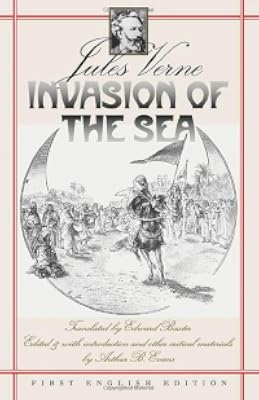
Next up: Invasion of the Sea
See all my Verne reviews here: https://www.sffworld.com/forum/threads/reading-vernes-voyages-extraordinaires.58... show less
The 53rd Extraordinary Voyage takes place in the United States, and brings back one of Verne's most eccentric inventors.
First read or reread?: Reread. It impressed me on my first read.
What is it about?: Set in the summer of 1903, a series of unexplained events occur across the Eastern United States, from unexplained volcanic activity to objects moving with great speed along the roads and rivers. The first-person narrator, John Strock, 'Head inspector in the federal police department' in Washington, DC, travels to the Blue Ridge Mountains of North Carolina and other locations to investigate.
This is one of those shorter Verne novels that are little more than a novella. show more It has a good pace, even though not that much actually happens, and I see why I was impressed when I first read it. The mysterious going-ons, the fantastic vehicle, the megalomaniac personality of Robur...
On the other hand, this was one of the first Verne novels I read, and I was very young then. Rereading it now, I notice that Verne was retreading some of his usual plots and themes. This is true of much of his later work: he does reuse his more successful formulas, although often he manages to make it different enough to seem fresh. Perhaps you could say this one is more derivative than usual, but it still worked for me, mostly.
The first part of the novel is devoted to the investigation of unexplained events, and is therefore very similar to the start of "Twenty Thousand Leagues under the Seas", although in this case a much larger part of the novel is devoted to the investigation.
This section of the novel, when the police inspector is trying to figure out what's going on, is full of questions rather than actual advances of the plot. Then the investigator is captured and gets to witness the technology that was behind the unexplained events. But, again, nothing much happens until the sudden end. The whole time, the point is more the sense of wonder rather than the actual plot. In that sense, it makes me think of later science fiction novels like "Rendezvous with Rama", and I'm not surprised it captured my imagination as a kid. This time around I'm familiar with Verne's typical stories, and I remembered very well the plot of this one, so the mystery does not have the same impact.
The resource of having the outsider, who serves as the audience surrogate, captured and thus getting to witness all the truth is also typical of this kind of Verne stories ("Twenty Thousand Leagues under the Seas", "Robur the Conqueror", "Facing the Flag"...). This, and the megalomaniacal personality of the villain, makes it a precursor of stories like James Bond's.
The fact that the point here is the wonder rather than the actual plot may bother some readers, but it fits my personal taste, so I was fine with it.
It is the second to last Verne novel published during his lifetime, just one year before his death, and it's typical of the more pessimist last part of his career. Science and technology can still be wondrous, but they now represent a threat to the human race, as well as an opportunity.
This is a sequel to "Robur the Conqueror", in the sense that it continues the story of the title character, but it is a separate story rather than a direct continuation, so it can be read independently. In fact, as Verne does when writing sequels, at some point in the novel he gives the reader a summary of the previous story when it becomes relevant.
Enjoyment factor: I enjoyed it, although I was less impressed than the first time round. It's short, and places more emphasis on sense of wonder than on plot. The pacing seemed good to me. In many ways it is derivative of other Verne stories.
Next up: Invasion of the Sea
See all my Verne reviews here: https://www.sffworld.com/forum/threads/reading-vernes-voyages-extraordinaires.58... show less
One of the lesser known Verne works and somewhat of a follow up to" Robur the Conqueror".
Unlike "Robur", the protagonist is fairly likeable. "Robur" is almost a travelogue - The antagonist, Robur, appears quickly. In "Master", the story is more of a mystery - Robur appears at the end of the story. In this it is somewhat like Nemo's appearance in "Mysterious Island", though "Master" is certainly not up to its story-telling and depth.
I enjoyed reading it as a technological mystery. It does not have the foretelling of "Robur" but I don't think that was the intent. Verne is simply recycling a character because he needs a genius antagonist. Just read and enjoy for what it is.
Unlike "Robur", the protagonist is fairly likeable. "Robur" is almost a travelogue - The antagonist, Robur, appears quickly. In "Master", the story is more of a mystery - Robur appears at the end of the story. In this it is somewhat like Nemo's appearance in "Mysterious Island", though "Master" is certainly not up to its story-telling and depth.
I enjoyed reading it as a technological mystery. It does not have the foretelling of "Robur" but I don't think that was the intent. Verne is simply recycling a character because he needs a genius antagonist. Just read and enjoy for what it is.
Another good read from Verne! This one was his final novel written in 1904 and is actually a sequel to an earlier novel called The Clipper of the Clouds (aka Robur the Conqueror). I only discovered this when part way through I found out the name of the antagonist-Robur! The great inventor Robur zooms across the Americas in first a car that can travel at least 150 miles per hour, putting the current speed of about 80 m.p.h to shame in a car race! Then an equally fast boat is seen; later still a submarine, and then an airplane! The protagonist of this story, Strock, a police investigator, soon gets the idea that these 3 vehicles are one and the same.
In the previous story, Robur determined to show to the world that heavier-than-air craft show more was the way forward, and during an exposition in which a great air balloon was shown to the world, Robur produced his offering, a dirigible type craft propelled not by lighter-than-air gas but by engines with propellers (air screws), and with this he overtook the balloon causing its occupants to crash to the ground. This event is alluded to in this later work as a kind of re-cap. Not having read the earlier book it was a bit of a surprise but having said that I didnt feel that I should need to have read that earlier work-the work stands alone!
Anyway I found the book quite entertaining and fast paced and is my third Verne novel so far. show less
In the previous story, Robur determined to show to the world that heavier-than-air craft show more was the way forward, and during an exposition in which a great air balloon was shown to the world, Robur produced his offering, a dirigible type craft propelled not by lighter-than-air gas but by engines with propellers (air screws), and with this he overtook the balloon causing its occupants to crash to the ground. This event is alluded to in this later work as a kind of re-cap. Not having read the earlier book it was a bit of a surprise but having said that I didnt feel that I should need to have read that earlier work-the work stands alone!
Anyway I found the book quite entertaining and fast paced and is my third Verne novel so far. show less
This was another one of Verne's lesser works. Although the plot was somewhat interesting, the writing came across as a bit stale and old-fashioned and the plotting was not as strong as it could have been. Even for myself, who likes Verne, I don't think this is a very impressive novel.
2 stars.
2 stars.
I like Verne very much even though much of his works I have read so far are cartoonish.
Nonetheless, there is just a positive, forward looking sense that I find invigorating.
This is not the best I have read to date , and I understand the last he wrote. Some say it is a poor cousin of Captain Nemo, and I get that.
It is also a sequel apparently to Robert the Conquerer, which I have now obtained via Gutenberg so will report on that later
Big Ship
11 March 2020
Nonetheless, there is just a positive, forward looking sense that I find invigorating.
This is not the best I have read to date , and I understand the last he wrote. Some say it is a poor cousin of Captain Nemo, and I get that.
It is also a sequel apparently to Robert the Conquerer, which I have now obtained via Gutenberg so will report on that later
Big Ship
11 March 2020
I don't think this short novel has withstood the passage of the years
Members
- Recently Added By
Author Information

Jules Verne was born on February 8, 1828 in Nantes, France. He wrote for the theater and worked briefly as a stockbroker. He is considered by many to be the father of science fiction. His most popular novels included Journey to the Center of the Earth, Twenty Thousand Leagues Under the Sea, and Around the World in Eighty Days. Several of his works show more have been adapted into movies and TV mini-series. In 1892, he was made a Chevalier of the Legion of Honor in France. He died on March 24, 1905 at the age of 77. (Bowker Author Biography) Jules Verne (1828-1905) is the author of numerous adventure stories grounded in popularizations of science. (Publisher Provided) show less
Some Editions
Awards and Honors
Series


Belongs to Publisher Series
Work Relationships
Is contained in
The Ultimate Science Fiction Mega Collection: 24 of the Best Sci-Fi Books of All Time: A Journey to the Center of the Earth, 20,000 Leagues Under the Sea, Around the World in 80 Days, John Carter of Mars Trilogy, The War of the Worlds, The Time Machine, Frankenstein, Dr. Jekyll and Mr. Hyde, 3 Ray Bradbury Stories, Flatland, & More by Jules Verne
Has the adaptation
Common Knowledge
- Canonical title
- Master of the World
- Original title
- Maître du monde
- Original publication date
- 1904
- People/Characters
- Robur
- Important places*
- Nantes, Pays de la Loire, Frankrijk
- Related movies
- Master of the World (1961 | IMDb)
- First words
- If I speak of myself in this story, it is because I have been deeply involved in its startling events, events doubtless among the most extraordinary which this twentieth century will witness.
- Last words
- (Click to show. Warning: May contain spoilers.)"Ah, well!' replied the old woman, "he was worthy of being so!"
- Original language*
- ranska
*Some information comes from Common Knowledge in other languages. Click "Edit" for more information.
Classifications
Statistics
- Members
- 835
- Popularity
- 32,994
- Reviews
- 9
- Rating
- (3.11)
- Languages
- 12 — Catalan, Dutch, English, Finnish, French, German, Greek, Italian, Portuguese, Spanish, Swedish, Turkish
- Media
- Paper, Audiobook, Ebook
- ISBNs
- 112
- UPCs
- 1
- ASINs
- 53