Snakes and Earrings
by Hitomi Kanehara, Sabine Mangold (Translator)
On This Page
Description
The work centers on a girl who experiments with her body -- such as piercing her tongue -- and is set against the backdrop of the adult entertainment scene.Tags
Recommendations
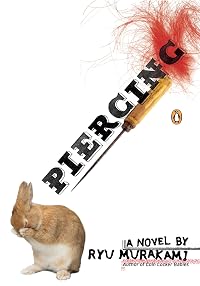
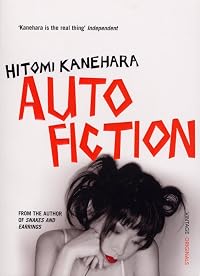
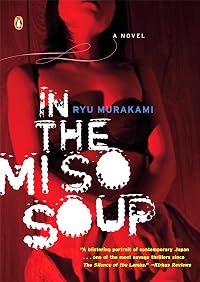
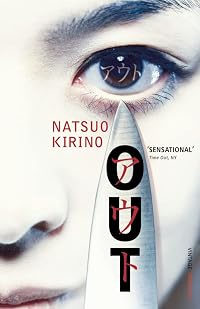
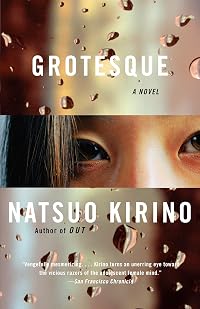
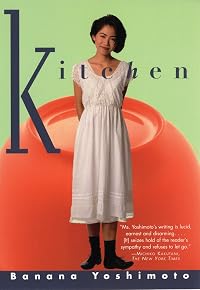
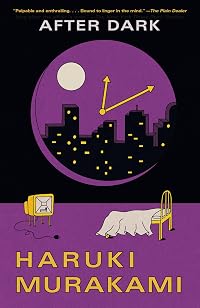
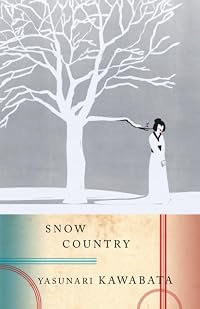



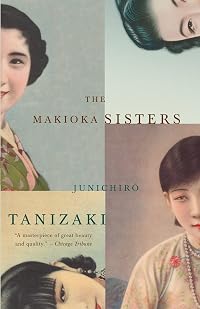
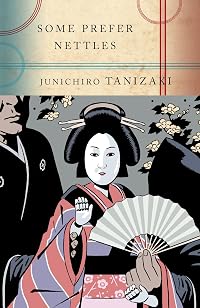
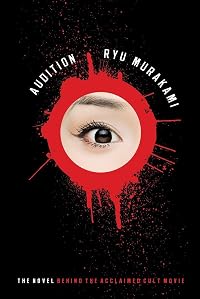
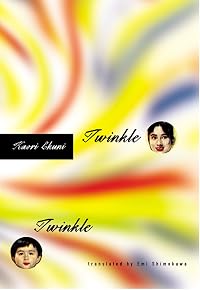
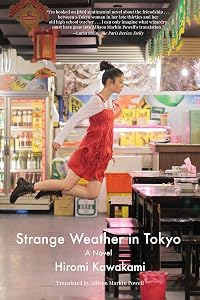
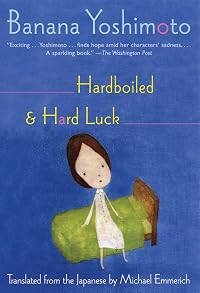
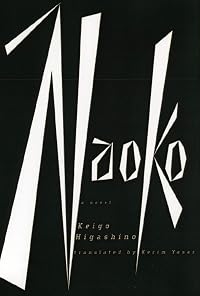
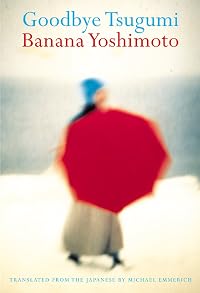


Member Recommendations
Member Reviews
Forget serenity, temples, stone gardens, tea ceremonies or geisha. Forget your cliche and probably stereotyped image of Japan. Forget also Haruki Murakami and his dreamlike novels. With Hitomi Kanehara, a young Japanese female writer, you will enter a very different Japan, in which underground culture, body modification, and (sexual) violence play a large role.
Snakes and earrings is quite a disturbing novel. See also the other reviews. Having a vivid imagination the tongue-piercing scenes left me quite disgusted! However I still felt that this is a very interesting novel in its own way. Its protagonist Lui, a 19 year old girl in Tokyo, is lost. Society wants her to be cute, a barbie-girl, playacting the role of kimono-wearing hostess/ show more semi-geisha as a temporary job. Lui wants to escape this fate (not that she expresses it in that way, it is just what she does), the oppression of society, but underground culture brings just as much violence, even if this is more physical. It is a very sad story about a girl who wants to feel, but the only thing left for her to feel is pain. I thought this was a very interesting and different view on Japanese society. show less
Snakes and earrings is quite a disturbing novel. See also the other reviews. Having a vivid imagination the tongue-piercing scenes left me quite disgusted! However I still felt that this is a very interesting novel in its own way. Its protagonist Lui, a 19 year old girl in Tokyo, is lost. Society wants her to be cute, a barbie-girl, playacting the role of kimono-wearing hostess/ show more semi-geisha as a temporary job. Lui wants to escape this fate (not that she expresses it in that way, it is just what she does), the oppression of society, but underground culture brings just as much violence, even if this is more physical. It is a very sad story about a girl who wants to feel, but the only thing left for her to feel is pain. I thought this was a very interesting and different view on Japanese society. show less
Girl meets boy, is fascinated by his forked tongue and is drawn into a relationship she's not really into until a violent ending. Lui, the protagonist, is something of a vagrant. She has no real interest in anything until she discovers the art of body modification, but what really attracts her is the possibility of dying. She starts an affair with a man who expresses desire to kill her and at one point she wonders if she'd rather be killed by her actual boyfriend after all. But it's the boyfriend who gets killed, and the lover might be the one who did it.
Unlike some other reviewers I saw definite character growth in Lui. For the most part she's lost and practically suicidal, but in the end she seems willing to give living a chance. Some show more of her choices aren't morally sound, but at least her reasons are about life, not death.
I'm a bit surprised to have liked this book: it's too short and too morbid for my tastes. For some reason it worked for me anyway. show less
Unlike some other reviewers I saw definite character growth in Lui. For the most part she's lost and practically suicidal, but in the end she seems willing to give living a chance. Some show more of her choices aren't morally sound, but at least her reasons are about life, not death.
I'm a bit surprised to have liked this book: it's too short and too morbid for my tastes. For some reason it worked for me anyway. show less
http://mowgliesq.com/2010/06/17/hitomi-kaneharas-snakes-and-earrings/
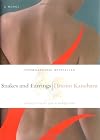
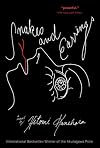
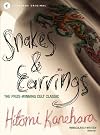
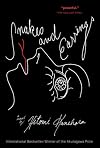
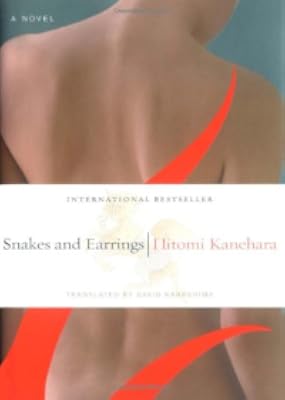
Superficially, Snakes and Earrings begs comparison to nihilistic Western novels such as Allan Warner’s Morvern Callar and Bret Easton Ellis’s Less Than Zero. Lui, the anti-heroine of the novel, channels both Morvern’s airy amorality and Clay’s muted despair. Yet this is more than a first-person narrative of Western anomie/ennui transplanted to Japan; Ms. Kanehara has managed to remain grounded in the Japanese canon while documenting a society that is coming to resemble those of the West. Two of her literary forefathers, Jun’ichiro Tanizaki and Yukio Mishima, exert a particularly strong influence here. Tanizaki’s “The Tattoo Artist” and Mishima’s show more Confessions of a Mask are thematically salient, the former in its meditation on beauty and moral corruption, the latter in its fascination with sadomasochism. (It’s also interesting to note that the cover of Snakes and Earrings bears an uncanny resemblance to that of Seven Japanese Tales, a collection in which “The Tattoo Artist” is included.)
Snakes and Earrings is certainly a promising first novel, written with the same chilling economy of language as Less Than Zero, the first novel of Kanehara’s more immediate literary ancestor. Unfortunately, it also shares Less Than Zero’s glaring stamp of juvenilia, as well as the presumption that readers should content themselves with a wunderkind’s slim and large-typed first volume until s/he can produce a “mature” work. In the case of Ellis, we had to wait seven years, but the finished product more than justified the hype surrounding his debut; despite much hand-wringing from priggish reviewers and moral busy-bodies, American Psycho secured Ellis a place in the pantheon of contemporary literature. No stranger to controversy herself, Kanehara may well be joining him presently. show less
Superficially, Snakes and Earrings begs comparison to nihilistic Western novels such as Allan Warner’s Morvern Callar and Bret Easton Ellis’s Less Than Zero. Lui, the anti-heroine of the novel, channels both Morvern’s airy amorality and Clay’s muted despair. Yet this is more than a first-person narrative of Western anomie/ennui transplanted to Japan; Ms. Kanehara has managed to remain grounded in the Japanese canon while documenting a society that is coming to resemble those of the West. Two of her literary forefathers, Jun’ichiro Tanizaki and Yukio Mishima, exert a particularly strong influence here. Tanizaki’s “The Tattoo Artist” and Mishima’s show more Confessions of a Mask are thematically salient, the former in its meditation on beauty and moral corruption, the latter in its fascination with sadomasochism. (It’s also interesting to note that the cover of Snakes and Earrings bears an uncanny resemblance to that of Seven Japanese Tales, a collection in which “The Tattoo Artist” is included.)
Snakes and Earrings is certainly a promising first novel, written with the same chilling economy of language as Less Than Zero, the first novel of Kanehara’s more immediate literary ancestor. Unfortunately, it also shares Less Than Zero’s glaring stamp of juvenilia, as well as the presumption that readers should content themselves with a wunderkind’s slim and large-typed first volume until s/he can produce a “mature” work. In the case of Ellis, we had to wait seven years, but the finished product more than justified the hype surrounding his debut; despite much hand-wringing from priggish reviewers and moral busy-bodies, American Psycho secured Ellis a place in the pantheon of contemporary literature. No stranger to controversy herself, Kanehara may well be joining him presently. show less
Semi-random purchase in the used book section. I'd never heard of this, but I was promised an international bestseller, a prize winner, and a look at underground culture in Japan. How could I resist?
The reviews for this book are deeply divided, and it's easy to see why. This book has explicit sex, a nihilistic and depressed narrator, sadomasochism, and body modification. It's easy for all of that to come off as sensationalistic — especially for readers so far removed from the culture this book is steeped in — it makes it harder to judge how grounded in reality it is.
I didn't always enjoy this book. In fact, I was making some very extreme faces in public while reading some of these scenes. But I was always fascinated.
Seriously, all show more the content warnings, but especially for violence, rape, body horror, eating disorders. show less
The reviews for this book are deeply divided, and it's easy to see why. This book has explicit sex, a nihilistic and depressed narrator, sadomasochism, and body modification. It's easy for all of that to come off as sensationalistic — especially for readers so far removed from the culture this book is steeped in — it makes it harder to judge how grounded in reality it is.
I didn't always enjoy this book. In fact, I was making some very extreme faces in public while reading some of these scenes. But I was always fascinated.
Seriously, all show more the content warnings, but especially for violence, rape, body horror, eating disorders. show less
Snakes and Earrings, a short first novel translated from the original Japanese, is an exploration of the daily life and inner thoughts of a urban teen. The young author won high accolades and the prestigious Akutagawa Prize for her attempt at depicting a microscopic slice of post-punk subculture. While this work does have a sprinkling of positive aspects, the overall impact is simultaneously facile and bleak.
One is immediately drawn into Lui's world and her frank descriptions of intertwined sex and violence. She is extremely preoccupied with appearance and labels, and perhaps this coupled with her complete lack of motivation beyond her immediate physicality, propels her into a relationship with Ama. Their meeting opens the novel and show more Lui's subsequent attempts to go deeper the only way she knows how, body modifications. The story follows her journey towards obtaining a forked tongue and a dragon tattoo. In this pursuit, she meet Shiba-san, the tattoo artist who plies his trade in exchange for violent sex with her, unbeknownst to Ama. This triangle fuels the plot to its strange and unconvincing end. The most pressing question the novel leaves the reader with is why this work received such high praise. show less
One is immediately drawn into Lui's world and her frank descriptions of intertwined sex and violence. She is extremely preoccupied with appearance and labels, and perhaps this coupled with her complete lack of motivation beyond her immediate physicality, propels her into a relationship with Ama. Their meeting opens the novel and show more Lui's subsequent attempts to go deeper the only way she knows how, body modifications. The story follows her journey towards obtaining a forked tongue and a dragon tattoo. In this pursuit, she meet Shiba-san, the tattoo artist who plies his trade in exchange for violent sex with her, unbeknownst to Ama. This triangle fuels the plot to its strange and unconvincing end. The most pressing question the novel leaves the reader with is why this work received such high praise. show less
This book contains what may possibly be the least sympathetic cast of characters I've ever come across. Young, drunk and without a care, these three form only the most fragile bonds with each other for no reason other than to inflict acts of sexual violence upon one another.
I bought this book because of its award-winning history and because of its very attractive cover design. The fact that it was on the clearance table at the local Barnes didn't hurt either. Despite only paying about a buck and a half for it I still felt cheated when I got to the end. Thankfully, this can be read in about an hour, but I would still only suggest it to anyone who's curious about the daily habits of violent, freeloading losers.
I bought this book because of its award-winning history and because of its very attractive cover design. The fact that it was on the clearance table at the local Barnes didn't hurt either. Despite only paying about a buck and a half for it I still felt cheated when I got to the end. Thankfully, this can be read in about an hour, but I would still only suggest it to anyone who's curious about the daily habits of violent, freeloading losers.
This book tried so hard to be shocking that it was painful. I was torn between being bored and just being grateful that it was a short 122 pages. Trite at best, this book lacked for character development and any real movement, instead focusing on "how weeeeeird" the characters were and how out of the mainstream they lived. I've read better fanfiction. This is a book for Chuck Palahniuk fans, or people who think that simple things like tongue piercing and light s&m are shocking.
Members
- Recently Added By
Lists

Books Read in 2018
4,360 works; 110 members

Books With Our Favorite First Lines
168 works; 104 members
Author Information

14+ Works 824 Members
Some Editions
Awards and Honors
Awards
Common Knowledge
- Canonical title
- Snakes and Earrings
- Original title
- 蛇にピアス; Hebi ni piasu (蛇にピアス) (蛇にピアス)
- Original publication date
- 2004 (original Japanese) (original Japanese); 2005 (English: Karashima) (English: Karashima)
- People/Characters
- Lui; Ama; Shiba
- Important places
- Japan
- Related movies
- Snakes and Earrings (2008)
- First words
- "Know what a forked tongue is?"
- Quotations
- "All I wanted was to be part of an underground world where the sun doesn't shine, there are no love songs, and the sound of children's laughter is never, ever heard."
- Last words
- (Click to show. Warning: May contain spoilers.)Then I turned to the sun, and I squinted into its unrelenting brightness.
- Blurbers
- Hui, Wei; Thorne, Matt; Murkami, Ryū
- Original language
- Japanese
- Disambiguation notice
- Snakes and Earrings (Originally published in Japan as: Hebi ni Piasu)
Classifications
- Genres
- Fiction and Literature, General Fiction
- DDC/MDS
- 895.636 — Literature & rhetoric Literatures of other languages Literatures of East and Southeast Asia Japanese Japanese fiction 2000–
- LCC
- PL855 .A528 .H4313 — Language and Literature Languages and literatures of Eastern Asia, Africa, Oceania Languages of Eastern Asia, Africa, Oceania Japanese language and literature Japanese literature Individual authors and works
- BISAC
Statistics
- Members
- 661
- Popularity
- 43,889
- Reviews
- 34
- Rating
- (3.25)
- Languages
- 15 — Czech, Danish, Dutch, English, Finnish, French, German, Hungarian, Italian, Japanese, Norwegian (Bokmål), Norwegian, Portuguese, Spanish, Swedish
- Media
- Paper
- ISBNs
- 23
- ASINs
- 3