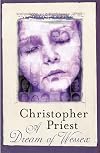
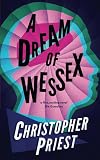
A Dream of Wessex
by Christopher Priest
On This Page
Description
Christopher Priest's artful sleight of hand when it comes to manipulating the experience of his books and notions of what is real reaches a peak in this novel that accounts the trials and tribulations of a group of people who have escaped into a utopian shared virtual reality known as Wessex. It is a world engineered to give them their every desire. But when one woman becomes subject to the violent attentions of a man who feels that she is everything he desires she must decide to fight back. show more Obsession and abuse of power can cross from the real world to the imagined all too easily. Thought by some to have been instrumental in the inspiration of the film INCEPTION, A DREAM OF WESSEX is a classic in the literature of virtual realities and remains one of Chris Priest's most highly regarded novels. Christopher Priest is a genre-leading author of SFF fiction. His novel, THE PRESTIGE, won a number of awards and was adapted into a critically acclaimed, Oscar-nominated film directed by Christopher Nolan (TENET, INCEPTION) starring Hugh Jackman (THE GREATEST SHOWMAN, X-MEN), Christian Bale (THE BIG SHORT, BATMAN BEGINS), Michael Caine (THE ITALIAN JOB) and Scarlett Johansson (MARRIAGE STORY, THE AVENGERS). show lessTags
Recommendations

















Member Reviews
In the near future, a research project uses what we would now call virtual reality to create a consensus projection of a future England where earthquakes have resulted in the West Country becoming separated from England. Dorchester has become a fashionable coastal resort; a daily tidal bore rushes through a narrow strait where Blandford used to be. Other political changes hint at a very different political shape to the world; Gulf oil money has spread Islam across much of the Americas, whilst much of Europe is under a benevolent Soviet regime. The objective of the project is to construct various favourable outcomes in the simulation, and then use research techniques whilst in the simulation to see how those outcomes came to be, so that show more the possibility of repeating them in real life can be investigated.
We focus on Julia Stretton, a member of the research team. She has been tasked with trying to help retrieve another member of the team, David Harkman, who has now been in the simulation for some two years and has resisted all efforts to retrieve him. Into this problem steps Paul Mason, with whom she once had an abusive relationship. The impact Paul Mason has on Julia and her work in the Wessex simulation is a complication she does not need.
The simulation is constructed in real time via the participants' subconsciousnesses; so people's representations within the simulation can continue when the individuals themselves are not in the "projector" that inserts them into Wessex. At the same time, as a consensus simulation, Wessex is dependent on the participants' determination to maintain it; Julia's concerns about Paul Mason are shared by another participant, but his appointment has been imposed by the backers of the project, who are looking for results...
Once again, Christopher Priest is playing with our perception of reality. Situations in the Wessex simulation can echo those in the real world, and vice versa. As Priest was still at this stage seeing himself overtly as a science fiction writer, there is a device standing behind the projection; this is a theme he would return to in The Extremes. As Paul Mason insinuates himself into the project, his dominant and coercive personality begins to impose changes on the simulation; he inserts himself as the Director of a recursive project within the simulation to put team members into a simulation of their own past lives.
We also see Priest examining coercive relationships, something that would recur in The Glamour. Relationships within the novel are of the time that the novel was written (1977), but the open attitude to sexual relationships is tinged with undercurrents of reaction and resistance that we would be more familiar with. Be warned, though, that the Paul Mason character is not beyond use of sexual violence.
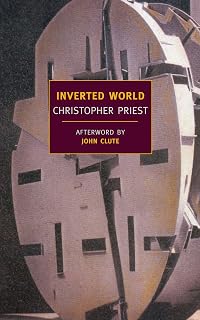
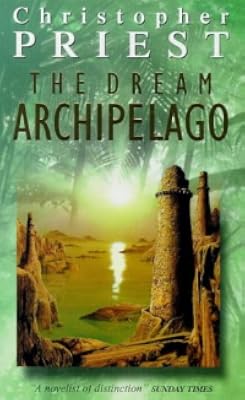
The setting of Dorchester as a newly-minted coastal resort town reflects some of the writing that Priest had put into his earlier novel Inverted World showing Mediterranean village life. Here we see Dorchester transformed into a tourist resort, with yachts, casinos, restaurants and clubs. It is slightly idealised, but it seems to me to reflect some thinking that Priest was doing at the time. After submitting this book to his publisher, Priest took himself off on holiday to the Greek islands, possibly looking for a setting matching that of his future Wessex Riviera. He did not find it, instead experiencing commercial mass tourism that jarred with his sensibilities. He cut his holiday short and returned to the UK, starting work on the first of what was to become his Dream Archipelago stories, where he explored these settings much further. But that was in the future...
Looking back from the perspective of 2025 to A Dream of Wessex, it is now easy to see it as part of a continuum of Priest's writing, developing themes and settings he would keep returning to. At the time, it was new - especially the provincial English setting, shown in a changed future form - and the virtual reality device (although other British writers had explored this idea, such as Bob Shaw in his short story The Cosmic Cocktail Party). The relationships in the novel - Julia Stratton, Paul Masson and David Harkman - and their natures, both inside and outside the Wessex simulation, led Priest's US publisher to misleadingly title the novel The Perfect Lover, which rather represents a complete misreading of the book, although if you were determined to call it that, there is enough material in the text to support that decision (especially if the rest of your publishing team hasn't read it).
After this book, Christopher Priest began to move away from overt mechanistic explanations for the situations he would put his characters into. But the setting of this book is, like the books of Thomas Hardy before him (also set in Wessex, albeit a rather different one), almost a character in itself, and the changes wrought in the landscape will intrigue anyone who knows the area at all. show less
We focus on Julia Stretton, a member of the research team. She has been tasked with trying to help retrieve another member of the team, David Harkman, who has now been in the simulation for some two years and has resisted all efforts to retrieve him. Into this problem steps Paul Mason, with whom she once had an abusive relationship. The impact Paul Mason has on Julia and her work in the Wessex simulation is a complication she does not need.
The simulation is constructed in real time via the participants' subconsciousnesses; so people's representations within the simulation can continue when the individuals themselves are not in the "projector" that inserts them into Wessex. At the same time, as a consensus simulation, Wessex is dependent on the participants' determination to maintain it; Julia's concerns about Paul Mason are shared by another participant, but his appointment has been imposed by the backers of the project, who are looking for results...
Once again, Christopher Priest is playing with our perception of reality. Situations in the Wessex simulation can echo those in the real world, and vice versa. As Priest was still at this stage seeing himself overtly as a science fiction writer, there is a device standing behind the projection; this is a theme he would return to in The Extremes. As Paul Mason insinuates himself into the project, his dominant and coercive personality begins to impose changes on the simulation; he inserts himself as the Director of a recursive project within the simulation to put team members into a simulation of their own past lives.
We also see Priest examining coercive relationships, something that would recur in The Glamour. Relationships within the novel are of the time that the novel was written (1977), but the open attitude to sexual relationships is tinged with undercurrents of reaction and resistance that we would be more familiar with. Be warned, though, that the Paul Mason character is not beyond use of sexual violence.
The setting of Dorchester as a newly-minted coastal resort town reflects some of the writing that Priest had put into his earlier novel Inverted World showing Mediterranean village life. Here we see Dorchester transformed into a tourist resort, with yachts, casinos, restaurants and clubs. It is slightly idealised, but it seems to me to reflect some thinking that Priest was doing at the time. After submitting this book to his publisher, Priest took himself off on holiday to the Greek islands, possibly looking for a setting matching that of his future Wessex Riviera. He did not find it, instead experiencing commercial mass tourism that jarred with his sensibilities. He cut his holiday short and returned to the UK, starting work on the first of what was to become his Dream Archipelago stories, where he explored these settings much further. But that was in the future...
Looking back from the perspective of 2025 to A Dream of Wessex, it is now easy to see it as part of a continuum of Priest's writing, developing themes and settings he would keep returning to. At the time, it was new - especially the provincial English setting, shown in a changed future form - and the virtual reality device (although other British writers had explored this idea, such as Bob Shaw in his short story The Cosmic Cocktail Party). The relationships in the novel - Julia Stratton, Paul Masson and David Harkman - and their natures, both inside and outside the Wessex simulation, led Priest's US publisher to misleadingly title the novel The Perfect Lover, which rather represents a complete misreading of the book, although if you were determined to call it that, there is enough material in the text to support that decision (especially if the rest of your publishing team hasn't read it).
After this book, Christopher Priest began to move away from overt mechanistic explanations for the situations he would put his characters into. But the setting of this book is, like the books of Thomas Hardy before him (also set in Wessex, albeit a rather different one), almost a character in itself, and the changes wrought in the landscape will intrigue anyone who knows the area at all. show less
Inventive, imaginative, visionary - an apt description for both men and women in the novel and author of the novel. Christopher Priest, one of my favorite novelists, set my mind gyrating and performing pirouettes once again with his A Dream of Wessex.
In 1985, in a special facility built underneath ancient Maiden Castle located near Dorchester, England, in pursuit of innovative insights and approaches to social issues of the day, 39 British academics and scientists participate in a “projection” whereby they share a virtual reality, a parallel world 150 years into the future. Once they are in Dorchester in the year 2135, memories of their lives back in the 20th century evaporate and are replaced by a complete 21st century identity. show more According to the rules of the Wessex Project, upon retrieval to the 20th century, participants are required to write a formal report recounting their experience.
Originally published in 1977, Christopher Priest's A Dream of Wessex is a mind-bending time twister, a cross between Philip K. Dick experimental science fiction and Wilkie Collins British suspense yarn. Here's a number of the highlights a reader will encounter in this tightly told tale of 225 pages:
MAIN CHARACTERS
There's Julia Stretton, Paul Mason and David Harkman. Julia is an attractive 27-year old geologist who thrives on her participation in the project. But there is an alarming crisis lurking on the horizon: Julia's former lover from a time when they were both students at university, a strikingly handsome man by the name of Paul Mason, joins the Wessex project.
Julia had to break off her relationship with Paul back then since beneath his good looks and charisma Paul Mason turned out to be manipulative, egocentric, cruel and domineering. Fortunately, in her current life, Julia can draw strength from another man who has recently joined the project, David Harkman. A sensitive, wise 40-year-old social historian, David is also an adventurer, a quality he will need when the power struggle within the project reaches the snapping point.
Once together in projected 21st century virtual reality, David and Julia fall deeply in love. But the lovers must deal with power hungry, self-centered Paul Mason, a man who doesn't accept defeat easily, and that's understatement. In all the Christopher Priest novels I've read to date, Paul Mason is unquestionably the darkest and most sinister of the author's characters. With the inclusion of Paul, the tension created within the story skyrockets.
TIDAL WAVES
In the year 2135, following a string of catastrophic earthquakes, southwest England is now an island separated from the mainland, Dorchester, a seaside town attracting tourists. The deep channel separating the two land masses is known as Blandford Passage featuring the most phenomenal change of all: tidal waves are a common occurrence. Rising to the challenge, future Brits ride these tidal waves on specially constructed, motorized craft, a cross between surfboard and jet ski. Surf's up, dude!
David Hartman has maintained his trim physique and saved enough money to purchase one of these unique crafts and quickly becomes adept at riding the Blandford title waves. Having been a surfer in my younger days, I especially appreciate how David’s skill and courage play their part in the unfolding drama.
INTUITION
Upon meeting one another for the first time inside the projection, both Julia and David have a feeling, an indefinable sense of recognition but David admits on the level of rationality his inner feelings do not make a shred of sense. Herein lies much of the delight in reading the novel – the dissonance between the men and women in the projection who think they are in the “real” world and a reader knowing they are merely participating in a shared virtual reality.
THE UNCONSCIOUS
A participant’s projected experience in simulated 2135 is a consequence, in part, of their alter ego. In other words, a person’s deeper wishes and desires color their projection. Added to this, however, we also read: “Someone had remarked at the beginning that the collective unconscious would produce archetypal horrors, nightmare images, dreamlike situations. It had been a semi-facetious remark, but many had taken it seriously. Unlike the dream-state, though, the Wessex of the group mind was controllable. There was constant correction stemming from reason, sanity, experience; the conscious mind could override the unconscious. The nightmare fantasies did not appear.”
INNER REALITY OF THE MIND
With each page we turn, the more we share the collective 2135 Wessex dream with the novel’s characters, the more we are confronted with the conundrum of the fleeting nature of feelings, sensations and memory. How much does remembering contribute to our sense of identity? What if we could no longer remember large swaths of the past or even our entire past? What would we fall back on? Our moods? Our emotions? Our ability to analyze via reason and logic?
JOLT OF THE WEIRD
In vintage Christopher Priest style, toward the end of A Dream of Wessex there is a sudden, unforeseen event propelling the story into even more amazing dimensions of time and space. I wouldn’t want to disclose anything specific here but I will pose a number of questions: What would happen if someone in 2135 discovered their membership in the 1985 Wessex Project? How would identity be shaken up if the men and women in 2135 Wessex created their own Wessex time travel project whereby they would travel backwards in time to the year 1985? Stated another way: What confusion would be created if men and women didn’t know if they were in the “real” world or in a projection of a projection? What would your reaction be if you saw your own name among the participants in a 2018 projection? To approach an answer to any or all of these questions, I highly recommend this Christopher Priest mind-stunner.
"In the same way that she had a double, and sometimes contradictory image of herself and her own future persona, so Julia had conflicting feelings about David Hartman. As she was here, living her real life in the real world, Harkman was just another member of the projection, if one in an unusual situation. But her memory of Harkman's alter ego was altogether differrent: warm, intrigued, excited, deeply personal."
Photo of Christopher Priest taken back in the 1970s when he wrote A Dream of Wessex show less
This took me right back to the 1970s when I read most of my sci-fi. Thoughtful political and social background to a story set in the near future (early 1980s) with projections to a further future. The decay of the environment, scarcity, the division of the world into not surprising blocks all rang true. The world is largely composed of an Islamic bloc including North America and a Soviet bloc including the UK where the story is set. Australia, I'm pleased to report, is one of the few independent countries.
Character development doesn't stand comparison with Shakespeare, but it compares favourably with the run of the mill science fiction I've read so much of. Priest is a polished writer, which makes him easy to read. The basic premise was show more believable, it's nice not to have to be convinced to suspend disbelief.
I confess I hadn't heard of him before, despite being well regarded, most notably these days for having written the book that later became the Nolan movie The Prestige. I could read more. It struck me as rather PK Dick without the drugs.
Trots off to look up that idea online. Spots this:
https://alittleteaalittlechat.wordpress.com/2016/04/26/a-dream-of-wessex-by-chri... show less
Character development doesn't stand comparison with Shakespeare, but it compares favourably with the run of the mill science fiction I've read so much of. Priest is a polished writer, which makes him easy to read. The basic premise was show more believable, it's nice not to have to be convinced to suspend disbelief.
I confess I hadn't heard of him before, despite being well regarded, most notably these days for having written the book that later became the Nolan movie The Prestige. I could read more. It struck me as rather PK Dick without the drugs.
Trots off to look up that idea online. Spots this:
https://alittleteaalittlechat.wordpress.com/2016/04/26/a-dream-of-wessex-by-chri... show less
This took me right back to the 1970s when I read most of my sci-fi. Thoughtful political and social background to a story set in the near future (early 1980s) with projections to a further future. The decay of the environment, scarcity, the division of the world into not surprising blocks all rang true. The world is largely composed of an Islamic bloc including North America and a Soviet bloc including the UK where the story is set. Australia, I'm pleased to report, is one of the few independent countries.
Character development doesn't stand comparison with Shakespeare, but it compares favourably with the run of the mill science fiction I've read so much of. Priest is a polished writer, which makes him easy to read. The basic premise was show more believable, it's nice not to have to be convinced to suspend disbelief.
I confess I hadn't heard of him before, despite being well regarded, most notably these days for having written the book that later became the Nolan movie The Prestige. I could read more. It struck me as rather PK Dick without the drugs.
Trots off to look up that idea online. Spots this:
https://alittleteaalittlechat.wordpress.com/2016/04/26/a-dream-of-wessex-by-chri... show less
Character development doesn't stand comparison with Shakespeare, but it compares favourably with the run of the mill science fiction I've read so much of. Priest is a polished writer, which makes him easy to read. The basic premise was show more believable, it's nice not to have to be convinced to suspend disbelief.
I confess I hadn't heard of him before, despite being well regarded, most notably these days for having written the book that later became the Nolan movie The Prestige. I could read more. It struck me as rather PK Dick without the drugs.
Trots off to look up that idea online. Spots this:
https://alittleteaalittlechat.wordpress.com/2016/04/26/a-dream-of-wessex-by-chri... show less
David and Julia meet, fall in love and live in paradise (in the year 2137). But in reality their bodies are contained in morguelike drawers in the Ridpath Project in the year 1985. They and other dreamers are trying to construct a future that might save the present. Very interesting premise.
This is another "questioning reality" story from Christopher Priest. A group of scientists create a device that projects a person’s consciousness into a future reality. It's meant to be a social experiment that will some how help people in the present. The future world was agreed upon before hand by each of the subjects. One of the scientists, David, has been stuck in the projection for two years. For him it has become his reality. Julia, also a member of the project finds David and they fall in love. Julia’s ex-lover Paul barges into the experiment and adds his consciousness with dire consequences.
The book was a quick read and more conventional than The Inverted World. A good read, but less complicated than the other works I have show more read by Priest. show less
The book was a quick read and more conventional than The Inverted World. A good read, but less complicated than the other works I have show more read by Priest. show less
Members
- Recently Added By
Lists

Bibliography for Among Others
159 works; 15 members

Books With Place Names in the Title
257 works; 11 members

Simulated Reality in Fiction
124 works; 7 members

Favorite Science Fiction
456 works; 218 members
Author Information

63+ Works 11,856 Members
Some Editions
Awards and Honors
Awards
Notable Lists
Series
Belongs to Publisher Series
Work Relationships
Is contained in
Common Knowledge
- Canonical title*
- Futur intérieur
- Original title
- A Dream of Wessex
- Alternate titles
- The Perfect Lover
- Original publication date
- 1977
- People/Characters*
- Julia Stretton; Paul Mason; John Eliot; David Harkman; Donald "Don" Mander; Trowbridge (show all 14); Peter Borovitine; Mary Rickard; Colin Willment; Thomas "Tom" Benedict; Kieran Santesson; Andy; Steve; Marilyn James
- Important places
- Dorchester, Dorset, England, UK
- Epigraph
- May you live through interesting times.
Ancient Chinese curse - Dedication
- To Martin Walker
- First words
- The Tartan Army had planted a bomb at Heathrow, and Julia Stretton, who had gone the long way round past the airport to avoid the usual congestion on the approach-roads to the M3, had been delayed for two hours by police and ... (show all)army checkpoints.
- Last words
- (Click to show. Warning: May contain spoilers.)As they went up the steps to the patio of Sekker's Bar, they heard a girl's voice shouting angrily, and a few moments later there was a tinkling of broken glass on the paving stones.
- Original language*
- Englisch
- Disambiguation notice
- US title: "The Perfect Lover"
*Some information comes from Common Knowledge in other languages. Click "Edit" for more information.
Classifications
Statistics
- Members
- 425
- Popularity
- 72,763
- Reviews
- 9
- Rating
- (3.74)
- Languages
- 5 — Dutch, English, French, German, Swedish
- Media
- Paper, Audiobook, Ebook
- ISBNs
- 17
- ASINs
- 12