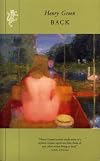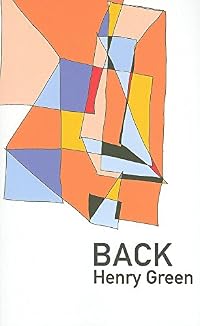
Back
by Henry Green
On This Page
Description
"Back is the story of Charlie Summer, who is back from the war and a POW camp having lost the woman he loved, Rose, to illness before he left and his leg to fighting. In other words, Charlie has very little to come back to, only memories, and on top of that he has been deeply traumatized by his experience of war. Rose's father introduces him to another young woman, Nancy, and Charlie becomes convinced that she is in fact Rose and pursues her. Back is at once a Shakespearean comedy of show more mistaken identities, a voyage into the world of madness, and a celebration of the improbable healing powers of love"-- show lessTags
Recommendations



























Member Reviews
Wonderful, strange, innovative book. The last page is one of the most affecting things I've read for a long time. How did people survive surviving a war for existence itself? i know that 50s britain was a bit buttoned-up, but my God, how did people get through the 40s even remotely mentally intact? makes me want to watch that ken loach (is it?) film about the founding of the NHS. gravity's rainbow seems to me another novel that captures the non-russian/non-german experience of living under such assault.
A disturbing story about a soldier coming back to England after spending time as a German prisoner of war. While he was gone, the woman he loved and with whom he was having an affair has had a child and later died. He becomes convinced that her half sister is really her. Eventually, after a series of coincidences and misunderstandings he ends up marrying the new woman. The novel is surprisingly difficult to read, largely I think because of extraordinarily clipped terse style. The dialogue, which is extremely idiomatic, is also terse and unexpansive, as if the characters are unwilling to give much away. There is a helpful afterword in this edition by George Tole.
In this tender, true, beautifully written book, people try to free themselves from their memories and get back to living. Charley, just back from a German prison camp and a war that took one of his legs, must now come to terms with the death of his lover, who died while he was in prison.
Never sentimental and sometimes comic, this book was remarkably good.
Never sentimental and sometimes comic, this book was remarkably good.
Finished this hours ago, cannot stop thinking about it.
Ratings
Members
- Recently Added By
Lists

Henry Green ranked
9 works; 2 members

1,001 BYMRBYD Concensus
723 works; 27 members

Troublesome bodies
110 works; 7 members
Author Information

16+ Works 4,372 Members
Writing under the pseudonym Henry Green, Henry Vincent Yorke kept his life as a wealthy industrialist separate from his literary persona. Although he had friends who were authors, he did not travel in literary circles and refused to be photographed, to protect his anonymity. Yorke was born in 1905 in Gloucestershire, England, and worked as a show more laborer before becoming managing director of a food engineering firm. From the publication of his first book Blindness (1926), which was begun when he was 17 years old and a student at Eton, he was admired for his unfailing sense of dialogue and characterization for all classes of British life. Green's last novel, Nothing, was published in 1950. Although he is still relatively unknown in the United States, he is recognized by authors such as John Updike and W. H. Auden as a masterful storyteller and one of the greatest English writers of the 20th century. He died in 1973 (Bowker Author Biography) show less
Awards and Honors
Series
Belongs to Publisher Series
Work Relationships
Is contained in
Common Knowledge
- Canonical title
- Back
- Original publication date
- 1946
- People/Characters
- Charley Summers; Nancy Whitmore
- First words
- A country bus drew up below the church and a young man got out.
Classifications
Statistics
- Members
- 353
- Popularity
- 88,901
- Reviews
- 5
- Rating
- (3.88)
- Languages
- English, French
- Media
- Paper, Ebook
- ISBNs
- 9
- ASINs
- 11