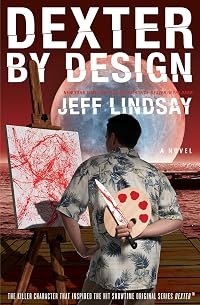
On This Page
Description
NATIONAL BESTSELLER • The Dexter series continues with Dexter’s deadliest case yet. • The Killer Character That Inspired the Hit Showtime Series DexterAfter his surprisingly glorious honeymoon in Paris, life is almost normal for Dexter Morgan. Married life seems to agree with him: he’s devoted to his bride, his stomach is full, and his homicidal hobbies are nicely under control. But old habits die hard—and Dexter’s work as a blood spatter analyst never fails to offer new show more temptations that appeal to his offbeat sense of justice. Not to mention that his Dark Passenger still waits to hunt with him in the moonlight. The discovery of a corpse (artfully displayed as a sunbather relaxing on a Miami beach chair) naturally piques Dexter’s curiosity and Miami’s finest realize they’ve got a terrifying new serial killer on the loose. And Dexter, of course, is back in business.
. show less
Tags
Recommendations

















Member Reviews
After returning from his honeymoon in Paris, Dexter begins settling into married life. Not long after his return, bodies start appearing with their guts replaced with thematic memorabilia. Together with Deborah, he must find and stop the criminal. But when Deborah is stabbed by one of the suspects, Dexter is left on his own and under investigation by the FBI.
Wow, this book is terrible. It's so repetitive it's almost a running joke with nearly every line of dialog being reiterated several times. Besides that, almost nothing happens. Dexter seems to be almost entirely brain dead throughout, relying on every other character to help him figure out obvious things. Astor and Cody are now (both!) murderous sociopaths who want to learn how to show more serial kill people. I guess we are just supposed to suspend our disbelief on this? Does Mr. Lindsay really think that some light child abuse is enough to deaden all emotion?
The book is laughably padded out with Dexter taking not one, but two international trips that do NOTHING to advance the plot. Seriously, all he does in Cuba is drink a few mojitos and follow all orders from Deborah's boyfriend. The whole gay artist as mass-murderer angle is just so stupid. Why should Dexter care if a performance artist photoshops his face into a murder video? It's going to be shown at film festival in Cuba. Are we supposed to believe that some drug lords will recognize the face of some random blood-spatter tech in Miami and demand that the police do something about it?
This book's plot makes no sense at all. And it's BORING. Everything plods along at a snail's pace with Dexter's interior monologue filling most of the pages with vague hypothetical stream-of-consciousness anxiety. The author should be ashamed. show less
Wow, this book is terrible. It's so repetitive it's almost a running joke with nearly every line of dialog being reiterated several times. Besides that, almost nothing happens. Dexter seems to be almost entirely brain dead throughout, relying on every other character to help him figure out obvious things. Astor and Cody are now (both!) murderous sociopaths who want to learn how to show more serial kill people. I guess we are just supposed to suspend our disbelief on this? Does Mr. Lindsay really think that some light child abuse is enough to deaden all emotion?
The book is laughably padded out with Dexter taking not one, but two international trips that do NOTHING to advance the plot. Seriously, all he does in Cuba is drink a few mojitos and follow all orders from Deborah's boyfriend. The whole gay artist as mass-murderer angle is just so stupid. Why should Dexter care if a performance artist photoshops his face into a murder video? It's going to be shown at film festival in Cuba. Are we supposed to believe that some drug lords will recognize the face of some random blood-spatter tech in Miami and demand that the police do something about it?
This book's plot makes no sense at all. And it's BORING. Everything plods along at a snail's pace with Dexter's interior monologue filling most of the pages with vague hypothetical stream-of-consciousness anxiety. The author should be ashamed. show less
Returning to Dexter Morgan's world is like catching up with an old friend I haven't seen for a while. Mind you, a friend I don't want to spend too much time with, a friend who's at once fascinating and endearing and scary as hell.
Overall, I enjoyed the 4th instalment of the series. However, I did find a few elements of the plot a little too predictable, and there were times I had to suspend my disbelief more than usual. But Lindsay's expert narrative kept me turning pages quickly. I love the sparks of genuine humour interspersed with the gut-churning macabre, and Dexter is, as always, a genuinely likeable monster.
I'm looking forward to the next one!
Overall, I enjoyed the 4th instalment of the series. However, I did find a few elements of the plot a little too predictable, and there were times I had to suspend my disbelief more than usual. But Lindsay's expert narrative kept me turning pages quickly. I love the sparks of genuine humour interspersed with the gut-churning macabre, and Dexter is, as always, a genuinely likeable monster.
I'm looking forward to the next one!
Dexter Morgan is a model citizen by day, working in the Miami police department as a forensic blood-splatter expert. Polite, nice-looking, friendly and seemingly devoted to his foster sister Detective Deborah Morgan, he is entirely unremarkable.
At night however Dutiful Daytime Dexter transforms into Dexter Duke of Darkness, Dexter of the Bright Knife, Dexter the Hard and Sharp and Totally Empty, Decapitating Dexter, when he goes on his killing sprees.
Tanks to his training by foster father Harry Morgan, Dexter has never killed anyone who doesn’t deserve it and all his victims have been serial slayers whom the law could not touch. In this book, for the first time, he murders someone not covered by ‘The Code of Harry’.
I read the show more first three Dexter books before I saw the prime-time sanitized TV series which, although pretty good, completely lacks the black humour, irony and word play of the books, narrated as they are by Deadly Dexter himself.
The books are deeper, darker and more disembodied than the TV show with its neat packaging and irresistible impulse to make the villain more a vigilante than a vicious killer.
If your only previous exposure to the character has been Michael C Hall’s quirky, lovable persona and his aggravating but fundamentally decent stooges, prepare yourself for a shock.
Death-dealing Dexter has gone undetected – except by his nemesis Sergeant Albert Doakes who is very suspicious of him and begins to follow him: to prove how ‘normal’ he is, Dexter spends more and more time at his girlfriend Rita’s house, watching TV and drinking beer.
Rita is just a convenience, part of his disguise, until he discovers her children Astor and Cody are – like him – conscienceless homicidal psychopaths. Determined to educate the killer kiddies in the Code of Harry, Dexter marries Rita, and the fourth book in the series starts with their honeymoon in Paris.
Dexter, former High Priest of Lunar Levity had become Dexter the Dutifully Deferred as he battles his urges and ‘trudges meekly along in the wake of the Good Ship Rita’.
The highlight of his trip was to have been a visit to the Rue Morgue – until Rita informed him the street was an imaginary creation: however, the honeymoon is salvaged when his bride forces him to attend ‘Jennifer’s Leg’, a piece of performance art in which the audience is treated to DVDs showing the artist slicing her leg off. Rita faints, but Dexter and his ‘Dark Passenger’ chuckle.
Back in Miami, Dexter is confronted by a series of artistically hacked corpses arranged, with trappings, as designer art works: foster sister Deborah, whose career as a homicide detective is hampered by the fact that she looks more ‘Legally Blonde’ than ‘Dirty Harry’, really needs his help.
When she is stabbed and the ‘alleged perp’ set free, our hero allows himself a night out in which he performs Dark Dexter’s Dance on the suspect, Alex Doncevic, delivering his own brand of chainsaw justice.
He is shattered to discover Doncevic is actually innocent of murder: furthermore, Doncevic’s lover Brandon Weiss, the guilty party, has captured Dastardly Dexter’s Deadly Deed on video, which he posts on You-Tube.
“Dexter of the Deadly Dimples is now starring in a minor motion picture” and he is not happy about it. To exacerbate matter, Sister Deborah’s partner Detective Coulter – first dismissed as a drooling dolt – is far from the fat fool fondly fancied by Dexter.
Faced with the deranged decorator, as Dexter the Mostly Modest calls the killer, our hero is transformed into Dopey Dithering Dexter, pursuing the psycho slayer to Havana in Cuba and back again to Miami.
The murderous munchkins Astor and Cody eventually save the day, rising to the occasion with deathly disorder, hindering the homicidal killer and even performing the deadly deed of disposal, so Dauntless Dexter is in the clear.
On the whole – great stuff! Homicidal humour, kidding killers and side-splitting slayers, the Dexter series is a complete challenge to the banal bourgeoisie.
Best of all are the visitations from The Ghost of Christmas Gone Terribly Wrong as Deborah is forced to come to terms with his sister’s love interest Kyle Chutsky, who was deprived of an arm and a leg by the cruel cutter who sliced off Sergeant Doakes’ hands, feet and tongue.
Unlike many other slasher stories, the Dexter series does not simply write out amputee victims: they return, like a bad smell. Handless, footless and tongueless, Doakes is still very much alive and determined to prove his suspicions of the dapper dandy Dexter, despite the fact he has now to rely on hook hands and a handheld computer for his voice.
“Move it, Motherfucker!” Doakes’ cheerful artificial baritone called out… sounding like he was happily calling out ‘Howdy, neighbour!’”
I laughed, and I laughed again. Dexter by Design is a delicious delight show less
At night however Dutiful Daytime Dexter transforms into Dexter Duke of Darkness, Dexter of the Bright Knife, Dexter the Hard and Sharp and Totally Empty, Decapitating Dexter, when he goes on his killing sprees.
Tanks to his training by foster father Harry Morgan, Dexter has never killed anyone who doesn’t deserve it and all his victims have been serial slayers whom the law could not touch. In this book, for the first time, he murders someone not covered by ‘The Code of Harry’.
I read the show more first three Dexter books before I saw the prime-time sanitized TV series which, although pretty good, completely lacks the black humour, irony and word play of the books, narrated as they are by Deadly Dexter himself.
The books are deeper, darker and more disembodied than the TV show with its neat packaging and irresistible impulse to make the villain more a vigilante than a vicious killer.
If your only previous exposure to the character has been Michael C Hall’s quirky, lovable persona and his aggravating but fundamentally decent stooges, prepare yourself for a shock.
Death-dealing Dexter has gone undetected – except by his nemesis Sergeant Albert Doakes who is very suspicious of him and begins to follow him: to prove how ‘normal’ he is, Dexter spends more and more time at his girlfriend Rita’s house, watching TV and drinking beer.
Rita is just a convenience, part of his disguise, until he discovers her children Astor and Cody are – like him – conscienceless homicidal psychopaths. Determined to educate the killer kiddies in the Code of Harry, Dexter marries Rita, and the fourth book in the series starts with their honeymoon in Paris.
Dexter, former High Priest of Lunar Levity had become Dexter the Dutifully Deferred as he battles his urges and ‘trudges meekly along in the wake of the Good Ship Rita’.
The highlight of his trip was to have been a visit to the Rue Morgue – until Rita informed him the street was an imaginary creation: however, the honeymoon is salvaged when his bride forces him to attend ‘Jennifer’s Leg’, a piece of performance art in which the audience is treated to DVDs showing the artist slicing her leg off. Rita faints, but Dexter and his ‘Dark Passenger’ chuckle.
Back in Miami, Dexter is confronted by a series of artistically hacked corpses arranged, with trappings, as designer art works: foster sister Deborah, whose career as a homicide detective is hampered by the fact that she looks more ‘Legally Blonde’ than ‘Dirty Harry’, really needs his help.
When she is stabbed and the ‘alleged perp’ set free, our hero allows himself a night out in which he performs Dark Dexter’s Dance on the suspect, Alex Doncevic, delivering his own brand of chainsaw justice.
He is shattered to discover Doncevic is actually innocent of murder: furthermore, Doncevic’s lover Brandon Weiss, the guilty party, has captured Dastardly Dexter’s Deadly Deed on video, which he posts on You-Tube.
“Dexter of the Deadly Dimples is now starring in a minor motion picture” and he is not happy about it. To exacerbate matter, Sister Deborah’s partner Detective Coulter – first dismissed as a drooling dolt – is far from the fat fool fondly fancied by Dexter.
Faced with the deranged decorator, as Dexter the Mostly Modest calls the killer, our hero is transformed into Dopey Dithering Dexter, pursuing the psycho slayer to Havana in Cuba and back again to Miami.
The murderous munchkins Astor and Cody eventually save the day, rising to the occasion with deathly disorder, hindering the homicidal killer and even performing the deadly deed of disposal, so Dauntless Dexter is in the clear.
On the whole – great stuff! Homicidal humour, kidding killers and side-splitting slayers, the Dexter series is a complete challenge to the banal bourgeoisie.
Best of all are the visitations from The Ghost of Christmas Gone Terribly Wrong as Deborah is forced to come to terms with his sister’s love interest Kyle Chutsky, who was deprived of an arm and a leg by the cruel cutter who sliced off Sergeant Doakes’ hands, feet and tongue.
Unlike many other slasher stories, the Dexter series does not simply write out amputee victims: they return, like a bad smell. Handless, footless and tongueless, Doakes is still very much alive and determined to prove his suspicions of the dapper dandy Dexter, despite the fact he has now to rely on hook hands and a handheld computer for his voice.
“Move it, Motherfucker!” Doakes’ cheerful artificial baritone called out… sounding like he was happily calling out ‘Howdy, neighbour!’”
I laughed, and I laughed again. Dexter by Design is a delicious delight show less
I am not a huge fan of serial killers, but Jeff Lindsay's Dexter series is a fine twist on the genre that has led to at least four novels and a Showtime cable TV series. Unlike most serial killers, Dexter was adopted and raised by a cop named Harry Morgan who knew what Dexter was and--believing that there was no way to change Dexter and not wanting to turn him in--taught Dexter that he should only murder people who are themselves murderers. Dexter is not always able to to stick to "Harry's Code" or "Path," but he tries very hard.
One advantage to the "Code" is that every time Dexter chops up the body of a viscious murderer and distributes the pieces in the gulf stream off the coast of his native Florida, the police do not become show more terribly anxious to find the body or the killer. Thus Dexter has gotten away with murdering scores of human berings that hardly anyone liked or cared about.
Part of the appeal of Dexter is that the novels (and the TV series) give you Dexter's stream of consciousness as he navigates a world in which he feels like an alien, often referring to himself as soulless, inhuman, and incapable of understanding how he is supposed to maintain the semblance of normal relationships with others when he feels incapable of empathy or even having the least clue as to what they want. (Little does Dexter realize that most of the rest of us feel a little bit that way.)
Of course, Dexter is right that he is more profoundly handicapped than the rest of us in the area of emotional connection or empathy, and part of his appeal, then, is his almost heroic attempt to connect with other human beings as if he were one of us. He has reason to connect. First of all, his day job is that of a forensic blood spatter analyst for the Miami Police Department. (How ironic is that occupation for a serial killer?) But it means that he has to try to fit in in an office setting where he not only becomes a familiar landmark for his forensic collegue Vince or Detective Angel Batista but they actually think of Dexter as a friend, and Dexter, not sure whether he can actually be anyone's friend, nevertheless accepts that this is as close as he will ever get to friendship.
On top of--or perhaps, rather, beneath these merely social relationships--Dexter has an adopted sister, Deborah, who has followed in their father's footsteps by becoming a police detective. Most amazing of all--especially to Dexter--is that he has married his girlfriend, Rita, and is on the way to adopting her two children. In a chilling twist that is different (so far) from the TV series, Dexter perceives that the children are psychologically damaged, and he has decided to turn them into serial killers like himself.
(That's the toughest part to sympathize with.)
Rita is clueless, of course, in both the novels and the TV series, but
Deb, who did not know that Dexter is a serial killer in the earliest novels and still hadn't found out the last time I watched the TV series, has found out by the time of this novel. At one point, Dexter notes that she does not realize just how many people he has killed, and he is not about to tell her. The main reason that she does not turn Dexter in is that he claims that their father gave his "hobby" the seal of approval. Deb is not sure whether to believe this, but in case it is true, she is hesitant to turn in her brother.
This conflict becomes a factor that propells the plot of this novel. After arguing over Dexter's grisly proclivity in the car while on the way to interview a witness, Deb goes to the witness's front door while Dexter decides he should stay in the car. Suddenly, out of the corner of his eye, he sees the person who answers the door attacking Deb, who then spends the rest of the novel in the hospital.
Suddenly, everybody wants to know exactly what happened, blow-by-blow, and Dexter does not reveal that he didn't go with Deb to the door because they were having a fight. "About what ?" would be the next logical question, and Dexter doesn't want to go there.
Dexter always confronts a villain who is a worse killer than himself, which allows us to root for Dexter. The villain of this novel is a writer turned avant garde artist. (Lindsay makes a dig against his own profession when he inserts a discussion about whether a writer could possibly be a murder suspect and one of his character's allows that writers can be surprisingly dangerous.) This killer is responsible for arranging dead bodies all over Miami in grisly talbeaux.
As a set up, the novel takes us along with Dexter and Rita on their Paris honeymoon, where Dexter is obliged to accompany his new wife on her pilgrimage to art museums. Dexter is disappointed to learn that the Rue Morgue is an invention of classic horror writer Edgar Alan Poe and does not actually exist. At the end of their visit, they go to an avant garde gallery where the exibit involves an artist named Jennifer who has videotaped herself cutting off her own leg. Rita faints. Dexter enjoys Paris for the first time.
It turns out that the artist-turned-killer is influenced by the same school of "art" to which Jennifer belongs even if he is probably not aware of her particular performance piece. His target, at first, is the Miami Tourism Bureau, videotaping his dead body arrangements and uploading them on the Internet with his text for an anti-tourism campaign. Unfortunately for Dexter, our anti-hero soon becomes the killer's new target, and then everyone who is close to him, including Rita and her children. Among other things, Dexter is forced to explore the question of whether his imperative to protect his new family is an unexpected spark of humanity or something else.
This is a pretty good story that I read in a couple of days even though I am a slow reader. It is not quite as good as some of the TV episodes and I suspect that it is not as good as the first novel in the series, "Darkly Dreaming Dexter," which I plan to read that novel some day. This novel is not a good place to start unless you have seen the TV series. Maybe the attempt to make Dexter more human in terms of his inchoate feelings of affection for his wife's children is a bit of a stretch. At the same time, the fact that he can only bond with them to the extent that he thinks of them as potential serial killers like himself is a reminder that Dexter is ultimately an evil man. show less
One advantage to the "Code" is that every time Dexter chops up the body of a viscious murderer and distributes the pieces in the gulf stream off the coast of his native Florida, the police do not become show more terribly anxious to find the body or the killer. Thus Dexter has gotten away with murdering scores of human berings that hardly anyone liked or cared about.
Part of the appeal of Dexter is that the novels (and the TV series) give you Dexter's stream of consciousness as he navigates a world in which he feels like an alien, often referring to himself as soulless, inhuman, and incapable of understanding how he is supposed to maintain the semblance of normal relationships with others when he feels incapable of empathy or even having the least clue as to what they want. (Little does Dexter realize that most of the rest of us feel a little bit that way.)
Of course, Dexter is right that he is more profoundly handicapped than the rest of us in the area of emotional connection or empathy, and part of his appeal, then, is his almost heroic attempt to connect with other human beings as if he were one of us. He has reason to connect. First of all, his day job is that of a forensic blood spatter analyst for the Miami Police Department. (How ironic is that occupation for a serial killer?) But it means that he has to try to fit in in an office setting where he not only becomes a familiar landmark for his forensic collegue Vince or Detective Angel Batista but they actually think of Dexter as a friend, and Dexter, not sure whether he can actually be anyone's friend, nevertheless accepts that this is as close as he will ever get to friendship.
On top of--or perhaps, rather, beneath these merely social relationships--Dexter has an adopted sister, Deborah, who has followed in their father's footsteps by becoming a police detective. Most amazing of all--especially to Dexter--is that he has married his girlfriend, Rita, and is on the way to adopting her two children. In a chilling twist that is different (so far) from the TV series, Dexter perceives that the children are psychologically damaged, and he has decided to turn them into serial killers like himself.
(That's the toughest part to sympathize with.)
Rita is clueless, of course, in both the novels and the TV series, but
Deb, who did not know that Dexter is a serial killer in the earliest novels and still hadn't found out the last time I watched the TV series, has found out by the time of this novel. At one point, Dexter notes that she does not realize just how many people he has killed, and he is not about to tell her. The main reason that she does not turn Dexter in is that he claims that their father gave his "hobby" the seal of approval. Deb is not sure whether to believe this, but in case it is true, she is hesitant to turn in her brother.
This conflict becomes a factor that propells the plot of this novel. After arguing over Dexter's grisly proclivity in the car while on the way to interview a witness, Deb goes to the witness's front door while Dexter decides he should stay in the car. Suddenly, out of the corner of his eye, he sees the person who answers the door attacking Deb, who then spends the rest of the novel in the hospital.
Suddenly, everybody wants to know exactly what happened, blow-by-blow, and Dexter does not reveal that he didn't go with Deb to the door because they were having a fight. "About what ?" would be the next logical question, and Dexter doesn't want to go there.
Dexter always confronts a villain who is a worse killer than himself, which allows us to root for Dexter. The villain of this novel is a writer turned avant garde artist. (Lindsay makes a dig against his own profession when he inserts a discussion about whether a writer could possibly be a murder suspect and one of his character's allows that writers can be surprisingly dangerous.) This killer is responsible for arranging dead bodies all over Miami in grisly talbeaux.
As a set up, the novel takes us along with Dexter and Rita on their Paris honeymoon, where Dexter is obliged to accompany his new wife on her pilgrimage to art museums. Dexter is disappointed to learn that the Rue Morgue is an invention of classic horror writer Edgar Alan Poe and does not actually exist. At the end of their visit, they go to an avant garde gallery where the exibit involves an artist named Jennifer who has videotaped herself cutting off her own leg. Rita faints. Dexter enjoys Paris for the first time.
It turns out that the artist-turned-killer is influenced by the same school of "art" to which Jennifer belongs even if he is probably not aware of her particular performance piece. His target, at first, is the Miami Tourism Bureau, videotaping his dead body arrangements and uploading them on the Internet with his text for an anti-tourism campaign. Unfortunately for Dexter, our anti-hero soon becomes the killer's new target, and then everyone who is close to him, including Rita and her children. Among other things, Dexter is forced to explore the question of whether his imperative to protect his new family is an unexpected spark of humanity or something else.
This is a pretty good story that I read in a couple of days even though I am a slow reader. It is not quite as good as some of the TV episodes and I suspect that it is not as good as the first novel in the series, "Darkly Dreaming Dexter," which I plan to read that novel some day. This novel is not a good place to start unless you have seen the TV series. Maybe the attempt to make Dexter more human in terms of his inchoate feelings of affection for his wife's children is a bit of a stretch. At the same time, the fact that he can only bond with them to the extent that he thinks of them as potential serial killers like himself is a reminder that Dexter is ultimately an evil man. show less
DEXTER BY DESIGN has brilliant pacing, great characterization, danger around every corner, and that odd sense that you ought not be empathizing with this character quite so much. Because he's evil. But he's a nice, charming, likable sort of evil. Way to screw with my head, Jeff Lindsay.
Lindsay pulls Dexter's new family into the mix and shows the children's development as little monsters while putting them all in mortal danger, which is a good move. Keeping them as background for Dexter would have made them boring, and these characters are anything but boring.
The danger Dexter's in from the law continues to compound, as well, as he does things without thinking or without following the rules, so too many cops are figuring out what he's show more about, though they all seem loathe to do anything about it.
I can't wait for the new one already. show less
Lindsay pulls Dexter's new family into the mix and shows the children's development as little monsters while putting them all in mortal danger, which is a good move. Keeping them as background for Dexter would have made them boring, and these characters are anything but boring.
The danger Dexter's in from the law continues to compound, as well, as he does things without thinking or without following the rules, so too many cops are figuring out what he's show more about, though they all seem loathe to do anything about it.
I can't wait for the new one already. show less
Compared to the previous book in the series, this one is more true to form. But it has begun to do something that I would have previously considered very unlikely, character growth of a serial killer. Sure Dexter isn't the normal serial killer--but the author could have built a successful franchise without any growth. Instead we are treated to an actual living breathing character developing in unexpected but believable ways.
I have been a fan of Jeff's writing since page one of the first book. Funny, well crafted, dark and somehow manages to have you barracking for Dexter to take his knife and fishing line to someone. I really have no deeper insights to offer as it has been covered by many. Suffice to say that this book and the others I have read in the series are worth every minute of reading time, even if it is as disturbing as Jennifer's Leg.
This weekend I'm going to a Q&A and lecture with Jeff Lindsay at the Perth Writers Festival. I am looking forward to hearing more about Jeff's writing and Dexter.
This weekend I'm going to a Q&A and lecture with Jeff Lindsay at the Perth Writers Festival. I am looking forward to hearing more about Jeff's writing and Dexter.
Members
- Recently Added By
Published Reviews
ThingScore 38
Lindsay is a fairly indifferent writer, prone to clumsy bare-bones action intermittently padded out with equally clumsy swaths of ultra-specific, banal detail, usually about Miami’s lousy traffic, or exactly what Dexter’s eating. His strength has always been in his fascinating characters, his wryly funny tone, and his grotesque imagery. The last element remains in full force here, but in show more the face of Dexter's fumblings, the jaunty tone is off, and the book often becomes repetitive. show less
added by Shortride
For fans of such "humor," Jeff Lindsay's new novel, "Dexter by Design," will surely be an enjoyable cup of congealed and gory tea. For others, this book is about as pleasant as a sewer swim, and just about as socially rewarding.
added by Shortride
Lists

Books Read in 2010
631 works; 11 members

Books Read in 2019
4,052 works; 108 members

Books Read in 2022
5,226 works; 115 members
Author Information

50+ Works 21,393 Members
Jeff Lindsay was born Jeffry P. Freundlich on July 14, 1952 in Miami, Florida. He graduated from Middlebury College in Vermont in 1975. He is best known for his novels about sociopathetic vigilante Dexter Morgan. The first book in the Dexter series, Darkly Dreaming Dexter, was published in 2004 and was the basis of the Showtime TV series Dexter. show more His other works include Tropical Depression: A Novel of Suspense, Dream Land: A Novel of the UFO Coverup, Time Blender and Dreamchild. (Bowker Author Biography) show less
Awards and Honors
Distinctions
Series

Common Knowledge
- Canonical title*
- Dexter l'esteta
- Original title
- Dexter by Design
- Original publication date
- 2009-09-08
- People/Characters
- Dexter Morgan; Rita; Cody; Astor; Deborah Morgan; Kyle Chutsky (show all 8); Brandon Weiss; Alex Doncevic
- Important places
- Paris, France; Miami, Florida, USA; Havana, Cuba
- Related movies
- Dexter (2006 | IMDb)
- Dedication
- For Hilary, as always
- First words
- Pardonez moi, Monsieur. Ou est la lune?
- Last words
- (Click to show. Warning: May contain spoilers.)You're going to have a WHAT?!
*Some information comes from Common Knowledge in other languages. Click "Edit" for more information.
Classifications
Statistics
- Members
- 2,102
- Popularity
- 9,849
- Reviews
- 73
- Rating
- (3.59)
- Languages
- 8 — Dutch, English, French, German, Hungarian, Italian, Portuguese, Spanish
- Media
- Paper, Audiobook, Ebook
- ISBNs
- 35
- UPCs
- 1
- ASINs
- 12