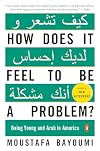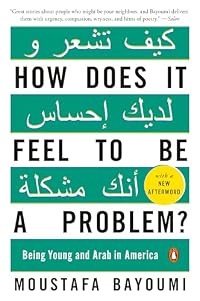
How Does It Feel to Be a Problem?: Being Young and Arab in America
by Moustafa Bayoumi
On This Page
Description
The story of how young Arab and Muslim Americans are forging lives for themselves in a country that often mistakes them for the enemy.Tags
Recommendations











Member Reviews
To start off I feel I should say, in the interest of full disclosure, that this is most definitely a laymen's perspective. I have never studied race relations or sociology in any sort of academic setting, nor have I read a lot of books on the subject. I just heard about this book on the radio, thought it sounded interesting, and ordered it from the library.
The book is a compilation of seven portraits of young Arab-Americans or Muslim Americans living in Brooklyn. I feel like the author did a good job gathering a variety of perspectives in spite of the limited geographic location. One person is angry and can't wait to leave America behind for the hope of a better life in Dubai. Another feels that every ethnic group suffers a certain show more period of persecution in America, and this is just their turn. The levels of trouble vary as well, from a young woman's stint in jail due to an overstayed visa, to a man's difficulty in finding a job with 'Al Jazeera' on his resume, to another woman's difficulty in reconciling her Iraqi heritage and American upbringing. My favorite portrait in the book was that of Yasmin, a high school girl who was forced to step down from her post as secretary of the student body because her religion did not permit her to attend school dances. Her determination in addressing the unfairness of the situation was admirable, and made for a wonderful story (and one of the more hopeful anecdotes).
My only real complaint is that I felt the author's prose got a bit self-indulgent at times. My personal laugh-out-loud favorite was, "The soldier walked into the TV room and slipped the disk into the DVD player, which disappeared like a Communion wafer into the machine's mouth" (73). Is he really trying to suggest that Michael Moore's 9/11 movie (the DVD in question) was, to these soldiers in Iraq, akin to a Catholic becoming one with God? Because that's not only strange, but doesn't even match the attitude of the soldiers that he describes towards the movie, which was ambivalent overall. Even those who felt the movie was correct were hardly reverent. If the author could have cut down on the silly metaphors, I think it would have been a better book. show less
The book is a compilation of seven portraits of young Arab-Americans or Muslim Americans living in Brooklyn. I feel like the author did a good job gathering a variety of perspectives in spite of the limited geographic location. One person is angry and can't wait to leave America behind for the hope of a better life in Dubai. Another feels that every ethnic group suffers a certain show more period of persecution in America, and this is just their turn. The levels of trouble vary as well, from a young woman's stint in jail due to an overstayed visa, to a man's difficulty in finding a job with 'Al Jazeera' on his resume, to another woman's difficulty in reconciling her Iraqi heritage and American upbringing. My favorite portrait in the book was that of Yasmin, a high school girl who was forced to step down from her post as secretary of the student body because her religion did not permit her to attend school dances. Her determination in addressing the unfairness of the situation was admirable, and made for a wonderful story (and one of the more hopeful anecdotes).
My only real complaint is that I felt the author's prose got a bit self-indulgent at times. My personal laugh-out-loud favorite was, "The soldier walked into the TV room and slipped the disk into the DVD player, which disappeared like a Communion wafer into the machine's mouth" (73). Is he really trying to suggest that Michael Moore's 9/11 movie (the DVD in question) was, to these soldiers in Iraq, akin to a Catholic becoming one with God? Because that's not only strange, but doesn't even match the attitude of the soldiers that he describes towards the movie, which was ambivalent overall. Even those who felt the movie was correct were hardly reverent. If the author could have cut down on the silly metaphors, I think it would have been a better book. show less
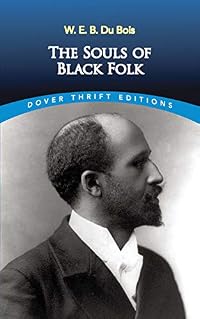
Excellent collection of portraits of young Arab-Americans who are subjected to discrimination and idiginities because of their religious beliefs. The perseverence of these young people is inspiring. This book resonates all the more now with the virulent Islamophobia that is pervasive all over the country these days. Bayoumi approaches his subject as W.E.B DuBois did in The Souls of Black Folk.
This is the common reading for incoming students at my university for the Fall of 2013. The author writes biographical profiles of about half a dozen Arab-Americans who live in Brooklyn, New York and how their lives changed in the wake of 9/11. The young people who served in the military had especially interesting profiles, I thought. This book shows how pervasive racism is in the U.S.
This book was upsetting to me. I understand that in the aftermath of the September 11th, 2001 attacks and the continual assaults by people of the faith that Muslim peoples were demonized and marginalized. When it comes right down to it I suppose people are afraid, but it is a shameful thing to have in your history. I am proud to be an American citizen, but when I see all these horrible ignorant things that people do to other people, it really makes me upset. It should not happen in a country like the United States, but even I am guilty of racial bias sometimes.
OK. Very New York centric. Could have done a better job providing some basic historical context.
This is a moving collection of the challenges and opportunities experienced by the Arab youth in America. Whether immigrants or US born, they face unique situations as youth in the US.
Members
- Recently Added By
Author Information
3 Works 444 Members
Moustafa Bayoumi is the author of How Does It Feel to Be a Problem? Being Young and Arab in America, which won an American Book Award and the Arab American Book Award for Nonfiction. He is the editor of Midnight on the Mavi Marmara and co-editor of The Edward Said Reader. He is Professor of English at Brooklyn College, City University of New York.
Awards and Honors
Common Knowledge
- Epigraph
- "Between me and the other world there is ever an unasked question: unasked by some through feelings of delicacy; by others through the difficulty of rightly framing it. All, nevertheless, flutter round it. They approach me in... (show all) a half-hesitant sort of way, eye me curiously or compassionately, and then, instead of saying it directly, How does it feel to be a problem? they say, I know an excellent colored man in my town; or, I fought at Mechanicsville; or, Do not these Southern outrages make your blood boil? At these I smile, or am interested, or reduce the boiling to a simmer, as the occasion may require. To the real question, How does it feel to be a problem? I answer seldom a word."
--W.E.B. Du Bois, The Souls of Black Folk - First words
- Sade and four of his twenty-something friends are at a hookah café almost underneath the Verrazano-Narrows Bridge in Brooklyn.
- Last words
- (Click to show. Warning: May contain spoilers.)Before long it has become a party of everyone for everyone and by everyone, and it lasts late into the night.
Classifications
- Genres
- Nonfiction, General Nonfiction, Religion & Spirituality
- DDC/MDS
- 305.892 — Social sciences Social sciences, sociology & anthropology Groups of people Ethnic and national groups Other ethnic and national groups Semites
- LCC
- E184 .A65 .B35 — History of the United States United States Elements in the population Afro-Americans
- BISAC
Statistics
- Members
- 348
- Popularity
- 90,257
- Reviews
- 7
- Rating
- (3.95)
- Languages
- English
- Media
- Paper, Ebook
- ISBNs
- 3
- ASINs
- 3