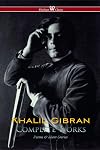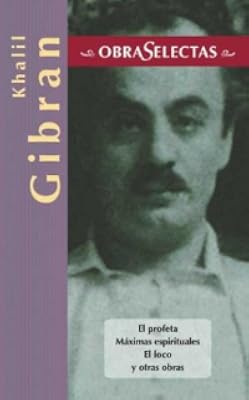
Khalil Gibran (Obras selectas series)
by Khalil Gibran
On This Page
Description
This volume contains the complete works (poetry and fiction) of Khalil Gibran. Khalil Gibran was a Lebanese-American writer, poet and visual artist, also considered a philosopher although he himself rejected this title in his lifetime. He is best known as the author of The Prophet, which was first published in the United States in 1923 and is one of the best-selling books of all time, having been translated into more than 100 languages. As worded by Suheil Bushrui and Joe Jenkins, Gibran's show more life has been described as one "often caught between Nietzschean rebellion, Blakean pantheism and Sufi mysticism." Gibran discussed "such themes as religion, justice, free will, science, love, happiness, the soul, the body, and death" in his writings, which were "characterized by innovation breaking with forms of the past, by symbolism, an undying love for his native land, and a sentimental, melancholic yet often oratorical style." He explored literary forms as diverse as "poetry, parables, fragments of conversation, short stories, fables, political essays, letters, and aphorisms." Salma Khadra Jayyusi has called him "the single most important influence on Arabic poetry and literature during the first half of [the twentieth] century", and he is still celebrated as a literary hero in Lebanon. show lessTags
Members
- Recently Added By
Author Information

745+ Works 29,473 Members
Khalil Gibran, also known as Kahlil Gibran, was born on January 6, 1883 in Northern Lebanon. As a result of his family's poverty, he received no formal education as a small child but had regular visits from the local priest who taught him about the Bible as well as the Syrian and Arabic languages. After his father was imprisoned for embezzlement show more and his family's property was confiscated by the authorities, his mother decided to emigrate to the United States in 1895. They settled in Boston's South End. He attended public school and art school, where he was introduced to the artist, photographer, and publisher Fred Holland Day. A publisher used some of Gibran's drawings for book covers in 1898. His family forced him to return to Lebanon to complete his education and learn the Arabic language. He enrolled in Madrasat-al-Hikmah, a Maronite-founded school, which offered a nationalistic curriculum partial to church writings, history and liturgy. He learned Arabic, French, and exceled in poetry. He returned to the United States in 1902. In 1904, he hosted his first art exhibit, which featured his allegorical and symbolic charcoal drawings. During this exhibition, he met Mary Elizabeth Haskell, who would go on to fund Gibran's artistic development for nearly his entire life. Not only was he an artist, but he also wrote poetry and other works including The Madman, The Prophet, and Sand and Foam. He died of cirrhosis of the liver and tuberculosis on April 10, 1931. (Bowker Author Biography) show less
Classifications
- Genres
- Fiction and Literature, General Fiction
- DDC/MDS
- 892.785 — Literature & rhetoric Literatures of other languages Afro-Asiatic literatures Arabic (Egypt, Lebanon, Palestine, Saudi Arabia, Sudan) Arabic miscellany 1800–1945
- LCC
- PJ3513 .I25 .O2 — Language and Literature Oriental languages and literatures Oriental philology and literature Assyriology. Akkadian Language
- BISAC
Statistics
- Members
- 18
- Popularity
- 1,391,235
- Languages
- English, Spanish
- Media
- Paper, Ebook
- ISBNs
- 2
- ASINs
- 1