On This Page
Description
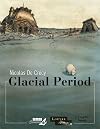
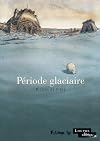
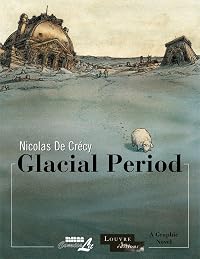
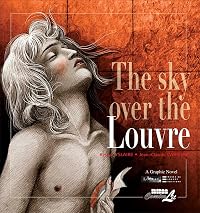
In this fanciful and richly imaginative story, one of the most original and important young European comic artists imagines a frozen world thousands of years hence in which all human history has been forgotten. A small group of archaeologists come upon the Louvre, buried in age-old snow, and cannot begin to explain all of the artifacts they see. Their interpretations of the wonders before them strike a humorous, absurd, and farcical tone. One of the few books coedited by the Louvre, this show more graphic novel features stunning illustrations as it presen show lessTags
Recommendations










Member Reviews
I've been googling reviews of Glacial Period and have been surprised to find that relatively few reviewers have the almost unreserved admiration for it that I do. Given that much of the criticism has been for what the book lacks--iidentifiable genre, conventional use of panels, light-heartedness,, a petrol-station, and similar wtfery--it's probably best read without expectations (and without delving deeply into those amazon reviews because too much is given away in some of them).
The story is imaginative and fascinating, with some unexpected turns. And given the length of the book it's surprising that Crecy was able to move from adventure to satire to touching moments to humour to history to protest and it's admirable that he could do so show more smoothly. The main characters are distinct and the protagonist himself is quite endearing.
And the pictures. I passed some several hours with this book simply because I spent so much time revelling in Crecy's artwork. He uses a subtle and very well-chosen palette, his treatment of light is equally subtle and equally well done, and he's a dab hand with a wash. I'm taken as well with his skittish but controlled pen & ink cloisonne lines against watercolour in quiet hues--leagues from anything that comes to mind upon hearing the words 'comic book'. The image and the text are inextricably and wonderfully entwined: The pigdog's enquiring nature is suggested in the tilt of his head and the viewpoint from which that enquiring posture is shown somehow reinforces the character's charm.
Perhaps I'm a bit carried away because I've only just finished reading Glacial Period, and won't be so enthusiastic when I look at it again, or because I've read too many post-apocalyptic novels set in petrol stations in which Cycladic artifacts are used as comic relief and have got blase about them. For the moment at least, I wholeheartedly recomment this. show less
The story is imaginative and fascinating, with some unexpected turns. And given the length of the book it's surprising that Crecy was able to move from adventure to satire to touching moments to humour to history to protest and it's admirable that he could do so show more smoothly. The main characters are distinct and the protagonist himself is quite endearing.
And the pictures. I passed some several hours with this book simply because I spent so much time revelling in Crecy's artwork. He uses a subtle and very well-chosen palette, his treatment of light is equally subtle and equally well done, and he's a dab hand with a wash. I'm taken as well with his skittish but controlled pen & ink cloisonne lines against watercolour in quiet hues--leagues from anything that comes to mind upon hearing the words 'comic book'. The image and the text are inextricably and wonderfully entwined: The pigdog's enquiring nature is suggested in the tilt of his head and the viewpoint from which that enquiring posture is shown somehow reinforces the character's charm.
Perhaps I'm a bit carried away because I've only just finished reading Glacial Period, and won't be so enthusiastic when I look at it again, or because I've read too many post-apocalyptic novels set in petrol stations in which Cycladic artifacts are used as comic relief and have got blase about them. For the moment at least, I wholeheartedly recomment this. show less
This is a strange graphic novella, part future travelogue, part art & cultural critique, part ecological warning tract, and part absurdist narrative.
The book basically breaks down into three acts. In the first, we are introduced to a group of archaeologist-anthropologist-explorers in a far future Earth ravaged by ecological catastrophe into a glacial wasteland. They are accompanied by talking hybrid pig-dogs who are for no discernible reason are named after American super-heroes like Hulk & Spider-Man. (One wonders if this was an unfortunate choice by the translator and that perhaps in the original French they were named after famous European comic characters--Tintin & Asterix perhaps?) We learn that the explorers are looking for show more artifacts from our earlier civilization, and perhaps a great city; also, that one of the pig-dogs, Hulk, has untoward feelings towards his human mistress.
In the second act, Hulk and the humans separately stumble upon different parts of the Louvre, recently uncovered via a snow-slide from its icy entombment. The humans discover the various paintings hung in the museum and completely misinterpret what they represent.
In the third act, the statures and various pieces of representational art come to life and begin to hound poor Hulk, impressing upon his the history of the Louvre and the downfall of the prior civilization. Hulk then mounts one of the large dog-like statues and rescues two of the humans who had become trapped in a mini-avalanche. They ride off into the sunset.
The plot summary above doesn't even begin to describe the strangeness, so I don't feel that I'm giving much away. The best part is the satirical second act, as the explorers take the representations of their finds far too literally. It serves as a critique of the potential follies of anthropology as well as the times that produced the art in question. The other parts of the narrative don't fare as well; the introductory section establishes relationships that are not successfully followed through on, while the end defies logic and undercuts the earlier parts with its use of the fantastic and absurd that comes out of nowhere. My understanding is that this is De Crécy's style; he just needed to either curtail it here or set us up better for it.
De Crécy, a graduate of the Angoulême comics art school, is a skilled storyteller and is able to work the reproductions of the various art works into his work with ease. This is partially an educational enterprise, done in conjunction with the Louvre to promote appreciation of the arts in general and their collections in particular. I'm not sure this is what they were expecting!
Still, there's enough good stuff here to recommendthat you consider giving it a look.
Rating: 3.5 (of 5) show less
The book basically breaks down into three acts. In the first, we are introduced to a group of archaeologist-anthropologist-explorers in a far future Earth ravaged by ecological catastrophe into a glacial wasteland. They are accompanied by talking hybrid pig-dogs who are for no discernible reason are named after American super-heroes like Hulk & Spider-Man. (One wonders if this was an unfortunate choice by the translator and that perhaps in the original French they were named after famous European comic characters--Tintin & Asterix perhaps?) We learn that the explorers are looking for show more artifacts from our earlier civilization, and perhaps a great city; also, that one of the pig-dogs, Hulk, has untoward feelings towards his human mistress.
In the second act, Hulk and the humans separately stumble upon different parts of the Louvre, recently uncovered via a snow-slide from its icy entombment. The humans discover the various paintings hung in the museum and completely misinterpret what they represent.
In the third act, the statures and various pieces of representational art come to life and begin to hound poor Hulk, impressing upon his the history of the Louvre and the downfall of the prior civilization. Hulk then mounts one of the large dog-like statues and rescues two of the humans who had become trapped in a mini-avalanche. They ride off into the sunset.
The plot summary above doesn't even begin to describe the strangeness, so I don't feel that I'm giving much away. The best part is the satirical second act, as the explorers take the representations of their finds far too literally. It serves as a critique of the potential follies of anthropology as well as the times that produced the art in question. The other parts of the narrative don't fare as well; the introductory section establishes relationships that are not successfully followed through on, while the end defies logic and undercuts the earlier parts with its use of the fantastic and absurd that comes out of nowhere. My understanding is that this is De Crécy's style; he just needed to either curtail it here or set us up better for it.
De Crécy, a graduate of the Angoulême comics art school, is a skilled storyteller and is able to work the reproductions of the various art works into his work with ease. This is partially an educational enterprise, done in conjunction with the Louvre to promote appreciation of the arts in general and their collections in particular. I'm not sure this is what they were expecting!
Still, there's enough good stuff here to recommendthat you consider giving it a look.
Rating: 3.5 (of 5) show less
An archeological expedition heads out into the snow-covered wasteland in search of a lost relic of an ancient civilization... which turns out to be the Louvre. I loved the idea for this book, of how our culture would look to archaeologists of the future. I particularly liked the part where they're trying to tell the story of our civilizations based only on the paintings they find (which in turn made me wonder how much of our own archaeology would be equally ridiculous to members of the culture in question). The execution wasn't perfect; there were spots where the translation felt a little rough, some of the story elements didn't quite fit together, and the art style, while visually interesting, wasn't always clear. There was also a show more strong element of absurdism that didn't quite gel for me, and the ending happened before I felt like all of the story was told, and was just plain odd to boot. But overall, short and interesting enough to be worth a read. 3.5 out of 5 stars. show less
I really enjoyed the premise of this graphic novel. It takes place far in the future, and these explorers are looking for the Louvre, not knowing what it is because it has been lost to time. They find it, and have absurd theories about the artwork. It was funny, as well as interesting, when they were commenting on the art. I really liked that it listed the works featured in the back. I suspect that I would have gotten even more out of it if I had more knowledge of art history or had the energy to spend a good amount of time looking stuff up about the paintings. Nevertheless, my art knowledge was increased. My only criticism is that sometimes I thought it got a bit heavy handed. I'm not sure how I feel about the sentient dogs, especially show more the one that's in love with a human woman and wishes interspecies love was accepted. Also, the jab at fat American tourists who only care about the Mona Lisa wasn't strictly necessary, though probably truer that I'd like to think. Overall, though, this was an interesting read that didn't require much of a time investment. show less
Odd. Apparently it’s an homage to the Louvre? In a strange frozen apocalypse, archeologists of the future are investigating our fallen contemporary civilization with the help of some genetically modified pig-dog-people. The pig-dog-people look a lot like sheep. In a landscape devoid of anything else, they discover the Louvre, intact down to the iconic glass pyramid, buried under mountains of snow and ice. The explorers come from a society that can make a talking dog, but are perplexed by renaissance paintings. At some point, everyone must drop some acid because the contents of the museum come to life and begin snarky conversation with each other and the explorers.
Not a fan.
Not a fan.
Glacial Period is Crécy's contribution to a ComicsLit and Louvre Museum co-edition of four graphic novels about the French museum. A witty, futuristic exploration of the meaning of the museum in a post-apocalyptic world, the book re-frames cherished cultural icons as incomprehensible signs of a vanished civilization. Readers follow characters as they navigate a glacial world and eventually discover the ruined museum and its cargo of relics. Among the skewed (though always insightful) readings of our artistic legacy are the characters' interpretations of representations of women, the significance they ascribe to our devotion to images, their view of cultural tourists, and the role they ascribe to animals in our world.
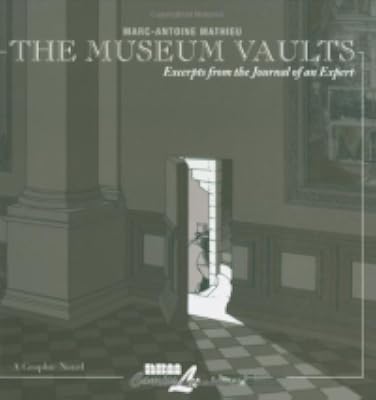
Like Marc-Antoine show more Mathieu's contribution to this series, The Museum Vaults: Excerpts from the Journal of an Expert, Crécy's Glacial Period is deeply skeptical of scientific or intellectual attempts to master the meaning of the museum. By the time Crécy's historian makes it to the Louvre, the relics have collectively fled.
On the whole, this is a very funny book, satirizing our reverence for history, highlighting the pitfalls of scientific inquiry, and imagining the most preposterous consequences of genetic engineering. Occasionally, Crécy lost me, though. In particular, the pig-dog Hulk's historical sense of smell is oddly represented and not well integrated into the story, though the concept is brilliant.
Nevertheless, a witty and entertaining read. show less
Like Marc-Antoine show more Mathieu's contribution to this series, The Museum Vaults: Excerpts from the Journal of an Expert, Crécy's Glacial Period is deeply skeptical of scientific or intellectual attempts to master the meaning of the museum. By the time Crécy's historian makes it to the Louvre, the relics have collectively fled.
On the whole, this is a very funny book, satirizing our reverence for history, highlighting the pitfalls of scientific inquiry, and imagining the most preposterous consequences of genetic engineering. Occasionally, Crécy lost me, though. In particular, the pig-dog Hulk's historical sense of smell is oddly represented and not well integrated into the story, though the concept is brilliant.
Nevertheless, a witty and entertaining read. show less
I read this book after Marc-Antoine Mathieu's Museum Vaults: Excerpts from the Journal of an Expert, which is out of order, given that De Crecy's Glacial Period is the first volume in this series co-published by the Musee du Louvre.
In the end, that mis-sequence turned out to be a good thing, since De Crecy's is the better tale, and sets the stage for these graphic novel explorations of the great art museum so well. This is a sort of post-apocalyptic tale, set in future days after global warming has wreaked havoc on our planet, and the Louvre is long buried and forgotten. A group of explorers come upon the remains, and De Crecy then proceeds to take the reader through a simultaneous exploration of selected artworks from the Louvre, as show more well as some of the history behind the great institution. While the explorers spout spurious theories to explain what they have found, one of their genetically enhanced dogs communicates with the artworks themselves, and ultimately saves them from further neglect by convincing them to abandon their rigid forms and (literally) run away free from the shell of the museum buildings.
Overall, Glacial Period is a quick and interesting read that mashes up science fiction, art, and the philosophy of art into a unique stew with a full and hearty flavor - well worth a taste! show less
In the end, that mis-sequence turned out to be a good thing, since De Crecy's is the better tale, and sets the stage for these graphic novel explorations of the great art museum so well. This is a sort of post-apocalyptic tale, set in future days after global warming has wreaked havoc on our planet, and the Louvre is long buried and forgotten. A group of explorers come upon the remains, and De Crecy then proceeds to take the reader through a simultaneous exploration of selected artworks from the Louvre, as show more well as some of the history behind the great institution. While the explorers spout spurious theories to explain what they have found, one of their genetically enhanced dogs communicates with the artworks themselves, and ultimately saves them from further neglect by convincing them to abandon their rigid forms and (literally) run away free from the shell of the museum buildings.
Overall, Glacial Period is a quick and interesting read that mashes up science fiction, art, and the philosophy of art into a unique stew with a full and hearty flavor - well worth a taste! show less
Members
- Recently Added By
Author Information

56+ Works 709 Members
Some Editions
Series

Common Knowledge
- Canonical title
- Glacial Period
- Original publication date
- 2005 (original) (original); 2006 (English translation) (English translation)
- First words*
- * Ah !
Encore ce rêve !
Encore et toujours ce rêve...
Et en plus, je rêve en marchant...
Si je rêve en marchant, c'est que je m'assoupis en marchant...
C'est à force de trop marcher. - Original language
- French
*Some information comes from Common Knowledge in other languages. Click "Edit" for more information.
Classifications
- Genre
- Graphic Novels & Comics
- DDC/MDS
- 741.5944 — Arts & recreation Drawing & decorative arts Drawing Comic books, graphic novels, fotonovelas, cartoons, caricatures, comic strips History, geographic treatment, biography European France & Monaco
- LCC
- PN6747 .C68 .P4713 — Language and Literature Literature (General) Literature (General) Collections of general literature Comic books, strips, etc.
- BISAC
Statistics
- Members
- 260
- Popularity
- 124,712
- Reviews
- 21
- Rating
- (3.35)
- Languages
- 6 — Czech, Dutch, English, French, Spanish, Turkish
- Media
- Paper, Ebook
- ISBNs
- 12
- ASINs
- 1