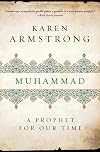
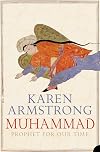
Muhammad: A Prophet for Our Time
by Karen Armstrong
On This Page
Description
From the best-selling author of Islam: A Short History comes an important addition to the Eminent Lives book series. A former Roman Catholic nun and winner of a Muslim Public Affairs Council Media Award, Karen Armstrong shows how Muhammad's life can teach us a great deal about our world. More is known about Muhammad than any other major religion founder, yet he remains mysterious. Born in 570 CE, he spent six decades spreading his message of peace and compassion. Yet for many people today, show more their knowledge of Muhammad is rife with misconceptions and misinformation, often fueled by bigotry. Armstrong sets the record straight, shattering the myth that Islam is a religion of cruelty and violence. One of the world's leading religious experts, Armstrong is a deeply respected voice in the continuous struggle for interfaith understanding. Her cogent assessment of Muhammad's genius and insightful summary of his authentic beliefs are priceless in this modern world troubled by religious extremism and intolerance. show lessTags
Recommendations





Member Reviews
If you'd like to get to the root of Muhammad, then Karen's book is the perfect introduction. She smoothly separates the religious from the secular as well as his economic from political strife in Mecca and Medina. She deftly brings in the Quran where the Surahs intersect with his life transitions. It was eye opening to see how inclusive and revolutionary Islam was when Muhammad was alive. He would be labeled today a radical feminist. It is also saddening how after the leader dies the spiritual movement assumes the role of religious power and control limiting the blessedness of what could be so much more.
In 1991, Karen published a biography of Muhammed, the founder of Islam. In 2006, she published this updated biography, hoping to focus more on his life and teachings that contradict the image of Muslim extremism, so that we Americans could put September 11 behind us and recognize Islam as a religion of peace. I haven’t read the first book, but I definitely enjoyed the second.
This is not the story of Islam or an interpretation of its scriptures. It is just a sympathetic biography of its founder. While Karen gives us both the dirt and the glory, she manages to put Mohammed’s story in its societal setting so that we can grasp his original teachings and decisions.
Mohammed’s laws, for example, were designed for a small, struggling show more community, never for the vast empire that succeeded him. His jihad, which does not mean “holy war” but which means “struggle,” was a tireless campaign against greed, injustice, and arrogance.
Arabs in Mohammed’s time did not feel it was necessary to convert to Judaism or Christianity, because they believed that they were already members of the Abrahamic family. In fact, the idea of conversion from one faith to another was alien. Pluralism was the more natural belief, and Muhammed embraced pluralism. A verse often quoted to prove Islamic exclusive beliefs actually means just the opposite:
“For if one goes in search of a religion other than islam unto God, it will never be accepted from him, and in the life to come, he shall be among the lost.”
Of course, Muhammed did not call his religion “islam”; the word simply meant self-surrender, and had nothing to do with a particular denomination or belief. In its original context, the teaching meant just the opposite of exclusivism. Muhammed hated sectarian quarrels, and was offended by the idea of a “chosen people.”
But Muhammed did believe reform was necessary. He despised the suppression of Arab women, and he could not condone any caste which separated those with money from those without. He personally gave a large percentage of his earnings to the poor, and expected the same selflessness from his little band of followers. All such kindnesses would be rewarded in paradise, he promised.
Does that mean the stories of Muhammed’s wars and raiding expeditions are rumors? No, and here Karen shows a little too much sympathy, as she explains the cultural expectations. A clan could hardly support itself without raiding, she explains! Stories of Muhammed’s harem are juicy as well. Nevertheless, this appears to be an honest portrait of a complex man who tried mightily to reform his little area of the world for the better. Highly recommended. show less
This is not the story of Islam or an interpretation of its scriptures. It is just a sympathetic biography of its founder. While Karen gives us both the dirt and the glory, she manages to put Mohammed’s story in its societal setting so that we can grasp his original teachings and decisions.
Mohammed’s laws, for example, were designed for a small, struggling show more community, never for the vast empire that succeeded him. His jihad, which does not mean “holy war” but which means “struggle,” was a tireless campaign against greed, injustice, and arrogance.
Arabs in Mohammed’s time did not feel it was necessary to convert to Judaism or Christianity, because they believed that they were already members of the Abrahamic family. In fact, the idea of conversion from one faith to another was alien. Pluralism was the more natural belief, and Muhammed embraced pluralism. A verse often quoted to prove Islamic exclusive beliefs actually means just the opposite:
“For if one goes in search of a religion other than islam unto God, it will never be accepted from him, and in the life to come, he shall be among the lost.”
Of course, Muhammed did not call his religion “islam”; the word simply meant self-surrender, and had nothing to do with a particular denomination or belief. In its original context, the teaching meant just the opposite of exclusivism. Muhammed hated sectarian quarrels, and was offended by the idea of a “chosen people.”
But Muhammed did believe reform was necessary. He despised the suppression of Arab women, and he could not condone any caste which separated those with money from those without. He personally gave a large percentage of his earnings to the poor, and expected the same selflessness from his little band of followers. All such kindnesses would be rewarded in paradise, he promised.
Does that mean the stories of Muhammed’s wars and raiding expeditions are rumors? No, and here Karen shows a little too much sympathy, as she explains the cultural expectations. A clan could hardly support itself without raiding, she explains! Stories of Muhammed’s harem are juicy as well. Nevertheless, this appears to be an honest portrait of a complex man who tried mightily to reform his little area of the world for the better. Highly recommended. show less
I listened to the audio version of this, read by the author. Once you get past her very peculiar British accent and her pronunciation of some common words in ways I have never before heard (I'm not saying she's wrong mind you -- but she's definitely in the minority), this book provides a decent, brief overview of Muhammad and the founding and growth of Islam to the time of his death. Of course, the big problem with books about people having revelations from god is that Muhammad either has to be insane and hearing voices in his head or he's making the whole thing up. Nevertheless, he acquires some devoted followers and a lot of wives (I lost track toward the end; it seemed like he was marrying another one every few minutes), and through show more a great deal of cleverness and well-timed boldness, he turns the tide against the polytheists in Mecca and sets the stage for Islam to emerge as the religion of the vast majority of Arabs. Armstrong goes to great lengths to stress the connections Muhammad acknowledged to the Christian and Jewish religions and his tolerance of people of those monotheistic faiths, who he felt were really worshiping the same god he was, just in their own way.
So the first bottom line is that in the ranks of prophets over the ages, Muhammad comes across as a fairly tolerant, even non-fanatical type. The real bottom line, however, not addressed by the book is that any religion must in the end be judged by what its followers do. Armstrong doesn't really address the split in Islam after Muhammad's death and the ongoing war between different sects, which goes against Muhammad's teaching that Muslims shouldn't war with other Muslims. Or the teaching of hatred by a small minority of Muslim clerics that has caused so much pain and suffering for so many. These are just facts, not an anti-Muslim rant. Perhaps it's just Islam's turn to be the dangerous religion. The Catholic priesthood is too busy molesting children to be much competition. show less
So the first bottom line is that in the ranks of prophets over the ages, Muhammad comes across as a fairly tolerant, even non-fanatical type. The real bottom line, however, not addressed by the book is that any religion must in the end be judged by what its followers do. Armstrong doesn't really address the split in Islam after Muhammad's death and the ongoing war between different sects, which goes against Muhammad's teaching that Muslims shouldn't war with other Muslims. Or the teaching of hatred by a small minority of Muslim clerics that has caused so much pain and suffering for so many. These are just facts, not an anti-Muslim rant. Perhaps it's just Islam's turn to be the dangerous religion. The Catholic priesthood is too busy molesting children to be much competition. show less
I found this a bit disappointing: there's a lot about Mohammed's life here, but not much about the man himself. This is all 'he went, he saw, he tried, he did', and I wanted 'he thought, he felt, he believed'. I wouldn't recommend it if you are interested in learning about Mohammed as a holy man. I guess it's a good introduction to the context in which the Qu'ran was received and written, though.
Interesting. I particularly appreciated learning about the early roots of Islam, how it built on existing traditions and practices, how Muhammad responded to local political threats and opportunities, and how early Islam tenets evolved as a consequence of those responses. Clearly, in my opinion, both Islam and Christianity would benefit from their practitioners more closely adhering to early beliefs in non-violence, tolerance and forgiveness.
This book is both an easily readable story of the life of Muhammad, told in generous and sympathetic terms, and also a layman's introduction to the core teachings of the Muslim religion, since both topics are in fact inseparable. The revelations to Muhammad, which are collected as the true and holy word of God in the Qur'an, came to Muhammad piecemeal during the course of his adult life and in specifically relevant contexts and circumstances that Ms. Armstrong vividly describes.
It was written by Karen Armstrong specifically to offset what she calls Western "bigotry" toward Islam, which she says has viewed the religion as warlike ever since the Crusades, and has vilified the Prophet himself in highly uncomplimentary terms. She is helped show more considerably in her purpose by the deliberately restricted focus of her attention. The scope of the book is limited to the life and times of the Prophet, and ends with his death. It is not a history of Islam. The further developments in history, such as Islam's military conquests and growth to empire after Muhammad's death, not to mention the violence and hostility which dominate our headlines today will have to be found elsewhere, in other conflicting books and discussions.
Instead, the endorsements on the back cover describe the book fairly and accurately as "respectful without being reverential, knowledgeable without being pedantic" and claim that it offers a "glimpse of how the vast majority of the world's Muslims understand their Prophet and their faith." The book is an excellent first introduction for the further in-depth study of Islam and its founder. show less
It was written by Karen Armstrong specifically to offset what she calls Western "bigotry" toward Islam, which she says has viewed the religion as warlike ever since the Crusades, and has vilified the Prophet himself in highly uncomplimentary terms. She is helped show more considerably in her purpose by the deliberately restricted focus of her attention. The scope of the book is limited to the life and times of the Prophet, and ends with his death. It is not a history of Islam. The further developments in history, such as Islam's military conquests and growth to empire after Muhammad's death, not to mention the violence and hostility which dominate our headlines today will have to be found elsewhere, in other conflicting books and discussions.
Instead, the endorsements on the back cover describe the book fairly and accurately as "respectful without being reverential, knowledgeable without being pedantic" and claim that it offers a "glimpse of how the vast majority of the world's Muslims understand their Prophet and their faith." The book is an excellent first introduction for the further in-depth study of Islam and its founder. show less
A fine, not great, short biography of Muhammad. The research is better than the prose and the prose moves along fine. A few tricky moments where Armstrong seems to be suggesting a knowledge of the divine, but only a few. An acceptable contribution to the Eminent Lives.
Members
- Recently Added By
Author Information

57+ Works 36,352 Members
Karen Armstrong is one of the foremost commentators on religious affairs in both Britain and the United States. She spent seven years as a Roman Catholic nun and received a degree at Oxford University. (Publisher Provided)
Series
Belongs to Publisher Series
Common Knowledge
- Canonical title
- Muhammad: A Prophet for Our Time
- Original title
- Muhammad: A Prophet for Our Time
- Original publication date
- 2006
- People/Characters
- Muhammad (Prophet)
- Dedication
- For Sally Cockburn
- First words
- The history of a religious tradition is a continuous dialogue between a transcendent reality and current events in the mundane sphere.
- Last words
- (Click to show. Warning: May contain spoilers.)A good place to start is with the figure of Muhammad: a complex man, who resists facile, ideologically-driven categorization, who sometimes did things that were difficult or impossible for us to accept, but who had profound genius and founded a religion and cultural tradition that was not based on the sword but whose name—"Islam"—signified peace and reconciliation.
- Original language
- English
- Disambiguation notice
- Muhammed: A Prophet for Our Time (c2006) is Armstrong's second biography of Muhammed. Her first was Muhammed: A Biography of the Prophet (published in 1991). Armstrong writes in the introduction to the second biography... (show all) that "in the wake of September 11, we need to focus on other aspects of Muhammad's life. So this is a completely new and entirely different book, which, I hope, will speak more directly to the terrifying realities of our post-September 11 world." (p. 7)
Classifications
- Genres
- Religion & Spirituality, Nonfiction, Biography & Memoir, History, General Nonfiction
- DDC/MDS
- 297.63 — Religion Other religions Islam Islamic Leaders and Structures The Prophet Muhammad
- LCC
- BP75 .A764 — Philosophy, Psychology and Religion Islam. Bahaism. Theosophy, etc. Islam. Bahai Faith. Theosophy, etc. Biography Muammad, Prophet, d. 632
- BISAC
Statistics
- Members
- 731
- Popularity
- 38,638
- Reviews
- 15
- Rating
- (3.61)
- Languages
- Dutch, English, Hungarian
- Media
- Paper, Audiobook, Ebook
- ISBNs
- 22
- ASINs
- 13