On This Page
Description
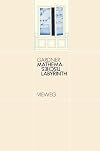
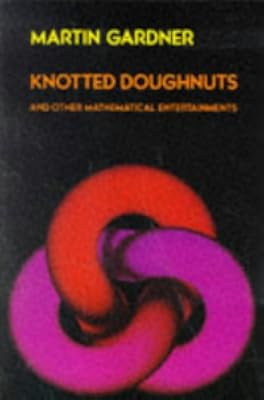
Noch vor wenigen Jahrzehnten ware der Verfasser eines Mathematikbuches von seinen Kollegen als frivol bezeichnet worden, hatte er Ratsel und andere unterhaltsame Dinge in sein Buch aufgenommen. Heute ist das nicht mehr so. In Donald E. Knuths umfangreichem Werk "The Art of Computer Programming" (New York: Addison Wesley, 1968,1969), an dem er noch weiter arbeitet, findet sich in den Obungen viel unterhalt sames Material. Es gibt sogar Lehrbucher, in denen dies der wichtigste Aspekt ist. show more Ein erfreuliches Beispiel dafur ist Harold R. Jacobs "Mathematics: A Human Endeavor", mit dem Untertitel, "A Textbook for Those Who Think They Don't Like the Subject" (San Francisco: W. H. Freemann and Co. , 1970). Richard Bellman, Kenneth L. Cooke und Jo Ann Lockett, die Autoren des Buches "Algorithms, Graphs, and Computers" (New York: Academic Press, 1970), schreiben in ihrem Vorwort: "Das wichtigste Me dium, das wir zum Erreichen unseres Zieles gewahlt haben, ist das mathematische Ratsel". Dieser Trend ist nicht schwer zu verstehen. Er ist Teil jenes muhseligen, langsamen Prozesses, bei dem die Lehrer erkennen, daB jene Studenten am best en lernen, die am besten motiviert sind. Mathemat::~ war nie ein langweiliger Gegenstand, obwohl er nur allzuoft auf die langweiligste Art und Weise unterrichtet worden ist. Es gibt keine bessere Moglichkeit, die Langeweile zu durchbrechen, als unterhaltsame Themen in die Lehr veranstaltung hineinzubringen, Themen, die Elemente des Spieles, des Humors, der Schonheit und der Oberraschung an sich haben. show lessTags
Recommendations
















Member Reviews
Some good ones, and some less interesting-to-me articles. Harmonic series made a debut in this collection, which show up in a later book in a solution to my favorite problem.
I would love to know what Gardner thought of the state of space exploration and extraterrestrial communication just before his death.
I would love to know what Gardner thought of the state of space exploration and extraterrestrial communication just before his death.
Ratings
Members
- Recently Added By
Author Information

229+ Works 15,701 Members
Martin Gardner is the author of more than seventy books on a vast range of topics including "Did Adam & Eve Have Navels?", "Calculus Made Easy", & "The Annotated Alice". He lives in Hendersonville, North Carolina. (Publisher Provided)
Series

Belongs to Publisher Series
CD Edition (6)
Work Relationships
Is contained in
Common Knowledge
- Canonical title*
- Enigmi e giochi matematici, v. 5
- Original publication date
- 1971
- Dedication
- For my brother-in-law, James B. Weaver
- First words
- Ten years ago the writer of a mathematics textbook would have been considered frivolous by his colleagues if his book included puzzles and other entertaining topics. This is no longer true.
- Disambiguation notice
- According to the Italian Wikipedia (Martin Gardner: Libri disponibili in italian... (show all)o), volume 5 of the Italian Enigmi e giochi matematici corresponds to volume 6 of the English series.
*Some information comes from Common Knowledge in other languages. Click "Edit" for more information.
Classifications
Statistics
- Members
- 104
- Popularity
- 312,288
- Reviews
- 1
- Rating
- (3.78)
- Languages
- 5 — English, French, German, Italian, Spanish
- Media
- Paper
- ISBNs
- 7
- ASINs
- 2