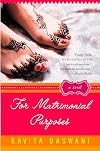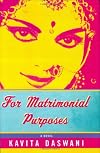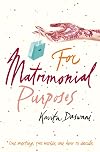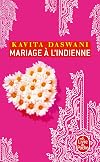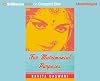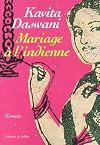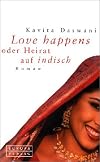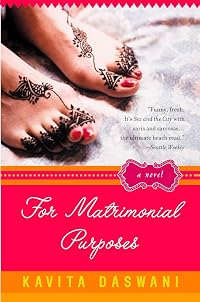
For Matrimonial Purposes
by Kavita Daswani
On This Page
Description
Spirited, elegant, fun, with an enchanting authorial voice, For Matrimonial Purposes - a first novel which was the subject of a fierce international auction - is a remarkable achievement, an original in the contemporary women's market. The main character, Anju, born and raised in Bombay, is now a fashion journalist in New York. But twinned with her enjoyment of the American scene, her single, glamorous life and the fashion perks it brings, is her determination to remain true to her Indian show more roots and her love of her extensive family. Marriage is the most important role for an Indian woman, and arranged marriages are still the custom: 'I am not working for your happiness, but for you to be married,' says Anju's mother. Anju is 30, old in Indian terms, and her mother and aunt fear that her independent ways might make her less acceptable to other family's eyes. They set about organising possible contacts in their home town, Bombay. But now a prospective bride or groom, or their families, can decline the suggested marriage after a meeting. For Matrimonial Purposes is the hilarious, poignant, loving story of Anju's journey, the rare selection of men and their families that she meets, and the choices that she must make while trying to remain true to herself and satisfy her family and tradition. show lessTags
Recommendations





Member Reviews
Entering her mid-thirties, Anju has proven to be a failure as a daughter. Sure, she's well-educated. Sure, she has a successful career as a fashion publicist. Sure, she has remained a "good girl" despite living by herself in that den of iniquity known as New York City. But she's failed to do the one thing that would define her worth and ease the anxiety she's causing her ultra-conservative, ultra-orthodox parents: she still hasn't married.
And it's not Anju's fault. She's fasted, she's prayed, she's presented herself as meek and submissive. She's allowed her mother to drag her to every swami, fortune teller, and holy man she can find. She's had her birth chart read, her destiny foretold. She's tried to lighten her too-dark complexion. show more She's attended parties and reunions and the weddings of others, in the hopes of making a match--all to no avail. She's even tried online matchmaking for Indian couples only. What will it take for Anju to meet the man that others assure her has been born for her and, in the meantime, how can she balance her traditional Indian life with her increasingly independent American one?
Other reviews have listed two primary problems with this book: the lack of a clearly defined personality in the protagonist, Anju, and the perception of the novel as a piece of fluff with little to say. And, yes, this certainly isn't the type of novel that is going to deeply move you or offer profound insight into Indian culture. It also has an ending that is predictable and wrapped up a little too quickly and neatly. However, the aforementioned criticisms are a little harsh.
First, the issue of Anju's personality, which to me is not a misstep on the part of the author, although it could seem that way to an American audience who would prefer a headstrong and fiercely independent protagonist eager to break the shackles enslaving her to a patriarchal society. But Anju is not American. While she has been raised in a family that loves her, she has also been raised to believe that who she is will always be defined by the man who protects her: first her father and later her husband. She has not been encouraged to become a fully realized person and therefore is waiting for her other half, who will define her existence by setting the boundaries of what her life will be. It should not be surprising that this protagonist hesitates to break with her religion and her heritage, despite sensing something is amiss with the expectations placed upon her. That she is uncertain, cautious, and hesitant makes her seem more real.
Second is the classification of the novel as mindless chick lit. Okay, I can't defend the chick lit part. And there are moments in the narrative when I became a little impatient with Anju's focus on designer shoes and the world of high fashion. But it could be argued that not accustomed to having a voice (or at least not confident enough to always use it), Anju is using fashion to communicate her values and her inner life to others. At home in Bombay, Anju tries to look the part of the fashionable and worldly expatriate, eager to show that she has become more independent, less constrained by social mores. Yet, while attending fashion shows in the U.S. and Europe, she opts out of the haute couture chic for traditional saris, demonstrating to Westerners her pride in herself as an Indian woman. Anju uses fashion in an attempt to attain balance and define herself: she does not want to lose that intrinsically Indian part of herself in America, but she does not want her desires and dreams to be subjugated to the search for a husband in her homeland.
And the novel, while perhaps simplistic in its presentation, is not mindless. Anju knows she is not just a disappointment because of her inability to marry; she knows it goes back to the day she was born: "And then I slid out, with a minuscule slit instead of the wormlike appendage [my mother] had been looking forward to seeing. Oh, God, she had delivered a daughter as a first-born. The unthinkable had happened" (102). Despite being a disappointment, Anju is not unloved and does not want to alienate her family by cutting all ties with her heritage and her customs. Her loneliness and alienation is real and will only worsen if she marries a white man, effectively becoming estranged from her family, or if she marries an Indian man whom she cannot love nor respect. And it's very easy for Americans (as just about every American character in the book does) to think that a family that would expect you to enter into an arranged marriage or to define yourself by who you marry doesn't really love you. But that's a bit hypocritical, no?
For all of our supposed independence, isn't our culture just as marriage happy, just as eager to be one half of a whole? Think we're not as guilty? Say Yes to the Dress, The Bachelor, at least a dozen Disney princess movies, and a wedding industry that sells fairy tales for a price that could put your first born through college suggest otherwise. I knew and know plenty of women who can't wait to get married because that's what they're supposed to do. They believe that's when they'll become who they were always meant to be--wives and mothers. The "arranged" bit isn't necessarily there, but a woman in her twenties is perpetually asked questions about her relationship status: Seeing anyone serious?
And this connection is what Daswani makes work for her in For Matrimonial Purposes. By presenting us with a protagonist with one foot in New York and the other in Bombay, we may see a bit more of ourselves in Anju's experience than we're comfortable with. All of the American superiority begins to deflate as we begin to realize much of Anju's plight may also be our own.
Cross posted at This Insignificant Cinder show less
And it's not Anju's fault. She's fasted, she's prayed, she's presented herself as meek and submissive. She's allowed her mother to drag her to every swami, fortune teller, and holy man she can find. She's had her birth chart read, her destiny foretold. She's tried to lighten her too-dark complexion. show more She's attended parties and reunions and the weddings of others, in the hopes of making a match--all to no avail. She's even tried online matchmaking for Indian couples only. What will it take for Anju to meet the man that others assure her has been born for her and, in the meantime, how can she balance her traditional Indian life with her increasingly independent American one?
Other reviews have listed two primary problems with this book: the lack of a clearly defined personality in the protagonist, Anju, and the perception of the novel as a piece of fluff with little to say. And, yes, this certainly isn't the type of novel that is going to deeply move you or offer profound insight into Indian culture. It also has an ending that is predictable and wrapped up a little too quickly and neatly. However, the aforementioned criticisms are a little harsh.
First, the issue of Anju's personality, which to me is not a misstep on the part of the author, although it could seem that way to an American audience who would prefer a headstrong and fiercely independent protagonist eager to break the shackles enslaving her to a patriarchal society. But Anju is not American. While she has been raised in a family that loves her, she has also been raised to believe that who she is will always be defined by the man who protects her: first her father and later her husband. She has not been encouraged to become a fully realized person and therefore is waiting for her other half, who will define her existence by setting the boundaries of what her life will be. It should not be surprising that this protagonist hesitates to break with her religion and her heritage, despite sensing something is amiss with the expectations placed upon her. That she is uncertain, cautious, and hesitant makes her seem more real.
Second is the classification of the novel as mindless chick lit. Okay, I can't defend the chick lit part. And there are moments in the narrative when I became a little impatient with Anju's focus on designer shoes and the world of high fashion. But it could be argued that not accustomed to having a voice (or at least not confident enough to always use it), Anju is using fashion to communicate her values and her inner life to others. At home in Bombay, Anju tries to look the part of the fashionable and worldly expatriate, eager to show that she has become more independent, less constrained by social mores. Yet, while attending fashion shows in the U.S. and Europe, she opts out of the haute couture chic for traditional saris, demonstrating to Westerners her pride in herself as an Indian woman. Anju uses fashion in an attempt to attain balance and define herself: she does not want to lose that intrinsically Indian part of herself in America, but she does not want her desires and dreams to be subjugated to the search for a husband in her homeland.
And the novel, while perhaps simplistic in its presentation, is not mindless. Anju knows she is not just a disappointment because of her inability to marry; she knows it goes back to the day she was born: "And then I slid out, with a minuscule slit instead of the wormlike appendage [my mother] had been looking forward to seeing. Oh, God, she had delivered a daughter as a first-born. The unthinkable had happened" (102). Despite being a disappointment, Anju is not unloved and does not want to alienate her family by cutting all ties with her heritage and her customs. Her loneliness and alienation is real and will only worsen if she marries a white man, effectively becoming estranged from her family, or if she marries an Indian man whom she cannot love nor respect. And it's very easy for Americans (as just about every American character in the book does) to think that a family that would expect you to enter into an arranged marriage or to define yourself by who you marry doesn't really love you. But that's a bit hypocritical, no?
For all of our supposed independence, isn't our culture just as marriage happy, just as eager to be one half of a whole? Think we're not as guilty? Say Yes to the Dress, The Bachelor, at least a dozen Disney princess movies, and a wedding industry that sells fairy tales for a price that could put your first born through college suggest otherwise. I knew and know plenty of women who can't wait to get married because that's what they're supposed to do. They believe that's when they'll become who they were always meant to be--wives and mothers. The "arranged" bit isn't necessarily there, but a woman in her twenties is perpetually asked questions about her relationship status: Seeing anyone serious?
And this connection is what Daswani makes work for her in For Matrimonial Purposes. By presenting us with a protagonist with one foot in New York and the other in Bombay, we may see a bit more of ourselves in Anju's experience than we're comfortable with. All of the American superiority begins to deflate as we begin to realize much of Anju's plight may also be our own.
Cross posted at This Insignificant Cinder show less
A lighthearted look at the world of arrange marriages, great for a bus journey to Glasgow. Anju is pretty much an Indian girl on the shelf, not getting any younger and still unable to find a husband, much to the consternation of her family. She escapes to America, a decision that will both free her and possibly make her unmarriable.
Finally! A book that doesn't introduce the future partner of the heroine in chapter 2! This book is a beautiful story of an Indian woman who doesn't seem to be able to find the man of her dreams, the man she wants to marry for love. Everyone knows this is not done in India and she drives her family crazy. When she decides to go to the USA, this is met with the usual problems. We also get a glimpse of the prejudices immigrants have to deal with. However, we are dealing with an intelligent heroine and the story is very credible. And of course she finds her man at the end. It's just that this is not all the book is about.
Fun read. Engaging without being too trite. I just wish though that the ending hadn't been so contrived, and the main protagonist had a little bit more spine to her.
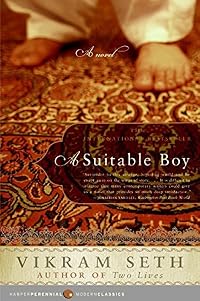
This book ambitions to blend "The devil wears Prada" with "A suitable boy" but fails to enchant on both counts. The passivity of the heroine and her futile lifestyle make her character bland and unlikable. Boring.
The sequence of the story was a little off, starting in the middle then going back to the beginning. While this can work well in a story, it doesn't quite work well in this book. It was a good starting point, but going back was tedious. I kept wanting to get to when the story began.
It wasn't very cohesive, either. Was it a book about being an immigrant? The cultural differences? Family? Religion? Finding a husband? it flitted about, not really staying on one topic enough to explore it.
It wasn't very cohesive, either. Was it a book about being an immigrant? The cultural differences? Family? Religion? Finding a husband? it flitted about, not really staying on one topic enough to explore it.
Indian girl from a very wealthy family inherits a curse and no one wants to marry her. The story is about how the very rich spend money on impressing other people and the importance of a good (expensive) astrologer in getting an arranged marriage. She goes to New York and ends up in a glittering job as a fashion publicist (Paris, Concorde, Blahnik) as everyone does in a chicklit novel, and eventually finds a man to marry. The author attempts to give the book depth by turning it into a moral story - the heroine must find herself before she can find a husband. She needn't have bothered, it was a fairly enjoyable piece of fluff anyway.
Members
- Recently Added By
Author Information
9 Works 815 Members
Common Knowledge
- People/Characters
- Anju
- Important places
- Bombay, India; New York, New York, USA; Los Angeles, California, USA
Classifications
Statistics
- Members
- 309
- Popularity
- 104,000
- Reviews
- 9
- Rating
- (3.40)
- Languages
- 5 — Dutch, English, French, German, Spanish
- Media
- Paper, Audiobook, Ebook
- ISBNs
- 21
- UPCs
- 1
- ASINs
- 3