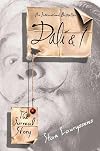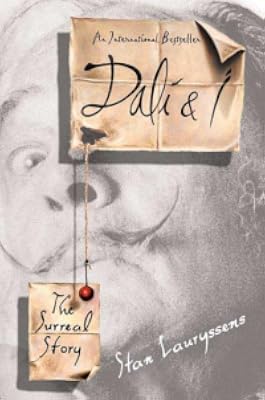
Dali & I: The Surreal Story
by Stan Lauryssens
On This Page
Description
An extraordinary memoir of fortune, fraud, and the master of modern artArt dealer Stan Lauryssens made millions in modern art, but he sold only one name: Salvador Dali?. The surrealist painter's work was a hot commodity for the newly rich, investors, and shady businessmen looking to launder their black-market cash. Stan didn't mind looking the other way; he just hoped the buyers would look the other way as well. The artworks he sold came from some very questionable sources, but he soon show more discovered that the shadiest source of all was Dali? himself.The more successful Stan became, the closer he came to Dali?, until he found himself living next door to the aging artist, in the Catalonian hills. While hiding from Interpol's detectives, Stan spent his time with the artists, musicians, business associates, and eccentrics who surrounded Dali?. He learned about Dali?'s secret history, the studio of artists who produced his work, and the moneymaking machine that kept Dali?'s extravagant lifestyle afloat long after his creativity began to flounder.Dali? & I offers a behind-the-scenes view of the commerce and conspiracy that go hand in hand in the international art world, written by a man who has been to the top only to discover that it's not so different from the bottom. show lessTags
Recommendations

























Member Reviews
I very rarely leave a review for a book I read so little of: DNF @14%, so bear that in mind, but I resent this book.
I picked it up randomly at the library in a rush because I am hyperfixated on Surrealism and Dalì, particularly his early work, at the moment and thought this was more of a biography/ memoir, rather than what it actually is. I haven't enjoyed it from the jump, but I forced myself to keep reading because I knew Dalì actually becomes a central figure, eventually. As much as I adore his work, I can't help be morbidly curious about how much of much his self aggrandising and general dickheadery increased exponentially as he aged.
What this actually is: the bargain version of something like The Wolf of Wall Street (not a film I show more even liked), but without any of the charm and skill that Scorsese and the cast bring to the endeavour. It's just a nouveau riche bourgeois yuppie bragging about how much money he made, fucking people over (who admittedly are rich, so LOL), and alternating between telling you how much he does or doesn't like the rich guy stuff he starts doing.
I fucking hate this guy. He's executive wanker in an 80s movie-coded. Like, I support securing the bag and it's always fun to see people with more money than sense get ripped off, but there's just no way to enjoy that or be anything but repulsed by a guy who instantly becomes more of an entitled prick than any of the people he's actually fleecing.
The whole book feels like constant shitty flexing. Maybe there is supposed to be an attempt to play it straight, no remorse in the moment, as with The Wolf of Wall Street, but the author, and presumably ghost writer, just don't have the chops to do that kind of subtlety. But, more, than anything, it just reads like a pathetic guy flexing.
The writing is terrible. It's readable and chuggable, but there isn't a scrap of artistry or soul in it. It just feels like life vanity, cash grab, airport book crap. If I had a long flight and absolutely nothing else to do this book would be a godsend, but otherwise I want nothing to do with it and wish I had gone with my gut.
Oof. I really don't normally go this hard, especially on such an early DNF, but I really did hate this book. show less
I picked it up randomly at the library in a rush because I am hyperfixated on Surrealism and Dalì, particularly his early work, at the moment and thought this was more of a biography/ memoir, rather than what it actually is. I haven't enjoyed it from the jump, but I forced myself to keep reading because I knew Dalì actually becomes a central figure, eventually. As much as I adore his work, I can't help be morbidly curious about how much of much his self aggrandising and general dickheadery increased exponentially as he aged.
What this actually is: the bargain version of something like The Wolf of Wall Street (not a film I show more even liked), but without any of the charm and skill that Scorsese and the cast bring to the endeavour. It's just a nouveau riche bourgeois yuppie bragging about how much money he made, fucking people over (who admittedly are rich, so LOL), and alternating between telling you how much he does or doesn't like the rich guy stuff he starts doing.
I fucking hate this guy. He's executive wanker in an 80s movie-coded. Like, I support securing the bag and it's always fun to see people with more money than sense get ripped off, but there's just no way to enjoy that or be anything but repulsed by a guy who instantly becomes more of an entitled prick than any of the people he's actually fleecing.
The whole book feels like constant shitty flexing. Maybe there is supposed to be an attempt to play it straight, no remorse in the moment, as with The Wolf of Wall Street, but the author, and presumably ghost writer, just don't have the chops to do that kind of subtlety. But, more, than anything, it just reads like a pathetic guy flexing.
The writing is terrible. It's readable and chuggable, but there isn't a scrap of artistry or soul in it. It just feels like life vanity, cash grab, airport book crap. If I had a long flight and absolutely nothing else to do this book would be a godsend, but otherwise I want nothing to do with it and wish I had gone with my gut.
Oof. I really don't normally go this hard, especially on such an early DNF, but I really did hate this book. show less
Dali & I, a memoir of the wild ride Stan Lauryssens experienced as a high-flying dealer of Salvador Dali’s artwork, sketches Dali as a grotesque human incarnation of the twisted surrealism that inspired his art. By placing his own name alongside Dali’s in the title and acknowledging his own moral shortcomings as a trafficker in fraudulent Dali art, Lauryssens seeks to redeem himself (or at least rationalize his misdeeds) as the inevitable byproduct of the aging Dali’s lack of artistic integrity and the greedy consumerism of wealthy art investors.
The beginning of the book is a major hoot, recounting with how Lauryssens rose from a menial job punching holes in Emmentaler cheese, to a stint as a writer for a bogus Hollywood magazine, show more to a millionaire reseller of Dali art. His conversational writing style, peppered with anecdotes from close associates of Dali, makes for an easy, engaging read. And the descriptions of Catalonia, along with its impact on Dali’s art, have a poetic quality about them.
Some of his swindling war stories carry a whiff of exaggeration, yet I have little doubt that greed and gullibility generated many easy marks for his fraudulent transactions. The author’s second- or third-hand descriptions of Dali’s wild orgies and penchant for signing his name to voluminous amounts of art he did not produce are still harder to accept at face value. Though Lauryssens undoubtedly traveled in Dali’s circles, writes with convincing detail, and is not the first to question the authenticity of some of Dali’s later works, he would have us believe that the majority of Dali’s body of artwork is inauthentic, including many famous paintings on display in museums around the world.
A tad too convenient of a theory, perhaps, serving the twin purposes of minimizing the import of the author’s own fraudulent acts (how guilty can he have been if the entire post-1930s Dali collection is suspect) and generating controversy and buzz for his book. And with a major movie starring Al Pacino as Dali in the works for relase in 2009, I can’t help but wonder if Dali & I represents yet another sleight of hand from this master of the trade. My advice: read the book (it's great fun after all) and judge its veracity for yourself! show less
The beginning of the book is a major hoot, recounting with how Lauryssens rose from a menial job punching holes in Emmentaler cheese, to a stint as a writer for a bogus Hollywood magazine, show more to a millionaire reseller of Dali art. His conversational writing style, peppered with anecdotes from close associates of Dali, makes for an easy, engaging read. And the descriptions of Catalonia, along with its impact on Dali’s art, have a poetic quality about them.
Some of his swindling war stories carry a whiff of exaggeration, yet I have little doubt that greed and gullibility generated many easy marks for his fraudulent transactions. The author’s second- or third-hand descriptions of Dali’s wild orgies and penchant for signing his name to voluminous amounts of art he did not produce are still harder to accept at face value. Though Lauryssens undoubtedly traveled in Dali’s circles, writes with convincing detail, and is not the first to question the authenticity of some of Dali’s later works, he would have us believe that the majority of Dali’s body of artwork is inauthentic, including many famous paintings on display in museums around the world.
A tad too convenient of a theory, perhaps, serving the twin purposes of minimizing the import of the author’s own fraudulent acts (how guilty can he have been if the entire post-1930s Dali collection is suspect) and generating controversy and buzz for his book. And with a major movie starring Al Pacino as Dali in the works for relase in 2009, I can’t help but wonder if Dali & I represents yet another sleight of hand from this master of the trade. My advice: read the book (it's great fun after all) and judge its veracity for yourself! show less
 This review was written for LibraryThing Early Reviewers.
Gargoyle: a grotesquely carved figure of a human or animal. Very early in my reading of Stan Lauryssens’ Dali & I the image of a gargoyle struck me as appropriate to describe Dali. He is grotesque. He is human in physical form, but animal-like in his actions and attitudes. He is engaged in self-carving throughout his life. Here is a typical Dali quote, upon being told someone is thinking of making a movie of his life: “Im-pos-si-ble. No scrrreen in the worrrld izzz larrrge enough for the geniuzzz of Dali. They would have to prrroject it on ze moon and to portray everrry second of Dali’s life. The film would have to be seventy yearzzz long.” (88) Stan Lauryssens, the author, becomes an art dealer, dealing exclusively in Dali, show more after learning very early on in life that “anyone – even presidents – can be taken for a ride.” (6) And what a ride he goes on! He finds cheating, deceiving and swindling enjoyable and rewarding. His rewards include parkland villas, luxury cars and Cartier watches. He sells a photocopy of a Dali to one of the many suckers he encounters for a quarter of a million dollars. Dali, he sees, is such a phenomenon that he is signing blank sheets of paper in preparation for lithographs, prints or etchings to be added later and these are being photocopied ad infinitum, with hundreds of thousands, perhaps millions of copies of worthless paper being sold to more and more suckers. Dali, he says, is only interested in “cash in hand, up front, as much as possible,” (107) but he himself is no different. He is thrown in prison and soon released on a technicality. The surreal life of Dali and Lauryssens continues to unfold as if on a giant roller-coaster. “Dali”, we are told at one point, has deliberately set out to dupe art critics, museum curators and art collectors...in a surrealistic joke.” (248) Lauryssens reaches a cathartic moment in which rather than swindling yet another victim, admits that the whole Dali thing is a con. (272) But given the enormous amount of duplicity engaged in by the author to make his Dali fortune, the veracity of the whole tale is questionable. In the author’s note we are assured that “events and actions...and conversations...are meant to reflect the substance” but in the end the assurance rings hollow. Nothing in the whole work can be taken at face value. The Dali thing is a con but the book itself comes across as a con, too. Lauryssens’ work seems no more than one of the fake fake Dalis he pawns off on the suckers. show less
This review was written for LibraryThing Early Reviewers.I was very disappointed in this book. The back cover blurb said that Stan Lauryssens was an art dealer who sold nothing but Dali and the longer he sold Dali the closer he got to Dali's inner circle until he ended up living next door to the artist. And it references the many fake Dali artworks on the market and mentions that Dali himself hired other artists to make fake Dali art.
Okay, so this sounds interesting. Rich people laundering money buying art, a dealer who gets to know Dali, an insider who can reveal the truth behind the frauds.
Except Stan only met Dali once, toward the end of Dali's life and long after he was no longer able to paint. They lived on the same mountain in Spain not because they were friends or because either of show more them chose it, but because Stan's girlfriend chose the house and moved there while Stan was in jail.
Oh, did I mention that Stan was a very good con man? He wasn't an art dealer. He sold people paintings and other Dali artwork that he suspected was fake and later learned was most assuredly fake. He also sold paintings, like Dali's version of "The Last Supper", that he didn't own, had no access to, and had no legal rights to sell. That's the one that landed him in jail, by the way.
There really isn't much story here. A lot of details are missing, and a lot of time periods are simply passed over. Unfortunately, when he skips over a time period he invariably jumps right into the middle of discussing the effects of something that happened during that time, without ever clearly explaining what really happened.
There are other books out about the Dali art scandals and all the fakes and the artists whose paintings were sold as Dali's. Even the short descriptions of these books and the people involved from Wikipedia and other web sites make more sense and give a more complete understanding than what you'll get from this book. And, if you check other references, you'll see that other people involved with Dali say that Stan's book is more fiction than fact.
Not my cup of tea.
OH: this book is becoming a movie starring Al Pacino as Dali. From what I've read, the entire story is being reworked and the movie is supposed to show Stan as not only Dali's friend, but a protege. In other words, from a book about deception in the art world, a book that is probably more false than fact, there is going to be a movie that takes what few facts are left and turns them into fiction.
I believe I'll have to pass on the movie as well. show less
Okay, so this sounds interesting. Rich people laundering money buying art, a dealer who gets to know Dali, an insider who can reveal the truth behind the frauds.
Except Stan only met Dali once, toward the end of Dali's life and long after he was no longer able to paint. They lived on the same mountain in Spain not because they were friends or because either of show more them chose it, but because Stan's girlfriend chose the house and moved there while Stan was in jail.
Oh, did I mention that Stan was a very good con man? He wasn't an art dealer. He sold people paintings and other Dali artwork that he suspected was fake and later learned was most assuredly fake. He also sold paintings, like Dali's version of "The Last Supper", that he didn't own, had no access to, and had no legal rights to sell. That's the one that landed him in jail, by the way.
There really isn't much story here. A lot of details are missing, and a lot of time periods are simply passed over. Unfortunately, when he skips over a time period he invariably jumps right into the middle of discussing the effects of something that happened during that time, without ever clearly explaining what really happened.
There are other books out about the Dali art scandals and all the fakes and the artists whose paintings were sold as Dali's. Even the short descriptions of these books and the people involved from Wikipedia and other web sites make more sense and give a more complete understanding than what you'll get from this book. And, if you check other references, you'll see that other people involved with Dali say that Stan's book is more fiction than fact.
Not my cup of tea.
OH: this book is becoming a movie starring Al Pacino as Dali. From what I've read, the entire story is being reworked and the movie is supposed to show Stan as not only Dali's friend, but a protege. In other words, from a book about deception in the art world, a book that is probably more false than fact, there is going to be a movie that takes what few facts are left and turns them into fiction.
I believe I'll have to pass on the movie as well. show less
This review was written for LibraryThing Early Reviewers.This book is a fun, fast ride. I really enjoyed it, and polished it off almost in one sitting. It's an unbelievable tale of an art con whose stock and trade is Dali. He knows all the tricks, and plays the game well. He leads a remarkable life, if you believe all that's in here, but even if you don't, it's an interesting read. Suddenly the con man finds that he's the mark, and his world come crashing down around him. You may not feel a lot of sympathy for Lauryssens, but you do want to know what happens next, as he runs off to reunite with his pregnant girlfriend in Spain, and falls in with Dali's closest confidants. If you're looking for true insight into Dali and his life, look in a history book. If you want a fun yarn about what may show more or may not have been, a tale of deception and human greed and how surreal life can really be, you won't be disappointed. show less
This review was written for LibraryThing Early Reviewers.It is surprising that the author of this supposedly non fiction book received the Hercules Poirot prize, an award of which there is not much to find on the internet. The style of writing is very basic and some of the sentence structure is awkward at best.
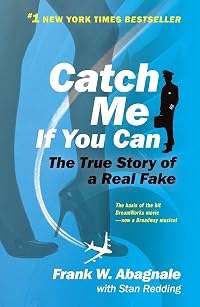
With respect to the content I must admit that from the moment the author wrote that he fabricated celebrity interviews he lost me. From that point on I kept comparing this book with the much better written 'Catch me if you can'. Just like that infamous novel, this work of (non) fiction reeks of nothing more than reader deception instead of a somewhat exaggerated account of facts.
Not only are the claims in 'Dali and I' far-fetched, the author would be rather stupid if indeed he show more defrauded his clients for millions and later wrote in graphic detail about them. A fair number of those clients are more than likely still alive and I can not imagine them reading this (non) fiction calmly.
If taken as a work of fiction I found it disappointing. None of the characters are interesting, least of all Dali and the author themselves, which is strange for such a flamboyant person as Dali was. The plot construction revolving around the author coming to terms with his guild and lapsing back into crime is not as well crafted as was Frank Abagnale's final employment for the FBI as a consultant. show less
With respect to the content I must admit that from the moment the author wrote that he fabricated celebrity interviews he lost me. From that point on I kept comparing this book with the much better written 'Catch me if you can'. Just like that infamous novel, this work of (non) fiction reeks of nothing more than reader deception instead of a somewhat exaggerated account of facts.
Not only are the claims in 'Dali and I' far-fetched, the author would be rather stupid if indeed he show more defrauded his clients for millions and later wrote in graphic detail about them. A fair number of those clients are more than likely still alive and I can not imagine them reading this (non) fiction calmly.
If taken as a work of fiction I found it disappointing. None of the characters are interesting, least of all Dali and the author themselves, which is strange for such a flamboyant person as Dali was. The plot construction revolving around the author coming to terms with his guild and lapsing back into crime is not as well crafted as was Frank Abagnale's final employment for the FBI as a consultant. show less
I was very excited about this book. As an art dealer who claims to have been Dali's neighbor and to have moved in the same social circle, Lauryssens is in a position to write a fascinating study of Dali and the art world. Instead, he wrote this book.
Lauryssens isn't a writer. His dialogue is so unnatural, so stiff, that it felt like I was reading a brochure. The only areas that are done well are the transcriptions of Dali interviews (not by the author), as Lauryssens just lets Dali speak for himself. The author seems to have no idea of why someone would want to read a book by an art dealer who sold fraudulent Dalis. He quickly glides over multiple arrests and jail time for art fraud only to then take the reader through pages of him show more buying a house with his girlfriend, which brings up another problem- every person in this book, including Lauryssens, is so one-dimensional that you don't care what happens to them.
The little information about Dali is given as gossip by others that Lauryssens encounters, including a man called "The Salesperson" who claims that Dali was a child molester. Lauryssens' claim of being in Dali's circle is really a stretch, as the Spanish town he moves to, where Dali grew up and is living his final days, is so small that everyone had met Dali at some point.
This is an instance when you really wish that a ghostwriter had been employed because the premise had so much potential. show less
Lauryssens isn't a writer. His dialogue is so unnatural, so stiff, that it felt like I was reading a brochure. The only areas that are done well are the transcriptions of Dali interviews (not by the author), as Lauryssens just lets Dali speak for himself. The author seems to have no idea of why someone would want to read a book by an art dealer who sold fraudulent Dalis. He quickly glides over multiple arrests and jail time for art fraud only to then take the reader through pages of him show more buying a house with his girlfriend, which brings up another problem- every person in this book, including Lauryssens, is so one-dimensional that you don't care what happens to them.
The little information about Dali is given as gossip by others that Lauryssens encounters, including a man called "The Salesperson" who claims that Dali was a child molester. Lauryssens' claim of being in Dali's circle is really a stretch, as the Spanish town he moves to, where Dali grew up and is living his final days, is so small that everyone had met Dali at some point.
This is an instance when you really wish that a ghostwriter had been employed because the premise had so much potential. show less
This review was written for LibraryThing Early Reviewers.Members
- Recently Added By
Lists

1970s Narratives
40 works; 6 members
Author Information

36+ Works 405 Members
Common Knowledge
- Canonical title
- Dali & I: The Surreal Story
- Original publication date
- 2008-06-08
- People/Characters
- Stan Lauryssens; Salvador Dalí; Andy Warhol; Ultra Violet; Gala Dalí; Amanda Lear (show all 49); Marc Lacroix; Young Dali (Manuel Pujol Baladas); Gilbert Hamon; Alain Bernadin; Lova Moor; Captain Moore; John Peter Moore; Alexander Korda; Luis Romero; Antoni Ribas; Ramon Guardiola; Ferran Adria; Josep; Ana; Eleuteri (Teri); Carola; Lydia the Madwoman from Port Lligat; Angel Planells; Hernán Cortés; Lluis Lauryssens; Nico; Viva; Valerie Solannas; Jim Morrison; Verushka; Edward James; Alexander Iolas; Elsa Schiaparelli; Elmyr de Hory; Pierre Schwartz; Michael Ward Stout; Marcel Duchamp; Senora Paquita; Arturo Caminada; Isidro Bea; Dada Ruspoli; Marc Lacroix; Rafael Santos Torroella; Antoni Ribas; Xavier Cugat; Lady Beaverbrook; Georges Mathieu; Llongueras
- Important places
- Spain; London, England, UK; Sotheby's, New York, New York, USA (headquarters); Hôtel Meurice, Paris, France; Hôtel George V, Paris, France; Figueres, Catalonia, Spain (show all 21); elBulli, Roses, Catalonia, Spain (Restaurant); Roses, Catalonia, Spain; Motel Ampurdan, Figueres, Catalonia, Spain; Agullana, Catalonia, Spain; Céret, Occitanie, France; France; Port Lligat, Catalonia, Spain; Nice, Alpes-Maritimes, Provence-Alpes-Côte d'Azur, France; The Factory, New York, New York, USA; Christie's, London, England, UK (headquarters); Barcelona, Catalonia, Spain; Luxembourg; Cadaqués, Catalonia, Spain; Perelada, Catalonia, Spain; St. Regis Hotel, New York, New York, USA
- Related movies
- Dali & I: The Surreal Story (2011 | IMDb)
- First words
- This is how it started: I was twenty-two and worked in Belgian cheese factory.
- Quotations
- "...'The paintings are genuine, the signatures are genuine, but yes, they're still fake Dali's,' she whispered in my ear. 'How can they be fake when the paintings and the signatures are good?' I asked. 'Because Dali hasn't ... (show all)been paid,' Gala replied."
- Last words
- (Click to show. Warning: May contain spoilers.)"Who is Dali?"
Classifications
Statistics
- Members
- 97
- Popularity
- 332,890
- Reviews
- 30
- Rating
- (2.59)
- Languages
- 6 — Dutch, English, Finnish, Hungarian, Portuguese, Spanish
- Media
- Paper, Audiobook, Ebook
- ISBNs
- 13
- ASINs
- 2