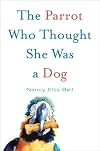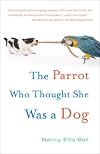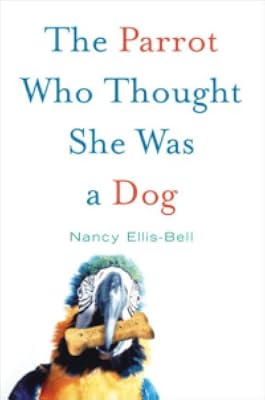
The Parrot Who Thought She Was a Dog
by Nancy Ellis-Bell
On This Page
Description
A memoir of one family's life after adopting a rescued macaw, a one-footed, expletive-loving bird named Sarah that quickly takes over the house, the family, and the dog, and the misadventures they experienced before teaching the neglected bird how to fly.Tags
Recommendations

























Member Reviews
I saw this book in the store and had to have it. I love parrots and macaws especially. I had a Scarlet once.
The writing was good and the 'story' seemed funny. The story was of how the author rescued a wild-caught, disabled, chronically ill Blue and Gold Macaw. She took in Sarah a bird with one leg, Macaw Wasting Syndrome, and a refusal to allow anyone to touch her.
It seemed a slam dunk as a fun, heart-warming book, until the author opened her mouth as it were. It turned out to be a sad, inaccurate tragedy that could have been prevented.
Unfortunately the funny story was achieved by allowing the bird to terrorize everyone in the family, the author, her husband, their dogs and cats. Just not the way you should allow a macaw to act. They show more will try to be dominant and if they achieve it they will be badly behaved and dangerous. It may seem to be kind to allow the bird to do what it wants, but it is a false sense of kindness because the bird is looking for safety and structure.
Ellis-Bell compounded her bad decisions by eventually allowing the bird to live outside its cage, even though it was not trained or socialized properly. More terror and destruction ensued. Also very dangerous for the bird. Possibly flying into glass windows/doors, getting bitten or scratched by the dogs and cats, and chewing into wires or toxic household items.
She then decides that the bird should be allowed outside ! She doesn't clip her feathers, she doesn't train the bird to step-up or to come when called. No she just lets the bird do what it wants. They live in Northern California, weather and habitat that is not conducive to survival of a lone macaw, a tropical species.
Which brings us to the other really terrible problem with this book: inaccurate information. She says macaws have no predators, not true. They are large birds, but still preyed upon in their own country and this one by hawks, eagles, and other raptors. She decides that a viral disease, Macaw Wasting Syndrome is really caused by not allowing the bird to fly, because its body starts to digest its own muscles !! She decides lack of flight allows an enzyme to build up and that is why her macaw is sick. She has no medical training, research or information to back this up, she just decides it.
Of course bad things happen. They live surrounded by huge trees 80-120 feet. The bird eventually flies into a huge tall tree, and can't get down. It becomes frightened by the height and the wind and can't move. It is fall coming on to winter and the weather is cold and wet. It ends up in a low 80 foot tree. After several days, the author, rather than try to go to her, or putting up a ladder so she can climb down. gets a tree climbing stranger to go up. The terrified bird flies from tree to tree, deeper into the forest. She spends several more nights outdoors in bad weather, no food, water, or warmth.
This is when the author becomes unbelievable. While her bird is lost, and fighting for her life, Ellis-Bell is shopping for another macaw. I am not making this up. She is told of a hand-fed scarlet that needs a home, and goes to visit it. She eventually gives up on Sarah, deciding that she is still alive, but flew off to be free. She brings home the new bird, and life goes on. Of course Macaw Wasting Syndrome is very contagious, and she doesn't talk at all about cleaning and disinfecting where Sarah was.
At some point they find Sarah's body at the foot of a tree.
Her bio says she had 3 macaws. We know about Sarah and the new one, but that means there is another that she doesn't talk about. what a shame it was probably killed or injured by her stupidity as well.
What I don't understand is why the publisher allowed this book to see the light of day, and to push it as a triumph of love. It is a triumph of shallow, selfish, stupidity. show less
The writing was good and the 'story' seemed funny. The story was of how the author rescued a wild-caught, disabled, chronically ill Blue and Gold Macaw. She took in Sarah a bird with one leg, Macaw Wasting Syndrome, and a refusal to allow anyone to touch her.
It seemed a slam dunk as a fun, heart-warming book, until the author opened her mouth as it were. It turned out to be a sad, inaccurate tragedy that could have been prevented.
Unfortunately the funny story was achieved by allowing the bird to terrorize everyone in the family, the author, her husband, their dogs and cats. Just not the way you should allow a macaw to act. They show more will try to be dominant and if they achieve it they will be badly behaved and dangerous. It may seem to be kind to allow the bird to do what it wants, but it is a false sense of kindness because the bird is looking for safety and structure.
Ellis-Bell compounded her bad decisions by eventually allowing the bird to live outside its cage, even though it was not trained or socialized properly. More terror and destruction ensued. Also very dangerous for the bird. Possibly flying into glass windows/doors, getting bitten or scratched by the dogs and cats, and chewing into wires or toxic household items.
She then decides that the bird should be allowed outside ! She doesn't clip her feathers, she doesn't train the bird to step-up or to come when called. No she just lets the bird do what it wants. They live in Northern California, weather and habitat that is not conducive to survival of a lone macaw, a tropical species.
Which brings us to the other really terrible problem with this book: inaccurate information. She says macaws have no predators, not true. They are large birds, but still preyed upon in their own country and this one by hawks, eagles, and other raptors. She decides that a viral disease, Macaw Wasting Syndrome is really caused by not allowing the bird to fly, because its body starts to digest its own muscles !! She decides lack of flight allows an enzyme to build up and that is why her macaw is sick. She has no medical training, research or information to back this up, she just decides it.
Of course bad things happen. They live surrounded by huge trees 80-120 feet. The bird eventually flies into a huge tall tree, and can't get down. It becomes frightened by the height and the wind and can't move. It is fall coming on to winter and the weather is cold and wet. It ends up in a low 80 foot tree. After several days, the author, rather than try to go to her, or putting up a ladder so she can climb down. gets a tree climbing stranger to go up. The terrified bird flies from tree to tree, deeper into the forest. She spends several more nights outdoors in bad weather, no food, water, or warmth.
This is when the author becomes unbelievable. While her bird is lost, and fighting for her life, Ellis-Bell is shopping for another macaw. I am not making this up. She is told of a hand-fed scarlet that needs a home, and goes to visit it. She eventually gives up on Sarah, deciding that she is still alive, but flew off to be free. She brings home the new bird, and life goes on. Of course Macaw Wasting Syndrome is very contagious, and she doesn't talk at all about cleaning and disinfecting where Sarah was.
At some point they find Sarah's body at the foot of a tree.
Her bio says she had 3 macaws. We know about Sarah and the new one, but that means there is another that she doesn't talk about. what a shame it was probably killed or injured by her stupidity as well.
What I don't understand is why the publisher allowed this book to see the light of day, and to push it as a triumph of love. It is a triumph of shallow, selfish, stupidity. show less
Story of how the author took in a one-footed, ill-mannered macaw. The bird had been wild-caught and injured in the process thus loosing her foot and becoming distrustful of humans. She was considered dangerous and not easy to handle, but her stunning beauty and her acceptance of the author charmed the woman. Re-named Sarah, the macaw was at first kept in a large cage in the author’s home- a small trailer that also housed two dogs, two cats and her husband. Before long the author decided to let Sarah out of her cage, felt that she deserved to experience freedom again. The bird promptly began terrorizing the other animals- stealing the dogs’ toys and bones, chasing the cats- and then moved on to destroy paperwork and furniture, show more basically causing havoc where she liked and then chuckling about it. Don’t get me wrong, there are some tender moments in here, and plenty of amusing ones as well, and I’m sure the parrot appreciated her freedom to move around and do what she willed, but it did not turn out well.
The parrot was not wing-clipped or trained and yet the author decided to let her fly free outside. This was okay for a while, at first Sarah would just walk on the ground or climb structures, then made short flights between smaller trees. Reading about how she dug holes with her beak alongside the author who was planting flower bulbs, made me smile. But when they had an outdoor party and the author let the guests convince her to allow the bird outside, Sarah walked through and ate the food, sampled people’s drinks, threw cutlery and plates on the floor, and everyone just smiled and thought it was cute? and then later of course, one day the parrot flew too high, and would not come back down. Despite all the author’s efforts to catch her, she was never recovered and succumbed to the elements. Meanwhile the author was already looking at another parrot to adopt from someone who felt her toddler was threatened by it. I’ve never kept any birds, much less parrots, but the few reviews I found online will tell you what myriad things this author did wrong- from feeding the wrong diet to neglecting discipline and training. Nobody else has mentioned one thing that appalled me- when the bird was lost, at first they followed it tree to tree, and sent climbing crews and teams with ladders up after it. When that failed, they attempted cutting down the tree the parrot was perched in. Of course Sarah just flew off into another tree- but they repeated this some twenty times. I really don’t understand who would fell twenty trees in a row, when the first attempt obviously did not work.
Some other readers feel like this book was too much about the author’s personal life, and not enough about the bird, and point out flaws in the writing style and things that were obviously left out. None of that really bothered me, though I constantly felt bad for her other pets and her husband, as Sarah not only stole and destroyed items but insisted on commandeering her chosen person’s affection as well. Even though the author could not safely touch Sarah at all (the next macaw she got, was much better-mannered and sweet tempered but after reading all this you have to wonder how well it is doing). I think I will stop here. show less
The parrot was not wing-clipped or trained and yet the author decided to let her fly free outside. This was okay for a while, at first Sarah would just walk on the ground or climb structures, then made short flights between smaller trees. Reading about how she dug holes with her beak alongside the author who was planting flower bulbs, made me smile. But when they had an outdoor party and the author let the guests convince her to allow the bird outside, Sarah walked through and ate the food, sampled people’s drinks, threw cutlery and plates on the floor, and everyone just smiled and thought it was cute? and then later of course, one day the parrot flew too high, and would not come back down. Despite all the author’s efforts to catch her, she was never recovered and succumbed to the elements. Meanwhile the author was already looking at another parrot to adopt from someone who felt her toddler was threatened by it. I’ve never kept any birds, much less parrots, but the few reviews I found online will tell you what myriad things this author did wrong- from feeding the wrong diet to neglecting discipline and training. Nobody else has mentioned one thing that appalled me- when the bird was lost, at first they followed it tree to tree, and sent climbing crews and teams with ladders up after it. When that failed, they attempted cutting down the tree the parrot was perched in. Of course Sarah just flew off into another tree- but they repeated this some twenty times. I really don’t understand who would fell twenty trees in a row, when the first attempt obviously did not work.
Some other readers feel like this book was too much about the author’s personal life, and not enough about the bird, and point out flaws in the writing style and things that were obviously left out. None of that really bothered me, though I constantly felt bad for her other pets and her husband, as Sarah not only stole and destroyed items but insisted on commandeering her chosen person’s affection as well. Even though the author could not safely touch Sarah at all (the next macaw she got, was much better-mannered and sweet tempered but after reading all this you have to wonder how well it is doing). I think I will stop here. show less
I think Nancy Ellis-Bell may be a little bit crazy. I have heard of love for animals before, but she is willing to go above and beyond. When she adopted a wild caught macaw named Sarah, she knew that she was inviting a potentially violent and destructive animal into her family’s midst. Sarah had been living in captivity for the past few years, first brought to the United States by a would-be breeder. When the breeding scenario went bust, Sarah was given to a bird rescue organization where Nancy found her and took her home.
While Sarah was not overly destructive or violent, she did turn their home upside-down. What amazed me the most was Nancy’s willingness to let it happen. After a few months of living with Sarah, Nancy decided to show more let the bird out. She followed Nancy first all over the house, then all over the yard, and then Sarah was exploring on her own. She dug up flowers, scratched marks into furniture, tore up work papers, and took short flights from one tree to the next. One day, Sarah flew higher and farther than ever before; unfortunately, she never flew back down again. Nancy never saw Sarah alive again, but she did adopt another exotic bird in short order. What better way to calm the loss of one thing than to replace it with another, I suppose.
Sarah’s antics are humorous, mostly because they didn’t happen to me. (I would have had to control an urge to wring the bird’s neck.) This would be an eye-opener for exotic bird owners, and she does offer plenty of well-written advice interspersed throughout the story for those interested. As a testament to her love for her bird, Nancy offers this glimpse into the world of a macaw and her patient owner. show less
While Sarah was not overly destructive or violent, she did turn their home upside-down. What amazed me the most was Nancy’s willingness to let it happen. After a few months of living with Sarah, Nancy decided to show more let the bird out. She followed Nancy first all over the house, then all over the yard, and then Sarah was exploring on her own. She dug up flowers, scratched marks into furniture, tore up work papers, and took short flights from one tree to the next. One day, Sarah flew higher and farther than ever before; unfortunately, she never flew back down again. Nancy never saw Sarah alive again, but she did adopt another exotic bird in short order. What better way to calm the loss of one thing than to replace it with another, I suppose.
Sarah’s antics are humorous, mostly because they didn’t happen to me. (I would have had to control an urge to wring the bird’s neck.) This would be an eye-opener for exotic bird owners, and she does offer plenty of well-written advice interspersed throughout the story for those interested. As a testament to her love for her bird, Nancy offers this glimpse into the world of a macaw and her patient owner. show less
"The Parrot Who Thought She Was a Dog" attempts to be the story of a meaningful and transformative relationship with a beloved pet, following in the popular "Marley and Me" genre, but Ellis-Bell lacks a sophisticated style and, for all but the last chapter, philosophical substance for the reader to grasp and carry through the book. There are several cute and amusing stories of Sarah, the once-wild Blue and Gold Macaw who was adopted by the author. Otherwise, the author comes across as highly egocentric and distant until the final three chapters. In fact, I would venture to say that the book serves as a lesson in the dangers of being a free-spirit and not providing sufficient structure and discipline for pets, especially show more highly-intelligent and traumatized/needy parrots. We all make mistakes, with pets and even kids, but bird-owners will, at times, be horrified by what the author allows Sarah to do, both in terms of negative effects for the bird's health and in the total loss of control in the home by the humans (and in the ultimate outcomes). Overall, the author is too interested in telling of her high-profile New York publishing connections and clients, her furniture, her sex life, and her gardening skill.
I enjoyed it, largely for the adventures of Sarah the macaw and in watching her learn to trust and live again (the bird). Still, the book would have been best served by a thorough edit from a judicious but firm editor who pushed the author to look beyond herself and give more depth and meaning to the story. Ellis-Bell writes at the end that she sat and wrote a good bit of the book over one weekend, and that is readily apparent in the bland and raw feel of the text. show less
I enjoyed it, largely for the adventures of Sarah the macaw and in watching her learn to trust and live again (the bird). Still, the book would have been best served by a thorough edit from a judicious but firm editor who pushed the author to look beyond herself and give more depth and meaning to the story. Ellis-Bell writes at the end that she sat and wrote a good bit of the book over one weekend, and that is readily apparent in the bland and raw feel of the text. show less
Easy to read, interesting characters, funny situations. Ellis-Bell isn't much of a stylist, though, and you get a bit tired of her (and get TMI about her sex life). She wants you to see her as a California goddess who loves animals -- but since this brings her to the point where her birds take over her house and drive out her long-suffering husband, you end up thinking she's more of a crackpot.
Since I love dogs and admire parrots but have no experience with them.
I could understand the author wanting to give her parrot the freedom she did and while other reviewers have corrected her I hope they do see that she did this not out of a bad spirit but out of love.
Granted like I said I do not have experience with birds and I know as humans we have to be the ones that set the guidelines with them.
I thought the experience/story itself was an interested read and though I was very saddened by the end .
I could understand the author wanting to give her parrot the freedom she did and while other reviewers have corrected her I hope they do see that she did this not out of a bad spirit but out of love.
Granted like I said I do not have experience with birds and I know as humans we have to be the ones that set the guidelines with them.
I thought the experience/story itself was an interested read and though I was very saddened by the end .
This author should not be allowed to have parrots. Ellis-Bell would probably be a bad parent also. You don't allow a child to do whatever they want. Macaws have the intelligience of a three-year-old. They need instruction on acceptable behaviour, for the benefit of the bird as well as the family. To allow Sarah, a blue and gold macaw, to terrorize a household while endangering her own life is unforgivable. To allow Sarah free flight is to allow the bird to commit suicide. Ellis-Bell also adopts other birds and does nothing to help them adapt either.
The final disaster was Ellis-Bell's attitude when Sarah flew away and a lackadaisical search begins. Well, Sarah doesn't return immediately so let's just adopt another macaw. Is Ellis-Bell an show more animal lover? Not in my book. show less
The final disaster was Ellis-Bell's attitude when Sarah flew away and a lackadaisical search begins. Well, Sarah doesn't return immediately so let's just adopt another macaw. Is Ellis-Bell an show more animal lover? Not in my book. show less
Members
- Recently Added By
Author Information
1 Work 83 Members
Some Editions
Classifications
Statistics
- Members
- 83
- Popularity
- 382,823
- Reviews
- 8
- Rating
- (2.84)
- Languages
- Dutch, English
- Media
- Paper, Ebook
- ISBNs
- 4
- ASINs
- 1