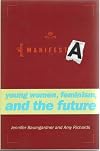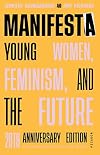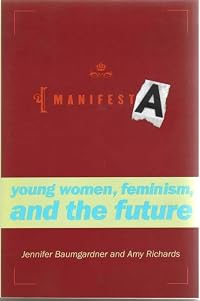
Manifesta: Young Women, Feminism, and the Future
by Jennifer Baumgardner
On This Page
Description
The twentieth anniversary release of a groundbreaking feminist text: a powerful indictment of the current state of feminism, and a passionate call to arms Today, people of all genders strive to uphold the goals of feminism and proudly embrace the term, but the movement itself is often beset with confusion and questions. Does personal empowerment happen at the expense of politics? Is feminism for the few-or does it speak to the many as they bump up against daily injustices? What does it mean show more to say "the future is female"?In 2000, Jennifer Baumgardner and Amy Richards's Manifesta set out to chronicle the feminism of their generation. They brilliantly revealed the snags in various hubs of the movement-from antipathy to the term itself to the hyped hatred of feminism's imperfect spokespeople-and showed that these snags had not imperiled the feminist cause. The book went on to inspire a new generation of readers and has become a classic of contemporary feminist literature.In the decades since Manifesta was published, the world has changed in ways both promising and terrifying. This twentieth anniversary edition of Manifesta features an updated bibliography, timeline, and resources, as well as a new introduction by the authors. Expertly unpacking both early women's history and the Third Wave feminism that seeded the active righteous intersectionality we see today, Manifesta remains an urgent and necessary tool to make sense of our past, present, and future. show lessTags
Recommendations




Member Reviews
From my Cannonball Read V review ...
As I close in on the full Cannonball, I'm trying to wrap up a lot of books that I've put down over the course of the year. There's a science book, one of the Song of Ice and Fire series, another etiquette book, and one on goddesses (seriously). And then there’s this one, which I started way back in January. Why the ten month break between starting and finishing it? Well … I just did not like it.
Manifesta is on a lot of 'must read' feminism book lists, but I found it to be mediocre. The writing isn't bad - it's not like Cinderella's Lost Diary or whatever that unfortunate book was that Cannonballers were offered for free earlier this year. My problem is that it’s not actually what it claims to show more be - a feminism manifesto. It's more like a thrown-together anthology of white feminism, with some 'picture this' writing thrown in. The chapters feel disjointed, and I'm not entirely clear what the authors sought to do with this book. Were they trying to say what the 'third wave' feminists are contributing to feminism as a whole? Were they trying to explore what previous feminists did (and how that was and was not successful)? Trying to outline what we should be doing going forward? I think a book could be successful in doing all three, but that’s not this book.
In addition to the book feeling disjointed and unfocused, there were so many areas where they missed opportunities to really explore feminism - warts and all. There was even one point where I wanted to just throw the book out the window, but was nearly 200 pages in so I just stuck it out. That moment was during a discussion of toys for young girls, and the issues with Barbie, and the attempts to push Mattel to sell Barbies that look more like all girls – so not just blond, white Barbies. The authors passed that off as “PC,” and they meant that as an insult. Any book that uses the concept of "Politically Correct" as though it is derogatory just isn't a good book in my opinion. Saying something is 'politically correct' means that it's showing some empathy to people, and recognizing that straight, white, cis people aren't all who matter.
That very specific issue is one example of the larger problem with this book - it's so, very, very white. Yes, the authors mention contributions from women of color (usually in passing), but they don't acknowledge any of the larger issues with mainstream white feminism. They buy into the "women fought to join the workforce and stay there after the war" story, for example, but don't acknowledge that many women of color had already been working for decades. They don't recognize the complexity of race, gender and sexuality - it's a lot of Gloria Steinem and one reference to bell hooks.
Going forward, I'll be avoiding these generic overviews of feminism, whether targeting and young women or not. I'm more interested in learning about the full history of feminism, and womanism, and reading books that look at the bigger issues of intersectionality that mainstream feminism keeps ignoring. show less
As I close in on the full Cannonball, I'm trying to wrap up a lot of books that I've put down over the course of the year. There's a science book, one of the Song of Ice and Fire series, another etiquette book, and one on goddesses (seriously). And then there’s this one, which I started way back in January. Why the ten month break between starting and finishing it? Well … I just did not like it.
Manifesta is on a lot of 'must read' feminism book lists, but I found it to be mediocre. The writing isn't bad - it's not like Cinderella's Lost Diary or whatever that unfortunate book was that Cannonballers were offered for free earlier this year. My problem is that it’s not actually what it claims to show more be - a feminism manifesto. It's more like a thrown-together anthology of white feminism, with some 'picture this' writing thrown in. The chapters feel disjointed, and I'm not entirely clear what the authors sought to do with this book. Were they trying to say what the 'third wave' feminists are contributing to feminism as a whole? Were they trying to explore what previous feminists did (and how that was and was not successful)? Trying to outline what we should be doing going forward? I think a book could be successful in doing all three, but that’s not this book.
In addition to the book feeling disjointed and unfocused, there were so many areas where they missed opportunities to really explore feminism - warts and all. There was even one point where I wanted to just throw the book out the window, but was nearly 200 pages in so I just stuck it out. That moment was during a discussion of toys for young girls, and the issues with Barbie, and the attempts to push Mattel to sell Barbies that look more like all girls – so not just blond, white Barbies. The authors passed that off as “PC,” and they meant that as an insult. Any book that uses the concept of "Politically Correct" as though it is derogatory just isn't a good book in my opinion. Saying something is 'politically correct' means that it's showing some empathy to people, and recognizing that straight, white, cis people aren't all who matter.
That very specific issue is one example of the larger problem with this book - it's so, very, very white. Yes, the authors mention contributions from women of color (usually in passing), but they don't acknowledge any of the larger issues with mainstream white feminism. They buy into the "women fought to join the workforce and stay there after the war" story, for example, but don't acknowledge that many women of color had already been working for decades. They don't recognize the complexity of race, gender and sexuality - it's a lot of Gloria Steinem and one reference to bell hooks.
Going forward, I'll be avoiding these generic overviews of feminism, whether targeting and young women or not. I'm more interested in learning about the full history of feminism, and womanism, and reading books that look at the bigger issues of intersectionality that mainstream feminism keeps ignoring. show less
Loved this. I didn't agree with everything in it, but if I did, it wouldn't be any fun to read. Well written, inspiring, and great for when you want some feminist action without reading heavy theory!
A must-read for all young women so as to remind us what our mothers and grandmothers faught so hard for and to also remind us of our responsibility to our own children and young women of the future. Manifesta is inspiring and the kick-in-the-butt that every young inactive feminist needs.
Ratings
Members
- Recently Added By
Published Reviews
added by lemontwist
Lists

Best Feminist Literature
188 works; 26 members

Macmillan Publishers
129 works; 3 members

3rd wave feminism
8 works; 1 member
Author Information

7+ Works 1,594 Members
Jennifer Baumgardner (pictured pregnant on the cover with director Gillian Aldrich) is the producer/creator of the award-winning film I Had an Abortion. She is the coauthor (with Amy Richards) of Manifesta: Young Women, Feminism, and the Future and Grassroots: A Field Guide for Feminist Activism (both Farrar, Straus & Giroux). Her most recent book show more is Look Both Ways: Bisexual Politics (FSG, 2007). She writes regularly for women's magazines like Glamour, Elle, and Redbook, as well as more political outlets such as the Nation, Harper's, and NPR's All Things Considered. She lives in New York City show less
Work Relationships
Has as a commentary on the text
Classifications
- Genres
- Sexuality and Gender Studies, General Nonfiction, Nonfiction
- DDC/MDS
- 305.4201 — Society, Government, and Culture Social sciences, sociology & anthropology Social group - Age, Gender, Ethnicity Women Social role and status of women Standard subdivisions
- LCC
- HQ1421 .B38 — Social sciences The family. Marriage, Women and Sexuality The Family. Marriage. Women Women. Feminism
- BISAC
Statistics
- Members
- 929
- Popularity
- 28,574
- Reviews
- 3
- Rating
- (3.65)
- Languages
- English
- Media
- Paper, Audiobook, Ebook
- ISBNs
- 5
- ASINs
- 3