On This Page
Description
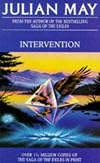
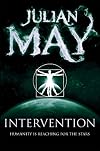
An origin story of Julian May's Galactic Milieu Trilogy and a link to her Saga of Pliocene Exile—"a superb piece of speculative fiction" (Library Journal).They have always been among us—the telepaths, the persons possessing higher mind-powers that have been called "metapsychic"—but they have always been few and far between and their abilities weak or erratic. Until now . . .
Human evolution makes a quantum leap. And all over the world, people begin to be born with extraordinary show more minds. Some of them are geniuses and some are very ordinary. But all of these metapsychic operants have mind-powers that "normal" humanity considers amazing—and dangerous.
Intervention paints this advent of Homo superior in a broad and colorful chronicle that begins in 1945 and culminates in 2013. Its many characters reveal the impact of higher mind-powers upon the possessors themselves, upon their "normal" associates, and upon a troubled society striving to avoid nuclear annihilation. The metapsychic operants are secretive and fearful at first. When they reveal themselves they are regarded with awe, exploited, and finally persecuted. They are torn by the dilemma of what role to play: are they destined to save the "normal" from global war, even if it means that they must use their mental powers to subjugate the race that gave birth to them?
The book's principal protagonists are members of the Remillard family of New Hampshire—whose descendants are featured in Julian May's worldwide bestselling Saga of Pliocene Exile. Intervention details with humor, thundering action, and scientific insight a world where the human mind does much more than think—a world that is fantastic, but by no means implausible.
. show less
Tags
Recommendations
























Member Reviews
I am re-reading May's Pliocene series, starting with this book. It spans decades, often skipping forward months and years at a time, to tell the story of how humans managed to raise themselves to metaphysical operancy, uniting enough minds to officially invite the wider galactic community to accept and help them. I don't think I've read this before, and I'm not sure I'll remember if I go to read it again in 10 years. The main narrative character, Rogatien Remillard, is likable, and his personal story reads as sadly believable as the human race adjusts to being able to read and manipulate minds, move things, and all that other magic-explained-by-technobabble stuff. It occasionally feels outdated, as the history of this Earth departs show more drastically from ours sometime in the early 80s. She does not have anything like the internet in the 2000s, for example, but there is a lot of SF out there that has been off by more than this.
All in all, not essential for enjoying the rest of the series, but a nice bit of background for it. As I'm starting "Jack the Bodyless" the characters feel more familiar, and Uncle Rogi starts as a very dependable narrator. Though "Intervention" is not very plot-driven, it's an interesting take on how humans might have gone from early 80s technology into the Galactic Milieu. And as per usual with May, the prose is at times hauntingly beautiful. She has scenes all over the world, and occasionally out of it, and every one of them comes to life with detail. She sells the idea of mind-to-mind communication and coercion, from intimately loving to monstrously invasive. If the story itself does not grab you (and again, it is not the most engaging of plots), the way she tells it will. show less
All in all, not essential for enjoying the rest of the series, but a nice bit of background for it. As I'm starting "Jack the Bodyless" the characters feel more familiar, and Uncle Rogi starts as a very dependable narrator. Though "Intervention" is not very plot-driven, it's an interesting take on how humans might have gone from early 80s technology into the Galactic Milieu. And as per usual with May, the prose is at times hauntingly beautiful. She has scenes all over the world, and occasionally out of it, and every one of them comes to life with detail. She sells the idea of mind-to-mind communication and coercion, from intimately loving to monstrously invasive. If the story itself does not grab you (and again, it is not the most engaging of plots), the way she tells it will. show less
Abbandonato appena oltre la metà.
Scritto benissimo, l'abilità dell'autrice è palese e ha un modo di raccontare originale e coinvolgente ma... la storia no. Non mi prende, non mi convince e non mi fa venire voglia di perderci tempo.
E' ridondante in troppe sue parti, lentissimo in altre, ma cosi lento che dopo cento pagine la storia è proseguita di pochissimo.
E comunque non mi ha preso per nulla.
Scritto benissimo, l'abilità dell'autrice è palese e ha un modo di raccontare originale e coinvolgente ma... la storia no. Non mi prende, non mi convince e non mi fa venire voglia di perderci tempo.
E' ridondante in troppe sue parti, lentissimo in altre, ma cosi lento che dopo cento pagine la storia è proseguita di pochissimo.
E comunque non mi ha preso per nulla.
Reread in 2024. Another massively enjoyable reread. This novel is quite different from Saga of the Exiles. It's told by a single narrator (although with a lot of omniscience) and as a result the prose style is very different to suit that idea - the language is a lot less complex and dense. You should read "Saga" first but the follow up series is a great addition.
Funny—it’s a prequel of sorts to the Galactic Milieu which, in a way, is a prequel to the Saga of Pliocene Exile, even though that takes place in the distant past. And one of the characters, maybe, is in all three?
Still, it was a good book, with a varied cast of characters, timeless themes, and a balance between conversation/exposition and action.
On to the Galactic Milieu next!
Still, it was a good book, with a varied cast of characters, timeless themes, and a balance between conversation/exposition and action.
On to the Galactic Milieu next!
This is a beloved re-read for me. I'd forgotten much of it, but then it's been 20 or so years since I read it last.
Best villain ever created in this series.
And what a great idea as to alien 'invasion' . Humor, suspense, complex plotting and great characters.
Best villain ever created in this series.
And what a great idea as to alien 'invasion' . Humor, suspense, complex plotting and great characters.
I didn't particularly care for some of May's other works in these series, but this book in particular was a delight to read. The characterization far exceeded what I experienced in other stories, and the plot itself is intricate, detailed, and expertly executed. I highly recommend this to anyone looking for an absorbing read.
Intervention combines the two prequels to the Galactic Milieu Trilogy, Surveillance and Metaconcert. It provides backstory on how the Milieu observed Earth, how the Lylmik insisted Earth be offered the chance to join the alliance and the history of the Remillard Family. Very good book - the only flaw is that it lacks the engaging, charismatic protagonists of the original trilogy (like Mark Remillard, Jack, etc.)
Members
- Recently Added By
Lists

Book Worlds We'd Like To Visit
322 works; 158 members
Author Information

178+ Works 20,954 Members
Julian May was born on July 10, 1931. She writes under her own name and several pseudonyms including Lee N. Falconer and Ian Thorne. Her first published work, a short story entitled Dune Roller, appeared in 1951 under the name J. C. May. She sold one more short story entitled Star of Wonder in 1953 before taking a break from the science fiction show more field. Starting in 1954, she wrote thousands of science encyclopedia articles for Consolidated Book Publishers. After finishing that project, she wrote similar articles for two other encyclopedia publishers. In 1957, she and her husband founded Publication Associates, a production and editorial service for small publishers. During this time, she wrote and edited two episodes of the Buck Rogers comic strip and a new Catholic catechism for Franciscan Herald Press. Between 1956 and 1981, she wrote more than 250 books for children and young adults. They were mostly non-fiction works dealing with the subjects of science, history, and short biographies of modern-day celebrities. She returned to the world of science fiction in the 1980s with such works as the Saga of Pliocene Exile and Galactic Milieu series. (Bowker Author Biography) show less
Some Editions
Awards and Honors
Awards
Series


Work Relationships
Contains
Common Knowledge
- Canonical title
- Intervention
- Original title
- Intervention
- Original publication date
- 1987
- People/Characters
- Rogatien "Uncle Rogi" Remillard; Denis Remillard; Donatien "Don" Remillard; Victor Remillard; Kieran O'Connor; Marie Madeleine "Sunny" Fabré
- Important places
- Dartmouth College, Hanover, New Hampshire, USA
- Epigraph
- Evolutionary creativity always renders invalid the “law of large numbers” and acts in an elitist way.
—Erich Jantsch
The Self-Organizing Universe
At the still point of the turning world. Neither flesh nor fleshless;
Neither from nor towards; at the still point, there the dance is,
But neither arrest nor movement. And do not call it fixity,
Where past and futur... (show all)e are gathered. Neither movement from nor towards,
Neither ascent nor decline. Except for the point, the still point,
There would be no dance, and there is only the dance.
—T. S. Eliot
“Burnt Norton” - Dedication
- To Robie Macauley
- First words
- The proverbial February thaw did not materialize for the 203rd annual Dartmouth Winter Carnival, and the temperature was around -10° Celsius when Uncle Rogi Remillard emerged from the sanctuary of the Peter Christian Tavern ... (show all)into a blustery, festive night.
- Last words
- (Click to show. Warning: May contain spoilers.)Rogi said, "Good night, Marc."
Classifications
Statistics
- Members
- 897
- Popularity
- 29,825
- Reviews
- 10
- Rating
- (3.93)
- Languages
- English, Italian
- Media
- Paper, Ebook
- ISBNs
- 7
- ASINs
- 3