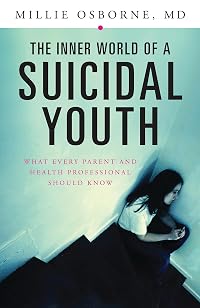
The Inner World of a Suicidal Youth: What Every Parent and Health Professional Should Know
by osbornemildred
On This Page
Description
A suicidal girl's diary, discovered after her death, gives gripping insight into why her self-esteem and will to live eroded, how she became a ""pretender"" to evade help, and - with narrative and comments from a psychiatrist included in this book - shows what this tragedy can teach us about better prevention and treatment strategies needed.Tags
Recommendations
Member Recommendations
Member Reviews
Frankly, I couldn't stand Electra, the "suicidal youth" in this book. From her diary entries, and the way Osborne describes her, she sounds like a spoiled, spiteful brat who bit the hand that fed her. She was constantly an attention-seeking drama queen with her family, and she demanded that they buy her so many things that several relatives actually ran into financial problems.
Electra had a lot of advantages -- a family who loved her, high intelligence, an excellent education, and better access to treatment for her depression than most people have. But she threw it all away. Not just in the sense that she committed suicide, either: she behaved like such a witch that she alienated all her aunts and uncles, she lied to her therapist about show more important things, and whenever she was hospitalized after a suicide attempt she lied to the doctors and staff and focused on getting out as soon as possible instead of getting better. (Having been hospitalized myself for depression I know what it feels like and how much you want to leave, but lying like that and leaving the hospital no better than you were when you came in is very self-defeating: it's just a surefire way to get yourself re-admitted before long.) No wonder Electra ended up killing herself. She rejected all attempts to help her.
Osborne acknowledges Electra's faults and sort of admits she wasn't a terribly likable person, which she says is the result of Electra having a personality disorder. (Borderline, I think.) She points out that a mental illness combined with a personality disorder is doubly difficult to treat, something those working and interacting with mentally ill people should know. I will give Dr. Osborne that much.
However, I still didn't get much out of this book. There was a lot of Electra and not enough illumination on mental illness and its treatment, or suicide prevention. And, as I said, I detested Electra, so it was all the more difficult for the "treatment and awareness" message to sink in.
Oh, and I should add here that Dr. Osborne didn't do a very good job of concealing Electra's identity. She didn't give her last name and says she changed some of the names of her relatives, but she used the real first name, and she also named the university Electra attended. Simply by Googling "Electra [name of university] suicide" you can find out her full name, and see a picture of her, and other things. Not a very good job of keeping confidentiality. show less
Electra had a lot of advantages -- a family who loved her, high intelligence, an excellent education, and better access to treatment for her depression than most people have. But she threw it all away. Not just in the sense that she committed suicide, either: she behaved like such a witch that she alienated all her aunts and uncles, she lied to her therapist about show more important things, and whenever she was hospitalized after a suicide attempt she lied to the doctors and staff and focused on getting out as soon as possible instead of getting better. (Having been hospitalized myself for depression I know what it feels like and how much you want to leave, but lying like that and leaving the hospital no better than you were when you came in is very self-defeating: it's just a surefire way to get yourself re-admitted before long.) No wonder Electra ended up killing herself. She rejected all attempts to help her.
Osborne acknowledges Electra's faults and sort of admits she wasn't a terribly likable person, which she says is the result of Electra having a personality disorder. (Borderline, I think.) She points out that a mental illness combined with a personality disorder is doubly difficult to treat, something those working and interacting with mentally ill people should know. I will give Dr. Osborne that much.
However, I still didn't get much out of this book. There was a lot of Electra and not enough illumination on mental illness and its treatment, or suicide prevention. And, as I said, I detested Electra, so it was all the more difficult for the "treatment and awareness" message to sink in.
Oh, and I should add here that Dr. Osborne didn't do a very good job of concealing Electra's identity. She didn't give her last name and says she changed some of the names of her relatives, but she used the real first name, and she also named the university Electra attended. Simply by Googling "Electra [name of university] suicide" you can find out her full name, and see a picture of her, and other things. Not a very good job of keeping confidentiality. show less
Ratings
Members
- Recently Added By
Author Information
1 Work 5 Members
Classifications
Statistics
- Members
- 5
- Popularity
- 3,437,705
- Reviews
- 1
- Rating
- (2.00)
- Languages
- English
- Media
- Paper, Ebook
- ISBNs
- 2