On This Page
Description
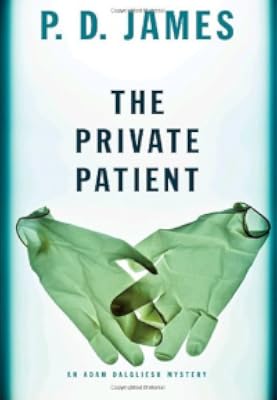
Commander Adam Dalgliesh and his team are called in to investigate a murder at a private nursing home for rich patients being treated by the famous plastic surgeon George Chandler-Powell.Tags
Recommendations









Member Reviews
P.D. James is an amazing writer. This book, published in her 88th year, shows no diminution in quality from her previous books, and gives lie to those who question the prowess of senior citizens. And what a pleasure generally to read a murder mystery that rises above the level of eighth grade reading and writing!
This book is a continuation of the Adam Dalgliesh mystery series, although like the others, it stands alone quite well.
Dalgliesh (or AD as he is known to his subordinates) is a Commander in London's Scotland Yard (i.e., the Metropolitan Police Service). He and his team are only called in for “important” or “politically sensitive” murders, although AD denies that - in his own estimation at least - any murder victim is show more ever unimportant.
AD is a private person with a poetic soul who inspires admiration, awe and respect from his crew, which includes Detective Inspector Kate Miskin and Detective Sergeant Francis Benton-Smith. He endeavors to keep his private and professional lives separate, and is largely successful in doing so. He is aware Miskin has always loved him, but they never discuss it; in fact, he is soon to be married to Emma Lavenham, a lecturer in literature at Cambridge.
But even while meeting with his future father-in-law to inform him he wants to marry Emma, he is called away on a case. Rhoda Gradwyn, just after receiving plastic surgery on a facial scar in a posh private facility located in an old Tudor manor house, has been murdered. As in other mysteries by James, there are only a limited number of suspects, and most of them have a motive.
James adds depth to her mysteries with thought-provoking meditations not often encountered in this genre. For example, before her surgery, as Rhoda gazes out her window, James writes:
"Time had fascinated her from childhood, its apparent power to move at different speeds, the dissolution it wrought on minds and bodies, her sense that each moment, all moments past and those to come, were fused into an illusory present which with every breath became the unalterable, indestructible past.”
Or this, as one of the characters, while in a chapel, gazes at the cross:
"Under this symbol battles had been fought, the great seismic upheavals of State and Church had changed the face of Europe, men and women had been tortured, burnt and murdered. It had been carried with its message of love and forgiveness into the darkest hells of human imagining.”
These are sentiments you don’t ordinarily encounter in mysteries, even cozies, and it is this elevation from the usual tired mystery prose for which James is so valued. Otherwise, she doesn’t toy with her formula, which includes lingering loving descriptions of homes and land; insightful glances into the minds of the characters; and the acute observations of the principals on the eternal verities that confront them with every death.
It is not until the end of the book that James diverges a bit from her usual modus operandi to wrap up series elements with a flourish of optimism and paean to love. One might guess that she fears this could be her last opportunity to do so. In any event, she ends with a contemplation of life and death that reconciles the tragedy of the many criminal acts in the world with the only path she deems to offer redemption:
"Deeds of horror are committed every minute and in the end those we love die. If the screams of all earth’s living creatures were one scream of pain, surely it would shake the stars. But we have love. It may seem a frail defence against the horrors of the world but we must hold fast and believe in it, for it is all we have."
Evaluation: James’ facility with the English language is a joy to read. If her mysteries don’t have that urgency of some that keeps you up all night turning the pages, it is all for the best; she is an author best savored in small amounts, so you can turn her phrases over and let the flavor of their sentiments blend in your mind. The whole Metropolitan Police Department team is most likeable, and are people with whom you enjoy spending time.
Listing of Adam Dalgliesh Murder Mystery Series in Order:
Cover Her Face by P.D. James
A Mind to Murder by P.D. James
Unnatural Causes by P.D. James
Shroud for a Nightingale by P. D. James
The Black Tower by P. D. James
Death of an Expert Witness by P. D. James
A Taste for Death by P. D. James
Devices and Desires by P. D. James
Original Sin by P. D. James
A Certain Justice by P. D. James
Death in Holy Orders by P. D. James
The Murder Room by P. D. James
The Lighthouse by P. D. James
The Private Patient by P. D. James show less
This book is a continuation of the Adam Dalgliesh mystery series, although like the others, it stands alone quite well.
Dalgliesh (or AD as he is known to his subordinates) is a Commander in London's Scotland Yard (i.e., the Metropolitan Police Service). He and his team are only called in for “important” or “politically sensitive” murders, although AD denies that - in his own estimation at least - any murder victim is show more ever unimportant.
AD is a private person with a poetic soul who inspires admiration, awe and respect from his crew, which includes Detective Inspector Kate Miskin and Detective Sergeant Francis Benton-Smith. He endeavors to keep his private and professional lives separate, and is largely successful in doing so. He is aware Miskin has always loved him, but they never discuss it; in fact, he is soon to be married to Emma Lavenham, a lecturer in literature at Cambridge.
But even while meeting with his future father-in-law to inform him he wants to marry Emma, he is called away on a case. Rhoda Gradwyn, just after receiving plastic surgery on a facial scar in a posh private facility located in an old Tudor manor house, has been murdered. As in other mysteries by James, there are only a limited number of suspects, and most of them have a motive.
James adds depth to her mysteries with thought-provoking meditations not often encountered in this genre. For example, before her surgery, as Rhoda gazes out her window, James writes:
"Time had fascinated her from childhood, its apparent power to move at different speeds, the dissolution it wrought on minds and bodies, her sense that each moment, all moments past and those to come, were fused into an illusory present which with every breath became the unalterable, indestructible past.”
Or this, as one of the characters, while in a chapel, gazes at the cross:
"Under this symbol battles had been fought, the great seismic upheavals of State and Church had changed the face of Europe, men and women had been tortured, burnt and murdered. It had been carried with its message of love and forgiveness into the darkest hells of human imagining.”
These are sentiments you don’t ordinarily encounter in mysteries, even cozies, and it is this elevation from the usual tired mystery prose for which James is so valued. Otherwise, she doesn’t toy with her formula, which includes lingering loving descriptions of homes and land; insightful glances into the minds of the characters; and the acute observations of the principals on the eternal verities that confront them with every death.
It is not until the end of the book that James diverges a bit from her usual modus operandi to wrap up series elements with a flourish of optimism and paean to love. One might guess that she fears this could be her last opportunity to do so. In any event, she ends with a contemplation of life and death that reconciles the tragedy of the many criminal acts in the world with the only path she deems to offer redemption:
"Deeds of horror are committed every minute and in the end those we love die. If the screams of all earth’s living creatures were one scream of pain, surely it would shake the stars. But we have love. It may seem a frail defence against the horrors of the world but we must hold fast and believe in it, for it is all we have."
Evaluation: James’ facility with the English language is a joy to read. If her mysteries don’t have that urgency of some that keeps you up all night turning the pages, it is all for the best; she is an author best savored in small amounts, so you can turn her phrases over and let the flavor of their sentiments blend in your mind. The whole Metropolitan Police Department team is most likeable, and are people with whom you enjoy spending time.
Listing of Adam Dalgliesh Murder Mystery Series in Order:
Cover Her Face by P.D. James
A Mind to Murder by P.D. James
Unnatural Causes by P.D. James
Shroud for a Nightingale by P. D. James
The Black Tower by P. D. James
Death of an Expert Witness by P. D. James
A Taste for Death by P. D. James
Devices and Desires by P. D. James
Original Sin by P. D. James
A Certain Justice by P. D. James
Death in Holy Orders by P. D. James
The Murder Room by P. D. James
The Lighthouse by P. D. James
The Private Patient by P. D. James show less
Reading the Private Patient is like eating at your grandmother's house. There will be no unexpected foods, the dinner will be so very comforting, your grandmother would have been painstakingly careful to make the ravioli or pie crust or fried chicken or whatever perfectly, and you will enjoy it. However, it will be dated and not exciting. So it is with the Private Patient. I love PD James. She is one of the great names in the mystery genre and Dalgleish has been one of my ideal characters. PD James plots perfectly, perhaps a bit to carefully here, and the supporting characters are lovingly considered, if a bit formulaic. The Private Patient has no surprises and the craft is so very evident. It is so matter of fact that it is a bit dull. show more However, I stayed up all night to read it, so I can recommend it if you want a comforting, perfectly laid out murder mystery of a classic sort. show less
It's interesting to read so many positive reviews of this book. My feelings on finishing it were that P. D. James, once very much a leader of the serious crime-fiction pack, has long since been overtaken by another generation of writers. I speak as an admirer of her previous books, all of which (I think) I've read. But I found this tale so very slow, dated and, frankly, unbelievable, on far too many levels.
Granted, the classic James elements - an isolated setting, a small handful of characters who may or may not have mysterious past histories, Dalgliesh's philosophical musings - are all present and correct. But this is 2009; as a previous reviewer has pointed out, most English people just don't speak or behave any more in the way they show more do in this book (nor do they change into 'country tweeds' to drive to Dorset!). There was a gallant attempt to introduce more contemporary elements into the story with the inclusion of Emma's gay friends, but they still didn't remotely convince me as characters rather than as a token bit of 'diversity'.
James's calm, forensic style, in which no-one ever gets particularly upset, hysterical, angry or euphoric (one of her favourite phrases is that things happen 'just as expected') works against her at times: it's hard to see how the murderer could ever have got worked up enough to kill anyone, given that the characters mostly appear to be in excellent control of their emotions. And as for Dalgliesh....I'm afraid to say that, for me, his almost godlike infallibility became a serious irritant. I'd agree with Bookmarque that the Dalgliesh-Emma relationship is so unlikely as to be verging on the creepy.
I too am sorry to be judging so negatively, but I felt the plot was minimal, the denouement rushed and badly-telegraphed (I actually had to go back and read several pages again because the revelation of the murderer's identity was so casually dropped in, almost as an afterthought), and there was simply no sense that the action was rooted in the here and now. P. D. James has had a stellar career as 'Queen of Crime' and I applaud her. But I don't think this book remotely measures up to her earlier work. show less
Granted, the classic James elements - an isolated setting, a small handful of characters who may or may not have mysterious past histories, Dalgliesh's philosophical musings - are all present and correct. But this is 2009; as a previous reviewer has pointed out, most English people just don't speak or behave any more in the way they show more do in this book (nor do they change into 'country tweeds' to drive to Dorset!). There was a gallant attempt to introduce more contemporary elements into the story with the inclusion of Emma's gay friends, but they still didn't remotely convince me as characters rather than as a token bit of 'diversity'.
James's calm, forensic style, in which no-one ever gets particularly upset, hysterical, angry or euphoric (one of her favourite phrases is that things happen 'just as expected') works against her at times: it's hard to see how the murderer could ever have got worked up enough to kill anyone, given that the characters mostly appear to be in excellent control of their emotions. And as for Dalgliesh....I'm afraid to say that, for me, his almost godlike infallibility became a serious irritant. I'd agree with Bookmarque that the Dalgliesh-Emma relationship is so unlikely as to be verging on the creepy.
I too am sorry to be judging so negatively, but I felt the plot was minimal, the denouement rushed and badly-telegraphed (I actually had to go back and read several pages again because the revelation of the murderer's identity was so casually dropped in, almost as an afterthought), and there was simply no sense that the action was rooted in the here and now. P. D. James has had a stellar career as 'Queen of Crime' and I applaud her. But I don't think this book remotely measures up to her earlier work. show less
As much as I love P.D. James’s body of work, I feel that her style is too dated. Fans will now pummel me with stones. It’s true though. She’s officially a “cozy” mystery writer. Her language while creative and sometimes beautiful does not check up with how people speak and think in 2009. It’s really too bad she couldn’t adapt because I think that would shake things up and make them much more interesting. But I guess she chose her path decades ago and it’s one that works for her.
While reading this one I found myself annoyed with Adam almost every time he opened his mouth. Must he always preach in that condescending way? If he has he so little faith in his minions, why doesn’t he hire some that don’t have to be led show more around like children? After all the years with Kate, he thinks she does a good job, but he doesn’t treat her that way. Her hero-worship and pining are kept in check though, thankfully. And the gooey, overly chaste and proper relationship with Emma is really unpleasant. Again, so dated as to be laughable. The scene where she drives her ex-lover’s car to meet him to tell him of a friend’s rape is a perfect example. He coddles her, is a tentative school-boy afraid to ask her what the hell she wants. She’s such a ninny that she can’t articulate anything in the flood of her emotions. And then he offers to sleep on the couch. The couch. It’s clear they’ve been to bed, why this sudden prudishness? Oy vey.
Also there was a lot less police procedural detail in this one than in the past. Back in the day, we’d get a lot of information about how multiple resources come together under Dalgliesh’s direction to move a case forward to a collar. Forensics, footwork, deduction; it all played a part. These days, things seem to only come from interviews and the end of day wine and cheese wrap up parties Dalgliesh throws for Benton and Miskin. Perhaps James isn’t as familiar with today’s techniques as she was of yesteryears’, but that just means she needs to hire a decent researcher. Surely she can afford one.
I don’t like feeling this way. It came up on me while reading the last one, The Lighthouse. In that one almost nothing happened. The mystery sort of folded in on itself and took very little in the way of investigation to solve. Mostly everyone was either running from place to place in the rain or holed up being deathly ill.
Plot-wise The Private Patient didn’t diverge from the usual course. Rhoda, our none-too-likeable victim is killed and we’re presented with a closed group of suspects in the immediate area. One or two stand out as particularly likely, but I know from past experience it won’t be one of these. The characters are pretty much her stock in trade. Grandstanding. Aloof. Condescending. Uncooperative. Hostile. Secretive. Hidebound. Neurotic. Sheltered. Opinionated. No one is allowed to be easy going, polite, helpful or well-adjusted. It’s kind of funny and I enjoy reading about these backward freaks and the strange ways they cope with James’s reality.
Maybe I wasn’t paying attention, but the ending seemed sloppy to me. The second killing (there is always a second killing) wasn’t wholly explained and it seemed that Dalgliesh was OK with that despite voicing doubts about the killer’s confession. And what a confession it was. Highly melodramatic and blood-soaked.
Ah, Dame James. I love you, but I think had you decided in the 80s to stay current, your work would have been more thrilling and unpredictable and have greater staying power. show less
While reading this one I found myself annoyed with Adam almost every time he opened his mouth. Must he always preach in that condescending way? If he has he so little faith in his minions, why doesn’t he hire some that don’t have to be led show more around like children? After all the years with Kate, he thinks she does a good job, but he doesn’t treat her that way. Her hero-worship and pining are kept in check though, thankfully. And the gooey, overly chaste and proper relationship with Emma is really unpleasant. Again, so dated as to be laughable. The scene where she drives her ex-lover’s car to meet him to tell him of a friend’s rape is a perfect example. He coddles her, is a tentative school-boy afraid to ask her what the hell she wants. She’s such a ninny that she can’t articulate anything in the flood of her emotions. And then he offers to sleep on the couch. The couch. It’s clear they’ve been to bed, why this sudden prudishness? Oy vey.
Also there was a lot less police procedural detail in this one than in the past. Back in the day, we’d get a lot of information about how multiple resources come together under Dalgliesh’s direction to move a case forward to a collar. Forensics, footwork, deduction; it all played a part. These days, things seem to only come from interviews and the end of day wine and cheese wrap up parties Dalgliesh throws for Benton and Miskin. Perhaps James isn’t as familiar with today’s techniques as she was of yesteryears’, but that just means she needs to hire a decent researcher. Surely she can afford one.
I don’t like feeling this way. It came up on me while reading the last one, The Lighthouse. In that one almost nothing happened. The mystery sort of folded in on itself and took very little in the way of investigation to solve. Mostly everyone was either running from place to place in the rain or holed up being deathly ill.
Plot-wise The Private Patient didn’t diverge from the usual course. Rhoda, our none-too-likeable victim is killed and we’re presented with a closed group of suspects in the immediate area. One or two stand out as particularly likely, but I know from past experience it won’t be one of these. The characters are pretty much her stock in trade. Grandstanding. Aloof. Condescending. Uncooperative. Hostile. Secretive. Hidebound. Neurotic. Sheltered. Opinionated. No one is allowed to be easy going, polite, helpful or well-adjusted. It’s kind of funny and I enjoy reading about these backward freaks and the strange ways they cope with James’s reality.
Maybe I wasn’t paying attention, but the ending seemed sloppy to me. The second killing (there is always a second killing) wasn’t wholly explained and it seemed that Dalgliesh was OK with that despite voicing doubts about the killer’s confession. And what a confession it was. Highly melodramatic and blood-soaked.
Ah, Dame James. I love you, but I think had you decided in the 80s to stay current, your work would have been more thrilling and unpredictable and have greater staying power. show less
P.D. James has always been a literary mystery writer, concerned with plot but equally interested in place, character, and background. In “The Private Patient,” which may be the final Adam Dalgliesh novel (James is, after all, in her nineties) I think she overwhelms one with detail not central to the plot. In several instances, in fact, she actually recapitulates the investigation after digressing into a series of private thoughts, reactions, scenic descriptions, etc., as if to say “Oh, right…back to the story.” I’ve read all of James’ books, and this is the first one where I had the notion that her publisher had specified a lengthy page count for contract fulfillment. Lengthy postscripts after the crime’s solution added show more to that thought.
All the digressions and redundancies may have been hiding the fact that this isn’t one of James’ better plots. It would give away too much to say exactly why, but I can say that when a detective team doesn’t solve the mystery until the death of the culprit, I feel cheated.
I hope that there’s another Dalgliesh in a drawer somewhere, because this wasn’t a satisfying finale. show less
All the digressions and redundancies may have been hiding the fact that this isn’t one of James’ better plots. It would give away too much to say exactly why, but I can say that when a detective team doesn’t solve the mystery until the death of the culprit, I feel cheated.
I hope that there’s another Dalgliesh in a drawer somewhere, because this wasn’t a satisfying finale. show less
Although I could never hope to be as good a writer on my best day as P. D. James is on her worst day I have to say I didn't find this as good as some of her best work. There were several, admittedly minor, questions left unanswered and I thought it was somewhat dispassionate even though the murders in the plot were crimes of passion. Maybe it is time for Adam Dalgliesh and his creator to retire.
The title refers to Rhoda Gradwyn, a successful investigative journalist with a terrible facial scar, who goes to a noted plastic surgeon to finally have the scar removed. She elects to have the operation done at his private clinic, situated in the magnificent home in Dorset called Cheverell Manor. The night after her successful operation she is show more strangled in her bed. Adam Dalgliesh and his special team are called in because the other private patient at the clinic is married to an important political person.
In the lead up to the murder there are several people who might have motives for murdering Rhoda. There is her friend, Robin Boyton, who is perpetually low on money and has been told by Rhoda that he will be left something in her will. There is Helena Cresset who was raised in Cheverell Manor but her father had to sell it after a financial scandal that was exposed by Rhoda. Helena is now the manager of the private clinic and lives in the Manor. Then there is Candace Westhall, sister of the assisting surgeon, who objected very strongly to Rhoda being treated at the Manor because of her profession.
As Dalgliesh and his team investigates more possibilities arise and then the body of Robin Boyton is discovered in a disused freezer. Slowly, inexorably the guilty party becomes obvious. There is some development of the personal lives of the investigators and the other people at the Manor but, as I said in the beginning, some questions are never answered. In particular, we never get an answer to why Rhoda decided after 34 years to get the scar fixed, why she said "I no longer need it." That to me is an unsatisfactory plot device. show less
The title refers to Rhoda Gradwyn, a successful investigative journalist with a terrible facial scar, who goes to a noted plastic surgeon to finally have the scar removed. She elects to have the operation done at his private clinic, situated in the magnificent home in Dorset called Cheverell Manor. The night after her successful operation she is show more strangled in her bed. Adam Dalgliesh and his special team are called in because the other private patient at the clinic is married to an important political person.
In the lead up to the murder there are several people who might have motives for murdering Rhoda. There is her friend, Robin Boyton, who is perpetually low on money and has been told by Rhoda that he will be left something in her will. There is Helena Cresset who was raised in Cheverell Manor but her father had to sell it after a financial scandal that was exposed by Rhoda. Helena is now the manager of the private clinic and lives in the Manor. Then there is Candace Westhall, sister of the assisting surgeon, who objected very strongly to Rhoda being treated at the Manor because of her profession.
As Dalgliesh and his team investigates more possibilities arise and then the body of Robin Boyton is discovered in a disused freezer. Slowly, inexorably the guilty party becomes obvious. There is some development of the personal lives of the investigators and the other people at the Manor but, as I said in the beginning, some questions are never answered. In particular, we never get an answer to why Rhoda decided after 34 years to get the scar fixed, why she said "I no longer need it." That to me is an unsatisfactory plot device. show less
A journalist dies at a plastic surgery clinic after what should have been a routine operation with a renowned surgeon. Investigation proves that the clinic is staffed by a rather odd group of individuals, all of whom seem to have issues. The dead woman, Rhoda Gradwyn, is a London journalist, and she has a nosy best friend who proves to have strange ties to the clinic.
As is always the case with James, the history and back-story of the characters is very important, and becomes essential to solving the mystery. What's really kind of sad for me is that this appears to be the end of the Dalgliesh series. Dalgliesh is ready to retire from Scotland Yard, and his two junior associates are tying up their loose ends. In reading this I couldn't show more help but think that James's heart was more in writing her Scotland Yard characters than in producing an actual mystery. This one didn't live up to the level of depth or suspense of the earlier volumes in the series. show less
As is always the case with James, the history and back-story of the characters is very important, and becomes essential to solving the mystery. What's really kind of sad for me is that this appears to be the end of the Dalgliesh series. Dalgliesh is ready to retire from Scotland Yard, and his two junior associates are tying up their loose ends. In reading this I couldn't show more help but think that James's heart was more in writing her Scotland Yard characters than in producing an actual mystery. This one didn't live up to the level of depth or suspense of the earlier volumes in the series. show less
Members
- Recently Added By
Published Reviews
ThingScore 25
Somewhere along the way to its denouement “The Private Patient” loses both track of and interest in its title character. Rhoda Gradwyn’s past is of great interest to some of the book’s characters but not to the reader.
added by y2pk
Lists

Crime and Mysteries to Read
746 works; 31 members

British Mystery
469 works; 14 members

Best 21st Century Books (So Far)
679 works; 86 members

Books About Murder
313 works; 7 members

Detective Stories
343 works; 5 members

Books Read in 2017
4,249 works; 130 members
Author Information

149+ Works 69,745 Members
P. D. James, pseudonym of Phyllis Dorothy James White, was born on August 3, 1920 in Oxford, England. During World War II, she served as a Red Cross nurse. She worked in administration for 19 years with the National Health Service. After the death of her husband in 1964, she took a Civil Service examination and became an administrator in the show more forensic science and criminal law divisions of the Department of Home Affairs. She spent 30 years in British Civil Service. She became Baroness James of Holland Park in 1991. Her first novel, Cover Her Face, was published in 1962. She wrote approximately 20 books during her lifetime including the Adam Dalgliesh Mystery series, the Cordelia Gray Mystery series, and Death Comes to Pemberley. She became a full-time writer in 1979. Three titles in the Adam Dalgliesh Mystery series received the Silver Dagger award--Shroud for a Nightingale, The Black Tower, and A Taste for Death. In 2000, she published her autobiography, Time to Be in Earnest. Her dystopian novel, The Children of Men, was adapted into a movie in 2006. She received the Diamond Dagger award for lifetime achievement. She died on November 27, 2014 at the age of 94. (Bowker Author Biography) P. D. James served in the forensic & criminal justice departments of Great Britain's Home Office until her retirement in 1979. She was made a Life Peer in 1991. Her detective novels include "Cover Her Face", "An Unsuitable Job for a Woman", "Death of an Expert Witness", "A Taste for Death", "Original Sin", & "A Certain Justice", many of which have been adapted for television. Her autobiography, "Time to be in Earnest", was published in 2000. (Publisher Provided) show less
Some Editions
Awards and Honors
Distinctions
Series

Belongs to Publisher Series
Work Relationships
Has the adaptation
Common Knowledge
- Canonical title
- The Private Patient
- Original title
- The Private Patient
- Original publication date
- 2008
- People/Characters
- Adam Dalgliesh; Emma Lavenham; Rhoda Gradwyn; George Chandler-Powell; Kate Miskin; Robin Boynton (show all 31); Candace Westhall; Helena Cressett; Marcus Westhall; Dean Bostock; Kim Bostock; Sharon Bateman; Francis Benton-Smith; Stephen Collingsby; Jeremy Coxon; Philip Kershaw; Flavia Holland; Letitia Frensham; Tom Mogworthy; Geoffrey Harkness; Mary Keyte; Edith Glenister; Laura Skeffington; Newton Macklefield; Claude Shepherd; Caroline Shepherd; Madeleine Rayner; Michael Curtis; Annie Townsend; Eliza Melbury; Elizabeth Barnes
- Important places
- London, England, UK; Dorset, England, UK; Midlands, England, UK; Cheverell Manor, Stoke Cheverell, Dorset, England, UK
- Epigraph
- [None]
- Dedication
- This book is dedicated to
Stephen Page, publisher,
and to all my friends, old and new, at Faber and Faber
in celebration of my forty-six unbroken years
as a Faber author - First words
- On November the 21st, the day of her forty-seventh birthday, and three weeks and two days before she was murdered, Rhoda Gradwyn went to Harley Street to keep a first appointment with her plastic surgeon, and there is a consu... (show all)lting room designed, so it appeared, to inspire confidence and allay apprehension, made the decision that would lead inexorably to her death.
- Quotations
- There was a moment in which, not touching the scar, he scrutinised it in silence. Then he switched off the light and sat again behind the desk. His eyes on the file before him, he said, 'And you waited thirty-four years to do... (show all) something about it. Why now, Miss Gradwyn?'
There was a pause, then she said, 'Because I no longer have need of it.'
She thought, ... these are my people, the upper working class merging into the middle class, that amorphous unregarded group who fought the country's wars, paid their taxes, clung to what remained of their traditions. They ha... (show all)d lived to see their simple patriotism derided, their morality despised, their savings devalued. They caused no trouble. ... If they protested that their cities had become alien, their children taught in overcrowded schools where ninety per cent of the children spoke no English, they were lectured about the cardinal sin of racism by those more expensively and comfortably circumstanced.
This new MMC -- Modernising Medical Careers -- makes training schemes far
more rigid. House men have become foundation-year doctors -- and we all know what a mess the government have made there -- senior house officers ar... (show all)e out,
registrars are specialist surgical trainees, and God knows how long all this will last before they think of something else, more forms to fill in, more
bureaucracy, more interference with people trying to get on with their jobs.
Perhaps they popped him into a freezer and produced him nice and fresh on the appropriate day. That's the plot of a book by a detective novelist, Cyril Hare. I think it's called Untimely Death, but it may have been published ... (show all)originally under a different name.
Rhoda Gladwyn was interesting about apparently unconscious copying of phrases and ideas and the occasional curious coincidences in literature when a strong idea enters simultaneously into two minds as if its time has come.
"How did he raise the matter with you?" "By giving me an old paperback. Cyril Hare's Untimely Death. It's a detective story in which the time of death is falsified."
To become a patient was to relinquish a part of oneself, to be received into a system which, however benign, subtly robbed one of initiative, almost of Will. They sat, patiently acquiescence, in their private worlds. - Last words
- (Click to show. Warning: May contain spoilers.)It may seem a frail defence against the horrors of the world but we must hold fast and believe in it, for it is all that we have.
- Disambiguation notice*
- Oorspronkelijke titel: The Private Patient.
*Some information comes from Common Knowledge in other languages. Click "Edit" for more information.
Classifications
Statistics
- Members
- 3,390
- Popularity
- 4,989
- Reviews
- 96
- Rating
- (3.60)
- Languages
- 14 — Chinese, Danish, Dutch, English, Finnish, French, German, Italian, Norwegian (Bokmål), Norwegian, Portuguese, Spanish, Swedish, Turkish
- Media
- Paper, Audiobook, Ebook
- ISBNs
- 66
- ASINs
- 24