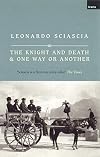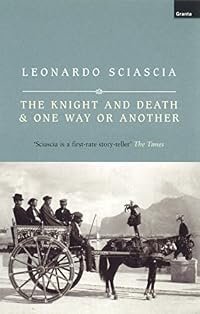
The knight and death, and, One way or another
by Leonardo Sciascia
On This Page
Description
From the acclaimed author of Day of the Owl, The Wine Dark Sea and The Moro Affair.Tags
Recommendations









Member Reviews
Having discovered Sciascia for the first time a few months ago, in a chance encounter at a Leiden bookshop, I grabbed four more in London, wrapped them up for Christmas and waited....
This slim volume is in the same vein as To Each His Own. Both contain murder, but one wouldn't recommend them to a crime fiction aficionado. Nothing is solved, the stories stop and some observations about the human condition have been made. The first of these two stories, some fifty pages, is a reverie by a dying detective, who is on his last case whilst reflecting on life, death, and setting about some of the things one might do in the face of a rapidly and permanently closing window of time.
The second story, One way or Another, is the more substantial of show more the two, around one hundred pages. An artist happens upon a most peculiar hotel, run by priests and about to host some of the movers and shakers (as they would no doubt now be called) of Italy. Industrial and political leaders rubbing shoulders with cardinals. It's a yearly spiritual retreat. Fine food is eaten, the best wine drunk and five mistresses are lodged there, though they never appear in company. Deaths - murders - begin to take place. But whereas in the average murder mystery such occurrences are at the heart of the story, here they are - not incidental - but merely part of the story. The priest who organises the event and the curious artist who is permitted to stay, verbally joust with each other throughout. Interesting thoughts about religion consequently abound. Poirot it is not.
I suspect that both of these stories may be allegorical, but I'm way too literal to get that. On a concrete level, Sciascia deals with the realities of institutionalised corruption in Italy. Can one do that and be allegorical as well? I don't know.
rest here: https://alittleteaalittlechat.wordpress.com/2019/01/12/the-knight-and-death-one-... show less
This slim volume is in the same vein as To Each His Own. Both contain murder, but one wouldn't recommend them to a crime fiction aficionado. Nothing is solved, the stories stop and some observations about the human condition have been made. The first of these two stories, some fifty pages, is a reverie by a dying detective, who is on his last case whilst reflecting on life, death, and setting about some of the things one might do in the face of a rapidly and permanently closing window of time.
The second story, One way or Another, is the more substantial of show more the two, around one hundred pages. An artist happens upon a most peculiar hotel, run by priests and about to host some of the movers and shakers (as they would no doubt now be called) of Italy. Industrial and political leaders rubbing shoulders with cardinals. It's a yearly spiritual retreat. Fine food is eaten, the best wine drunk and five mistresses are lodged there, though they never appear in company. Deaths - murders - begin to take place. But whereas in the average murder mystery such occurrences are at the heart of the story, here they are - not incidental - but merely part of the story. The priest who organises the event and the curious artist who is permitted to stay, verbally joust with each other throughout. Interesting thoughts about religion consequently abound. Poirot it is not.
I suspect that both of these stories may be allegorical, but I'm way too literal to get that. On a concrete level, Sciascia deals with the realities of institutionalised corruption in Italy. Can one do that and be allegorical as well? I don't know.
rest here: https://alittleteaalittlechat.wordpress.com/2019/01/12/the-knight-and-death-one-... show less
Having discovered Sciascia for the first time a few months ago, in a chance encounter at a Leiden bookshop, I grabbed four more in London, wrapped them up for Christmas and waited....
This slim volume is in the same vein as To Each His Own. Both contain murder, but one wouldn't recommend them to a crime fiction aficionado. Nothing is solved, the stories stop and some observations about the human condition have been made. The first of these two stories, some fifty pages, is a reverie by a dying detective, who is on his last case whilst reflecting on life, death, and setting about some of the things one might do in the face of a rapidly and permanently closing window of time.
The second story, One way or Another, is the more substantial of show more the two, around one hundred pages. An artist happens upon a most peculiar hotel, run by priests and about to host some of the movers and shakers (as they would no doubt now be called) of Italy. Industrial and political leaders rubbing shoulders with cardinals. It's a yearly spiritual retreat. Fine food is eaten, the best wine drunk and five mistresses are lodged there, though they never appear in company. Deaths - murders - begin to take place. But whereas in the average murder mystery such occurrences are at the heart of the story, here they are - not incidental - but merely part of the story. The priest who organises the event and the curious artist who is permitted to stay, verbally joust with each other throughout. Interesting thoughts about religion consequently abound. Poirot it is not.
I suspect that both of these stories may be allegorical, but I'm way too literal to get that. On a concrete level, Sciascia deals with the realities of institutionalised corruption in Italy. Can one do that and be allegorical as well? I don't know.
rest here: https://alittleteaalittlechat.wordpress.com/2019/01/12/the-knight-and-death-one-... show less
This slim volume is in the same vein as To Each His Own. Both contain murder, but one wouldn't recommend them to a crime fiction aficionado. Nothing is solved, the stories stop and some observations about the human condition have been made. The first of these two stories, some fifty pages, is a reverie by a dying detective, who is on his last case whilst reflecting on life, death, and setting about some of the things one might do in the face of a rapidly and permanently closing window of time.
The second story, One way or Another, is the more substantial of show more the two, around one hundred pages. An artist happens upon a most peculiar hotel, run by priests and about to host some of the movers and shakers (as they would no doubt now be called) of Italy. Industrial and political leaders rubbing shoulders with cardinals. It's a yearly spiritual retreat. Fine food is eaten, the best wine drunk and five mistresses are lodged there, though they never appear in company. Deaths - murders - begin to take place. But whereas in the average murder mystery such occurrences are at the heart of the story, here they are - not incidental - but merely part of the story. The priest who organises the event and the curious artist who is permitted to stay, verbally joust with each other throughout. Interesting thoughts about religion consequently abound. Poirot it is not.
I suspect that both of these stories may be allegorical, but I'm way too literal to get that. On a concrete level, Sciascia deals with the realities of institutionalised corruption in Italy. Can one do that and be allegorical as well? I don't know.
rest here: https://alittleteaalittlechat.wordpress.com/2019/01/12/the-knight-and-death-one-... show less
Having discovered Sciascia for the first time a few months ago, in a chance encounter at a Leiden bookshop, I grabbed four more in London, wrapped them up for Christmas and waited....
This slim volume is in the same vein as To Each His Own. Both contain murder, but one wouldn't recommend them to a crime fiction aficionado. Nothing is solved, the stories stop and some observations about the human condition have been made. The first of these two stories, some fifty pages, is a reverie by a dying detective, who is on his last case whilst reflecting on life, death, and setting about some of the things one might do in the face of a rapidly and permanently closing window of time.
The second story, One way or Another, is the more substantial of show more the two, around one hundred pages. An artist happens upon a most peculiar hotel, run by priests and about to host some of the movers and shakers (as they would no doubt now be called) of Italy. Industrial and political leaders rubbing shoulders with cardinals. It's a yearly spiritual retreat. Fine food is eaten, the best wine drunk and five mistresses are lodged there, though they never appear in company. Deaths - murders - begin to take place. But whereas in the average murder mystery such occurrences are at the heart of the story, here they are - not incidental - but merely part of the story. The priest who organises the event and the curious artist who is permitted to stay, verbally joust with each other throughout. Interesting thoughts about religion consequently abound. Poirot it is not.
I suspect that both of these stories may be allegorical, but I'm way too literal to get that. On a concrete level, Sciascia deals with the realities of institutionalised corruption in Italy. Can one do that and be allegorical as well? I don't know.
rest here: https://alittleteaalittlechat.wordpress.com/2019/01/12/the-knight-and-death-one-... show less
This slim volume is in the same vein as To Each His Own. Both contain murder, but one wouldn't recommend them to a crime fiction aficionado. Nothing is solved, the stories stop and some observations about the human condition have been made. The first of these two stories, some fifty pages, is a reverie by a dying detective, who is on his last case whilst reflecting on life, death, and setting about some of the things one might do in the face of a rapidly and permanently closing window of time.
The second story, One way or Another, is the more substantial of show more the two, around one hundred pages. An artist happens upon a most peculiar hotel, run by priests and about to host some of the movers and shakers (as they would no doubt now be called) of Italy. Industrial and political leaders rubbing shoulders with cardinals. It's a yearly spiritual retreat. Fine food is eaten, the best wine drunk and five mistresses are lodged there, though they never appear in company. Deaths - murders - begin to take place. But whereas in the average murder mystery such occurrences are at the heart of the story, here they are - not incidental - but merely part of the story. The priest who organises the event and the curious artist who is permitted to stay, verbally joust with each other throughout. Interesting thoughts about religion consequently abound. Poirot it is not.
I suspect that both of these stories may be allegorical, but I'm way too literal to get that. On a concrete level, Sciascia deals with the realities of institutionalised corruption in Italy. Can one do that and be allegorical as well? I don't know.
rest here: https://alittleteaalittlechat.wordpress.com/2019/01/12/the-knight-and-death-one-... show less
Ratings
Members
- Recently Added By
Author Information

626+ Works 9,735 Members
Born in Sicily, Sciascia was a literary and critical genius as well as a best-selling activist-writer. In the tradition of such Sicilian writers as Luigi Pirandello and Giuseppe Di Lampedusa, he explored in neorealist novels the island's impact on its inhabitants' lives: how they coped with crime, the Mafia, and corruption. His best-known works show more include The Day of the Owl, The Sicilian Relatives, and the collection of short stories The Wine-Dark Sea. In his most controversial work, The Moro Affair, he implicated Italy's leaders in the 1978 kidnapping and murder of former premier Aldo Moro by the leftist terrorist group, the Red Brigade. Though a long-time Communist, Sciascia eventually left the party to become a member of the Radical party, whose tenets were closer to his own anarchist leanings. As a representative of the party, Sciascia was elected to both the Italian and European Parliaments. (Bowker Author Biography) show less
Common Knowledge
- Canonical title
- The knight and death, and, One way or another
- Blurbers
- Hensher, Philip
Classifications
Statistics
- Members
- 39
- Popularity
- 744,516
- Reviews
- 3
- Rating
- (3.88)
- Languages
- English
- Media
- Paper, Ebook
- ISBNs
- 2
- ASINs
- 2