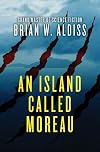
Moreau's Other Island
by Brian W. Aldiss
On This Page
Description
A castaway government official is stranded on an island of man-made monsters in this bold reimagining of the H. G. Wells science fiction classic War is hell, and the conflict tearing the world apart may be humankind's last. Set adrift on a makeshift raft in the middle of the South Pacific, the sole survivor of a sabotaged space-shuttle flight, undersecretary of state Calvert Roberts is certain his life is coming to an end. But fate intervenes, depositing him dehydrated and half starved on show more the beach of an uncharted island with a giant M etched into a cliff wall. At first it appears to be paradise, but Eden has a dark side: Here, Dr. Mortimer Dart is playing God. A genius geneticist who is certifiably mad, he is called Master by the unspeakable creations of his predecessor--monstrous creatures, neither human nor animal but some nightmarish hybrid. Yet as horrible as the stranded government official finds these abominations, it is the truth behind Dart's experiments that chill Roberts's blood--for it will open wide a window onto an inescapable future of emptiness, ashes, and death. One of twentieth-century science fiction's brightest luminaries, Grand Master Brian W. Aldiss pays homage to one of the genre's most beloved progenitors, the great H. G. Wells, author of The Time Machine, The War of the Worlds, and other science fiction classics. An Island Called Moreau is a gripping near-future tale of inhuman experimentation, dystopia, morality, war, and mad science that honors and ingeniously updates Wells's brilliant, dark masterwork, The Island of Doctor Moreau. show lessTags
Recommendations











Member Reviews
My reaction to reading this novel in 1996. Spoilers follow.
Sort of a sequel to H. G. Wells’ The Island of Dr. Moreau. The founding conceit here is that there really was a Moreau or, rather MacMoreau who conducted vivisection experiments fictionalized by Wells. Aldiss brings the story forward to 1996 and keeps much the same plot: a shipwrecked (or rather spacewrecked) man lands on the island, is horrified by the experiments being conducted on beasts, and eventually watches the whole set up come crashing down.
However, narrator Edward Prendick of Wells’ novel is rather – in the world at large – insignificant. Aldiss’ narrator, Calvert Roberts, is an ambitious, self-important, rather pompous Undersecretary of State for the U.S. show more (Oddly, though his primary job is as negotiator, he is unable to reconcile the Beast People and Dart.) Moreau is a rather physically strong, imposing figure. Aldiss’ island is ruled over by Mortimer Dart, a man maimed by fetal exposure to thalidomide. Like Moreau, he has set himself up as a god over the Beast People (descendants of MacMoreau’s experimental subjects), and he gives the law to them in catchy rock tunes reminiscent of Moreau’s Law chants.
Dart is interested in the effects of form and attitude on behavior (the plasticity of flesh like Moreau). He sees himself as a victim though he is just as tyrannical as Moreau and experiments on human fetus’ to create Seal People. Like Wells’ novel, this book is concerned with animal and human nature. In The Island of Dr. Moreau, the narrator tries, at first, to see a sharp distinction between then realizes much of the animal remains in man. In this novel, the narrator realizes there is a continuum of animal to human nature. Aldiss, however, is unwilling to indict the animal nature as evil. When Calvert lives for four days with the Seal People, he looks back on the experience – complete with sexual unions with the genetically human but bestially formed Seal People and a four year old – with pleasure and no shame. The sensual Heather the narrator views as being corrupted by civilization.
As nuclear war is looming outside this island and eventually breaks out, the increasingly human (led by the clever Foxy) Beast People destroy the human presence on the island as they become more human – and are killed by the rescuers of Dart. The book’s theme is that instinct (the animal virtue as embodied in the Seal People) must be alloyed with Reason (as epitomized by science and Dart’s playing of Haydn).
I’m not sure I believe in the validity of this appeal to the virtues of the animal – civilization seems to work best channeling and controlling these impulses, but that seems the book’s conclusion. show less
Sort of a sequel to H. G. Wells’ The Island of Dr. Moreau. The founding conceit here is that there really was a Moreau or, rather MacMoreau who conducted vivisection experiments fictionalized by Wells. Aldiss brings the story forward to 1996 and keeps much the same plot: a shipwrecked (or rather spacewrecked) man lands on the island, is horrified by the experiments being conducted on beasts, and eventually watches the whole set up come crashing down.
However, narrator Edward Prendick of Wells’ novel is rather – in the world at large – insignificant. Aldiss’ narrator, Calvert Roberts, is an ambitious, self-important, rather pompous Undersecretary of State for the U.S. show more (Oddly, though his primary job is as negotiator, he is unable to reconcile the Beast People and Dart.) Moreau is a rather physically strong, imposing figure. Aldiss’ island is ruled over by Mortimer Dart, a man maimed by fetal exposure to thalidomide. Like Moreau, he has set himself up as a god over the Beast People (descendants of MacMoreau’s experimental subjects), and he gives the law to them in catchy rock tunes reminiscent of Moreau’s Law chants.
Dart is interested in the effects of form and attitude on behavior (the plasticity of flesh like Moreau). He sees himself as a victim though he is just as tyrannical as Moreau and experiments on human fetus’ to create Seal People. Like Wells’ novel, this book is concerned with animal and human nature. In The Island of Dr. Moreau, the narrator tries, at first, to see a sharp distinction between then realizes much of the animal remains in man. In this novel, the narrator realizes there is a continuum of animal to human nature. Aldiss, however, is unwilling to indict the animal nature as evil. When Calvert lives for four days with the Seal People, he looks back on the experience – complete with sexual unions with the genetically human but bestially formed Seal People and a four year old – with pleasure and no shame. The sensual Heather the narrator views as being corrupted by civilization.
As nuclear war is looming outside this island and eventually breaks out, the increasingly human (led by the clever Foxy) Beast People destroy the human presence on the island as they become more human – and are killed by the rescuers of Dart. The book’s theme is that instinct (the animal virtue as embodied in the Seal People) must be alloyed with Reason (as epitomized by science and Dart’s playing of Haydn).
I’m not sure I believe in the validity of this appeal to the virtues of the animal – civilization seems to work best channeling and controlling these impulses, but that seems the book’s conclusion. show less
https://fromtheheartofeurope.eu/an-island-called-moreau-moreaus-other-island-by-...
Not one of the great Aldiss works, I’m afraid. Published in 1981, set during a global war in 1996, the narrator, who is the US Undersecretary of State, crashes on a Pacific island where the sinister Dr Dart, himself an embittered thalidomide victim, has been carrying on the tradition of H.G. Wells’ Dr Moreau by combining animal and humans through experimentation. Various other human exiles also live on the island.
It’s not so much a sequel to the original Wells novel, more an update to the present-ish day. There are a lot of traps about disability, race and gender to fall into here, and I’m sorry to say that Aldiss falls into pretty much all of show more them. I’m generally a huge Aldiss fan, but I would hesitate to recommend this even to completists. show less
Not one of the great Aldiss works, I’m afraid. Published in 1981, set during a global war in 1996, the narrator, who is the US Undersecretary of State, crashes on a Pacific island where the sinister Dr Dart, himself an embittered thalidomide victim, has been carrying on the tradition of H.G. Wells’ Dr Moreau by combining animal and humans through experimentation. Various other human exiles also live on the island.
It’s not so much a sequel to the original Wells novel, more an update to the present-ish day. There are a lot of traps about disability, race and gender to fall into here, and I’m sorry to say that Aldiss falls into pretty much all of show more them. I’m generally a huge Aldiss fan, but I would hesitate to recommend this even to completists. show less
This is the third in the author's monster trilogy, this one being based on a less well known work of classic horror than Frankenstein or Dracula, namely H G Wells's The Island of Doctor Moreau. In the near future of 1996 (this was published in 1982), the superpowers are at war, with the USA and China facing off against the Soviet Union. A senior US official is the sole survivor of a plane crash who ends up on a Pacific island populated by apparent savages. These are the descendants of the real life half-human, half-animal creatures on which Wells supposedly based his novel. In this instance, the genetic horrors are perpetrated by an embittered survivor of the real life drug thalidomide, that caused limb loss and other deformities to show more babies of mothers who took the drug in the later 1950s/early 1960s. Despite this horribly realistic scenario, I thought it was the weakest of the three novels, and I found the characters and whole situation rather unrealistic even on their own terms. In fact, the book is not even really part of a trilogy as the characters and backdrop are entirely different from those in the other two, and much less sympathetic. Disappointing. show less
Calvert Roberts, Subsecretario del Gobierno de Estados Unidos, naufraga tras caer su nave espacial al océano. Afortunadamente, es recogido en una lancha y llevado hasta la llamada Isla de Moreau. En dicha isla gobierna con mano de hierro el llamado Amo, de nombre Mortimer Dart, que realiza experimentos al modo del mítico personaje creado por H.G. Wells, que a su vez, como se deja entrever, estuvo inspirado por un tal McMoreau. A partir de aquí, asistiremos a las aventuras y desventuras de Roberts para intentar salir de la isla, conociendo de paso todo el sistema creado por Dart. Resulta interesante el trasfondo de la novela, donde se deja entrever que se está manteniendo una guerra a nivel global.
‘La otra isla del doctor Moreau’ show more (Moreau’s Other Island, 1980), del británico Brian W. Aldiss, más que una secuela es un remake de la famosa novela de Wells, un actualización escrita desde los años ochenta por uno de los abanderados de la New Wave. Si bien resulta poco novedosa, es una novela entretenida. show less
‘La otra isla del doctor Moreau’ show more (Moreau’s Other Island, 1980), del británico Brian W. Aldiss, más que una secuela es un remake de la famosa novela de Wells, un actualización escrita desde los años ochenta por uno de los abanderados de la New Wave. Si bien resulta poco novedosa, es una novela entretenida. show less
Really bad. Like Island of Dr. Moreau with Marlon Brando bad.
Durante un viaje de regreso del espacio, y presumiblemente como resultado de un sabotaje, una nave espacial cae del espacio y en suúnico superviviente llega a una isla perdida en el océano presidida por una enorme M. Poco a poco, el protagonista de la novela. Shaw, descubre que en ella Mortimer Darts, una víctima de la talidomida fascinada por las deformidades humanas, ha llevado a cabo unos experimentos en la misma línea que los del legendario doctor Moreau.
Jun 24, 2022Spanish
Members
- Recently Added By
Author Information

563+ Works 27,394 Members
Brian W. Aldiss was born in Dereham, United Kingdom on August 18, 1925. In 1943, he joined the Royal Signals regiment, and saw action in Burma. After World War II, he worked as a bookseller at Oxford University. His first book, The Brightfount Diaries, was published in 1955. His first science fiction novel, Non-Stop (Starship in the United show more States), was published in 1958. He wrote more than 80 books including Hothouse, Greybeard, The Helliconia Trilogy, The Squire Quartet, Frankenstein Unbound, The Malacia Tapestry, Walcot, and Mortal Morning. His short story Super-Toys Last All Summer Long was the basis for the film A.I. Artificial Intelligence. He has received numerous awards for his work including two Hugo Awards, the Nebula Award, the John W. Campbell Memorial Award, and an OBE for services to literature. He was also an anthologist and an artist. He was the editor of 40 anthologies including Introducing SF, The Penguin Science Fiction Omnibus, Space Opera, Space Odysseys, Galactic Empires, Evil Earths, and Perilous Planets. He was an abstract artist and his first solo exhibition, The Other Hemisphere, was held in Oxford in August-September 2010. He died on August 19, 2017 at the age of 92. (Bowker Author Biography) show less
Some Editions
Series
Belongs to Publisher Series
Work Relationships
Is a (non-series) sequel to
Common Knowledge
- Canonical title
- Moreau's Other Island
- Original title
- Moreau's Other Island
- Alternate titles
- An Island Called Moreau
- Original publication date
- 1980
- People/Characters
- Calvert Roberts; Mortimer Dart
- Important places
- The Island of Dr. Moreau (Noble's Isle)
- First words
- To sink below the surface of the ocean was to enter a world of sound.
- Last words
- (Click to show. Warning: May contain spoilers.)For the ocean was ultimately no more enduring than Instinct alone, or unaided Reason.
- Blurbers
- Pohl, Frederik; Bawden, Nina; Cooper, Edmund; Tennant, Emma; Zelanzy, Roger
- Original language
- English
Classifications
Statistics
- Members
- 229
- Popularity
- 141,088
- Reviews
- 7
- Rating
- (3.20)
- Languages
- English, French, German, Spanish
- Media
- Paper, Ebook
- ISBNs
- 17
- ASINs
- 4