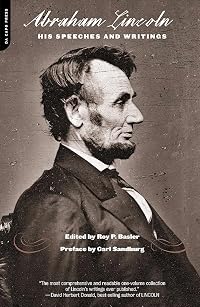
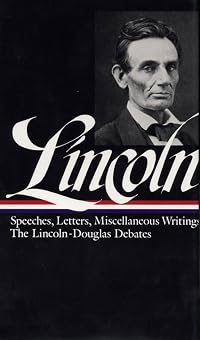
Abraham Lincoln: His Speeches and Writings
by Abraham Lincoln
On This Page
Description
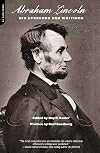
History. Nonfiction. This volume presents nearly 250 of Lincoln's most important speeches, state papers, and letters in their entirety. Here are not only the masterpieces—the Gettysburg Address, the Inaugural Addresses, the 1858 Republican Convention Speech, the Emancipation Proclamation—but hundreds of lesser-known gems. Alfred Kazin has written that Lincoln was "not just the greatest writer among our Presidents . . . but the most telling and unforgettable of all American 'public' show more writer-speakers," and it’s never been cleaner than in this comprehensive edition. show lessTags
Recommendations







Member Reviews
Written for a generation before the internet and Doris Kearns Goodwin.
It had the following effects on me:
1. It really made me appreciate Team of Rivals. All the sources and letters and notes that she must have sorted through are not among his most popular.
2. It also deepened my appreciation of Lincoln as a student and as a human being who would admit to his own mistakes.
3. The notes from the editor really confirmed to me that we struggle with a positive bias towards some past figures. Not that Lincoln didn't do good things. But the editor, for the most part, seemed to deliberately choose letters and speeches that displayed him at his best.
4. There were some that showcased his humor. If they exist, I would have liked more.
5. The show more parallels to today were plentiful. Do human beings politics ever create a different result?
6. Lincoln's religious views are often up for debate. I maintain that it is impossible to decide. Sure there are the oft-quoted lines regarding his doubt. But would a man of his familiarity with language really need to resort to scripture so often? It is hard to believe that he is, as most politicians do, only using them to curry favor. Especially when he often does the opposite. My conclusion is that there is, and always will be, for me, a big question mark over the topic of his true thoughts on religion (And I say the same for Washington). show less
It had the following effects on me:
1. It really made me appreciate Team of Rivals. All the sources and letters and notes that she must have sorted through are not among his most popular.
2. It also deepened my appreciation of Lincoln as a student and as a human being who would admit to his own mistakes.
3. The notes from the editor really confirmed to me that we struggle with a positive bias towards some past figures. Not that Lincoln didn't do good things. But the editor, for the most part, seemed to deliberately choose letters and speeches that displayed him at his best.
4. There were some that showcased his humor. If they exist, I would have liked more.
5. The show more parallels to today were plentiful. Do human beings politics ever create a different result?
6. Lincoln's religious views are often up for debate. I maintain that it is impossible to decide. Sure there are the oft-quoted lines regarding his doubt. But would a man of his familiarity with language really need to resort to scripture so often? It is hard to believe that he is, as most politicians do, only using them to curry favor. Especially when he often does the opposite. My conclusion is that there is, and always will be, for me, a big question mark over the topic of his true thoughts on religion (And I say the same for Washington). show less
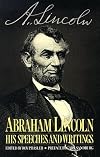
$18-$24. 1946. Preface by Sandburg = > value. Fine condition.
Ratings
Members
- Recently Added By
Lists

Mustich's 1000 Books to Read Before You Die: A Life Changing List
1,001 works; 20 members
Author Information

362+ Works 9,673 Members
Abraham Lincoln (February 12, 1809 - April 15, 1865) was the 16th president of the United States, serving from March 1861 until his assassination in April 1865. Lincoln led the United States through its Civil War, its bloodiest war and its greatest moral, constitutional and political crisis. In doing so, he preserved the Union, abolished slavery, show more strengthened the federal government, and modernized the economy. Lincoln was a self-educated lawyer in Illinois, a Whig Party leader and a state legislator in the 1830s. After a series of highly publicized debates in 1858, during which Lincoln spoke out against the expansion of slavery, he lost the U.S. Senate race to his archrival, Democrat Stephen A. Douglas. In 1860, Lincoln secured a Republican Party presidential nomination. His presidential election resulted in seven southern slave states to form the Confederacy before he took the office on March 4, 1861. Lincoln is regarded by historians as one of the greatest United States presidents. During his term, he created the system of national banks with the National Banking Act. This provided a strong financial network in the country. It also established a national currency. In 1862, Congress created, with Lincoln's approval, the Department of Agriculture. Lincoln was able to appoint five Supreme Court justices during his time as president. He is largely responsible for instituting the Thanksgiving holiday in the US. Lincoln's Gettysburg Address of 1863 became an iconic statement of America's dedication to the principles of nationalism, republicanism, equal rights, liberty, and democracy. Lincoln held a moderate view of Reconstruction. On April 15, 1865, six days after the surrender of Confederate commanding General Robert E. Lee, Lincoln was assassinated at the Ford Theater by John Wilkes Booth, a noted actor and Confederate spy from Maryland. Lincoln was married to Mary Todd Lincoln on November 4, 1842. They had four children, all boys. Only the oldest, Robert, survived to adulthood. After Lincoln's death, Robert committed his mother, Mary, for a short time. The death of their children had a profound effect on the mental health of both Lincoln and his wife. (Bowker Author Biography) show less
All Editions
Series
Belongs to Publisher Series
Work Relationships
Is abridged in
Common Knowledge
- Canonical title
- Abraham Lincoln: His Speeches and Writings
- Original publication date
- 1946
- Dedication
- To my Father
- First words
- The Editor has attempted in this volume to give readers a full and accurate text of Abraham Lincoln's most important works.
- Last words
- (Click to show. Warning: May contain spoilers.)To leave him thus, rather than with his "Last Public Address," seems appropriate.
Classifications
- Genres
- Nonfiction, History, General Nonfiction, Biography & Memoir, Politics and Government
- DDC/MDS
- 973.7 — History & geography History of North America United States Civil War Era (1857-1865)
- LCC
- E457.92 — History of the United States United States Civil War period, 1861-1865 Lincoln's administrations, 1861-April 15, 1865
- BISAC
Statistics
- Members
- 181
- Popularity
- 181,585
- Reviews
- 2
- Rating
- (4.33)
- Languages
- English
- Media
- Paper, Ebook
- ISBNs
- 4
- ASINs
- 6