On This Page
Description
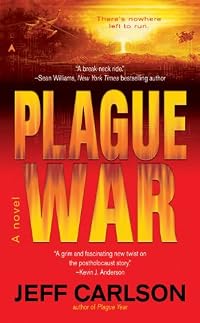
Researcher Ruth Goldman has developed a vaccine with the potential to inoculate the world's survivors against the nanotech plague that devastated humanity, but the fractured U.S. government will stop at nothing to keep it for themselves.Tags
Recommendations




Member Reviews
Spoiler warning: This review may contain spoilers for the previous book in the series.
Plague War starts right where Plague Year left off. Ruth, Cam, and Newcombe are trekking across the country below 'the barrier' with a vaccine for the machine plague coursing through their veins, searching the mountains for other survivors to pass it on to. America is at war with itself, and without a vaccine it is more like an island war as they battle for control of habitable mountaintops. Ruth and the guys watch in horror as an aerial war is fought over their heads, never knowing quite who is winning and concerning themselves only with not being captured by either side.
For the most part Plague War was a more enjoyable read than the first book in my show more opinion. There was a bit more tension, suspense, and excitement to be found. There was also a bit more science, because the characters knew more about the nano-plague that wiped out a huge portion of humanity, and the conflict between the surviving militaries added a bit more intensity to the novel.
These were fairly well balanced out by the infuriating relationship between Cam and Ruth, however, and the fact that at times the nanotechnology just became a bit absurd. A vaccine, an anti-vaccine, and anti-anti-vaccine, and super-mega-ultra-anti-anti-anti-vaccine. Okay, I made that last one up, but you get the idea. Then again, maybe that's a perfectly accurate prediction of a futuristic nano arms race.
Regardless, I enjoyed the book. It's science fiction for a reason. It's fun and interesting, and I'm okay with that. show less
Plague War starts right where Plague Year left off. Ruth, Cam, and Newcombe are trekking across the country below 'the barrier' with a vaccine for the machine plague coursing through their veins, searching the mountains for other survivors to pass it on to. America is at war with itself, and without a vaccine it is more like an island war as they battle for control of habitable mountaintops. Ruth and the guys watch in horror as an aerial war is fought over their heads, never knowing quite who is winning and concerning themselves only with not being captured by either side.
For the most part Plague War was a more enjoyable read than the first book in my show more opinion. There was a bit more tension, suspense, and excitement to be found. There was also a bit more science, because the characters knew more about the nano-plague that wiped out a huge portion of humanity, and the conflict between the surviving militaries added a bit more intensity to the novel.
These were fairly well balanced out by the infuriating relationship between Cam and Ruth, however, and the fact that at times the nanotechnology just became a bit absurd. A vaccine, an anti-vaccine, and anti-anti-vaccine, and super-mega-ultra-anti-anti-anti-vaccine. Okay, I made that last one up, but you get the idea. Then again, maybe that's a perfectly accurate prediction of a futuristic nano arms race.
Regardless, I enjoyed the book. It's science fiction for a reason. It's fun and interesting, and I'm okay with that. show less
Take a world without warm-blooded life below 10,000 feet. Detail its problems of potentially lethal insect swarms, plants dying for lack of pollinators, and vast soil erosion. Add in an American military government trying to find a solution to the “machine plague” of nanotechnology that did all that killing while fighting rebels. Blend with a war against what’s left of the Russian and Chinese militaries.
That’s the world our hero Cam and heroine Ruth wander across, desperately trying to bring their vaccine against the machine plague to isolated mountain top survivors in the Sierra Nevadas – while staying out of the clutches of the American government. It has used nanotech weapons on its own people and wants the strategic show more advantage of the vaccine for itself.
Even faster paced than its predecessor, Plague Year, and taking place over less time, this novel also stands out not only in its extrapolations of the plague’s effects but the superb characterization of Ruth, Cam, and another character returning from the first novel. The relationship between Cam and Ruth, both damaged physically and psychically by their post-plague experiences, is a complex blend of sexual attraction, guilt, denial, and need. Carlson also does a nice, credible job in depicting military culture and values.
The only quibble I have with the novel is that the ending felt a bit rushed and vague at the end. Still, it’s a very good post-apocalypse story and worthy successor to the first novel. show less
That’s the world our hero Cam and heroine Ruth wander across, desperately trying to bring their vaccine against the machine plague to isolated mountain top survivors in the Sierra Nevadas – while staying out of the clutches of the American government. It has used nanotech weapons on its own people and wants the strategic show more advantage of the vaccine for itself.
Even faster paced than its predecessor, Plague Year, and taking place over less time, this novel also stands out not only in its extrapolations of the plague’s effects but the superb characterization of Ruth, Cam, and another character returning from the first novel. The relationship between Cam and Ruth, both damaged physically and psychically by their post-plague experiences, is a complex blend of sexual attraction, guilt, denial, and need. Carlson also does a nice, credible job in depicting military culture and values.
The only quibble I have with the novel is that the ending felt a bit rushed and vague at the end. Still, it’s a very good post-apocalypse story and worthy successor to the first novel. show less
A lot of survivors called it Plague Year, or Year One, but it wasn’t only human history that had crashed in the long fourteen months since the machine plague. The invisible nanotech devoured all warm-blooded life below ten thousand feet elevation. What remained of the ecosystem was badly out of whack, with only fish, frogs, and reptiles left to whittle down the exploding insect populations—and the land suffered for it.—“Plague War”
Occasionally, I’ll stumble across a novel that contains intriguing scientific ideas as its basis, yet the story will fail to interest me. For some reason, the narrative is unable to build upon the author’s killer speculative concepts. It’s a shame and the book ends up feeling like a missed show more opportunity. In the end, it always leaves me wondering about how the author could have utilized their ideas better. I find that I end up thinking less about what the novel is, and more about what the novel could have been. And my final answer is clearly that the novel could have been better.
Unfortunately, “Plague War” by Jeff Carlson is one of these novels. Despite an interesting starting premise of a machine plague which makes Earth inhabitable for people below 10,000 feet thereby requiring survivors to live on isolated mountain peaks, the novel flounders. During the first half of the book, the three main characters essentially wander somewhat aimlessly through the post-apocalyptic landscape below 10,000 feet. This is quite reminiscent of the “lost in the forest” trope one encounters often in the fantasy genre, and it’s just as uninspiring in this setting. This would be less of an issue if what the characters encountered below 10,000 feet was exciting and riveting; instead, it’s rather mundane.
The underlying problem is that Carlson tries to hold the speculative aspects of the novel to a high level of verisimilitude. “Plague War” comes off more as a scientific exercise of following a hypothesis to a conclusion rather than a speculative novel. While this may lead to some interesting scientific reasoning, it isn’t necessarily engaging as a narrative. Sometimes “bad stuff” just needs to happen to keep things interesting, whether it’s utterly believable or not. And “Plague War” just doesn’t have enough “bad stuff” in it to engage the reader.
Ruth Goldman, Cam Najarro and Staff Sergeant Mark Newcombe are stranded on foot in the desolate post-apocalyptic wasteland outside of Sacramento, ninety miles from elevation. Ruth, a nanotech researcher, has recently developed a first generation nano vaccine that offers the three of them protection from the machine plague. Now they’ve set off on a mission to carry the vaccine to any other survivors they can find.
To complicate matters, the American government, now based in Leadville Colorado, is hunting them. The machine plague vaccine holds a great strategic advantage for the Leadville government, since the group that controls the vaccine will control the world below 10,000 feet. Therefore, it’s imperative for Leadville to keep it out of the hands of other factions, in particular, the rebel groups that they’re currently fighting against. Not surprisingly, the rebels have also taken an interest in Ruth’s group (for the some reasons as Leadville as well as for their self-preservation), and would like nothing more than to intercept Ruth and her gang before Leadville scoops them up.
Soon a catastrophic event changes the entire political landscape, and in the aftermath a new greater threat emerges on the horizon which promises a war that could change America forever.
Slow to start, “Plague War” improves during the second half of the novel as the focus shifts to the impending war, and away from Ruth, Cam and Newcombe’s journey to find and vaccinate survivors. Though the group is being hunted by a multitude of desperate competing factions early on, the danger never feels palpable or immediate. Instead, Ruth and her friends are often able to hide from any surveillance or confrontation they encounter until the danger passes. Fleeing from confrontation may be an unquestionably intelligent act, but it doesn’t make for exciting reading.
To aggravate matters, there is an awkward romantic subplot between Cam and Ruth that receives an undue amount of attention throughout the book. They both want to seemingly become involved with each other, but they are incredibly hesitant and their inaction makes them miserable. And miserable characters are often miserable to read, especially when their problems are mostly self-inflicted (and their lovelife is mentally and emotionally beaten to death). They act more like lovestruck teenagers than adults, endlessly thinking about what could happen between them rather than doing anything about it. Carlson belabors this plot point, and the lack of forward momentum in the relationship ends up quickly becoming an annoyance and distraction to the story. This may not have been as much of a problem if other events intruded upon their frequent moments of indecision; however with action at a minimum, the reader is made to suffer along with Ruth and Cam.
Once the two of them gain more separation from each other in the second half of the book, the story improves slightly. Though the impending war between America and its invaders adds some spice to the mix, it’s unfortunately not enough to save the book. By this point, I was so annoyed by Ruth and Cam that I lacked any type of emotional attachment to them and had completely lost interest in their plight. Once lost, I was only left to speculate on what “Plague War” could have been.
Last Word:
If there was one word for me that encapsulated my experience with Jeff Carlson’s “Plague War” it would be “disappointing”. Clearly, the novel could have been so much more. With such an interesting speculative foundation, I anticipated more, but an overall lack of action and an annoying romantic subplot torpedoed my enjoyment of the novel. Even though the second half of the book is livelier, Carlson can’t overcome the damage incurred early on when Ruth’s group wanders “lost in the forest”. show less
Occasionally, I’ll stumble across a novel that contains intriguing scientific ideas as its basis, yet the story will fail to interest me. For some reason, the narrative is unable to build upon the author’s killer speculative concepts. It’s a shame and the book ends up feeling like a missed show more opportunity. In the end, it always leaves me wondering about how the author could have utilized their ideas better. I find that I end up thinking less about what the novel is, and more about what the novel could have been. And my final answer is clearly that the novel could have been better.
Unfortunately, “Plague War” by Jeff Carlson is one of these novels. Despite an interesting starting premise of a machine plague which makes Earth inhabitable for people below 10,000 feet thereby requiring survivors to live on isolated mountain peaks, the novel flounders. During the first half of the book, the three main characters essentially wander somewhat aimlessly through the post-apocalyptic landscape below 10,000 feet. This is quite reminiscent of the “lost in the forest” trope one encounters often in the fantasy genre, and it’s just as uninspiring in this setting. This would be less of an issue if what the characters encountered below 10,000 feet was exciting and riveting; instead, it’s rather mundane.
The underlying problem is that Carlson tries to hold the speculative aspects of the novel to a high level of verisimilitude. “Plague War” comes off more as a scientific exercise of following a hypothesis to a conclusion rather than a speculative novel. While this may lead to some interesting scientific reasoning, it isn’t necessarily engaging as a narrative. Sometimes “bad stuff” just needs to happen to keep things interesting, whether it’s utterly believable or not. And “Plague War” just doesn’t have enough “bad stuff” in it to engage the reader.
Ruth Goldman, Cam Najarro and Staff Sergeant Mark Newcombe are stranded on foot in the desolate post-apocalyptic wasteland outside of Sacramento, ninety miles from elevation. Ruth, a nanotech researcher, has recently developed a first generation nano vaccine that offers the three of them protection from the machine plague. Now they’ve set off on a mission to carry the vaccine to any other survivors they can find.
To complicate matters, the American government, now based in Leadville Colorado, is hunting them. The machine plague vaccine holds a great strategic advantage for the Leadville government, since the group that controls the vaccine will control the world below 10,000 feet. Therefore, it’s imperative for Leadville to keep it out of the hands of other factions, in particular, the rebel groups that they’re currently fighting against. Not surprisingly, the rebels have also taken an interest in Ruth’s group (for the some reasons as Leadville as well as for their self-preservation), and would like nothing more than to intercept Ruth and her gang before Leadville scoops them up.
Soon a catastrophic event changes the entire political landscape, and in the aftermath a new greater threat emerges on the horizon which promises a war that could change America forever.
Slow to start, “Plague War” improves during the second half of the novel as the focus shifts to the impending war, and away from Ruth, Cam and Newcombe’s journey to find and vaccinate survivors. Though the group is being hunted by a multitude of desperate competing factions early on, the danger never feels palpable or immediate. Instead, Ruth and her friends are often able to hide from any surveillance or confrontation they encounter until the danger passes. Fleeing from confrontation may be an unquestionably intelligent act, but it doesn’t make for exciting reading.
To aggravate matters, there is an awkward romantic subplot between Cam and Ruth that receives an undue amount of attention throughout the book. They both want to seemingly become involved with each other, but they are incredibly hesitant and their inaction makes them miserable. And miserable characters are often miserable to read, especially when their problems are mostly self-inflicted (and their lovelife is mentally and emotionally beaten to death). They act more like lovestruck teenagers than adults, endlessly thinking about what could happen between them rather than doing anything about it. Carlson belabors this plot point, and the lack of forward momentum in the relationship ends up quickly becoming an annoyance and distraction to the story. This may not have been as much of a problem if other events intruded upon their frequent moments of indecision; however with action at a minimum, the reader is made to suffer along with Ruth and Cam.
Once the two of them gain more separation from each other in the second half of the book, the story improves slightly. Though the impending war between America and its invaders adds some spice to the mix, it’s unfortunately not enough to save the book. By this point, I was so annoyed by Ruth and Cam that I lacked any type of emotional attachment to them and had completely lost interest in their plight. Once lost, I was only left to speculate on what “Plague War” could have been.
Last Word:
If there was one word for me that encapsulated my experience with Jeff Carlson’s “Plague War” it would be “disappointing”. Clearly, the novel could have been so much more. With such an interesting speculative foundation, I anticipated more, but an overall lack of action and an annoying romantic subplot torpedoed my enjoyment of the novel. Even though the second half of the book is livelier, Carlson can’t overcome the damage incurred early on when Ruth’s group wanders “lost in the forest”. show less
Plague War continues on from Plague Year, in this episode we see Cam & Ruth continue to rally against the leadership of Leadville whilst fighting to their fellow North Americans from the plague.
What began as a post apocalypse survival series has turned into somewhat of a military thriller with both Russia & China invading the United States after word spreads of a vaccine to the nanotechnology plague having been discovered.
There's plenty of action as the story unfolds however I found the narrative a little choppy at times with it running smoothly for a few chapters then suddenly taking a leap forward to the next plot point. You kind of get used to it, but each time it is a little jarring and I found myself flipping back to make sure I show more hadn't just accidentally moved more than one page forward.
Overall, it moves the story line in a new welcome direction and the characters interactions with those on both sides of the Leadville divide is interesting, as was the Russian subterfuge. show less
What began as a post apocalypse survival series has turned into somewhat of a military thriller with both Russia & China invading the United States after word spreads of a vaccine to the nanotechnology plague having been discovered.
There's plenty of action as the story unfolds however I found the narrative a little choppy at times with it running smoothly for a few chapters then suddenly taking a leap forward to the next plot point. You kind of get used to it, but each time it is a little jarring and I found myself flipping back to make sure I show more hadn't just accidentally moved more than one page forward.
Overall, it moves the story line in a new welcome direction and the characters interactions with those on both sides of the Leadville divide is interesting, as was the Russian subterfuge. show less
ABR's full Plague War: The Author's Cut audiobook review can be found at Audiobook Reviewer.
A mixture of military and post-apocalyptic thriller set in the not too distant future, Plague War captivates it’s audience with several gut wrenching ideas (not necessary new ones) that are communicated clearly and concisely thus making them very real!
Nanotechnology that was designed to create cures for diseases takes an unexpected turn – it is released and begins to eat at all living organisms – plant, animal and human alike – destroying them. Only those that escape and live in the mountains – 10,000 feet above survive.
Staged in the war torn U.S., Dr. Ruth Goldman, Cam, and Nemocheck struggle to reach a military base in Colorado, show more escape from Leadville and deliver the vaccine to the good guys. Amidst an invasion by China and Russia, our heroes must deliver the vaccine while dodging nuclear bombs, invading forces and their own people!
This book also focuses on the power struggle of nations as well as survival of humankind – we are our own worst enemy. Communications break-down, bombs are no longer a threat but a reality. As if this is not enough, Ruth must find the origin of a ghost nanotech that has taken up residency in the vaccine while navigating a romance.
Well written with high levels of anxiety inducing moments, Carlson achieves a well-developed, very real like plot with twists that leave one wondering what he has in store for them next. An excellent read for those who love military thrillers and those who love relationship themed reads.
Audiobook provided for review by the narrator. show less
A mixture of military and post-apocalyptic thriller set in the not too distant future, Plague War captivates it’s audience with several gut wrenching ideas (not necessary new ones) that are communicated clearly and concisely thus making them very real!
Nanotechnology that was designed to create cures for diseases takes an unexpected turn – it is released and begins to eat at all living organisms – plant, animal and human alike – destroying them. Only those that escape and live in the mountains – 10,000 feet above survive.
Staged in the war torn U.S., Dr. Ruth Goldman, Cam, and Nemocheck struggle to reach a military base in Colorado, show more escape from Leadville and deliver the vaccine to the good guys. Amidst an invasion by China and Russia, our heroes must deliver the vaccine while dodging nuclear bombs, invading forces and their own people!
This book also focuses on the power struggle of nations as well as survival of humankind – we are our own worst enemy. Communications break-down, bombs are no longer a threat but a reality. As if this is not enough, Ruth must find the origin of a ghost nanotech that has taken up residency in the vaccine while navigating a romance.
Well written with high levels of anxiety inducing moments, Carlson achieves a well-developed, very real like plot with twists that leave one wondering what he has in store for them next. An excellent read for those who love military thrillers and those who love relationship themed reads.
Audiobook provided for review by the narrator. show less
This sequel to Plague Year was not a disappointment. The action was even better than the first book. I liked hearing Hernandez's perspective. Once again Jeff has hit it out of the park this is one hot on fire artist I am so glad I finally found an author I can be glad every time I pick up one of his books.
This sequel to Plague Year was not a disappointment. The action was even better than the first book. I was a little annoyed by the Cam/Ruth relationship. I liked hearing Hernandez's perspective. It would have been nice to have his narration and more about his role in the action towards the end of the book.
Members
- Recently Added By
Author Information

32+ Works 1,246 Members

Jeff Carlson is a LibraryThing Author, an author who lists their personal library on LibraryThing.
Awards and Honors
Awards
Series

Common Knowledge
- Original publication date
- 2008
Classifications
Statistics
- Members
- 201
- Popularity
- 162,161
- Reviews
- 10
- Rating
- (3.30)
- Languages
- English, German, Spanish
- Media
- Paper, Ebook
- ISBNs
- 7
- ASINs
- 2