On This Page
Description
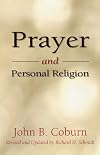
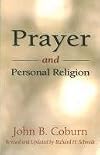
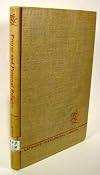
The purpose of this volume says John Coburn is to help you pray and grow in your personal religious life. It is a book about your inner life and your relationship with God. Although this relationship is unique for each person, there is a general way in which God deals with us and through which we respond. This book is concerned with this general pattern. Chapters include: Prayer is Response to God Be Yourself and Begin with Where You Are Clearing the Ground: When, Where, and How to Pray The show more Foundation Stones of Prayer: Adoration, Thanksgiving, Confession, Intercession, Petition The House that Prayer Builds: Prayers that You Think, that You Feel, that You Will Progress in Prayer: Practicing the Presence of God; Reading, Prayer Groups, Retreats; a Rule of Life; On Beginning Again Mature Personal Religion: Action and Worship On Suffering and Joy show lessTags
Recommendations





















Member Reviews
This is an early, if not first, published book by a theologian who went on to lead the Episcopal Diocese through difficult times.
The idea of "personal religion" is a little -- OK, a lot -- unclear. And the idea of prayer as communication with a divinity is foreign to this text. Still, the author begins his concluding chapter with a beautiful sentiment from William Blake, below, and the admission that "suffering and joy are inextricably bound together". But what does that "mean"? !! [90]
He offers this non-explanation: "The reason that suffering joyfully for the love of God is so powerful is very simply that this is the way of the cross. This is the way Christ did his work." [95] This is not helpful. Who thinks, or could possibly "want", show more a divinity to suffer for any reason, much less for love!
So here is the excerpt from the Blake poem "Auguries of Innocence":
Man was made for joy and woe;
And, when this we rightly know,
Safely through the world we go.
Joy and woe are woven fine,
A clothing for the soul divine."
We wear this vestment on the inside. show less
The idea of "personal religion" is a little -- OK, a lot -- unclear. And the idea of prayer as communication with a divinity is foreign to this text. Still, the author begins his concluding chapter with a beautiful sentiment from William Blake, below, and the admission that "suffering and joy are inextricably bound together". But what does that "mean"? !! [90]
He offers this non-explanation: "The reason that suffering joyfully for the love of God is so powerful is very simply that this is the way of the cross. This is the way Christ did his work." [95] This is not helpful. Who thinks, or could possibly "want", show more a divinity to suffer for any reason, much less for love!
So here is the excerpt from the Blake poem "Auguries of Innocence":
Man was made for joy and woe;
And, when this we rightly know,
Safely through the world we go.
Joy and woe are woven fine,
A clothing for the soul divine."
We wear this vestment on the inside. show less
Ratings
Members
- Recently Added By
Author Information
17 Works 435 Members
John Coburn was born in Connecticut in 1914 and educated at the Wooster School, Princeton University, and Union Theological Seminary. A World War II naval chaplain, he served as dean of Trinity Cathedral, Newark, New Jersey, and rector of parishes in New York and Massachusetts. He taught at Robert College, Istanbul, and later at what is now show more Episcopal Divinity School. He served as Bishop of Massachusetts from 1976 to 1986. He died in 2009 at the age of 95. show less
Series

Classifications
Statistics
- Members
- 184
- Popularity
- 178,694
- Reviews
- 1
- Rating
- (2.00)
- Languages
- English
- Media
- Paper, Ebook
- ISBNs
- 3
- ASINs
- 7