On This Page
Description
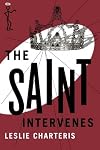
Simon Templar is the Saint--daring, dazzling, and just a little disreputable. On the side of the law, but standing outside it, he dispenses his own brand of justice one criminal at a time. In this collection of short stories, the Saint intervenes to teach a motley bag of criminals the error of their ways. Crooked financiers, bookies, fake inventors, dodgy bankers, dealers in pornography, unethical businessmen, murderers, thieves, and liars--all will come to regret the day their actions show more caught the Saint's attention. Leslie Charteris was born in Singapore and moved to England in 1919. He left Cambridge University early when his first novel was accepted for publication. He wrote novels about the Saint throughout his life, becoming one of the 20th century's most prolific and popular authors. show lessTags
Recommendations













Member Reviews
Another reviewer has already perfectly summed up these Saint short stories as “lightweight but entertaining”. I know that most Saint fans seem to prefer the novella-length or full-length Saint stories, but for a bit of light entertainment that you can dip into I personally prefer the short stories which feature in this volume and in “The Brighter Buccaneer” and “The Happy Highwayman”.
Of the fourteen stories in this book, there are only four that I would class as rather weak and therefore not worth reading again. Another four were pretty good, and six were excellent.
But there is something that I noticed about this book that I would like to go into in more detail. This is the fact that in several places Leslie Charteris show more expresses, through words that he puts into the mouths of his characters, some pretty radical views.
The Saint usually targets crooks and dodgy rich businessmen in order to enrich himself. But he does occasionally act as a Robin Hood figure, robbing the rich to help the poor. For example, in one story in this book he takes very tough action against a ruthless businessman who super-exploits his workforce, and in another he even helps out from his own pocket an ordinary person who has been under pressure from big business.
But the radical side of Charteris and the Saint comes through most strongly in the story in this volume entitled “The Noble Sportsman”. At a dinner party one sympathetic character is accused of being a Communist for expressing some leftish opinions. He replies: “I admit that I believe in the divine right of mankind to earn a decent wage, to have enough food to eat and a decent house to live in...If that is Communism, I suppose I’m a Communist.”
The same character goes on to say that people get dragged into fighting modern wars “to save the faces of their politicians and the bank balances of their businessmen.” His opponents assume that he was a conscientious objector in the First World War, but he points out that he was actually “enjoying the experience of inhaling poison gas when I was sixteen years old. While you, Ormer, were making patriotic speeches, and you, Walmar, were making money.”
The Saint is then asked if he doesn’t agree that the character “is talking like one of these damned street-corner Reds?” The Saint responds: “I rather like these street-corner Reds – one or two of them are really sincere.”
The Saint also launches a sarcastic verbal attack on upper class “sportsmen”, questioning the courage required “to watch a pack of hounds pull down a savage fox, or to loose off a shot-gun at a ferocious grouse, or to catch a great man-eating trout with a rod and line.”
Of course by the 1930s, when these stories were written, the words “Red” and “Communist” were tainted by Stalinism. The original aim of Marxists, and indeed of the 1917 Russian Revolution, had been for working people to take democratic control of the economy and society. But Stalinist Russia had become a tyrannical and bureaucratic state capitalist system, like all the other, later, so-called “communist” regimes of China, Eastern Europe etc.
Nevertheless, it was quite radical for Charteris to express such “Red” opinions through his characters.
It should also be mentioned that, although racial stereotyping is not totally absent from the Saint stories, there is much less of it than was the norm in the crime fiction of that period. (Charteris himself was of mixed Chinese-British parentage.)
Of course, the Saint is not a “Red” in the sense of fighting for what Marx called “the self-emancipation of the working class”. When he challenges ruthless rich capitalists he is more of an avenging angel figure who does things on behalf of ordinary people, rather than encouraging them to fight back collectively themselves. In that sense the Saint is very much like Robin Hood. show less
Of the fourteen stories in this book, there are only four that I would class as rather weak and therefore not worth reading again. Another four were pretty good, and six were excellent.
But there is something that I noticed about this book that I would like to go into in more detail. This is the fact that in several places Leslie Charteris show more expresses, through words that he puts into the mouths of his characters, some pretty radical views.
The Saint usually targets crooks and dodgy rich businessmen in order to enrich himself. But he does occasionally act as a Robin Hood figure, robbing the rich to help the poor. For example, in one story in this book he takes very tough action against a ruthless businessman who super-exploits his workforce, and in another he even helps out from his own pocket an ordinary person who has been under pressure from big business.
But the radical side of Charteris and the Saint comes through most strongly in the story in this volume entitled “The Noble Sportsman”. At a dinner party one sympathetic character is accused of being a Communist for expressing some leftish opinions. He replies: “I admit that I believe in the divine right of mankind to earn a decent wage, to have enough food to eat and a decent house to live in...If that is Communism, I suppose I’m a Communist.”
The same character goes on to say that people get dragged into fighting modern wars “to save the faces of their politicians and the bank balances of their businessmen.” His opponents assume that he was a conscientious objector in the First World War, but he points out that he was actually “enjoying the experience of inhaling poison gas when I was sixteen years old. While you, Ormer, were making patriotic speeches, and you, Walmar, were making money.”
The Saint is then asked if he doesn’t agree that the character “is talking like one of these damned street-corner Reds?” The Saint responds: “I rather like these street-corner Reds – one or two of them are really sincere.”
The Saint also launches a sarcastic verbal attack on upper class “sportsmen”, questioning the courage required “to watch a pack of hounds pull down a savage fox, or to loose off a shot-gun at a ferocious grouse, or to catch a great man-eating trout with a rod and line.”
Of course by the 1930s, when these stories were written, the words “Red” and “Communist” were tainted by Stalinism. The original aim of Marxists, and indeed of the 1917 Russian Revolution, had been for working people to take democratic control of the economy and society. But Stalinist Russia had become a tyrannical and bureaucratic state capitalist system, like all the other, later, so-called “communist” regimes of China, Eastern Europe etc.
Nevertheless, it was quite radical for Charteris to express such “Red” opinions through his characters.
It should also be mentioned that, although racial stereotyping is not totally absent from the Saint stories, there is much less of it than was the norm in the crime fiction of that period. (Charteris himself was of mixed Chinese-British parentage.)
Of course, the Saint is not a “Red” in the sense of fighting for what Marx called “the self-emancipation of the working class”. When he challenges ruthless rich capitalists he is more of an avenging angel figure who does things on behalf of ordinary people, rather than encouraging them to fight back collectively themselves. In that sense the Saint is very much like Robin Hood. show less
Solid collection of short stories starring Charteris' anti-hero battling assorted villains, who received something swift and terrible, even if it's not quite justice. Lively and entertaining.
Simon Templar first appeared in 1928 in 'Meet The Tiger' and Leslie Charteris continued producing novels and short stories featuring 'The Saint' until 1963; after which time he allowed other hands to write the books. The Saint Intervenes is a collection of twelve short stories; also published as 'Boodle', which has two additional tales - 'The Uncritical Publisher' & 'The Noble Sportsman'.
These are fast-moving yarns with Templar outwitting crooks and con-men at there own game. Natural justice prevails while Templar lines his own pocket and the police in the shape of Chief Inspector Claud Eustace Teal scratch their heads.
These are fast-moving yarns with Templar outwitting crooks and con-men at there own game. Natural justice prevails while Templar lines his own pocket and the police in the shape of Chief Inspector Claud Eustace Teal scratch their heads.
Ratings
Members
- Recently Added By
Lists

Elevenses
316 works; 88 members
Author Information

401+ Works 9,839 Members
Series

Belongs to Publisher Series
Doubleday Crime Club (1934.08)
Zwarte Beertjes (742)
Common Knowledge
- Canonical title
- Boodle
- Original title
- Boodle
- Alternate titles
- The Saint Intervenes
- Original publication date
- 1934
- People/Characters
- Patricia Holm; Monty Hayward; Peter Quentin; Claud Eustace Teal (Chief Inspector); Simon Templar (the Saint); George Uppingdon (show all 17); Sidney Immelbern; Wallington Titus Oates; Oscar Newdick; Dave Roberts; Melvin Flager; Domenick Naccaro; Giuseppe Rolfieri; Sumner Journ; Gilbert Tanfold; Lewis Enstone; Louie Fallon
- Important places
- London, England, UK
- First words
- LIEUTENANT-COLONEL SIR GEORGE UPPINGDON, it must be admitted,was not a genuine knight; neither, as a matter of fact, was he a genuine colonel.
- Last words
- (Click to show. Warning: May contain spoilers.)It always would be.
- Original language*
- English
- Disambiguation notice
- BOODLE has also been published as THE SAINT INTERVENES. However, the book(s) contain between 12 and 14 stories, depending on the edition, so THE SAINT INTERVENES and BOODLE are not quite the same work.
*Some information comes from Common Knowledge in other languages. Click "Edit" for more information.
Classifications
Statistics
- Members
- 197
- Popularity
- 166,066
- Reviews
- 3
- Rating
- (3.81)
- Languages
- Dutch, English
- Media
- Paper, Audiobook, Ebook
- ISBNs
- 9
- UPCs
- 1
- ASINs
- 20