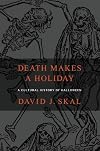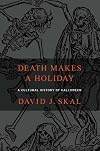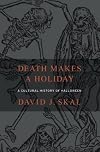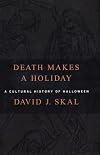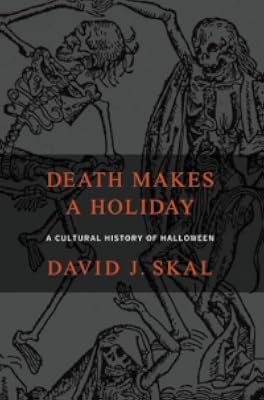
Death Makes a Holiday: A Cultural History of Halloween
by David J. Skal
On This Page
Description
Offers an in-depth study of one of America's most popular and complex holidays, tracing its history back to Celtic lore and legend, explaining how it has evolved into its current form, and exploring its various traditions.Tags
Recommendations









Member Reviews
Hmm, maybe 2.5 stars.
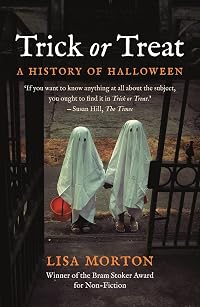
I read this more-or-less back-to-back with [b:Trick or Treat: A History of Halloween|15108967|Trick or Treat A History of Halloween|Lisa Morton|https://i.gr-assets.com/images/S/compressed.photo.goodreads.com/books/1344714782l/15108967._SY75_.jpg|20763931], and my impression, walking away, is that I preferred Trick or Treat. The two cover a lot of the same ground, though Skal goes deeper into some things (not always to the benefit of the book).
It struck me at one point that Skal's book is sort of negative in tone... not to the point that I think he dislikes Halloween: considering his usual subject matter, I'm sure that's not the case! And yet he never misses an opportunity to bring up the worst case scenarios of show more Halloween. The book opens with the story of Ronald Clark O'Bryan poisoning his son (and attempting to poison others), later on we get to hear of Halloween costumes or stunts gone wrong which resulted in death, and a haunted house that burned down with people inside, the escalating gay bashing at parades/parties... It's not relentless, and I assume it's done in service to juicy sensationalism, but it was certainly a pattern. It's not that I want those incidents ignored, either, as they are part of the history of the celebrations of Halloween, but there wasn't a feeling of enchantment in the other parts of the text to compensate. Pages 144-5 outright irritated me with the heavy dismissal of "PC culture" discouraging costumes that belittle or steal a culture. 2002 was a long time ago now, sure, but...ick. ("Loved" the defense of an unnamed -- emphasis: unnamed! -- Native American store owner feeling honored if people rented the handmade, authentic Ojibwa costumes she provided. I don't know which logical fallacy this is, but that is not what people protest generally. How's the totally-exists-for-real woman feel about Sexy Indian Princess costumes made in China of cheap polyester?) (See below for another example from this place in the book.)
The chapter near the end on horror films was meh, and spent way too much time rehashing the plots of Halloween and its various sequels. Perhaps that was Skal's compromise in exploring horror and slasher films in this book? I know Halloween occupies this weird space of not having a very solid history: haunted houses pop up in October, but horror movies are released throughout the year. Halloween embraces the macabre, but is everything macabre related to Halloween? I would argue not (ooh, ooh, maybe there's my future thesis topic in Halloweenology).
Trick or Treat wasn't super scholarly, but it was more so than this one in both tone and citation. To check the sources here, you have to flip back to the notes, find the chapter, and then look for the phrase of the sentence or passage that has a citation. That's still more than many popular nonfiction books will do, mind. I just think it's worth highlighting how sources are documented when evaluating nonfiction works.
Speaking of tone...language...word choice... the author rather abuses cute turns of phrase to create transitions between topics. Some actually do work, others are a bit tryhard, and then there was:
No, author! Why? What even is that?
Also, I just straight-up disagree with:
Nope, Nightmare Before Christmas was really explicit about Jack's Christmas efforts being all wrong, and there was no place in Christmas for Halloween creepy things. Also, pretty bold move to tie one Halloween-Christmas movie, tie it to a still relatively obscure Central European Christmas demon, and then broadly extrapolate to "all holidays" having a light/dark, death/rebirth dynamic. I guess e.g. Valentine's Day counts because the mob killed some other members of the mob, or Labor Day because of the bloody struggle of labor rights?
Time Marches
Parts of this book are now possibly a bit dated.
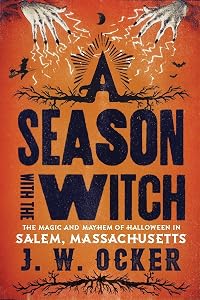
- His discussion of Salem hints that the Peabody Essex Museum is in on the spooktacular vibes of the town, which is the exact opposite message Ocker got in [b:A Season with the Witch: The Magic and Mayhem of Halloween in Salem, Massachusetts|28943696|A Season with the Witch The Magic and Mayhem of Halloween in Salem, Massachusetts|J.W. Ocker|https://i.gr-assets.com/images/S/compressed.photo.goodreads.com/books/1455299649l/28943696._SX50_.jpg|49165420]. Now, again, 2002ish versus 2015. Okay, have looked it up now. Per Ocker: 1992, PEM got a new director and a 10-year plan (i.e. wrapping up in 2002) to change the direction -- far away from witches and spooky stuff. Soooo, who do I trust, Ocker or Skal? More research needed.
- See above about his railing against "treating people with respect run amok" -- sorry, political correctness and PC "culture cops." I mean, plus ca change in some ways, yes, but that bit of editorializing hasn't aged well and/or doesn't set well with this millennial (if it's a generational thing).
-- Also! From that same cursed pair of pages, he recounts University of Alabama students dressing up for Halloween as Klansmen and staging a mock lynching -- this in 2001. Ah, the things that have become relevant yet again (how long until some of them are running for office and that resurfaces?). Anyway, Skal's choice of wording in seems to suggest that the only reason anyone was upset was due to the Southern Poverty Law Center sharing photos online and "creat[ing] the predictable media uproar." There's an innocent way of parsing that phrasing, but I'm not inclined to it due to the preceding huffing and puffing about political correctness, and also our current news and political climate. "Created" the uproar? Maybe accuse the SPLC of "virtue signalling" while you're at it, author. Even if you buy anyone's argument that e.g. blackface wasn't frowned upon in the 80s (it was), everyone(-ish, sigh) gets that KKK terrorism is bad, and recreating it is not some clever send-up or macabre, spooky event. This author, in another part of the book, even does recount some of the KKK history in connection to blacks being stereotyped as extra-superstitious and easily frightened, so...yeah. Pack that opinion away.
- Final chapter looks at how people handled Halloween in the wake of 9/11: incredibly topical for this book's original publication date, but now just a bit of a curiosity. show less
I read this more-or-less back-to-back with [b:Trick or Treat: A History of Halloween|15108967|Trick or Treat A History of Halloween|Lisa Morton|https://i.gr-assets.com/images/S/compressed.photo.goodreads.com/books/1344714782l/15108967._SY75_.jpg|20763931], and my impression, walking away, is that I preferred Trick or Treat. The two cover a lot of the same ground, though Skal goes deeper into some things (not always to the benefit of the book).
It struck me at one point that Skal's book is sort of negative in tone... not to the point that I think he dislikes Halloween: considering his usual subject matter, I'm sure that's not the case! And yet he never misses an opportunity to bring up the worst case scenarios of show more Halloween. The book opens with the story of Ronald Clark O'Bryan poisoning his son (and attempting to poison others), later on we get to hear of Halloween costumes or stunts gone wrong which resulted in death, and a haunted house that burned down with people inside, the escalating gay bashing at parades/parties... It's not relentless, and I assume it's done in service to juicy sensationalism, but it was certainly a pattern. It's not that I want those incidents ignored, either, as they are part of the history of the celebrations of Halloween, but there wasn't a feeling of enchantment in the other parts of the text to compensate. Pages 144-5 outright irritated me with the heavy dismissal of "PC culture" discouraging costumes that belittle or steal a culture. 2002 was a long time ago now, sure, but...ick. ("Loved" the defense of an unnamed -- emphasis: unnamed! -- Native American store owner feeling honored if people rented the handmade, authentic Ojibwa costumes she provided. I don't know which logical fallacy this is, but that is not what people protest generally. How's the totally-exists-for-real woman feel about Sexy Indian Princess costumes made in China of cheap polyester?) (See below for another example from this place in the book.)
The chapter near the end on horror films was meh, and spent way too much time rehashing the plots of Halloween and its various sequels. Perhaps that was Skal's compromise in exploring horror and slasher films in this book? I know Halloween occupies this weird space of not having a very solid history: haunted houses pop up in October, but horror movies are released throughout the year. Halloween embraces the macabre, but is everything macabre related to Halloween? I would argue not (ooh, ooh, maybe there's my future thesis topic in Halloweenology).
Trick or Treat wasn't super scholarly, but it was more so than this one in both tone and citation. To check the sources here, you have to flip back to the notes, find the chapter, and then look for the phrase of the sentence or passage that has a citation. That's still more than many popular nonfiction books will do, mind. I just think it's worth highlighting how sources are documented when evaluating nonfiction works.
Speaking of tone...language...word choice... the author rather abuses cute turns of phrase to create transitions between topics. Some actually do work, others are a bit tryhard, and then there was:
The witch trials effectively exploded the blocked-up septic tank that was Salem's collective soul.
No, author! Why? What even is that?
Also, I just straight-up disagree with:
"The weird, abusive pranks [Jack] Skellington ultimately inflicts upon Christmas celebrants strongly echo...Krampus... a basic acknowledgement that all holidays have a dark side, rooted in the death / rebirth dynamic..."
Nope, Nightmare Before Christmas was really explicit about Jack's Christmas efforts being all wrong, and there was no place in Christmas for Halloween creepy things. Also, pretty bold move to tie one Halloween-Christmas movie, tie it to a still relatively obscure Central European Christmas demon, and then broadly extrapolate to "all holidays" having a light/dark, death/rebirth dynamic. I guess e.g. Valentine's Day counts because the mob killed some other members of the mob, or Labor Day because of the bloody struggle of labor rights?
Time Marches
Parts of this book are now possibly a bit dated.
- His discussion of Salem hints that the Peabody Essex Museum is in on the spooktacular vibes of the town, which is the exact opposite message Ocker got in [b:A Season with the Witch: The Magic and Mayhem of Halloween in Salem, Massachusetts|28943696|A Season with the Witch The Magic and Mayhem of Halloween in Salem, Massachusetts|J.W. Ocker|https://i.gr-assets.com/images/S/compressed.photo.goodreads.com/books/1455299649l/28943696._SX50_.jpg|49165420]. Now, again, 2002ish versus 2015. Okay, have looked it up now. Per Ocker: 1992, PEM got a new director and a 10-year plan (i.e. wrapping up in 2002) to change the direction -- far away from witches and spooky stuff. Soooo, who do I trust, Ocker or Skal? More research needed.
- See above about his railing against "treating people with respect run amok" -- sorry, political correctness and PC "culture cops." I mean, plus ca change in some ways, yes, but that bit of editorializing hasn't aged well and/or doesn't set well with this millennial (if it's a generational thing).
-- Also! From that same cursed pair of pages, he recounts University of Alabama students dressing up for Halloween as Klansmen and staging a mock lynching -- this in 2001. Ah, the things that have become relevant yet again (how long until some of them are running for office and that resurfaces?). Anyway, Skal's choice of wording in seems to suggest that the only reason anyone was upset was due to the Southern Poverty Law Center sharing photos online and "creat[ing] the predictable media uproar." There's an innocent way of parsing that phrasing, but I'm not inclined to it due to the preceding huffing and puffing about political correctness, and also our current news and political climate. "Created" the uproar? Maybe accuse the SPLC of "virtue signalling" while you're at it, author. Even if you buy anyone's argument that e.g. blackface wasn't frowned upon in the 80s (it was), everyone(-ish, sigh) gets that KKK terrorism is bad, and recreating it is not some clever send-up or macabre, spooky event. This author, in another part of the book, even does recount some of the KKK history in connection to blacks being stereotyped as extra-superstitious and easily frightened, so...yeah. Pack that opinion away.
- Final chapter looks at how people handled Halloween in the wake of 9/11: incredibly topical for this book's original publication date, but now just a bit of a curiosity. show less
Did you know Ehrich Weiss, better known as Harry Houdini, died Halloween night in 1926? It wasn’t a stunt gone awry, but a dare acted out a week earlier which led to his demise. The story, told through David J. Skal’s book Death Makes a Holiday: A Cultural History of Halloween, clarifies a university student followed him to his dressing room where he dared Houdini to take a stomach punch. Skal continues, “He may already have been suffering from undiagnosed appendicitis; the result was peritonitis and a swift but excruciating death.”
During Houdini’s time, Spiritualism was a growing movement. Some Victorians believed spirits of the newly departed could be communicated with through the use of Mediums. World War I also gave rise show more to the movement because of the enormous death toll.
Mr. Houdini thought Mediums were con artist and enjoyed debunking their methods. His wife Bess, on the other hand, was a devote Spiritualist who lived to prove him wrong. Before Houdini’s death, he gave a secret code to his wife and other believers such as Sir Arthur Conan Doyle. If Mediums were the real deal surely one could relay the message back.
Every year for ten years, Bess attended different séances on Halloween night, with noted Spiritualists. She left unenthusiastic. Finally, a New York seer named Arthur Ford claimed he had been contacted by Houdini’s spirit. Bess acknowledged his claim and signed a statement proving its validity, but she later recanted claiming the code wasn’t all that secret.
What was the secret message? I know you are dying to know! The bunch of garbled-goop goes, “ROSABELLE ANSWER TELL PRAY ANSWER LOOK TELL ANSWER ANSWER TELL.”
Author Skal has written an engaging history of Halloween. Through the use of the Oxford English Dictionary and period postcards, he follows the migration of the celebration from Europe to America. What started as a way to relax after the harvest has now turned to big business with Disney costumes and Hershey candies.
Within the pages one will read all about haunted houses, witches, Jack-o’-Lanterns, and skeletons. He includes a fascinating chapter on Hollywood title, “Halloween on Screen” and concludes with the scariest of scenarios, September 11.
This was a purely fun, nostalgic look at Halloween when the monsters were in front of the door and not behind it. show less
During Houdini’s time, Spiritualism was a growing movement. Some Victorians believed spirits of the newly departed could be communicated with through the use of Mediums. World War I also gave rise show more to the movement because of the enormous death toll.
Mr. Houdini thought Mediums were con artist and enjoyed debunking their methods. His wife Bess, on the other hand, was a devote Spiritualist who lived to prove him wrong. Before Houdini’s death, he gave a secret code to his wife and other believers such as Sir Arthur Conan Doyle. If Mediums were the real deal surely one could relay the message back.
Every year for ten years, Bess attended different séances on Halloween night, with noted Spiritualists. She left unenthusiastic. Finally, a New York seer named Arthur Ford claimed he had been contacted by Houdini’s spirit. Bess acknowledged his claim and signed a statement proving its validity, but she later recanted claiming the code wasn’t all that secret.
What was the secret message? I know you are dying to know! The bunch of garbled-goop goes, “ROSABELLE ANSWER TELL PRAY ANSWER LOOK TELL ANSWER ANSWER TELL.”
Author Skal has written an engaging history of Halloween. Through the use of the Oxford English Dictionary and period postcards, he follows the migration of the celebration from Europe to America. What started as a way to relax after the harvest has now turned to big business with Disney costumes and Hershey candies.
Within the pages one will read all about haunted houses, witches, Jack-o’-Lanterns, and skeletons. He includes a fascinating chapter on Hollywood title, “Halloween on Screen” and concludes with the scariest of scenarios, September 11.
This was a purely fun, nostalgic look at Halloween when the monsters were in front of the door and not behind it. show less
Written in 2002, Skal investigates both the origins of the holiday and the modern interpretations. He writes about the single case of candy tampering at Halloween that has been prosecuted, that of Ronald O' Bryan, who in 1974 gave his children and his friend's children poisoned Pixie Stixs. O'Bryan's son died and he was executed. There are chapters that include the rise of adults celebrating, the rise in popularity of high cost costumes rather than homemade ones, the history of police and anti-gay groups clashing with celebrants in San Francisco and NYC, church sponsored "Hell Houses" and profiles of "yard haunters", people who go all out to turn their homes into haunted houses. Really interesting and goes into territory that you show more usually don't find in "history of Halloween" books. show less
An interesting, if unfocused, look at a uniquely American holiday. Chapter one is the best part of the book as it explores the history of Halloween from routes in pagan and Christian religious holidays to the mischievous vandalism of the early twentieth century to the modern candy-collecting spree. The other chapters seem to ramble through a series of topics that are interesting, but span such a broad realm of Halloween lore and tradition that the book doesn't mesh well. The afterword about the effects of 9/11 on Halloween 2001 seems gratuitous and tacked on because of when the book was published.
A fascinating and entertaining look at the modern history of Halloween. This is one I will read again and probably buy.
An informative, creepy and fun account of the history of Halloween, from its roots in European history to its current de-fanged, corporate, binge chocolate and parent-helicoptering version.
Covers
- The evolution of Halloween iconography
- Its uneasy relationship with mainstream culture and
- Its periodical service as a flash point for Christian fundamentalists
- and its resonance and popularity with marginalized societies
Spooky fun!
Covers
- The evolution of Halloween iconography
- Its uneasy relationship with mainstream culture and
- Its periodical service as a flash point for Christian fundamentalists
- and its resonance and popularity with marginalized societies
Spooky fun!
A fun, light-weight cultural history of Halloween. I was hoping for more substance -- but enjoyed it nonetheless.
Members
- Recently Added By
Author Information

30+ Works 7,601 Members
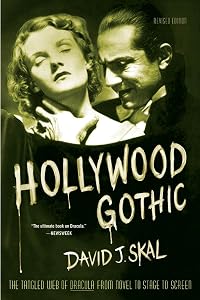
David J. Skal is a respected scholar of all things macabre. A frequent talk-show guest and lecturer, his many media appearances include "The CBS Evening News," " Joan Rivers," "Charlie Rose," and NPR's "All Things Considered." He is the author of The Monster Show, Hollywood Gothic, and Dark Carnival. He has written, produced and appeared in a show more variety of film and television documentaries on occult and pop-culture subjects. (Bowker Author Biography) show less
Classifications
- Genres
- Nonfiction, History, General Nonfiction, Sociology, Religion & Spirituality
- DDC/MDS
- 394.2646 — Society, government, & culture Customs, etiquette & folklore General customs Special Occasions Holidays Holidays of September, October, November Halloween
- LCC
- GT4965 .S58 — Geography, Anthropology and Recreation Manners and customs (General) Manners and customs (General) Customs relative to public and social life
- BISAC
Statistics
- Members
- 241
- Popularity
- 135,476
- Reviews
- 7
- Rating
- (3.65)
- Languages
- English
- Media
- Paper
- ISBNs
- 3
- ASINs
- 2