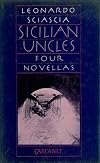
Sicilian Uncles
by Leonardo Sciascia
On This Page
Description
A Sicilian uncle is a mentor, a patron, but a sinister and treacherous one. This quartet of thriller novellas shows illusions being lost and ideals betrayed amid war and revolution.Tags
Recommendations
















Member Reviews
Good collection of novellas, ostenibly linked in terms of the shadiness of Sicilian uncles but really each an exploration of how the Sicilian psyche has accommodated sweeping changes in different historical epochs. The first one shows the fickleness of family after the Americans occupy a village in WWII and suddenly certain committed fascists become dedicated free-market acolytes. The second follows the dedicated attempts of a dyed in the wool communist to lament Stalin's death. The third goes back to the failed revolution in 1848 and subsequent landing of Garibaldi in 1860 that finally ended the Bourbon reign, during which time the ability of a duplicitous Baron to navigate the shifting tides is ruefully observed by more genuine show more partisans. Finally, the best one recounts the plight of working-class soldiers who 'volunteer' to serve with the Italian army in the Spanish civil war, half aware that the side they are fighting actually represents their interests. It is particularly tragic and witty in how those at the bottom are borne along by political currents. show less
Leonardo Sciascia’s Sicilian Uncles, translated here from the Italian by N.S. Thompson, is a collection of four stories/novellas. I have enjoyed everything I’ve read by this man (see my other reviews) but I was apprehensive when I learned that this was a collection of early stories. I worried they might be weak or formative works. Well, they aren’t. They are mature works of fiction, full-fledged “Sciascias” in every sense. There is not a clunker in the bunch. Be advised, however, they do not focus on those topics the author is most famous for: detectives and the mafia; nor do I think they can be called, as the generic description does here, "thrillers."
“The American Aunt”
The American Aunt opens in 1943 when the Allies were show more just about to take the small Sicilian town in which our young narrator lives. The unnamed narrator and his friend get up to all kinds of high-jinks. Then the Americans arrive and the two start hanging around with Tony, a NCO who tells them about the United States. If you’ve done reading of any scope on the Second World War, this is a story for you.
In its fifty pages Sciascia seems to touch on every aspect of the conflict in Sicily. Fascinating is the depiction of the local fascists, among whom the narrator’s father and uncle. The uncle is a shrill and unrepentant layabout. The narrator sells him black market cigarettes at extravagant prices which he resents. The father knows Mussolini has failed in a major way and tosses his fascist insignia onto a neighbor’s roof for safekeeping. He doesn't want it laying about the house. The uncle however will hear none of it. He longs for the days when Mussolini kept Italy “respected in the world” but says nothing about the lost war his hero also wanted. The young narrator teases him mercilessly. The narrator is thrilled by the Americans. His view of what has happened in Italy is free from patriotic fascist claptrap.
Then the war ends and into this setting comes his mother’s sister, the eponymous american aunt. The aunt was born in the same poor small town in which her sister and the narrator still live. The aunt has a store somewhere in Brooklyn. She is rich by comparison with her Sicilian relatives. And she let’s everyone know just how rich she is. Her unquestionably generous gifts come at a price: a shrill and persistent bossiness. For in the end the aunt is the same small-minded provincial she's always been. The action is compressed, vivid and fast moving. The cries from the disillusioned uncle remind one of a wounded lion gone into the bush to die. I won’t give away the kicker. This is a wonderful story.
“The Death of Stalin”
Like most Americans of my generation I have often found the historical popularity of Stalin perplexing. That he was ever seen in congenial terms, that he ever had millions upon millions of admirers seems incredible. That he is still held in awe by many people today is nauseating. This story shows how a group of village socialists in Sicily deluded themselves into thinking Stalin was a hero. Calogero is enamoured of Stalin, views him as a good person concerned with the fate of the worker. It becomes clear, in the context offered by fascist Mussolini and his black shirts, why Calogero so readily embraces “Uncle Joe.” Calogero is himself enormously loyal and kind, but he has suffered:
The story is set in a small Sicilian village during the war in which we see how the local socialists, whose mouthpiece is Calogero, rationalize Stalin’s behavior, his inaction and his actions, during that war.
” 'Forty-Eight’ ”
This is a story of the revolution of 1848 as it affected the Sicilian town of Castro, specifically the household of Baron Garziano. The narrator is the son of the Baron’s gardener and Sunday coachman, Master Carme. The Baron is married to a dessicated, overly pious woman, Donna Concettina, whom he betrays with the wife of one of his workers, a harmless fellow called Pepé. The Baron has the kind Pepé hauled off to prison so fornication with his unfaithful wife won’t be inconveniently interruptus. There is a hilarous scene in which the shrewish Donna Concettina catches the Baron inside the apartment of Mrs. Pepé. Donna Concettina bangs on the mistress’s door with a rock. Only Sciascia could have written it.
Then the revolution begins in earnest and the Baron’s cowardice knows no bounds. He cowers from what he clearly views as the just rage of the populace. He has Master Carme answer the door. It’s pure tumult: with the King’s intendent and judge returning from their flight to now feel some sympathy for the liberals’ (revolutionaries’) positions. At one point all the local liberals are released from jail where they had been held for some time. The Baron sees his tidy world turned upside down. There’s a brief period of cooperation. Somehow the local Bishop has been able to create an assembly comprised aristocracy, clergy, and peasantry. How can this possibly work? It can’t. The social rift is too yawning a chasm.
Soon several local socialists are dead, murdered in the streets, which may the purpose for which they were released. Donna Concettina will no longer speak with the Baron who must exchange comments via a third party, sometimes Master Carme. Sciascia is able to give a sense of how the revolution happened in rural Sicily. We see the political forces come into play, but at the same time the story verges on high-grade farce.
“Antimony”
This final story of the collection, set during the Spanish Civil War (1936-39), is narrated by one of the unemployed Italians that fascist Bennito Mussolini has sent to Franco. In Spain the poor tended to be Republicans (Communists, Anarchists, Socialists, etc.). The tragedy here is that Italy has sent its own poor to fight on the side of Franco and the fascist Falange. The story seeks to question and inform the reader about the role of Italy in the Spanish Civil War. It does so brilliantly.
This collection is highly recommended. show less
“The American Aunt”
The American Aunt opens in 1943 when the Allies were show more just about to take the small Sicilian town in which our young narrator lives. The unnamed narrator and his friend get up to all kinds of high-jinks. Then the Americans arrive and the two start hanging around with Tony, a NCO who tells them about the United States. If you’ve done reading of any scope on the Second World War, this is a story for you.
In its fifty pages Sciascia seems to touch on every aspect of the conflict in Sicily. Fascinating is the depiction of the local fascists, among whom the narrator’s father and uncle. The uncle is a shrill and unrepentant layabout. The narrator sells him black market cigarettes at extravagant prices which he resents. The father knows Mussolini has failed in a major way and tosses his fascist insignia onto a neighbor’s roof for safekeeping. He doesn't want it laying about the house. The uncle however will hear none of it. He longs for the days when Mussolini kept Italy “respected in the world” but says nothing about the lost war his hero also wanted. The young narrator teases him mercilessly. The narrator is thrilled by the Americans. His view of what has happened in Italy is free from patriotic fascist claptrap.
Then the war ends and into this setting comes his mother’s sister, the eponymous american aunt. The aunt was born in the same poor small town in which her sister and the narrator still live. The aunt has a store somewhere in Brooklyn. She is rich by comparison with her Sicilian relatives. And she let’s everyone know just how rich she is. Her unquestionably generous gifts come at a price: a shrill and persistent bossiness. For in the end the aunt is the same small-minded provincial she's always been. The action is compressed, vivid and fast moving. The cries from the disillusioned uncle remind one of a wounded lion gone into the bush to die. I won’t give away the kicker. This is a wonderful story.
“The Death of Stalin”
Like most Americans of my generation I have often found the historical popularity of Stalin perplexing. That he was ever seen in congenial terms, that he ever had millions upon millions of admirers seems incredible. That he is still held in awe by many people today is nauseating. This story shows how a group of village socialists in Sicily deluded themselves into thinking Stalin was a hero. Calogero is enamoured of Stalin, views him as a good person concerned with the fate of the worker. It becomes clear, in the context offered by fascist Mussolini and his black shirts, why Calogero so readily embraces “Uncle Joe.” Calogero is himself enormously loyal and kind, but he has suffered:
...All the poor who believed in hope, used to call him ‘Uncle Joe,’ as they had once done Garibaldi. They used the name ‘uncle’ for all the men who brought justice or vengeance, the hero or the capomafia: the ideal of justice always shines when vindictive thoughts are decanted. Calogero had been interned [under Mussolini], his comrades there had instructed him in doctrine, but he couldn’t think of Stalin as anything other than an ‘Uncle’ who could arm for a vendetta and strike decisively a baccagliu, that is, in the slang of all Sicilian ‘Uncles’....
The story is set in a small Sicilian village during the war in which we see how the local socialists, whose mouthpiece is Calogero, rationalize Stalin’s behavior, his inaction and his actions, during that war.
” 'Forty-Eight’ ”
This is a story of the revolution of 1848 as it affected the Sicilian town of Castro, specifically the household of Baron Garziano. The narrator is the son of the Baron’s gardener and Sunday coachman, Master Carme. The Baron is married to a dessicated, overly pious woman, Donna Concettina, whom he betrays with the wife of one of his workers, a harmless fellow called Pepé. The Baron has the kind Pepé hauled off to prison so fornication with his unfaithful wife won’t be inconveniently interruptus. There is a hilarous scene in which the shrewish Donna Concettina catches the Baron inside the apartment of Mrs. Pepé. Donna Concettina bangs on the mistress’s door with a rock. Only Sciascia could have written it.
Then the revolution begins in earnest and the Baron’s cowardice knows no bounds. He cowers from what he clearly views as the just rage of the populace. He has Master Carme answer the door. It’s pure tumult: with the King’s intendent and judge returning from their flight to now feel some sympathy for the liberals’ (revolutionaries’) positions. At one point all the local liberals are released from jail where they had been held for some time. The Baron sees his tidy world turned upside down. There’s a brief period of cooperation. Somehow the local Bishop has been able to create an assembly comprised aristocracy, clergy, and peasantry. How can this possibly work? It can’t. The social rift is too yawning a chasm.
Soon several local socialists are dead, murdered in the streets, which may the purpose for which they were released. Donna Concettina will no longer speak with the Baron who must exchange comments via a third party, sometimes Master Carme. Sciascia is able to give a sense of how the revolution happened in rural Sicily. We see the political forces come into play, but at the same time the story verges on high-grade farce.
“Antimony”
This final story of the collection, set during the Spanish Civil War (1936-39), is narrated by one of the unemployed Italians that fascist Bennito Mussolini has sent to Franco. In Spain the poor tended to be Republicans (Communists, Anarchists, Socialists, etc.). The tragedy here is that Italy has sent its own poor to fight on the side of Franco and the fascist Falange. The story seeks to question and inform the reader about the role of Italy in the Spanish Civil War. It does so brilliantly.
This collection is highly recommended. show less
I'm slowly reading all of Sciascia's work insofar as it's available in English.
Like John Berger's fiction, there's an urge to put Sciascia's into sociology or some such category. Absolutely not because it's a historical fiction, padded out with stuff about How Things Used To Be Done, but because they are political. This could be bad, but it isn't. Although Berger and Sciascia have hearts and consciences, above all they are not proselytisers but observers. And if your observations are acute enough, there is no need to state the obvious.
rest is here: https://alittleteaalittlechat.wordpress.com/2019/08/13/sicilian-uncles-by-leonar...
Like John Berger's fiction, there's an urge to put Sciascia's into sociology or some such category. Absolutely not because it's a historical fiction, padded out with stuff about How Things Used To Be Done, but because they are political. This could be bad, but it isn't. Although Berger and Sciascia have hearts and consciences, above all they are not proselytisers but observers. And if your observations are acute enough, there is no need to state the obvious.
rest is here: https://alittleteaalittlechat.wordpress.com/2019/08/13/sicilian-uncles-by-leonar...
I'm slowly reading all of Sciascia's work insofar as it's available in English.
Like John Berger's fiction, there's an urge to put Sciascia's into sociology or some such category. Absolutely not because it's a historical fiction, padded out with stuff about How Things Used To Be Done, but because they are political. This could be bad, but it isn't. Although Berger and Sciascia have hearts and consciences, above all they are not proselytisers but observers. And if your observations are acute enough, there is no need to state the obvious.
rest is here: https://alittleteaalittlechat.wordpress.com/2019/08/13/sicilian-uncles-by-leonar...
Like John Berger's fiction, there's an urge to put Sciascia's into sociology or some such category. Absolutely not because it's a historical fiction, padded out with stuff about How Things Used To Be Done, but because they are political. This could be bad, but it isn't. Although Berger and Sciascia have hearts and consciences, above all they are not proselytisers but observers. And if your observations are acute enough, there is no need to state the obvious.
rest is here: https://alittleteaalittlechat.wordpress.com/2019/08/13/sicilian-uncles-by-leonar...
Quatre nouvelles du grand écrivain sicilien. Dans chacune, le petit monde de son île se trouve transformé par un tournant de l'Histoire. Dans « Quarante-huit », la victoire de Garibaldi fait d'un hobereau monarchiste un adepte des idées nouvelles. Dans « L'Antimoine », un pauvre paysan, engagé chez les franquistes pendant la guerre civile espagnole, découvre qu'il se bat contre des gens qui lui ressemblent. « La Tante d'Amérique » évoque la Libération, l'arrivée des Américains avec leurs bienfaits, mais aussi leur incompréhension. Dans « La Mort de Staline », un cordonnier obtus ne se remet pas des révélations du XXe Congrès.
Muy buenos cuentos uno de ellos el del Quarantoto es El Gatopardo pero desde el lado de los pobres. La muerte de Stalin muy bueno y el antimonio sobre la guerra de españa tambien buenisimo
Incluye cuatro cuentos
Aug 20, 2010Spanish
Members
- Recently Added By
Lists

Italian Literature
558 works; 43 members
Author Information

626+ Works 9,898 Members
Born in Sicily, Sciascia was a literary and critical genius as well as a best-selling activist-writer. In the tradition of such Sicilian writers as Luigi Pirandello and Giuseppe Di Lampedusa, he explored in neorealist novels the island's impact on its inhabitants' lives: how they coped with crime, the Mafia, and corruption. His best-known works show more include The Day of the Owl, The Sicilian Relatives, and the collection of short stories The Wine-Dark Sea. In his most controversial work, The Moro Affair, he implicated Italy's leaders in the 1978 kidnapping and murder of former premier Aldo Moro by the leftist terrorist group, the Red Brigade. Though a long-time Communist, Sciascia eventually left the party to become a member of the Radical party, whose tenets were closer to his own anarchist leanings. As a representative of the party, Sciascia was elected to both the Italian and European Parliaments. (Bowker Author Biography) show less
Some Editions
Series
Belongs to Publisher Series
Work Relationships
Is contained in
Common Knowledge
- Canonical title
- Sicilian Uncles
- Original title
- Gli zii di Sicilia
- Original publication date
- 1958
- First words*
- Filippo silbó desde la calle a las tres de la tarde.
- Original language
- Italian
*Some information comes from Common Knowledge in other languages. Click "Edit" for more information.
Classifications
- Genres
- Fiction and Literature, General Fiction
- DDC/MDS
- 853.914 — Literature & rhetoric Italian, Romanian & related literatures Italian fiction 1900- 20th Century 1945-1999
- LCC
- PQ4879 .C54 .Z313 — Language and Literature French, Italian, Spanish and Portuguese literatures Italian literature Individual authors, 1961-2000
Statistics
- Members
- 316
- Popularity
- 101,431
- Reviews
- 8
- Rating
- (4.06)
- Languages
- 6 — Catalan, English, French, German, Italian, Spanish
- Media
- Paper, Ebook
- ISBNs
- 22
- ASINs
- 11