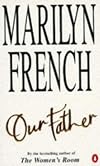
Our Father
by Marilyn French
On This Page
Description
The woman who changed the face of feminism with The Women's Room brings us an unforgettable story of sisterhood, fatherhood, family, and loveIn a Massachusetts hospital, as distinguished presidential adviser Stephen Upton lies mortally ill, four women gather at his lavish mansion. Half sisters Elizabeth, Mary, Alex, and Ronnie have painful and poignant memories of their childhoods-and of their father.Born to different mothers, the sisters haven't seen one another in years.As Upton hovers show more between life and death, his daughters begin to open up about the man they love and hate. They share their s show lessTags
Recommendations






















Member Reviews
I have mixed feelings about "Our Father" by Marilyn French. The novel started off interesting enough. However, it was a bit convoluted and at times, making it difficult to follow the characters. I liked the dynamics of the various sisters and the difficulties they faced being raised by different mothers. As they come together and get to know one another on a more personal level, a dark secret is revealed. This is where I found the plot to lose its luster. The dialogue and behavior of the main characters were so unrealistic, it just didn't hold my interest. The ending, in my opinion, was a letdown.
I have mixed feelings about "Our Father" by Marilyn French. The novel started off interesting enough. However, it was a bit convoluted and at times, making it difficult to follow the characters. I liked the dynamics of the various sisters and the difficulties they faced being raised by different mothers. As they come together and get to know one another on a more personal level, a dark secret is revealed. This is where I found the plot to lose its luster. The dialogue and behavior of the main characters were so unrealistic, it just didn't hold my interest. The ending, in my opinion, was a let down.
Durch den Schlaganfall des Vaters alarmiert, treffen nach Jahren die vier Töchter des Mannes wieder aufeinander. Sie sind Halbschwestern und so unterschiedlich wie es nur geht. Doch nachdem sie die ersten gegeneinander gerichteten Kämpfe ausgetragen haben, kristallisiert sich mehr und mehr heraus, das es etwas gibt, was sie alle verbindet: Die Gefühle gegenüber ihrem Vater, der ihnen allen eine grausame Kindheit beschert hat. Diese Erfahrung schweißt sie zusammen, sie beschließen, sich zu rächen. Sie holen ihren Vater zu sich nach Hause...
Ecrit en 1994, déjà sur la thème du prédateur, d'un père prédateur et de sororité pour accomplir le pire mais aussi faire face ensemble pour dépasser le traumatisme et continuer à vivre
HIGHLY RECOMMENDED. Selected excerpts and comments ...
“I wanted to command attention the way he did, learned how to do it too, Clare said I had it down, but not the same, they don’t listen to me the same way, it’s different. They liked listening, looking up to him, elder statesman. They don’t like listening to me.” p22
“Oh, why didn’t I go? Nobody asked me.” p110
Because we’ve been taught from the beginning that we must not ask, we must wait. Wait for a man to ask us to the prom, to ask us out for a drink, dinner, a date, marriage. Along with the convention that those events are supposedly of utmost importance in a woman’s life, it’s no wonder we grow up waiting to be asked for — everything. Jobs, membership on show more task forces and projects, raises, promotions, clients … all the things that put us on the ladder, and help us ascend, to status and income.
Imagine a world in which boys were reprimanded for asking, we taught they must wait— Well, full stop there.
And imagine, of course, that women seldom ask them for anything of importance because, well, men just aren’t that important, except as escorts in one way or another …
And it’s not just that. The few of us who do ask are told ‘no’ (if our asking is indeed acknowledged, ‘heard’…). (And note, we don’t respond to rejection with a shooting spree.)
So often, we eventually stop.
“Is that all I am to him, a shudder in the loins? Is that all fatherhood is?” p216
“Poor kid, what must that feel like, your own father doesn’t even have the interest to lay eyes on you.” p216
“All I want is some answers. … I don’t care about the money.” p222
…
“You’re asking for something he doesn’t want to give.” p223
No, more likely, something he doesn’t have. I dare say we impute too much self-awareness to men on issues like this.
“He was so powerful things just appeared before him when he wanted them.” p227
Right. Men don’t even have to ask. And women don’t ask. Partly because they’ve been taught all their lives not to; we’re supposed to just wait … See above. And partly because when we do ask, we don’t get what we’re asking for anyway. See This is what happens, Chris Wind.
“… that you and generations of men before you felt that incest was their prerogative, their right—that fathers own the bodies of their daughters as they do those of their wives and slaves. And that they believe they have the right to own other human beings, to control them, that indeed, they define manhood as the ability to control others.” p296 (my emphasis)
“… you [the father who raped her when she was a child, telling her the whole time that he loved her…] destroyed utterly my ability to discriminate love from power, sex from submission. You ruined my emotional life. Forever.” p300
Does that explain the possibly increasing preference for ‘rough’ sex?
“This left me with a sense of helplessness and inferiority—a sense that I have no existence, don’t matter—that I will have to battle as long as I live.” p302
Don’t need to rape your daughters to do that. Just ignore and belittle them from the moment they’re born until they finally get the fuck out of your house.
“Even though I never harmed you—after all, I have no responsibility for my own existence, my ow birth—and never wished you ill, you have condemned me to eternal shadowhood and pain.” p303
Indeed. Men, why do you create something in order to ignore it, abandon it, to hurt it so? Because perverse ‘masculinity’ requires it. And you buy it. Masculinity.
“I don’t have to have another husband. The thought shocked her into utter stillness.” p318
Pity more women don’t realize that at eighteen. In our current society, we don’t need to marry a man. End of story. Take advantage of that! show less
“I wanted to command attention the way he did, learned how to do it too, Clare said I had it down, but not the same, they don’t listen to me the same way, it’s different. They liked listening, looking up to him, elder statesman. They don’t like listening to me.” p22
“Oh, why didn’t I go? Nobody asked me.” p110
Because we’ve been taught from the beginning that we must not ask, we must wait. Wait for a man to ask us to the prom, to ask us out for a drink, dinner, a date, marriage. Along with the convention that those events are supposedly of utmost importance in a woman’s life, it’s no wonder we grow up waiting to be asked for — everything. Jobs, membership on show more task forces and projects, raises, promotions, clients … all the things that put us on the ladder, and help us ascend, to status and income.
Imagine a world in which boys were reprimanded for asking, we taught they must wait— Well, full stop there.
And imagine, of course, that women seldom ask them for anything of importance because, well, men just aren’t that important, except as escorts in one way or another …
And it’s not just that. The few of us who do ask are told ‘no’ (if our asking is indeed acknowledged, ‘heard’…). (And note, we don’t respond to rejection with a shooting spree.)
So often, we eventually stop.
“Is that all I am to him, a shudder in the loins? Is that all fatherhood is?” p216
“Poor kid, what must that feel like, your own father doesn’t even have the interest to lay eyes on you.” p216
“All I want is some answers. … I don’t care about the money.” p222
…
“You’re asking for something he doesn’t want to give.” p223
No, more likely, something he doesn’t have. I dare say we impute too much self-awareness to men on issues like this.
“He was so powerful things just appeared before him when he wanted them.” p227
Right. Men don’t even have to ask. And women don’t ask. Partly because they’ve been taught all their lives not to; we’re supposed to just wait … See above. And partly because when we do ask, we don’t get what we’re asking for anyway. See This is what happens, Chris Wind.
“… that you and generations of men before you felt that incest was their prerogative, their right—that fathers own the bodies of their daughters as they do those of their wives and slaves. And that they believe they have the right to own other human beings, to control them, that indeed, they define manhood as the ability to control others.” p296 (my emphasis)
“… you [the father who raped her when she was a child, telling her the whole time that he loved her…] destroyed utterly my ability to discriminate love from power, sex from submission. You ruined my emotional life. Forever.” p300
Does that explain the possibly increasing preference for ‘rough’ sex?
“This left me with a sense of helplessness and inferiority—a sense that I have no existence, don’t matter—that I will have to battle as long as I live.” p302
Don’t need to rape your daughters to do that. Just ignore and belittle them from the moment they’re born until they finally get the fuck out of your house.
“Even though I never harmed you—after all, I have no responsibility for my own existence, my ow birth—and never wished you ill, you have condemned me to eternal shadowhood and pain.” p303
Indeed. Men, why do you create something in order to ignore it, abandon it, to hurt it so? Because perverse ‘masculinity’ requires it. And you buy it. Masculinity.
“I don’t have to have another husband. The thought shocked her into utter stillness.” p318
Pity more women don’t realize that at eighteen. In our current society, we don’t need to marry a man. End of story. Take advantage of that! show less
Ratings
Members
- Recently Added By
Author Information

39+ Works 5,315 Members
Writer and feminist activist Marilyn French was born in Brooklyn, New York on November 21, 1929. She studied philosophy and English literature at Hofstra College, earning a bachelor's degree in 1951 and a master's in 1964. Before earning her doctorate from Harvard University, she taught English at Hofstra from 1964 to 1968. She was an assistant show more professor of English at the College of the Holy Cross from 1972 to 1976. She wrote numerous books throughout her lifetime including The Women's Room (1977), The War against Women (1992), and Season in Hell: A Memoir (1998). She died of heart failure on May 2, 2009 at the age of 79. (Bowker Author Biography) show less
Some Editions
Common Knowledge
- Canonical title*
- Our Father
- Original publication date
- 1994
- Dedication*
- Voor mijn medezusters
E.M. Broner
Carol Jenkins
Gloria Steinem
In liefde en dankbaarheid - First words*
- 'Vrouwen kunnen je even erg kwetsen als mannen!' foeterde Ronnie heftig in het duister van de vensternis.
- Last words*
- (Click to show. Warning: May contain spoilers.)Vooruit, Ronnie.
*Some information comes from Common Knowledge in other languages. Click "Edit" for more information.
Classifications
Statistics
- Members
- 299
- Popularity
- 107,251
- Reviews
- 5
- Rating
- (3.60)
- Languages
- 7 — Danish, Dutch, English, French, German, Norwegian (Bokmål), Swedish
- Media
- Paper, Audiobook, Ebook
- ISBNs
- 26
- ASINs
- 3