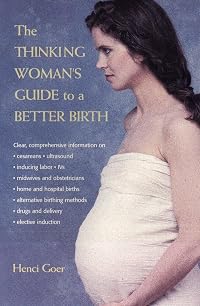
The Thinking Woman's Guide to a Better Birth
by Henci Goer
On This Page
Description
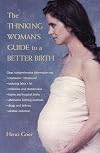
As an intelligent woman, you are probably used to learning as much as you can before making major decisions. But when it comes to one of the most important decisions of your life--how you will give birth--it is hard to gather accurate, unbiased information. Surprisingly, much of the research does not support common medical opinion and practice. Birth activist Henci Goer gives clear, concise information based on the latest medical studies. The Thinking Woman's Guide to a Better Birth helps show more you compare and contrast your various options and shows you how to avoid unnecessary procedures, drugs, restrictions, and tests. The book covers: Cesareans Breech babies Inducing labor Electronic Fetal Monitoring Rupturing Membranes Coping with slow labor Pain medication Epistiotomy Vaginal birth after a Ceasarean Doulas Deciding on a doctor or midwife Choosing where to have your baby and much more . . . show lessTags
Recommendations





Member Reviews
Controversial thought: Why is an epidural(Pit, or an ultrasound) like medical marijuana in 2019*?
That question is quite answerable after reading this book. Or even just glancing through allllllllll her notes and citations in the back. She's done her homework.**
I also liked her opinion of physicians. Believe it or not, most of the medical books I've read over the past year have been quite negatively prejudiced towards medical professionals (who are human and subject to the same failings that other people are). The problem, she seems to say several times, isn't completely their fault, it's the educational, legal, and hospital money-making system.
So why did I rate it so low?
While the information was good, the tone was harsh. This woman show more does not soften the facts... and these can get descriptively gruesome. While I believe in letting people know what has been studied (and what has not been studied), I felt a twinge of sympathy for a certain subset of women, who might be reading this book, who have no choice. Consider a woman who is pregnant with twins. Has no option but to go to a hospital. Due to positioning, has no option but to have a c-section. After reading this book, she will probably be an anxious mess, convinced that she is set up for horrendous complications and setting her twins up for a life of bad health. So I thought the tone could have been softened.
Second, she repeats her information quite regularly. I think that could have been remedied. But maybe the reader was just supposed to read the chapters by themselves and not the book as a whole? Who knows what the author intended.
*In 10 years I predict it will be different.
**or has presented it about mostly everything. There is an interesting aside in her section about choosing an OB-GYN, about asking how often they will take ultrasounds of the baby. Unfortunately, she never expounds on that point, why it would matter, etc. Also check this one out before you decide whether she's right or wrong. show less
That question is quite answerable after reading this book. Or even just glancing through allllllllll her notes and citations in the back. She's done her homework.**
I also liked her opinion of physicians. Believe it or not, most of the medical books I've read over the past year have been quite negatively prejudiced towards medical professionals (who are human and subject to the same failings that other people are). The problem, she seems to say several times, isn't completely their fault, it's the educational, legal, and hospital money-making system.
So why did I rate it so low?
While the information was good, the tone was harsh. This woman show more does not soften the facts... and these can get descriptively gruesome. While I believe in letting people know what has been studied (and what has not been studied), I felt a twinge of sympathy for a certain subset of women, who might be reading this book, who have no choice. Consider a woman who is pregnant with twins. Has no option but to go to a hospital. Due to positioning, has no option but to have a c-section. After reading this book, she will probably be an anxious mess, convinced that she is set up for horrendous complications and setting her twins up for a life of bad health. So I thought the tone could have been softened.
Second, she repeats her information quite regularly. I think that could have been remedied. But maybe the reader was just supposed to read the chapters by themselves and not the book as a whole? Who knows what the author intended.
*In 10 years I predict it will be different.
**or has presented it about mostly everything. There is an interesting aside in her section about choosing an OB-GYN, about asking how often they will take ultrasounds of the baby. Unfortunately, she never expounds on that point, why it would matter, etc. Also check this one out before you decide whether she's right or wrong. show less
Though by now overdue for an update, this books has a lot of benefit for women who are looking for a more intellectual approach to the subject of childbirth. The book is well-organized, with chapter-by-chapter summaries of what specific steps moms-to-be might take in certain situations and of the medical literature on each subject.
This book had a lot of good information, however it is a little bit shocking and actually kind of makes you scared to give birth in a hospital. But the sources are well documented.
Fantastic book with a half an inch thick of citations. The author really did her research. Tells the truth you normally don't hear about C-sections, pitocin, epidurals, episiotomies, and other high-tech interventions. There are a lot of risks and side effects the medical establishment doesn't want you to know.
If you want a natural childbirth, READ THIS BOOK! If you think you want a C-section or an epidural and think it's not a big deal, READ THIS BOOK!
If you want a natural childbirth, READ THIS BOOK! If you think you want a C-section or an epidural and think it's not a big deal, READ THIS BOOK!
An excellent, straightforward pregnancy book for the woman who wants to consider all of her options - without an OB breathing down her neck! Very informative and helpful.
I just absolutely loved this when I read it. A bit too radical for those new to the idea of natural birth, but good for those on the fence, and of course those already convinced will love it.
Inestimable value in this book if you really want to know about how to avoid intervention and therefore problems with your delivery. I had my first of 5 natural deliveries after reading this book.
Members
- Recently Added By
Author Information

6 Works 723 Members
Common Knowledge
- Original publication date
- 1999-10
- Epigraph
- We can no longer say that a great deal of American obstetric practice goes forth without adequate research. It is now more accurate to say that many interventions are used routinely or frequently in spite of research that has... (show all) clearly shown that the procedure is being used inappropriately in this country. - Judith Pence Rooks, Midwifery and Childbirth in America
If you don't know your options, you don't have any. - Diana Korte and Roberta Scaer, A Good Birth, A Safe Birth - Dedication
- To my three children, the birth of whom, among other joys, led me into my life's work. And to my beloved husband, who gave me those children.
- First words
- You're expecting a baby or planning to become pregnant. [Introduction]
- Last words
- (Click to show. Warning: May contain spoilers.)• Women prefer midwifery-style, homelike care.
- Blurbers
- Creevy, Don; Simkin, Penny; Corry, Maureen P.
- Original language
- English
Classifications
Statistics
- Members
- 593
- Popularity
- 49,673
- Reviews
- 9
- Rating
- (4.39)
- Languages
- English
- Media
- Paper, Ebook
- ISBNs
- 3
- UPCs
- 1
- ASINs
- 2