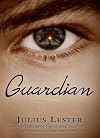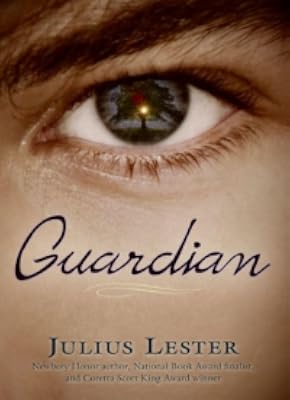
Guardian
by Julius Lester
On This Page
Description
In a rural southern town in 1946, a white man and his son witness the lynching of an innocent black man. Includes historical note on lynching.Tags
Recommendations



































Member Reviews
Loved this book. It was a quick read with a powerful message. I recommended this for a middle school group read. Provides lots of thought-provoking discussion. Themes of friendship and integrity combine with the darker side of black history to pack a punch!
Guardian is haunting. The story is extremely well written. It is both descriptive and so raw that it is uncomfortable to read. That is what I liked about it. The book addresses social issues and mature themes (rape, lynching). Highly recommended as a must-read for teens and adults.
Pros: Your emotions and your thinking will be stretched in new directions as you walk alongside Ansel and Willie in this powerful novel.
There's more to our review. Visit the The Reading Tub® to see why we recommend this book. You can add your review, too.
Pros: Your emotions and your thinking will be stretched in new directions as you walk alongside Ansel and Willie in this powerful novel.
There's more to our review. Visit the The Reading Tub® to see why we recommend this book. You can add your review, too.
Reviewed by JodiG. for TeensReadToo.com
There was a dark time in the history of the United States when even the best-intentioned people bore silent witness to the atrocities that were being committed by others. A time in which a person had to chose between honesty and personal safety.
It is Tuesday afternoon, a hot summer day in 1946. By Friday night a crime will have been committed, two people will be dead, and fourteen-year-old Ansel Anderson will be forever tormented by the events of that night and those that followed.
Ansel lives in Davis, a small town deep in the South. The town was named after the most wealthy and influential family in the area, the family now headed by Zeph Davis. Cap'n Davis has a way of employing his "negroes" in show more such a way that they remain in debt to him, a legal form of slavery.
Everyone in Davis knows the rules of the social order. Black people are expected to address all whites - even the children - as "ma'am" or "sir", they are to move from the sidewalk when a white person is coming, and they are to always be congenial. Even Ansel's best friend, Willie, addresses him as Mister Ansel.
Ansel works in his father's store, along with Willie. Bert Anderson is preparing Ansel to take over the store someday, and to be a successful store owner he knows that Ansel has to start considering who he spends time with and what the other people in town think of him. His mother Maureen feels differently. She doesn't like the way the townspeople act and doesn't want her son to grow up with such narrow-minded influences. She has bigger dreams for Ansel, and, along with Esther Davis, Cap'n Davis's sister, she plants the seeds for Ansel to dream of a future beyond Davis.
An unfortunate storm is brewing in Davis. Entitlement and anger are swelling in Zeph Davis the Third, the teenage son of Cap'n Davis. But who would believe that the son of a wealthy white man could commit such a heinous act as rape and murder when there was a negroe at the scene of the crime?
And even if they do believe, will anyone take the risk of speaking out?
GUARDIAN is an amazingly well-crafted story that grabs your attention and your heart from the very beginning. Author Julius Lester has a way of pulling you along in such a way that you can feel the intensity building with every word until the explosive finale. There is no sugar-coating to this story; it is real and it is raw and borne from a very sad reality in our world.
If you can read and pass along one book this year, let it be GUARDIAN. show less
There was a dark time in the history of the United States when even the best-intentioned people bore silent witness to the atrocities that were being committed by others. A time in which a person had to chose between honesty and personal safety.
It is Tuesday afternoon, a hot summer day in 1946. By Friday night a crime will have been committed, two people will be dead, and fourteen-year-old Ansel Anderson will be forever tormented by the events of that night and those that followed.
Ansel lives in Davis, a small town deep in the South. The town was named after the most wealthy and influential family in the area, the family now headed by Zeph Davis. Cap'n Davis has a way of employing his "negroes" in show more such a way that they remain in debt to him, a legal form of slavery.
Everyone in Davis knows the rules of the social order. Black people are expected to address all whites - even the children - as "ma'am" or "sir", they are to move from the sidewalk when a white person is coming, and they are to always be congenial. Even Ansel's best friend, Willie, addresses him as Mister Ansel.
Ansel works in his father's store, along with Willie. Bert Anderson is preparing Ansel to take over the store someday, and to be a successful store owner he knows that Ansel has to start considering who he spends time with and what the other people in town think of him. His mother Maureen feels differently. She doesn't like the way the townspeople act and doesn't want her son to grow up with such narrow-minded influences. She has bigger dreams for Ansel, and, along with Esther Davis, Cap'n Davis's sister, she plants the seeds for Ansel to dream of a future beyond Davis.
An unfortunate storm is brewing in Davis. Entitlement and anger are swelling in Zeph Davis the Third, the teenage son of Cap'n Davis. But who would believe that the son of a wealthy white man could commit such a heinous act as rape and murder when there was a negroe at the scene of the crime?
And even if they do believe, will anyone take the risk of speaking out?
GUARDIAN is an amazingly well-crafted story that grabs your attention and your heart from the very beginning. Author Julius Lester has a way of pulling you along in such a way that you can feel the intensity building with every word until the explosive finale. There is no sugar-coating to this story; it is real and it is raw and borne from a very sad reality in our world.
If you can read and pass along one book this year, let it be GUARDIAN. show less
This book discusses an important but disturbing piece of American history – racially inspired mob lynching in the 1940s South. The book takes on the perspective of several people living in a small town where a shocking and violent rape results in an innocent man’s life being taken. I admire the author tackling such a weighty issue, but I had two major problems with this book. The first is that the slim book focuses on less than a week’s worth of time, and I feel like the characters and writing style both suffer from this. Instead of letting the characters have time to develop, the author has to just come out and say what the characters are supposed to be like – i.e., he is evil, he is good, he is scared, etc. – rather than show more show this through a more elaborate unfolding of the major characters. As a consequence, the reader never really feels like the characters could be real people (instead of caricatures) and can’t feel connected with the characters. The second problem I had is with the writing style. For much of the book, it feels almost like the author is writing stage directions rather than a novel. In addition, I didn’t particularly like the way the omniscient narrator jumps back and forth between the past, present, and future within a sentence or a paragraph. (For instance, note the discontinuity in this paragraph: “As the Reverend walks back into the crowd, people eagerly step forward to shake his hand, pat him on the back, express their condolences over his loss. Many of them will think back on this night when, the very next summer, the Reverend is caught with one of the girls from the Junior Choir, which is what had happened in Atlanta. The Reverend and his wife were barely given time to pack before they left Davis. No one knew where he went, and no one cared.” – p. 87). Personally, I also felt like many of the situations in this book were more adult than young adult in nature. Honestly, the best part of the book for me was the historical facts included in the back of the book. show less
This is the first book that I have read by award-winning author, Julius Lester, and I appreciated his work from the first page. He has a beautiful writing style and effortlessly brings the reader in to the time and place of the story. The book takes place in a small southern town in 1946, through the eyes of a young white boy. Racism is the main theme of the book, but lessons are also learned about honesty, standing up for oneself, and finding your own identity. Mr. Lester does not shy away from difficult subject matter, and his descriptions can be a bit graphic at times, especially for younger readers. However, events like the ones that took place in this story were really happening in this country not too long ago, and it is so show more important that children and teens continue to get exposed to the issues of racism and prejudice. This is a great book for adults to read and discuss with teens (I would recommend for ages 14 and up). show less
This slim book demonstrates the devastation that a lie of omission can create in a family. Ansel and his father come upon a murdered girl’s body and allow another to be accused, knowing who really did it. What followers is a horrible lynching. Ansel’s loss of respect for his father changes his life forever.
Powerful book. Statistics at the end give the tragic data of lynching in the U.S.
Powerful book. Statistics at the end give the tragic data of lynching in the U.S.
This not a feel good novel by any means. It tells it like it was in the South. Where ppl were still referred to as the "N" word and other ppl could control their fate at the drop of a hat. It is sad, but it is history. This would be a good book to read in high school while studying that time period. It is a short/quick read and is easy to understand.
Members
- Recently Added By
Author Information

56+ Works 11,075 Members
Julius Bernard Lester was born in St. Louis, Missouri on January 27, 1939. He received a bachelor's degree in English from Fisk University in 1960. He moved to New York to become a folk singer. He performed on the coffeehouse circuit as a singer and guitarist. He released two albums entitled Julius Lester in 1965 and Departures in 1967. His first show more published book, The Folksinger's Guide to the 12-String Guitar as Played by Leadbelly written with Pete Seeger, was published in 1965. In the 1960s, Lester was closely involved as a writer and photographer with the Student Nonviolent Coordinating Committee. He traveled to the South to document the civil rights movement and to North Vietnam to photograph the effects of American bombardment. He also hosted radio and television talk shows in New York City. He wrote more than four dozen nonfiction and fiction books for adults and children. His books for adults included Look Out, Whitey!: Black Power's Gon' Get Your Mama, Revolutionary Notes, All Is Well, Lovesong: Becoming a Jew, and The Autobiography of God. His children's books included To Be a Slave, Sam and the Tigers, and Day of Tears: A Novel in Dialogue, which won the American Library Association's Coretta Scott King Award in 2006. He also wrote reviews and essays for numerous publications including The New York Times Book Review, The Boston Globe, The Village Voice, Dissent, The New Republic, and the Los Angeles Times Book Review. After teaching for two years at the New School for Social Research in New York, Lester joined the faculty of the University of Massachusetts, Amherst in 1971. He originally taught in the Afro-American studies department, but transferred to the Judaic and Near Eastern studies department when Lester criticized the novelist James Baldwin for what he felt were anti-Semitic remarks. He died from complications of chronic obstructive pulmonary disease on January 18, 2018 at the age of 78. (Bowker Author Biography) show less
Awards and Honors
Awards
Distinctions
Notable Lists
Common Knowledge
- Canonical title
- Guardian
- Original publication date
- 2008-10-28
- People/Characters
- Ansel Anderson; Willie Benton; Zeph Davis; Bert Anderson; Mary Susan; Esther Davis (show all 7); Maureen Anderson
- First words
- Trees remember. They talk among themselves about "the winter of sixty-two when the snow was so heavy it broke limbs on the Father oak tree in the church cemetery. We were worried he might not survive." "And what about the ... (show all)summer it hardly rained and we had to send our roots deep into the earth to find water?" they reminisce. But some trees do not speak, not even to the birds that find delicious insects hidden beneath their bark, not even to the birds building nests on their branches thick with leaves. These are the old trees whose ponderous, arching branches create cool shade. They do not speak because they are ashamed. At least ones in the South are. They were used for evil. Even though they could not defend themselves, they are still ashamed. Sometimes when the wind caresses their leaves, they whisper to the breezes, telling them what they have seen and heard, telling those invisible messengers how they were used as accomplices in evil. The wind can listen for only so long to such painful memories. To ride itself of the horror threaded into the bark and rings of the trees, the wind goes high into the sky where it can expel the suffering of the trees without hurting anything or anyone. But there are times when a tree can no longer withstand the pain inflicted on it, and the wind will take pity on that tree and topple it over in a mighty storm. All the other trees who witnessed the evil look down upon the fallen tree with envy. They pray for the day when a wind will end their suffering. I pray for the day when God will end mine.
- Last words
- (Click to show. Warning: May contain spoilers.)How do I atone for the sins of that time, of that place? I atone by forcing myself to remember the cruelties committed in the name of my race. By remembering, I hold the pain close to my heart. That was what William Benton, Senior did by not forgetting the mountains of bodies. Being guardian of those particular pains. That is the least we can do for them--and ourselves.
Classifications
Statistics
- Members
- 131
- Popularity
- 250,070
- Reviews
- 10
- Rating
- (4.00)
- Languages
- English, French
- Media
- Paper, Ebook
- ISBNs
- 5
- ASINs
- 3