
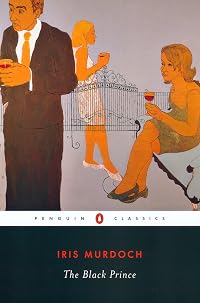
The Black Prince
by Iris Murdoch 
On This Page
Description
Bradley Pearson, an unsuccessful novelist in his late fifties, has finally left his dull office job as an Inspector of Taxes. Bradley hopes to retire to the country, but predatory friends and relations dash his hopes of a peaceful retirement. He is tormented by his melancholic sister, who has decided to come live with him; his ex-wife, who has infuriating hopes of redeeming the past; her delinquent brother, who wants money and emotional confrontations; and Bradley's friend and rival, Arnold show more Baffin, a younger, deplorably more successful author of commercial fiction. The ever-mounting action includes marital cross-purposes, seduction, suicide, abduction, romantic idylls, murder, and due process of law. Bradley tries to escape from it all but fails, leading to a violent climax and a coda that casts shifting perspectives on all that has preceded. show lessTags
Recommendations








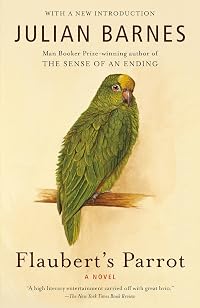
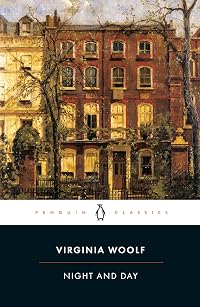
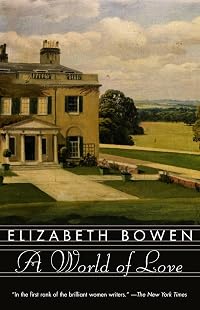

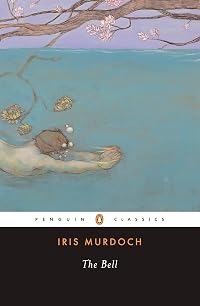
Member Recommendations
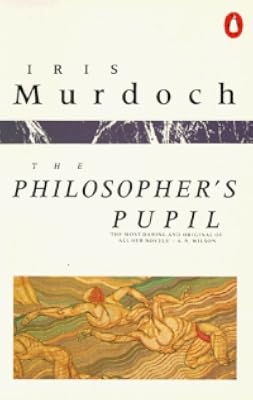
Queenofcups I heard many echoes of Lolita in reading The Black Prince. Anyone else find this to be the case?
30

JuliaMaria Der Roman "Der schwarze Prinz" und die gleichnamige Adaption für das Theater.
Member Reviews
Well this was much more fun than I expected.
The narrator, Bradley Pearson, talks the reader through this book at intervals as if commenting on his own biography, although at the end Murdoch discombobulates us and leaves us to our own devices in terms of whether to believe him or not.
As Bradley would have us believe, having recently retired from the tax office he was getting ready to disappear to a cottage rental to focus back on his writing again (having published some work in the distant past) when a series of events turns his plans on their head and who he is upside down. Embroiled in the affairs of his friends and family despite his protestations against involvement of any kind, The Black Prince is a smart, tragical farce that was show more highly enjoyable.
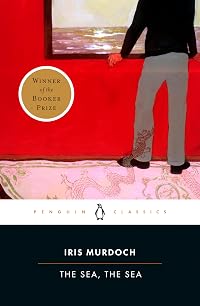
This was my second Iris Murdoch novel, and I enjoyed it even more than The Sea, The Sea. Clever, funny and engaging - what's not to love about this book.
4.5 stars - wonderfully darkly comedic, with a cast of terrific characters. show less
The narrator, Bradley Pearson, talks the reader through this book at intervals as if commenting on his own biography, although at the end Murdoch discombobulates us and leaves us to our own devices in terms of whether to believe him or not.
As Bradley would have us believe, having recently retired from the tax office he was getting ready to disappear to a cottage rental to focus back on his writing again (having published some work in the distant past) when a series of events turns his plans on their head and who he is upside down. Embroiled in the affairs of his friends and family despite his protestations against involvement of any kind, The Black Prince is a smart, tragical farce that was show more highly enjoyable.
This was my second Iris Murdoch novel, and I enjoyed it even more than The Sea, The Sea. Clever, funny and engaging - what's not to love about this book.
4.5 stars - wonderfully darkly comedic, with a cast of terrific characters. show less
The Black Prince is a complex piece of work with a purpose and a ruthless compassion at the heart of it. This is a 'framed' work with many conceits - that there is a separate person, a P.A. Loxias, who befriends Bradley after the events of the novel have taken place, and supports him in writing his 'memoir'. Yet..... Bradley Pearson himself is a novelist, never stops describing himself as a novelist, even though he is describing what happened to 'him' - the events which enabled him to write his 'great work'. That would imply, then, that Loxias himself is the one making up a fiction about Mr. Pearson's experiences, except, of course we know that IRIS herself MADE UP the whole thing. A woman pretending to be .... the editor, a man show more (mysterious and a musician) who is also pretending to be a man (a fiction writer) to whom all these things happened. The characters in the book also, at the end, offer their own comments - which is really - in a structural sense, a very funny thing to do and makes the point that - in any kind of writing the point of view of the narrator/writer is suspect. ALWAYS. People are always out to protect, defend, justify and explain themselves, put themselves in a good light. The implication is that for in order for this to happen every now and then someone has to be sacrificed. Hamlet and Bradley Pearson..... (Other characters die, but they die unsymbolically, of causes and effects that aren't literary!!). Embedded within the novel's commentary and inquiry on 'art' - whether it is hot or cold, whether it should be secret or public, whether suffering must happen to allow real art, is a painful indictment of marriage as potentially a sadistic playground in which a couple preys upon a third person in order to strengthen their own bond and excise their own demons - literally feeding on the spirit of another. Rachel and Arnold have to be one of the creepiest couples I've ever met in fiction (I don't read Stephen King....) so in a way I think what made this book so hard to read is that it is a horror story, in a way. What I found hardest to read was the way people twisted everything anyone else said to suit their own point of view. That is purely and sharply the most brilliant aspect of the novel, and in a way, probably its 'first' purpose - to demonstrate this point over and over and over again, to literally beat you over the head with it. Yes, it is brilliant, but no, it is not fun to read. However, as with the previous Murdochs I have read, as the experience settles, I expect it will settle in my mind as an enriching read. ***
I could have given it more stars, and I started out giving it a four star rating, but then I was doing errands and thinking it over and I decided that it would make more sense to rate IM's novels, since I am reading so many of them to each other. By that method, I have to drop it to *** because as clever a book as it is it's not an 'agile' book and plods at times and people talk wayyyyyy too much. Although I know Iris does that on purpose to make a point, I think the book is unbalanced, heavy with both too much talking and too much thinking and too much in general. An interesting experiment with worthy moments. But not entirely successful, at least, not for me. show less
I could have given it more stars, and I started out giving it a four star rating, but then I was doing errands and thinking it over and I decided that it would make more sense to rate IM's novels, since I am reading so many of them to each other. By that method, I have to drop it to *** because as clever a book as it is it's not an 'agile' book and plods at times and people talk wayyyyyy too much. Although I know Iris does that on purpose to make a point, I think the book is unbalanced, heavy with both too much talking and too much thinking and too much in general. An interesting experiment with worthy moments. But not entirely successful, at least, not for me. show less
Have I mentioned that I love Iris Murdoch? I love this book, its like a practice run for The Sea The Sea, with a dreadful and deluded male narrator, convinced of his own genius and importance, but constantly thwarted by the interruptions of others. As ever the complex interactions of the cast unfold with both horrible and hilarious consequences, the final postscripts giving a somewhat different version of events.
The Black Prince plays around with ideas about the complex relationship between Art, ethical choices, and erotic love. Which is arguably what all novels do, but Murdoch does it in more complex, sophisticated and (unexpectedly) explicit ways than most. We are drawn into engaging emotionally with a very unlikeable narrator - not only a boring man but also an unsuccessful writer - who briefly becomes interesting, human, and a creator of worthwhile art through falling into a totally reprehensible passion for a woman 40 years his junior, the daughter of his best friends. Murdoch constructs a wickedly comic narrative around the love affair, which of course ends up hurting all concerned in spectacularly awful ways, and we can't help laughing show more at things which in real life we would see as a terrible tragedy. Add in a few levels of unreliable and contradictory narrators, and the result is great fun, but also gives us a lot to think about.
Now, where can I get some postcards of the Post Office Tower...? show less
Now, where can I get some postcards of the Post Office Tower...? show less
Why difficult? Because throughout this expertly written tome, we're aware that what we're witnessing is a train wreck. Or even a series of them, if you will. And you know what they say about not wanting to turn away...
So there's Bradley Pearson, our narrator, who lunges in with his story after a somewhat mysterious foreword by an editor, one P. Loxias. Pearson, a commercially unsuccessful writer who's now retired from the Tax Department, is struggling to actually write. He's enmeshed in the lives of his former protege, Arnold Baffin (a successful writer) and Mrs. Rachel Baffin. Their daughter Julian, Bradley's ex-wife Christian, and Christian's brother Francis make up the unhappy cast. Oh, and not to forget Priscilla, Bradley's sister, show more who's turned up at his doorstep in a dire emotional crisis and decided to live with him henceforth.
Oh, what tangled webs we weave! Right from the opening phone call sequence ("Bradley, can you come quickly, I think I've just killed Rachel") from Arnold, you're tempted to groan. And groan we do, as we're first pulled into a marital crisis chez the Baffins, then the arrival of the much-hated Christian; in the middle of all this is the repulsive leech-like Francis and the pathetic Priscilla, all, for lack of a better expression, hopelessly in Bradley's hair.
Not that there's much there, mind. Bradley himself considers himself rather above the kind of work that Arnold Baffin does: he's a much better writer than Arnold, you see, and is given to lofty meditations on the nature of art. Never mind he does come across as rather pompous and stuffy. But then, an entanglement with Rachel. THEN, something else...
Oh, good Lord! By this point I was wanting to whack each of them on the head for different reasons. But of course that meant I was still reading. And therein lies the magic: Iris Murdoch is not a writer to take on lightly. You must be prepared for a thorough drenching in the lives of her characters. More often than not, Murdoch spares no one. As for plot, there is not much. There are events of course, that propel the narrative, but it mostly goes from one crisis to the next; we, the readers, hang on for dear life as this unlikely bus takes yet another sharp turn at high speed, fully afraid of what's coming next.
Sigh. How does one write like this? Even if Bradley's meanderings about art were too lengthy, and his literary discussions with young Julian had to be skimmed, I was hopelessly hooked. (I remember reading Murdoch's An Unofficial Rose when I was too young, but even then I was impressed by the writing.) As I was hurtling through the final piece, yet another devastation: there were afterwords! Each of the miserable gits who were elements of Bradley's story get their own voice in the end. And, let me tell you, it will do a number on your head. As if all that were not enough, who should turn up as the last unsettling voice but the mysterious P. Loxias! (Oh, heavens, Murdoch, couldn't you have gone a bit easy on us? What are we to make of all this clamor?)
And so I conclude with a note of gentle warning, if there is such a thing. Read at your own peril. For you are entering a bleak world, a real world, a frightening world. Keep a comforting drink and a pillow at hand. show less
So there's Bradley Pearson, our narrator, who lunges in with his story after a somewhat mysterious foreword by an editor, one P. Loxias. Pearson, a commercially unsuccessful writer who's now retired from the Tax Department, is struggling to actually write. He's enmeshed in the lives of his former protege, Arnold Baffin (a successful writer) and Mrs. Rachel Baffin. Their daughter Julian, Bradley's ex-wife Christian, and Christian's brother Francis make up the unhappy cast. Oh, and not to forget Priscilla, Bradley's sister, show more who's turned up at his doorstep in a dire emotional crisis and decided to live with him henceforth.
Oh, what tangled webs we weave! Right from the opening phone call sequence ("Bradley, can you come quickly, I think I've just killed Rachel") from Arnold, you're tempted to groan. And groan we do, as we're first pulled into a marital crisis chez the Baffins, then the arrival of the much-hated Christian; in the middle of all this is the repulsive leech-like Francis and the pathetic Priscilla, all, for lack of a better expression, hopelessly in Bradley's hair.
Not that there's much there, mind. Bradley himself considers himself rather above the kind of work that Arnold Baffin does: he's a much better writer than Arnold, you see, and is given to lofty meditations on the nature of art. Never mind he does come across as rather pompous and stuffy. But then, an entanglement with Rachel. THEN, something else...
Oh, good Lord! By this point I was wanting to whack each of them on the head for different reasons. But of course that meant I was still reading. And therein lies the magic: Iris Murdoch is not a writer to take on lightly. You must be prepared for a thorough drenching in the lives of her characters. More often than not, Murdoch spares no one. As for plot, there is not much. There are events of course, that propel the narrative, but it mostly goes from one crisis to the next; we, the readers, hang on for dear life as this unlikely bus takes yet another sharp turn at high speed, fully afraid of what's coming next.
Sigh. How does one write like this? Even if Bradley's meanderings about art were too lengthy, and his literary discussions with young Julian had to be skimmed, I was hopelessly hooked. (I remember reading Murdoch's An Unofficial Rose when I was too young, but even then I was impressed by the writing.) As I was hurtling through the final piece, yet another devastation: there were afterwords! Each of the miserable gits who were elements of Bradley's story get their own voice in the end. And, let me tell you, it will do a number on your head. As if all that were not enough, who should turn up as the last unsettling voice but the mysterious P. Loxias! (Oh, heavens, Murdoch, couldn't you have gone a bit easy on us? What are we to make of all this clamor?)
And so I conclude with a note of gentle warning, if there is such a thing. Read at your own peril. For you are entering a bleak world, a real world, a frightening world. Keep a comforting drink and a pillow at hand. show less
“One of the many respects, dear friend, in which life is unlike art is this: character’s in art can have unassailable dignity, whereas characters in life have none” (97).
“the book had to come into being because of Julian, and because of the book Julian had to be” (339).
You are along for the ride in a myopically-narrated account of a frustrated author, Bradley Pearson, who needs a little time away in the countryside to make progress on his novel. In the way are his friend and fellow writer, Arnold, portrayed as a successful hack, Arnold’s wife, Rachel, who falls in (unrequited) love with Bradley, and a host of other needy, annoying, oblivious, childlike characters who heap their problems on Bradley … or so he imagines. And show more this is just the point: as the narrator of this book, Bradley makes an artistic record of his ego-driven view of the events and the people involved. In this account, they distinctly lack the dignity that Bradley bestows on himself.
I read The Black Prince as a book about artistic vision but also probably about vision more generally: how we see things and how we imagine (or don’t imagine) other people to see the same things. Bradley’s narrative has its own internal conflicts and clear contradictions with to the narratives that come later. But this story is more than just the portrayal of an unreliable narrator because these narrated events are connected with real moral. The moral dilemma comes into focus around Bradley’s (58) imagined (or real) love affair with Julian (20) daughter of his writer friend. Bradley seeks out Julian in defiance of social decorum and through clear manipulation of Julian’s emotional and social inexperience. Bradley sees the events one way. Others see the same events with a different overlay of motives and assumptions and implications. If we perceive the same events but look at them differently, in ways that are colored by our own motivations and egos, what chance do we have of reaching a common moral understanding that would allow us to make good choices? And whose moral perspective is the right one? Each of the characters in this book are harmed by each other (but mostly by Bradley) because they see the world as they are inclined to see it and they assume that what they understand others understand as well.
The alternative narratives are in the postscripts, which were some of the best parts of the book. All of the postscript contributions are from characters other than the narrator. They aim to recast the truth of the events recounted by Bradley throughout the book, but the postscripts themselves are clearly skewed presentations of their own. Those narrators are just as unreliable as Bradley. The postscripts are art of a different type and from altogether different perspectives. They add no “Truth” to the narrative only other perspectives experienced as truth. Each of these fictions and their clear contradictions seem to call into question the truism that art affords access to truth. Narratives like these crowd out other interpretations. They do not invite contemplation or consideration of possible worlds, only the world presented.
My only critical thought is that this book felt less subtle than a similarly-themed but later book The Sea, The Sea was. I appreciate the vertiginous perspective throughout the book of having an author of fiction writing fiction about his own experiences and continually calling attention to his unreliability as a narrator and to the ways that writers manipulate truth and perception in writing … but it did seem like the point was delivered to readers a bit overtly. It was still very enjoyable, however. show less
“the book had to come into being because of Julian, and because of the book Julian had to be” (339).
You are along for the ride in a myopically-narrated account of a frustrated author, Bradley Pearson, who needs a little time away in the countryside to make progress on his novel. In the way are his friend and fellow writer, Arnold, portrayed as a successful hack, Arnold’s wife, Rachel, who falls in (unrequited) love with Bradley, and a host of other needy, annoying, oblivious, childlike characters who heap their problems on Bradley … or so he imagines. And show more this is just the point: as the narrator of this book, Bradley makes an artistic record of his ego-driven view of the events and the people involved. In this account, they distinctly lack the dignity that Bradley bestows on himself.
I read The Black Prince as a book about artistic vision but also probably about vision more generally: how we see things and how we imagine (or don’t imagine) other people to see the same things. Bradley’s narrative has its own internal conflicts and clear contradictions with to the narratives that come later. But this story is more than just the portrayal of an unreliable narrator because these narrated events are connected with real moral. The moral dilemma comes into focus around Bradley’s (58) imagined (or real) love affair with Julian (20) daughter of his writer friend. Bradley seeks out Julian in defiance of social decorum and through clear manipulation of Julian’s emotional and social inexperience. Bradley sees the events one way. Others see the same events with a different overlay of motives and assumptions and implications. If we perceive the same events but look at them differently, in ways that are colored by our own motivations and egos, what chance do we have of reaching a common moral understanding that would allow us to make good choices? And whose moral perspective is the right one? Each of the characters in this book are harmed by each other (but mostly by Bradley) because they see the world as they are inclined to see it and they assume that what they understand others understand as well.
The alternative narratives are in the postscripts, which were some of the best parts of the book. All of the postscript contributions are from characters other than the narrator. They aim to recast the truth of the events recounted by Bradley throughout the book, but the postscripts themselves are clearly skewed presentations of their own. Those narrators are just as unreliable as Bradley. The postscripts are art of a different type and from altogether different perspectives. They add no “Truth” to the narrative only other perspectives experienced as truth. Each of these fictions and their clear contradictions seem to call into question the truism that art affords access to truth. Narratives like these crowd out other interpretations. They do not invite contemplation or consideration of possible worlds, only the world presented.
My only critical thought is that this book felt less subtle than a similarly-themed but later book The Sea, The Sea was. I appreciate the vertiginous perspective throughout the book of having an author of fiction writing fiction about his own experiences and continually calling attention to his unreliability as a narrator and to the ways that writers manipulate truth and perception in writing … but it did seem like the point was delivered to readers a bit overtly. It was still very enjoyable, however. show less
Bradley Pearson is a marginally successful author well past his professional prime, who fancies himself much more talented and good-looking than he is. At the beginning of the novel Bradley is preparing to leave on holiday, sure that a change of scene will inspire him to write his greatest work. But barriers arise in rapid succession, as he learns of his ex-wife's arrival in London, his friend Arnold Baffin calls asking for help resolving a quarrel with his wife Rachel, and his sister Priscilla breaks down after trouble with her husband. Bradley immediately falls into "fix-it" mode, but every act has consequences. Watching Bradley is like watching a row of dominoes fall. And then Bradley becomes positively delusional, falling head over show more heels for a much younger woman and being just arrogant enough to think the relationship will work.
Iris Murdoch's characterizations are brilliant. Bradley is a bumbling fool but doesn't know it. Rachel and Priscilla are women of a certain age, each with her own set of neuroses. Rachel and Arnold's relationship is typical of many long marriages, but Bradley fails to understand how two people are angry or frustrated with one another without fracturing the strong bond between them. I also love Murdoch's ability to describe the ordinary in such extraordinary ways:
The division of one day from the next must be one of the most profound peculiarities on this planet. It is, on the whole, a merciful arrangement. We are not condemned to sustained flights of being, but are constantly refreshed by little holidays from ourselves. We are intermittent creatures, always falling to little ends and rising to little new beginnings. Our soon-tired consciousness is meted out in chapters, and that the world will look quite different tomorrow is, both for our comfort and our discomfort, usually true. How marvellously too night matches sleep, sweet image of it, so neatly apportioned to our need. (p. 232)
The Black Prince has a very interesting structure. Bradley's story is written in the first person, as if he is telling it to the book's editor, who wrote a "foreword" to this book. A second foreword, written by Bradley, provides the reader with his personal history. After Bradley's story is complete, four important characters offer postscripts. These not only supply a denouement, they also shed entirely new light on everything that was written before. It turns out Bradley is one of the most unreliable narrators I've ever experienced. The plot twists at the end sent me off in search of earlier passages, to re-read in a new light. I'm still puzzling through the intricacies of this book, which is why Iris Murdoch is one of my favorite authors. show less
Iris Murdoch's characterizations are brilliant. Bradley is a bumbling fool but doesn't know it. Rachel and Priscilla are women of a certain age, each with her own set of neuroses. Rachel and Arnold's relationship is typical of many long marriages, but Bradley fails to understand how two people are angry or frustrated with one another without fracturing the strong bond between them. I also love Murdoch's ability to describe the ordinary in such extraordinary ways:
The division of one day from the next must be one of the most profound peculiarities on this planet. It is, on the whole, a merciful arrangement. We are not condemned to sustained flights of being, but are constantly refreshed by little holidays from ourselves. We are intermittent creatures, always falling to little ends and rising to little new beginnings. Our soon-tired consciousness is meted out in chapters, and that the world will look quite different tomorrow is, both for our comfort and our discomfort, usually true. How marvellously too night matches sleep, sweet image of it, so neatly apportioned to our need. (p. 232)
The Black Prince has a very interesting structure. Bradley's story is written in the first person, as if he is telling it to the book's editor, who wrote a "foreword" to this book. A second foreword, written by Bradley, provides the reader with his personal history. After Bradley's story is complete, four important characters offer postscripts. These not only supply a denouement, they also shed entirely new light on everything that was written before. It turns out Bradley is one of the most unreliable narrators I've ever experienced. The plot twists at the end sent me off in search of earlier passages, to re-read in a new light. I'm still puzzling through the intricacies of this book, which is why Iris Murdoch is one of my favorite authors. show less
Members
- Recently Added By
Lists

The Guardian's 1000 Novels Everyone Must Read
1,005 works; 547 members

1001 Books You Must Read Before You Die
1,448 works; 1,132 members

Female Author
1,235 works; 67 members

Philosophical Fiction
97 works; 27 members

Booker Prize
491 works; 62 members
Booker Prize Shortlist: Titles Read
103 works; 10 members
20th Century Literature
1,161 works; 55 members
Didactic Fiction
29 works; 3 members

Top Five Books of 2016
795 works; 229 members

Blue Pyramid 1,276 Best Books of All Time
1,248 works; 32 members

Books Read in 2023
5,547 works; 145 members

Man Booker Prize Longlist 1973
4 works; 1 member

A Good Read (Radio 4)
151 works; 1 member

Books with Noble Titles
179 works; 11 members

Books with Colourful Titles
171 works; 8 members

Llibres que he llegit el 2009
35 works; 1 member

Books Set in London
49 works; 3 members

Hulk's Essential Reading List
38 works; 1 member
Talk Discussions
Past Discussions
The Black Prince in Iris Murdoch readers (May 2013)
Author Information

99+ Works 29,243 Members
Iris Murdoch was one of the twentieth century's most prominent novelists, winner of the Booker Prize for The Sea. She died in 1999. (Publisher Provided) Iris Murdoch was born in Dublin, Ireland on July 15, 1919. She was educated at Badminton School in Bristol and Oxford University, where she read classics, ancient history, and philosophy. After show more several government jobs, she returned to academic life, studying philosophy at Newnham College, Cambridge. In 1948, she became a fellow and tutor at St. Anne's College, Oxford. She also taught at the Royal College of Art in London. A professional philosopher, she began writing novels as a hobby, but quickly established herself as a genuine literary talent. She wrote over 25 novels during her lifetime including Under the Net, A Severed Head, The Unicorn, and Of the Nice and the Good. She won several awards including the James Tait Black Memorial Prize for The Black Prince in 1973 and the Booker Prize for The Sea, The Sea in 1978. She died on February 8, 1999 at the age of 79. (Bowker Author Biography) show less
Iris Murdoch has a Legacy Library. Legacy libraries are the personal libraries of famous readers, entered by LibraryThing members from the Legacy Libraries group.
Some Editions
Awards and Honors
Awards
Distinctions
Work Relationships
Is contained in
Common Knowledge
- Canonical title
- The Black Prince
- Original title
- The Black Prince
- Original publication date
- 1973
- People/Characters
- Bradley Pearson; Arnold Baffin; Rachel Baffin; Julian Baffin; Francis Marloe
- Important places
- London, England, UK
- Dedication
- to Ernesto de Marchi
- Last words
- (Click to show. Warning: May contain spoilers.)And after art there is, let me assure you all, nothing. P.L.
- Original language
- English
Classifications
Statistics
- Members
- 1,687
- Popularity
- 13,190
- Reviews
- 44
- Rating
- (3.77)
- Languages
- 15 — Danish, Dutch, English, Estonian, French, German, Korean, Lithuanian, Portuguese, Romanian, Russian, Serbian, Spanish, Swedish, Turkish
- Media
- Paper, Audiobook, Ebook
- ISBNs
- 40
- ASINs
- 18