On This Page
Description
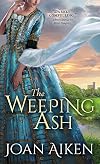
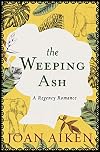
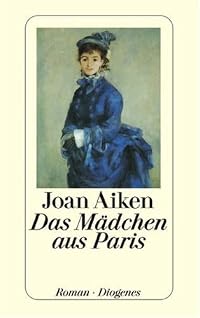
The Paget family is irrevocably changed in this Regency period romance reissue from legendary author Joan AikenNew bride Fanny Paget experiences shame and torment in her loveless arranged marriage, finding solace only in her budding friendship with estate gardener Andrew Talgarth. He never seems too busy to listen and sympathize.
But Fanny is trapped, until her husband's cousins arrive from India and a series of explosive events unfold that change the lives of all involved. Andrew is there show more through it all, strong and steadfast, awaiting Fanny's greatest self-discovery-no matter how long it takes.
What readers say:
"Romance and high adventure flow at a rapid pace!"
"Cracking entertainment, with lots of romance and thrills."
"A fast, satisfying read."
"Vivid and vibrant!"
. show less
Tags
Recommendations

























Member Reviews
Warning: This Aiken Regency (the period is just before the turn of the 18th century to the 19th) is not for the faint of heart. If you like your adventure romances to be nothing better than one of her playful regency romps, then you might want to avoid The Weeping Ash as it's much darker, more dangerous, and often disturbing. In fact, I suspect Aiken, before writing this epic novel, had been immersing herself in Dicken's Bleak House; Hardy's Far From the Madding Crowd and Tess of the d'Urbervilles. I also have a mental image of Aiken spending time with books such as Forster's A Passage to India and M.M. Peyton's The Far Pavilions before writing The Weeping Ash--not for historical details, obviously, but for her mood, tone, and dramatic show more plotting.
The book alternates between two stories. First we meet Fanny, a 16 year-old girl raised in the English countryside, who is urged by her father to marry a man of 46--more monster than man, as it turns out--with three daughters, two of whom are older than Fanny, herself.
Then, across continents, we meet orphaned twins, Scylla and Cal, (possibly) illegitimate cousins of Thomas Paget who have been growing up in India under the guardianship of the indomitable Miss Musson, an elderly woman healer originally from Boston and sister of a benevolent doctor who has died before the story begins. Scylla and Cal have had a happy and carefree childhood up to this point, but now, in their late teens, court intrigues and power reversals have made it imperative that they flee the region with the help of a certain Colonel Cameron, an American who's basically a mercenary soldier-adventurer with a tragic past.
In the final chapters Fanny, Scylla, and Cal all meet in England at the estate that's on loan to Thomas Paget by an unknown, benevolent cousin, Julianna (who never appears in the book in person, only through correspondence). Here everything that's been both right and wrong in all the characters' lives leads inevitably to an increasingly dramatic conclusion involving a mystical ash planted in the estate's garden right next to the house, a gardener haunted by a specter, tragic deaths, poetry, passion, lust, hatred, madness, and finally to mature, romantic love. What a mini-series this story would make! As a story, it's a feast, but some might walk away from the table feeling dizzy and overstuffed.
Fanny Paget's resemblance to Austen's Fanny Price is certainly no coincidence. If Fanny Price had married the odious and abusive Thomas Paget, it's easy to imagine that she would behave with the same quiet dignity, humility, kindness, inner strength and deep convictions Fanny Paget exhibits under extreme circumstances. In fact, Joan Aiken seems to gently mock the trifling tribulations Austen's protagonists suffer with such strength of moral character when readers of both authors compare the Austen women's circumstances to the physically painful, humiliating, nightmarish indignities Aiken's Fanny suffers--REALLY suffers.
Scylla is more what we'd expect from one of Aiken's heroines or from any romance author writing in the 20th century. Scylla is easier for contemporary women to relate to, but it's Fanny who rules this novel.
And as usual, Aiken's characters are larger than life, humorous, witty, horrifying, humble, bold--always colorful, often tragic...she's a master of characterization.
I'm still seeking out and reading the very prolific Joan Aiken. The Weeping Ash departs from what I've read of her work thus far. I don't think its likely to appeal to people who are looking for pure escapism from Aiken. I'm relieved, myself, that most of her books don't contain this many tragically disturbing events, especially one bizarre and troubling scene involving incest. All the same, I couldn't put it down; it involved me entirely and will stay with me. For those reasons, I'm giving it the highest rating for its genre. show less
The book alternates between two stories. First we meet Fanny, a 16 year-old girl raised in the English countryside, who is urged by her father to marry a man of 46--more monster than man, as it turns out--with three daughters, two of whom are older than Fanny, herself.
Then, across continents, we meet orphaned twins, Scylla and Cal, (possibly) illegitimate cousins of Thomas Paget who have been growing up in India under the guardianship of the indomitable Miss Musson, an elderly woman healer originally from Boston and sister of a benevolent doctor who has died before the story begins. Scylla and Cal have had a happy and carefree childhood up to this point, but now, in their late teens, court intrigues and power reversals have made it imperative that they flee the region with the help of a certain Colonel Cameron, an American who's basically a mercenary soldier-adventurer with a tragic past.
In the final chapters Fanny, Scylla, and Cal all meet in England at the estate that's on loan to Thomas Paget by an unknown, benevolent cousin, Julianna (who never appears in the book in person, only through correspondence). Here everything that's been both right and wrong in all the characters' lives leads inevitably to an increasingly dramatic conclusion involving a mystical ash planted in the estate's garden right next to the house, a gardener haunted by a specter, tragic deaths, poetry, passion, lust, hatred, madness, and finally to mature, romantic love. What a mini-series this story would make! As a story, it's a feast, but some might walk away from the table feeling dizzy and overstuffed.
Fanny Paget's resemblance to Austen's Fanny Price is certainly no coincidence. If Fanny Price had married the odious and abusive Thomas Paget, it's easy to imagine that she would behave with the same quiet dignity, humility, kindness, inner strength and deep convictions Fanny Paget exhibits under extreme circumstances. In fact, Joan Aiken seems to gently mock the trifling tribulations Austen's protagonists suffer with such strength of moral character when readers of both authors compare the Austen women's circumstances to the physically painful, humiliating, nightmarish indignities Aiken's Fanny suffers--REALLY suffers.
Scylla is more what we'd expect from one of Aiken's heroines or from any romance author writing in the 20th century. Scylla is easier for contemporary women to relate to, but it's Fanny who rules this novel.
And as usual, Aiken's characters are larger than life, humorous, witty, horrifying, humble, bold--always colorful, often tragic...she's a master of characterization.
I'm still seeking out and reading the very prolific Joan Aiken. The Weeping Ash departs from what I've read of her work thus far. I don't think its likely to appeal to people who are looking for pure escapism from Aiken. I'm relieved, myself, that most of her books don't contain this many tragically disturbing events, especially one bizarre and troubling scene involving incest. All the same, I couldn't put it down; it involved me entirely and will stay with me. For those reasons, I'm giving it the highest rating for its genre. show less
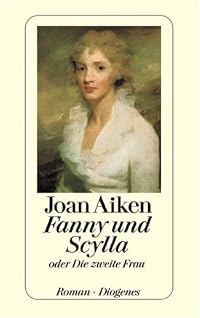
Eines meiner absoluten Lieblingsbücher
Mar 10, 2011 (Edited)German
Ratings
Members
- Recently Added By
Author Information

215+ Works 19,798 Members
Joan Delano Aiken was born in Rye, Sussex, England, on September 4, 1924, the daughter of the Pulitzer Prize winner, writer Conrad Aiken. She was raised in a rural area and home schooled by her mother until the age 12. She then attended Wychwood School, a boarding school in Oxford. Her work first appeared in 1941 when the British Broadcasting show more Corporation, where she worked as a librarian, broadcast some of her short stories on their Children's Hour program. Aiken also worked at St. Thomas's Hospital, and in 1943 she moved to the reference department of the London office of the United Nations, where she collected information about resistance movements. She worked for the UN until 1949, all the while continuing to write stories. In 1953 a collection of short fiction called All You've Ever Wanted and Other Stories was published. While writing The Wolves of Willoughby Chase, begun in 1952, her husband became ill and died of lung cancer in 1955. After working for five years as a copy editor at Argosy Magazine, and at the J. Walter Thompson Advertising Firm, she returned and finished the book in 1963. The Wolves of Willoughby Chase won the Lewis Carroll Shelf Award and was made into a successful film in 1988. In 1969 The Whispering Mountain won the Guardian Children's Book Award, and in 1972, Night Fall won America's Edgar Allen Poe Award for juvenile mystery. Aiken is best known for her adult "fantasy" stories. She has received awards for children's fiction and for mystery fiction, and has also written ''sequels'' to Jane Austen books. She collaborated with her daughter to write many episodes of her Arabel and Mortimer the raven series for the BBC. In all, Aiken wrote 92 novels - including 27 for adults - as well as plays, poems and short stories, although she was best known as a writer of children's stories. Joan Aiken died in January of 2004 at the age of 79. (Bowker Author Biography) show less
Series

Belongs to Publisher Series
detebe (22475)
Common Knowledge
- Original title
- The Lightning Tree
- Alternate titles
- The Weeping Ash
- Original publication date
- 1980
Classifications
- Genres
- Fiction and Literature, Romance, General Fiction, Historical Fiction, Fantasy
- DDC/MDS
- 823.914 — Literature & rhetoric English & Old English literatures English fiction 1900- 1901-1999 1945-1999
- LCC
- PZ4 .A289 — Language and Literature Fiction and juvenile belles lettres Fiction and juvenile belles lettres Fiction in English
- BISAC
Statistics
- Members
- 100
- Popularity
- 321,822
- Reviews
- 3
- Rating
- (3.64)
- Languages
- English, German
- Media
- Paper, Ebook
- ISBNs
- 16
- ASINs
- 4