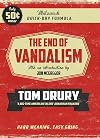
The End of Vandalism
by Tom Drury
On This Page
Description
Ten years ago, Tom Drury's groundbreaking debut, The End of Vandalism, was serialized in the New Yorker, was compared to the work of Sherwood Anderson and William Faulkner by USA Today, and was named a Best Book of the Year in multiple publications. Welcome to Grouse County-a fictional Midwest that is at once familiar and amusingly eccentric-where a thief vacuums the church before stealing the chalice, a lonely woman paints her toenails in a drafty farmhouse, and a sleepless man watches his show more restless bride scatter their bills beneath the stars. At the heart of The End of Vandalism is an unforgettable love triangle set off by a crime: Sheriff Dan Norman arrests Tiny Darling for vandalizing an antivandalism dance and then marries the culprit's ex-wife Louise. So Tiny loses Louise, Louise loses her sense of self, and the three find themselves on an epic journey. At turns hilarious and heart-breaking, The End of Vandalism is a radiant novel about the beauty and ache of modern life. show lessTags
Recommendations









Member Reviews
I received a copy of The End of Vandalism through a Goodreads Giveaway.
Sometimes when I read an author's first novel, I find myself noticing the author's effort--sometimes a first novel feels labored, and sometimes it just doesn't work. Barely a quarter of the way through The End of Vandalism, though, I realized that I trusted this author. I wasn't distracted by the attempt to craft the novel, I was just reading and enjoying it. This is not an ordinary first novel.
I enjoyed the map at the front and the list of characters at the back, and actually found myself referring to them frequently for at least the first half of the book.
Often when I read a book that reviewers describe as "funny," I see what they're talking about, but I'm not show more actually all that amused. Reading this book, though, I really did spontaneously laugh out loud at certain passages. I keep going back to the description of Marie Person ("woman in pickup"), on pages 84-85 of my copy.
The driver of the truck was a sunburned, overweight woman named Marie Person. She was in her sixties and drove leaning forward, forearms curved to the wheel, shoulders gently rolling in a red-and-white-checked shirt. Marie was one of those eccentrics who travel the lonely highways of monotonous states and almost seem to have been hired by the tourism department to enliven the traveler's experience. These people have certain things in common. Often they hold a patent, or have applied for one but are being blocked by lawyers, or have some other reason to correspond frequently with Washington, D.C. Sometimes the stamped and addressed letters ride beside them, fanned out on the car seat, which is usually a bench and not a bucket. They travel at midday or late at night. They cross desolate stretches for vague and shifting reasons that often have to do with animals. They need a vaccine for Skip the pony or special food for Rufus the cat to get his urine flowing again. They are going to look at a calf in Elko named Dream Weaver or Son of Helen's Song. They know everyone in the low-roofed diners along the way, but no one seems to know them. This they account for by giving the details of some unpopular stand they have taken that made everyone furious but was after all the right thing to do. Their surnames are not traceable to other surnames you have heard.
Much of the book is made up of funny little everyday happenings and amusing situations, but then it takes a more somber turn. This is when Drury really impresses me, sure-handedly taking the characters he's been showing in a folksy and sometimes comical light and putting them through a crisis.
Thoroughly recommended. show less
Sometimes when I read an author's first novel, I find myself noticing the author's effort--sometimes a first novel feels labored, and sometimes it just doesn't work. Barely a quarter of the way through The End of Vandalism, though, I realized that I trusted this author. I wasn't distracted by the attempt to craft the novel, I was just reading and enjoying it. This is not an ordinary first novel.
I enjoyed the map at the front and the list of characters at the back, and actually found myself referring to them frequently for at least the first half of the book.
Often when I read a book that reviewers describe as "funny," I see what they're talking about, but I'm not show more actually all that amused. Reading this book, though, I really did spontaneously laugh out loud at certain passages. I keep going back to the description of Marie Person ("woman in pickup"), on pages 84-85 of my copy.
The driver of the truck was a sunburned, overweight woman named Marie Person. She was in her sixties and drove leaning forward, forearms curved to the wheel, shoulders gently rolling in a red-and-white-checked shirt. Marie was one of those eccentrics who travel the lonely highways of monotonous states and almost seem to have been hired by the tourism department to enliven the traveler's experience. These people have certain things in common. Often they hold a patent, or have applied for one but are being blocked by lawyers, or have some other reason to correspond frequently with Washington, D.C. Sometimes the stamped and addressed letters ride beside them, fanned out on the car seat, which is usually a bench and not a bucket. They travel at midday or late at night. They cross desolate stretches for vague and shifting reasons that often have to do with animals. They need a vaccine for Skip the pony or special food for Rufus the cat to get his urine flowing again. They are going to look at a calf in Elko named Dream Weaver or Son of Helen's Song. They know everyone in the low-roofed diners along the way, but no one seems to know them. This they account for by giving the details of some unpopular stand they have taken that made everyone furious but was after all the right thing to do. Their surnames are not traceable to other surnames you have heard.
Much of the book is made up of funny little everyday happenings and amusing situations, but then it takes a more somber turn. This is when Drury really impresses me, sure-handedly taking the characters he's been showing in a folksy and sometimes comical light and putting them through a crisis.
Thoroughly recommended. show less
Tom Drury’s dry, obliquely funny style of writing perfectly captures a certain tone of the mid-west. His characters are completely unique and yet recognizable types. And although they do many things, it is usually through what they say that we know them. Dan Norman, the taciturn Sheriff of Grouse County, loves Louise Darling, the estranged wife of Tiny Darling, a petty thief and electrical jinx. Louise, who works as a photographer’s assistant to old Perry Kleeborg, has put aside her rebellious youth and Tiny with it and is prepared for a bit of the happiness she deserves, even if she has to prompt Dan out of his respectful silence and into action. Through their relations and friends and passers-through, we come to not exactly know show more Grouse County, but at least to feel comfortable with it. It’s a bit like Lake Wobegon, but without the twee. More than anything, Drury’s people seem real, full of hope, but subject to immense sadness. Some wander endlessly, like Tiny, looking for where they fit, while others, like Louise, grow into themselves, or, like Dan, have their direction and motivation thrust upon them.
Perhaps due to the lengthy gestation of the book — much of it appeared over a number of years in numerous short stories in The New Yorker — the three sections of the novel have a somewhat different feel. The first third of the book best displays Drury’s ironic style. In the latter sections he seems more concerned with pitiable developments in the lives of Louise and Dan, which changes the emotional tone of the book. In a sense, it becomes more of a typical novel as it develops. However, flashes of Drury’s dry wit surface even through Louise’s sadness.
Well worth reading and, for me at least, tracking down whatever else Drury has written. Recommended. show less
Perhaps due to the lengthy gestation of the book — much of it appeared over a number of years in numerous short stories in The New Yorker — the three sections of the novel have a somewhat different feel. The first third of the book best displays Drury’s ironic style. In the latter sections he seems more concerned with pitiable developments in the lives of Louise and Dan, which changes the emotional tone of the book. In a sense, it becomes more of a typical novel as it develops. However, flashes of Drury’s dry wit surface even through Louise’s sadness.
Well worth reading and, for me at least, tracking down whatever else Drury has written. Recommended. show less
’En el condado de Grouse’ (The End of Vandalism, 1994), del norteamericano Tom Drury, fue publicada en principio por capítulos en The New Yorker, hasta que tras su éxito fue completada para formar una novela propiamente dicha. La acción transcurre en el territorio ficticio de Grouse, y el peso de la historia recae en tres personajes, el sheriff Dan Norman, Louise y Tiny. Aunque se les da voz a más personajes (predicadores, granjeros, comerciantes, estudiantes, artistas, etc.), y por tanto podría hablarse de novela coral, no lo es tanto, ya que las voces principales en torno a las que gira el argumento, son estas tres.
En este condado del Medio Oeste americano, un territorio mítico donde los haya, plagado de particularidades show more geográficas y sociales, transcurre esta historia sencilla de personajes sencillos y familiares. Pero lo mejor de la novela de Drury son sus protagonistas, las relaciones que se establecen entre todos ellos, y el transcurrir de sus vidas. Porque no se trata de una novela de acción trepidante, todo sucede de manera tranquila y paulatina, casi de manera minimalista. Y no es no que no suceda nada, claro que pasan cosas, pero son las típicas situaciones de una pequeña población, o de cualquier ciudad, como puedan ser el traslado de una caravana. La novela está llena de pequeños detalles, pero sin abundar en excesivas y ampulosas descripciones. Y aquí está el buen hacer de Drury, acercarnos a estos personajes, a estas personas, de manera engañosamente simple, porque no es fácil escribir de manera sencilla.
En fin, que se trata de una buena novela, con muchos aciertos, recomendable, aunque en algunas ocasiones me ha parecido algo fría. show less
En este condado del Medio Oeste americano, un territorio mítico donde los haya, plagado de particularidades show more geográficas y sociales, transcurre esta historia sencilla de personajes sencillos y familiares. Pero lo mejor de la novela de Drury son sus protagonistas, las relaciones que se establecen entre todos ellos, y el transcurrir de sus vidas. Porque no se trata de una novela de acción trepidante, todo sucede de manera tranquila y paulatina, casi de manera minimalista. Y no es no que no suceda nada, claro que pasan cosas, pero son las típicas situaciones de una pequeña población, o de cualquier ciudad, como puedan ser el traslado de una caravana. La novela está llena de pequeños detalles, pero sin abundar en excesivas y ampulosas descripciones. Y aquí está el buen hacer de Drury, acercarnos a estos personajes, a estas personas, de manera engañosamente simple, porque no es fácil escribir de manera sencilla.
En fin, que se trata de una buena novela, con muchos aciertos, recomendable, aunque en algunas ocasiones me ha parecido algo fría. show less
My first book by Drury - love his style. Really great writing, believable and well developed characters. I couldn't put this down. He captures the joy, sadness and absurdity in every day life. I laughed out loud many times, cried hard once and didn't want the story to end. Can't wait to read more.
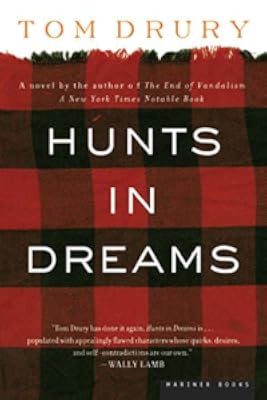
This book is a literary highwire act. There's no good reason it should be as wonderful as it is. The plot meanders all over the place. It jumps from character to character with little reason, and it has what would be described as "tone problems" if we were all sitting around workshopping it. Yet it's perfect. I can't decide whether it's the funniest sad book I've ever read or the saddest funny book. It was better than Hunts in Dreams which I really liked. Just read this guy already.
This is a wonderful book, written with a light touch, beautifully sketched characters and funny anecdotes. On the one hand there is so much in it, but on the other hand the plot barely troubles you at all. As someone at book group said 'it's just one thing happening after another', but it's so compelling and so well described that it draws you in irretrievably.
A beautiful book about small town life in the Midwest. Drury's writing is spare, almost simple, but his characters definitely are not. This book has real humor in it, without any sense of kitsch or folksiness. And there's a pathos that can be quite devastating mixed in, too. Much of this book was initially serialized in the New Yorker in the mid '90s, something they rarely do. It's a great read that I highly recommend. -Cory
Members
- Recently Added By
Lists

Recommend the 20 best books you've read in the last five years
2,168 works; 603 members

Franklit
95 works; 1 member

Books Read in 2024
4,727 works; 128 members
Author Information

10+ Works 824 Members
Tom Drury is the author of "The End of Vandalism" & "The Black Brook", one of Granta's "Best Young American Novelists," & a Guggenheim fellow for 2000-2001. His fiction has appeared most recently in "The New Yorker" & "Ploughshares". He lives with his wife & their daughter in Connecticut, where he teaches at Wesleyan University. (Bowker Author show more Biography) show less
Some Editions
Awards and Honors
Distinctions
Series
Belongs to Publisher Series
Common Knowledge
- Canonical title
- The End of Vandalism
- Original publication date
- 1994
- People/Characters
- Dan Norman; Louise Darling; Tiny Darling
- Important places
- Grouse County
- Epigraph
- If you do not attain happiness, always
remember that you are on a good path,
and try not to leave it.
—the elder Zosima,
The Brothers Karamazov - Dedication
- TO CHRISTIAN
- First words
- One fall they held the blood drive in the fire barn at Grafton.
- Last words
- (Click to show. Warning: May contain spoilers.)"The scientist dies."
- Canonical DDC/MDS
- 813.54
- Canonical LCC
- PS3554.R84
Classifications
Statistics
- Members
- 385
- Popularity
- 81,603
- Reviews
- 12
- Rating
- (3.81)
- Languages
- 5 — English, French, German, Italian, Spanish
- Media
- Paper, Audiobook, Ebook
- ISBNs
- 20
- ASINs
- 6