On This Page
Description
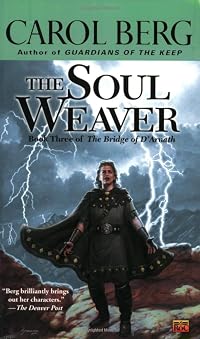
Seyonne, the slave-turned-savior of the acclaimed Revelation and Transformation, returns to fight evil and tame the demons within him--in the third novel in this "thoroughly original" (Starburst) epic saga.Tags
Recommendations





Member Reviews
My comment to my husband as I finished this book was, "This is why I'm a reader, not a writer. I never would have thought to wrap this story up in the way that the author did."
The absolute rightness of the ending almost makes up for the parts of the book that lagged. I grieved that Seyonne sacrificed all his melydda in order to retain his humanity, but it fit, and he still hopes he may find the connection to it yet again. He has his beloved son and discovered respect and love with Elinor. Aleksander has fulfilled his destiny and Fiona hers as well. The only nagging loose end is the Gastai.
This trilogy of the Rai-Kirah is a fantasy quite different from anything I have read, with shape-shifters, sorcerers, demons, and gods. A relatively show more small cast of characters who come to life in these pages. An enthralling and thought-provoking story, well told and memorable. show less
The absolute rightness of the ending almost makes up for the parts of the book that lagged. I grieved that Seyonne sacrificed all his melydda in order to retain his humanity, but it fit, and he still hopes he may find the connection to it yet again. He has his beloved son and discovered respect and love with Elinor. Aleksander has fulfilled his destiny and Fiona hers as well. The only nagging loose end is the Gastai.
This trilogy of the Rai-Kirah is a fantasy quite different from anything I have read, with shape-shifters, sorcerers, demons, and gods. A relatively show more small cast of characters who come to life in these pages. An enthralling and thought-provoking story, well told and memorable. show less
A strong end to the trilogy, and a definite improvement over book #2. Here, the two main friends from the first novel are working side-by-side, so much of the joy that was missing from book #2 is present here. The stakes are higher than ever, and there are a great many obstacles to be overcome in this action-packed finale. There is also a lot that is disappointing, mostly in the form of a minor character who, for some reason, is unnecessarily hurtful to others, but everyone somehow loves her for it. She is particularly cruel right at the end, but everyone seems to think she has acted well. But as I said, she is a minor character, and this is a minor point. What works exceptionally well in this tale is the way that the two main show more characters get pushed to their limits. One shines, and the other, well, doesn’t, and that, too, is well-written and compelling. This book also earns points for making terrific use of ambiguity. There is a major plot point that is unclear in its resolution, and while such approaches often feel cheap and gimmicky, this does not. This feels real, and the uncertainty of the character’s future is extraordinarily well-handled. If it weren’t for a few sour notes in other aspects of the storytelling, I would say that this was one of the most satisfying endings to a fantasy series that I’d ever read. This isn’t the world’s greatest book, by any stretch, and it’s only getting 4 stars from me. But the resolution is quite solid, and the story threads, the ones that are neatly tied up and the ones that are not, are quite well-chosen. show less
This is wonderful epic fantasy trilogy, absolutely recommended. The Rai-Kirah series is original and carries a vibe of classic fantasy with modern flavor, it was first published some 15 years ago and I didn’t notice any difference with the books of the current fantasy styles; it has all the elements I could wish for, like memorable characters, moral complexity, rich prose, a thrilling tale, solid worldbuilding, though-provoking themes and lots of entertainment. I loved reading it.
I feared a little that the story would lose direction at some point, considering the first book is both a standalone and a trilogy setter and the second, if not knitted with finality, has nonetheless a clear ending, but Berg surprised me yet again using a few show more open ends to weave the foundation for the last installment and raising the stakes for all the characters, deepening the exploration of all the parties involved in the world’s fate. This trilogy is not a single story split in parts, but three stages of the same tale, each rooted in the previous one but not totally inter-dependent. I would not go as far as saying that you can read book three without reading the previous ones and enjoy it all the same, but thanks to this careful structure with progressive complexity and slower beginnings, a reader is never dropped in medias res. Context-shaping and characterization are always solid and consistent, before long no additional details are required to understand the characters’ motivations and the logic behind their behaviors.
The characters are always extremely engrossing. Seyonne is the protagonist, of course, but once more he is not alone in his adventures. He doesn’t let go of his masochist streak either, but this time he gets less beatings himself, probably because humiliation and misfortune are equally shared with his companions.
“Guilt is a cruel taskmaster.”
The first half of the book felt weaker compared to all the other parts of the trilogy, though it featured a character I was very eager to read about and prepared the ground for the subsequent delivery, which was truly epic. At the beginning of the second half things speed unexpectedly forward and the brilliant layers of the plot converge; I was reeled in and surprised without letup. A few resolutions on the finish line were a bit simplistic, but not to a detrimental effect. I enjoyed the book very much!
Again, Berg doesn’t shy from raising some difficult questions along the way; Seyonne’s and Aleksander’s soul-searching finds its conclusion in the events of Restoration. The pitfalls of tradition, the meaning of faith, the nature of power and of men, the impact of individual and group choices are some of the topics explored ever since the fallen demon slayer and the warrior prince first met at a slave-auction block.
“What could make you alter the very nature of your soul? Nothing.”
I really liked the though-provoking themes so smoothly woven into the story and its complex world. During the action, this latter book in particular brings the concepts of culture clash, religious tenets and disruptive innovation to the extreme, and shows the ruinous effects of racism, slavery and domination of one people over another. Seyonne’s and partly Aleksander’s inner torments play a vital part as they discover their purpose, and their duality also reflects the conflict raging in the whole of the Dherzi Empire. Does the end justify the means? Should a being have the right to elevate himself above the others and judge what is correct? If such thing as moral superiority, or divine claim, exists, should other people be prevented from erring or should free will be respected at any cost? Or even should there be a compromise, wouldn’t such decisions choke the natural development of a society?
I’m not saying that the story is heavy or slow, far from it, but as it unfolds there is also a clear invitation to think, all the more so in Restoration. The book’s answers are politically correct. The final denouement, as much as I liked it and everything, strays a little of from the course I appreciated so far in the trilogy. Maybe Berg could have dared more, but the ending is nonetheless satisfying and intense, full of drama and beauty.
Carol Berg is a master storyteller and I’m looking forward to reading more from her. show less
I feared a little that the story would lose direction at some point, considering the first book is both a standalone and a trilogy setter and the second, if not knitted with finality, has nonetheless a clear ending, but Berg surprised me yet again using a few show more open ends to weave the foundation for the last installment and raising the stakes for all the characters, deepening the exploration of all the parties involved in the world’s fate. This trilogy is not a single story split in parts, but three stages of the same tale, each rooted in the previous one but not totally inter-dependent. I would not go as far as saying that you can read book three without reading the previous ones and enjoy it all the same, but thanks to this careful structure with progressive complexity and slower beginnings, a reader is never dropped in medias res. Context-shaping and characterization are always solid and consistent, before long no additional details are required to understand the characters’ motivations and the logic behind their behaviors.
The characters are always extremely engrossing. Seyonne is the protagonist, of course, but once more he is not alone in his adventures. He doesn’t let go of his masochist streak either, but this time he gets less beatings himself, probably because humiliation and misfortune are equally shared with his companions.
“Guilt is a cruel taskmaster.”
The first half of the book felt weaker compared to all the other parts of the trilogy, though it featured a character I was very eager to read about and prepared the ground for the subsequent delivery, which was truly epic. At the beginning of the second half things speed unexpectedly forward and the brilliant layers of the plot converge; I was reeled in and surprised without letup. A few resolutions on the finish line were a bit simplistic, but not to a detrimental effect. I enjoyed the book very much!
Again, Berg doesn’t shy from raising some difficult questions along the way; Seyonne’s and Aleksander’s soul-searching finds its conclusion in the events of Restoration. The pitfalls of tradition, the meaning of faith, the nature of power and of men, the impact of individual and group choices are some of the topics explored ever since the fallen demon slayer and the warrior prince first met at a slave-auction block.
“What could make you alter the very nature of your soul? Nothing.”
I really liked the though-provoking themes so smoothly woven into the story and its complex world. During the action, this latter book in particular brings the concepts of culture clash, religious tenets and disruptive innovation to the extreme, and shows the ruinous effects of racism, slavery and domination of one people over another. Seyonne’s and partly Aleksander’s inner torments play a vital part as they discover their purpose, and their duality also reflects the conflict raging in the whole of the Dherzi Empire. Does the end justify the means? Should a being have the right to elevate himself above the others and judge what is correct? If such thing as moral superiority, or divine claim, exists, should other people be prevented from erring or should free will be respected at any cost? Or even should there be a compromise, wouldn’t such decisions choke the natural development of a society?
I’m not saying that the story is heavy or slow, far from it, but as it unfolds there is also a clear invitation to think, all the more so in Restoration. The book’s answers are politically correct. The final denouement, as much as I liked it and everything, strays a little of from the course I appreciated so far in the trilogy. Maybe Berg could have dared more, but the ending is nonetheless satisfying and intense, full of drama and beauty.
Carol Berg is a master storyteller and I’m looking forward to reading more from her. show less
I have once again resumed my determined effort to learn to properly appreciate audiobooks! I read this trilogy in print about 10 years ago and loved it. A couple years ago, I decided to listen to it in audio. The narrator is Kevin Stillwell and I found his reading style works well for me, plus I already had an attachment to the characters and the story, so I did better with them than I usually do. However, I stalled out on this third audiobook twice despite enjoying it for the most part, and gave up. After picking cross-stitching back up recently, I decided to try it again while doing that. I’m still a bad audiobook listener, but I think listening while cross-stitching works a little better for me than listening while commuting in show more Atlanta traffic.
I enjoyed this whole trilogy, but I think the first book was my favorite and this last book, while good, was my least favorite. Seyonne’s decisions in this book became particularly frustrating to me.I always hate it when a favorite character goes darkside, even if it’s temporary. In the end his actions redeemed him pretty well, but he wasn’t fun to read about for a large portion of the story. I don’t remember what I thought when I first read it in print, I just remember inhaling them quickly and enjoying them all. The story from the first book was the only one I remembered very clearly though, so I think it must have been my favorite the first time around too. Despite some of my complaints, I did enjoy this overall and there were some great moments. I also think I would have enjoyed this even more had I re-read it in print rather than listening to it as an audio, but it’s hard to find time to re-read print books when there are so many new books I want to try.
One thing I’ve always loved about Carol Berg’s writing is that, at least in the books I’ve read so far, she starts out with a seemingly simple story that slowly gets more complex as she continuously reveals new layers that make you reconsider everything that happened before. She also does a great job of writing characters I care about and writes some really enjoyable character friendships. I consider her one of my favorite authors.
This series was my first introduction to Carol Berg and I loved it, but now that I’ve re-read them after reading some of her other books, I think I would recommend her Lighthouse duet as the better starting point, and also the related Sanctuary duet. show less
I enjoyed this whole trilogy, but I think the first book was my favorite and this last book, while good, was my least favorite. Seyonne’s decisions in this book became particularly frustrating to me.
One thing I’ve always loved about Carol Berg’s writing is that, at least in the books I’ve read so far, she starts out with a seemingly simple story that slowly gets more complex as she continuously reveals new layers that make you reconsider everything that happened before. She also does a great job of writing characters I care about and writes some really enjoyable character friendships. I consider her one of my favorite authors.
This series was my first introduction to Carol Berg and I loved it, but now that I’ve re-read them after reading some of her other books, I think I would recommend her Lighthouse duet as the better starting point, and also the related Sanctuary duet. show less
If you like sexy, tormented, demon-possessed men, then this series is for you.
I'd read the first two (Transformation and Revelation) quite a few years ago, so it took me a little bit to get into it, as it all came back to me.
The book follows the same protagonist, Seyonne, as he struggles to integrate the man he is with the demon inside him. Meanwhile, he supports his friend and king, Aleksander, through a political coup that deposes him...
I remembered absolutely loving the first two books. I liked this one as well (as I've liked everything I've read by Carol Berg), but it wasn't without flaws. Seyonne has absolute faith that Aleksander is a great leader, destined for great things. But in this book, seriously, he seems rather dumb and show more shortsighted, constantly letting emotion (and his short temper) rather than logic guide his decisions. I didn't see him as a potentially great king, or worthy of Seyonne's total loyalty.
This is a very unusual thing for me to say, but I also wished there was more romance throughout the book. I feel like it would have fit in. Instead, it's got a romantic interest just tacked on to the end, with absolutely no emotional build-up to it. I felt it was a missed opportunity. Instead, the main focus is on Seyonne's personal struggle to make decisions between power and human concerns, which are largely symbolized by his infant son, who isn't even realized as a character - he's just a 'baby.' Babies don't interest me much, so I felt a lack of involvement there. It's nice to see a man in a 'father' role, but even if there are reasons given, he's a pretty crappy dad. So yeah, I could have used more romance than a couple of lines bewailing the loss of the wife who tried to murder him. show less
I'd read the first two (Transformation and Revelation) quite a few years ago, so it took me a little bit to get into it, as it all came back to me.
The book follows the same protagonist, Seyonne, as he struggles to integrate the man he is with the demon inside him. Meanwhile, he supports his friend and king, Aleksander, through a political coup that deposes him...
I remembered absolutely loving the first two books. I liked this one as well (as I've liked everything I've read by Carol Berg), but it wasn't without flaws. Seyonne has absolute faith that Aleksander is a great leader, destined for great things. But in this book, seriously, he seems rather dumb and show more shortsighted, constantly letting emotion (and his short temper) rather than logic guide his decisions. I didn't see him as a potentially great king, or worthy of Seyonne's total loyalty.
This is a very unusual thing for me to say, but I also wished there was more romance throughout the book. I feel like it would have fit in. Instead, it's got a romantic interest just tacked on to the end, with absolutely no emotional build-up to it. I felt it was a missed opportunity. Instead, the main focus is on Seyonne's personal struggle to make decisions between power and human concerns, which are largely symbolized by his infant son, who isn't even realized as a character - he's just a 'baby.' Babies don't interest me much, so I felt a lack of involvement there. It's nice to see a man in a 'father' role, but even if there are reasons given, he's a pretty crappy dad. So yeah, I could have used more romance than a couple of lines bewailing the loss of the wife who tried to murder him. show less
I have very mixed feelings about this conclusion to the Rai-Kirah trilogy. Berg's prose is as well-crafted as ever, and I enjoyed the first half very much, but as soon as Seyonne meets the prisoner of Tyrrad Nor, it begins to drag.
Almost nothing went the way I expected it to; that's not necessarily a bad thing, but I didn't think the author's choices were the most satisfying. I was puzzled by Seyonne's course of action, annoyed that it took him such an unconscionable amount of time to seek crucial information, and disappointed that he wasn't strong enough to offer Nyel the healing he planned (in fact, he didn't even really try). I was also saddened by the fate of the rai-kirah. Nor did I think that Alecsander achieved the glorious show more gods-touched future Seyonne envisioned for him.
The one small satisfaction is that Ysanne conveniently died, leaving Seyonne free to find a more worthy woman (although I still think it should have been Fiona). show less
Almost nothing went the way I expected it to; that's not necessarily a bad thing, but I didn't think the author's choices were the most satisfying. I was puzzled by Seyonne's course of action, annoyed that it took him such an unconscionable amount of time to seek crucial information, and disappointed that he wasn't strong enough to offer Nyel the healing he planned (in fact, he didn't even really try). I was also saddened by the fate of the rai-kirah. Nor did I think that Alecsander achieved the glorious show more gods-touched future Seyonne envisioned for him.
The one small satisfaction is that Ysanne conveniently died, leaving Seyonne free to find a more worthy woman (although I still think it should have been Fiona). show less
It felt like the main character was replaced in whole by a completely new charater - one who was wholely unlikeable and untrustable. and because this new person was so outside the values- and personality and even the theme of the story - I feel like i just read a book that i wish i hadnt. all the way through it the character just made feeble bad choices and there was no sense that he ever had a plan nor that he really felt remorse for some of the things he did.
I think the author writes victimization very well but is not equally able to write from the perspective of the perpetrator.
I think the author writes victimization very well but is not equally able to write from the perspective of the perpetrator.
Members
- Recently Added By
Lists

Fantasy by Women Who Broke Away from Europe
144 works; 12 members
Author Information

19+ Works 8,357 Members
Some Editions
Awards and Honors
Awards
Series

Belongs to Publisher Series
Gallimard, Folio SF (456)
Common Knowledge
- Canonical title
- Restoration
- Original title
- Restoration
- Original publication date
- 2002
- Dedication
- To all true heroes and heroines
- First words
- I was living in the land of demons when I first came to believe that the god-stories of the Ezzarians were true.
- Last words
- (Click to show. Warning: May contain spoilers.)And it will be called the Day of Ending, the last day of the world.
- Original language*
- Amerikanisch
*Some information comes from Common Knowledge in other languages. Click "Edit" for more information.
Classifications
Statistics
- Members
- 791
- Popularity
- 35,137
- Reviews
- 16
- Rating
- (4.00)
- Languages
- 5 — Czech, English, French, German, Polish
- Media
- Paper, Audiobook, Ebook
- ISBNs
- 10
- ASINs
- 6