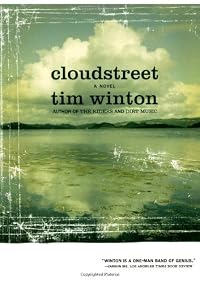
Cloudstreet
by Tim Winton
On This Page
Description
"After two separate catastrophes, two very different families leave the country for the bright lights of Perth. The Lambs are industrious, united, and--until God seems to turn His back on their boy Fish--religious. The Pickleses are gamblers, boozers, fractious, and unlikely landlords. Change, hardship, and the war force them to swallow their dignity and share a great, breathing, shuddering house called Cloudstreet. Over the next twenty years, they struggle and strive, laugh and curse, come show more apart and pull together under the same roof, and try as they can to make their lives. Winner of the Miles Franklin Award and recognized as one of the greatest works of Australian literature, Cloudstreet is Tim Winton's sprawling, comic epic about luck and love, fortitude and forgiveness, and the magic of the everyday"-- show lessTags
Recommendations





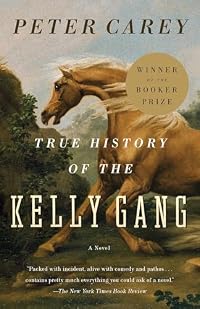

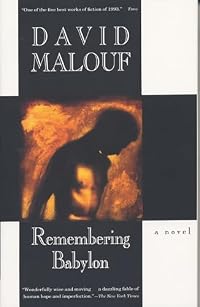

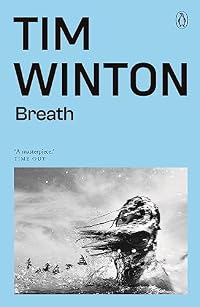


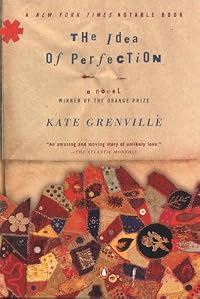


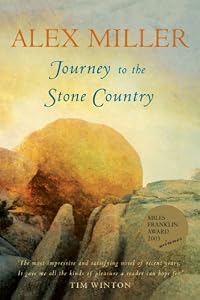
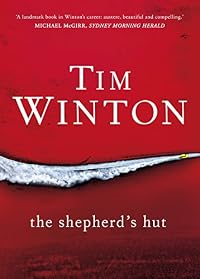




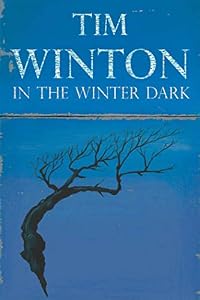




Member Recommendations

by kjuliff
Member Reviews
This is going to be one of my stand-out reads for the year. It's SUPERB!
Opening just after WW2, we meet two families who end up sharing a ramshackle and unlovely house - the Pickles - drunken floozy Dolly and her gambling husband . And their tenants- the driven Lambs- who, under the supervision of mother Oriel- open a successful grocery store.
And their children- anorexic Rose Pickles, the golden-child Fish Lamb, who suffers a brain-impairing accident in the first pages and will never be the same again- and his depressed brother Quick.
As twenty years roll by in Perth, as good and bad luck befall them, there is, too, a weird strand of magic realism running through a tale of everyday folk. And I'd say Winton carries it off- it just makes show more the saga SING.
Fabulous writing. show less
Opening just after WW2, we meet two families who end up sharing a ramshackle and unlovely house - the Pickles - drunken floozy Dolly and her gambling husband . And their tenants- the driven Lambs- who, under the supervision of mother Oriel- open a successful grocery store.
And their children- anorexic Rose Pickles, the golden-child Fish Lamb, who suffers a brain-impairing accident in the first pages and will never be the same again- and his depressed brother Quick.
As twenty years roll by in Perth, as good and bad luck befall them, there is, too, a weird strand of magic realism running through a tale of everyday folk. And I'd say Winton carries it off- it just makes show more the saga SING.
Fabulous writing. show less
"Life was something you didn't argue with, because when it came down to it, whether you barracked God or nothing at all, life was all there was. And death."
In this novel the author introduces the reader to two dysfunctional working class families, the Pickles and the Lambs, who flee the city after separate catastrophes and find refuge under the same roof.
Sam Pickles, who recently lost most of a hand in a boating mishap, inherits the sizeable, but ramshackle house on Cloudstreet, however a covenant in the will prevents him from reselling the property for twenty years. Sam Pickles an inveterate gambler, but not a lucky one who invariably squanders any money that he makes, decides do take in tenants and rent out half of the building.
The show more Lambs, whose farm has gone bankrupt and whose son Samson, nicknamed Fish, was recently left permanently brain-damaged in a fishing accident, decide to take up tenancy in the house. Just like the Pickles the Lambs have suffered their own run of bad luck but unlike their landlords are God-fearing and industrious. Determined to change their luck with hard work the Lambs establish a small thriving shop out of a ground floor room in their half of the house. An uneasy détente forms between the two families which with the passage of time gradually becomes begrudging tolerance, until finally, after an inter-family marriage, cooperation.
Each of the main characters are fighting their own demons, Sam his gambling addiction, his wife Rose alcoholism and a liking of extra-marital sex, Oriel Lamb feels so unsettled by the house moves out into a tent in the back garden, Quick Lamb, Fish’s brother, battles with guilt over his perceived role in his sibling’s disability as does his father, whilst Rose Pickles resents being forced to quit schooling because of her parents's irresponsibility.
Spanning a period of roughly twenty years from the end of WWII to the early 1960' the two families are afflicted by a number of tragic and horrific events—adultery, death, guilt, physical and mental disability to name but a few that when the author introduces a mass murder into the plot it seems almost trivial.
Much of the book deals with what Sam refers to the "shifty shadow" of fate yet despite or because of their struggles the two families display a remarkable sense of dogged determination to succeed and in doing so becomes a tale about coping, acceptance and forgiveness, in particular the hardest form of all, self-forgiveness. Interspersed between the tragic elements there is also humour and magic, a talking pig and a mysterious Aborigine who can walk on water to name but a couple, which help lighten the mood. Although I must admit I couldn't always fathom the significance of, in particular, the magical interludes but then maybe that was just me.
On the whole I found this is a quite remarkable book featuring a cast of interesting characters who are well drawn and who display a certain honesty, meaning that I found it an enjoyable read despite its seemingly bleak outlook. show less
In this novel the author introduces the reader to two dysfunctional working class families, the Pickles and the Lambs, who flee the city after separate catastrophes and find refuge under the same roof.
Sam Pickles, who recently lost most of a hand in a boating mishap, inherits the sizeable, but ramshackle house on Cloudstreet, however a covenant in the will prevents him from reselling the property for twenty years. Sam Pickles an inveterate gambler, but not a lucky one who invariably squanders any money that he makes, decides do take in tenants and rent out half of the building.
The show more Lambs, whose farm has gone bankrupt and whose son Samson, nicknamed Fish, was recently left permanently brain-damaged in a fishing accident, decide to take up tenancy in the house. Just like the Pickles the Lambs have suffered their own run of bad luck but unlike their landlords are God-fearing and industrious. Determined to change their luck with hard work the Lambs establish a small thriving shop out of a ground floor room in their half of the house. An uneasy détente forms between the two families which with the passage of time gradually becomes begrudging tolerance, until finally, after an inter-family marriage, cooperation.
Each of the main characters are fighting their own demons, Sam his gambling addiction, his wife Rose alcoholism and a liking of extra-marital sex, Oriel Lamb feels so unsettled by the house moves out into a tent in the back garden, Quick Lamb, Fish’s brother, battles with guilt over his perceived role in his sibling’s disability as does his father, whilst Rose Pickles resents being forced to quit schooling because of her parents's irresponsibility.
Spanning a period of roughly twenty years from the end of WWII to the early 1960' the two families are afflicted by a number of tragic and horrific events—adultery, death, guilt, physical and mental disability to name but a few that when the author introduces a mass murder into the plot it seems almost trivial.
Much of the book deals with what Sam refers to the "shifty shadow" of fate yet despite or because of their struggles the two families display a remarkable sense of dogged determination to succeed and in doing so becomes a tale about coping, acceptance and forgiveness, in particular the hardest form of all, self-forgiveness. Interspersed between the tragic elements there is also humour and magic, a talking pig and a mysterious Aborigine who can walk on water to name but a couple, which help lighten the mood. Although I must admit I couldn't always fathom the significance of, in particular, the magical interludes but then maybe that was just me.
On the whole I found this is a quite remarkable book featuring a cast of interesting characters who are well drawn and who display a certain honesty, meaning that I found it an enjoyable read despite its seemingly bleak outlook. show less
I don't know where to begin this review. I finished reading Cloudstreet a few weeks ago and have been trying to find the words to communicate just how much I loved this Australian novel by Tim Winton.
Oddly enough, if it weren't for the TV series, I wouldn't have read Cloudstreet at all. A few years ago there was a radio segment where an announcer read sections of Cloudstreet to listeners to the sounds of seagulls etc. it was amusing but put me off ever picking up this novel for myself.
I was then moved to tears by watching the TV series Cloudstreet which motivated me to read the novel and I'm extremely glad I did.
The writing was uniquely Australian and the characters deftly drawn. My favourite character was Fish, and I was astonished at show more Winton's ability to create such a complex and loveable character; it was sheer brilliance!!
Cloudstreet is now one of my favourite books and is competing for the place of favourite Australian novel. For anyone who is contemplating reading this novel, I beg you to do so. The writing is accessible and the pages just fly along so don't be intimidated by the size. Tim Winton's Cloudstreet will stay with me forever and I'm excited to read more books from this incredible writer in the future.
Outstanding!! show less
Oddly enough, if it weren't for the TV series, I wouldn't have read Cloudstreet at all. A few years ago there was a radio segment where an announcer read sections of Cloudstreet to listeners to the sounds of seagulls etc. it was amusing but put me off ever picking up this novel for myself.
I was then moved to tears by watching the TV series Cloudstreet which motivated me to read the novel and I'm extremely glad I did.
The writing was uniquely Australian and the characters deftly drawn. My favourite character was Fish, and I was astonished at show more Winton's ability to create such a complex and loveable character; it was sheer brilliance!!
Cloudstreet is now one of my favourite books and is competing for the place of favourite Australian novel. For anyone who is contemplating reading this novel, I beg you to do so. The writing is accessible and the pages just fly along so don't be intimidated by the size. Tim Winton's Cloudstreet will stay with me forever and I'm excited to read more books from this incredible writer in the future.
Outstanding!! show less
Here's how my reading of Cloudstreet progressed:
First week: Ok, this is pretty good, I guess.
Second week: Hm, I don't know about this.
Third week: Oh god, I think I'm going to throw up. Seriously, I think I'm going to throw up and I'm not kidding. Ok, I'm actually gagging on the subway.
Fourth week: Ok, I have to read my book, but I know it will make me nauseated. I just know it.
Fifth week: GOD this book is a bore.
Sixth week: Hey, this is pretty good . . . . Ok, it was going pretty well for a while there, but BORED NOW . . . . Hey, this is a pretty good book . . . . Man, I am loving this book!
Seventh week: Damn, I'm at the office, so and I can't read my book! Maybe I can read some during this 12-minute break . . . . Whoa, is it 2:00 show more already? . . . .
Eighth week: Wow, this is a good book . . . . SHIT, I missed my subway stop!!!
End of eighth week: No, I won't put my book down. Go away.
So, yeah. Started out lukewarm, moved to actively hating it, but something about it kept me coming back -- probably the really strong characters. So I'd recommend sticking with this one if you're not immediately grabbed. show less
First week: Ok, this is pretty good, I guess.
Second week: Hm, I don't know about this.
Third week: Oh god, I think I'm going to throw up. Seriously, I think I'm going to throw up and I'm not kidding. Ok, I'm actually gagging on the subway.
Fourth week: Ok, I have to read my book, but I know it will make me nauseated. I just know it.
Fifth week: GOD this book is a bore.
Sixth week: Hey, this is pretty good . . . . Ok, it was going pretty well for a while there, but BORED NOW . . . . Hey, this is a pretty good book . . . . Man, I am loving this book!
Seventh week: Damn, I'm at the office, so and I can't read my book! Maybe I can read some during this 12-minute break . . . . Whoa, is it 2:00 show more already? . . . .
Eighth week: Wow, this is a good book . . . . SHIT, I missed my subway stop!!!
End of eighth week: No, I won't put my book down. Go away.
So, yeah. Started out lukewarm, moved to actively hating it, but something about it kept me coming back -- probably the really strong characters. So I'd recommend sticking with this one if you're not immediately grabbed. show less
Cloud Street by Tim Winton
Along with Peter Carey, Tim Winton (and others) bring something of Australia to the written word. Yes, they are both Australians, so that’s kinda what you expect but not always how it works.
Look at Kazuo Ishiguro, penned one the most quintessential English novels ever written , yet wasn’t born within the sound of Bow Bells, unless he has very acute hearing.
Then we have Englishman, Lee Child, brining that American anti-hero, Jack Reacher, to life.
Russel Hoban, an American, who gave us Riddley Walker, one of the most obscure yet pure books about England albeit set in an unknown time.
Then we have fantasy authors who create whole worlds then set their books in those realms.
And of course I’m not show more mentioning the squillions of authors whose work could have been produced anywhere and probably was. How many books could you translate then edit to relocate the story seamlessly from say France to Bosnia?
Already we have the indignity of translating books written in British English to American English. You know, like an American reviewer says something like “I was ok up until page 617 and then they used the word nappy and at that point I just threw my hands up and tossed the book in the trash.”
Where am I going with this? Here’s the thing about Australian books, Australia nearly always figures hugely in them.
You may laugh but there are books and apart from road signs, airports, etc to let you know what country you are in, you’d never guess because it is largely irrelevant.
I do not believe this to be true about Australian novels, the country they are set in is pivotal to everything. And this book is no exception.
Tim Winton: "The place comes first. If the place isn't interesting to me then I can't feel it. I can't feel any people in it. I can't feel what the people are on about or likely to get up to."
So, to the book. A rambling biopic of two families, two very different families at that, getting pushed very close together under one roof. Yes, it rambles, jumps and starts, stalls, but keeps going onwards. It is set in the period of the 40s to the 60s.
I loved the characters, even the arseholes. If there is something that Tim Winton is at home with it’s engaging, colourful, characters that have presence and grow with the story. At times it felt more like an epic than a novel but there was more than enough meat in there to get your teeth into.
True to that Australian landscape, people can be extreme and suffer extreme hardship as a kind of test. They say that in Australia everything wants to kill you, Well, survival is a rite of passage before a person can become themselves (and a true Aussie) and be allowed to use that language like a blunt weapon.
Good on ya Tim Winton. show less
Along with Peter Carey, Tim Winton (and others) bring something of Australia to the written word. Yes, they are both Australians, so that’s kinda what you expect but not always how it works.
Look at Kazuo Ishiguro, penned one the most quintessential English novels ever written , yet wasn’t born within the sound of Bow Bells, unless he has very acute hearing.
Then we have Englishman, Lee Child, brining that American anti-hero, Jack Reacher, to life.
Russel Hoban, an American, who gave us Riddley Walker, one of the most obscure yet pure books about England albeit set in an unknown time.
Then we have fantasy authors who create whole worlds then set their books in those realms.
And of course I’m not show more mentioning the squillions of authors whose work could have been produced anywhere and probably was. How many books could you translate then edit to relocate the story seamlessly from say France to Bosnia?
Already we have the indignity of translating books written in British English to American English. You know, like an American reviewer says something like “I was ok up until page 617 and then they used the word nappy and at that point I just threw my hands up and tossed the book in the trash.”
Where am I going with this? Here’s the thing about Australian books, Australia nearly always figures hugely in them.
You may laugh but there are books and apart from road signs, airports, etc to let you know what country you are in, you’d never guess because it is largely irrelevant.
I do not believe this to be true about Australian novels, the country they are set in is pivotal to everything. And this book is no exception.
Tim Winton: "The place comes first. If the place isn't interesting to me then I can't feel it. I can't feel any people in it. I can't feel what the people are on about or likely to get up to."
So, to the book. A rambling biopic of two families, two very different families at that, getting pushed very close together under one roof. Yes, it rambles, jumps and starts, stalls, but keeps going onwards. It is set in the period of the 40s to the 60s.
I loved the characters, even the arseholes. If there is something that Tim Winton is at home with it’s engaging, colourful, characters that have presence and grow with the story. At times it felt more like an epic than a novel but there was more than enough meat in there to get your teeth into.
True to that Australian landscape, people can be extreme and suffer extreme hardship as a kind of test. They say that in Australia everything wants to kill you, Well, survival is a rite of passage before a person can become themselves (and a true Aussie) and be allowed to use that language like a blunt weapon.
Good on ya Tim Winton. show less
Well, that was like a feature-length episode of Round The Twist! I enjoyed the characters and the dialogue for the most part, but 400 pages is too long for 'quirky', and I was flagging by the final pages. Blackwater by Michael McDowell is a far better weird and watery epic!
Two families, the Pickles and the Lambs, move into a dilapidated house called 'Cloudstreet' in Perth, Western Australia, and stay there, growing together and falling apart, for twenty years. Sam Pickles is a gambler who believes that the 'hairy hand of God' and the 'shady shadow' will determine his fate. He loses the fingers on one hand in an accident and relies ever more on his luck turning to support his family, including wife Dolly and bright but troubled daughter show more Rose. Lester and Oriel Lamb are hardworkers who rent half of Cloudstreet from the Pickles and turn the front room into a successful corner shop. Their son Fish was nearly drowned when he was little and left brain damaged. Fish's brother Quick goes onto marry Rose Pickles. The house is a character in itself, haunted by the spirit of a white woman and a brown girl.
The characters are great and the humour is very droll, but the book still dragged for me. Loved the writing, though, almost magical in parts but interspersed with dry dialogue to speed up the odd chapter! I also got a real feel for Perth, which I can't remember reading about before, in the fifties and sixties. Definitely an experience, but one I'm not sure I would repeat. show less
Two families, the Pickles and the Lambs, move into a dilapidated house called 'Cloudstreet' in Perth, Western Australia, and stay there, growing together and falling apart, for twenty years. Sam Pickles is a gambler who believes that the 'hairy hand of God' and the 'shady shadow' will determine his fate. He loses the fingers on one hand in an accident and relies ever more on his luck turning to support his family, including wife Dolly and bright but troubled daughter show more Rose. Lester and Oriel Lamb are hardworkers who rent half of Cloudstreet from the Pickles and turn the front room into a successful corner shop. Their son Fish was nearly drowned when he was little and left brain damaged. Fish's brother Quick goes onto marry Rose Pickles. The house is a character in itself, haunted by the spirit of a white woman and a brown girl.
The characters are great and the humour is very droll, but the book still dragged for me. Loved the writing, though, almost magical in parts but interspersed with dry dialogue to speed up the odd chapter! I also got a real feel for Perth, which I can't remember reading about before, in the fifties and sixties. Definitely an experience, but one I'm not sure I would repeat. show less
I>Cloudstreet follows the lives of two families - the Lambs and the Pickles sharing a duplex home on the titular street in Perth, from 1944 to 1969. Overall, the novel is like an Australian version of The Waltons, but with more fighting and alcoholism. Karen’s Readers’ Advisory recommended it as something that would give one a sense of every day life in Australia. On that count, I would say it was a qualified success; I can believe it accurately reflects what everyday life was like for some people in Perth during the times it describes. My real enjoyment of the book lies in the multidimensional characters author Tim Winton creates, and there I would say Cloudstreet is really wonderful. My favorite character is the easygoing, show more fun-loving patriarch Sam Pickles. On one hand, he spends altogether too much money at the horse races, and even his young children regard him as too immature to be raising a family, but he isn’t a fool; more like an occasionally sad clown. Between his own gambling addiction, his difficult marriage to alcoholic and self-destructive Dolly, his wayward son‘s death, and the industrial accident which took four of his fingers and put him out of a job, Sam has a lot to cope with. By the end of the book, it’s apparent that his laid-back attitude is the only thing that’s got him through tough times. He's like a green sapling that bends with the wind, while all the stronger, more brittle trees around him are snapping and blowing over. One other great thing about Sam: he’s got a cool cockatoo who functions as comic relief, when things get too depressing. Kudos to author Tim Winton for featuring such a likable bird in this novel! Daughter Rose Pickle is not so happy-go-lucky. As her mother drinks herself into oblivion, the job of raising the twins falls to Rose. In some ways, it builds her self-reliance; she really is a remarkably strong girl, but it also makes her bitter, and literally eats away at her, insofar as it might be responsible for her anorexia. The dynamic between Rose and Dolly is one of the darkest things about Cloudstreet. If it isn’t hate between them, it’s close enough. Even when they eventually come to an uneasy understanding (based on an unusual revelation about Dolly), the damage is too great to support trust or affection. This is definitely not a wholesome family drama like Little House on the Prairie.
While the Pickles struggle with substance abuse and dysfunction, they are renting out the other half of their house to the much more sympathetic Lamb family, who have recently moved to Perth from rural outlands, where their bright and gregarious son “Fish” (they all have distracting nicknames like that) recently suffered debilitating brain damage after a near-drowning, when he got tangled in a net trawling for crabs. Matriarch Oriel had been a devout evangelist, until the incident shook her loose from organized religion. She’s tough as nails, and treats the reader to some fascinating flashbacks of a true frontier upbringing. Australia in the 1910’s was an untamed continent at the terminus of the sprawling British Empire; it really was like the “ends of the Earth”. Husband Lester is somewhat less severe, and acts as a moderating force over both families. He is responsible enough to run their little family business- a fruit and vegetable store- but not upright or shrewd enough to avoid Sam Pickle occasionally helping him lose his earnings at the racetrack. The Lamb kids are troublesome in their own way, and there’s a lot of chaos, but their drama isn’t quite so heavy as the Pickles’.
Well, that’s just my impression. In the end, both families have their share of good times (Lester’s popular vaudeville act, Sam’s big win at the racetrack, collective hallucinations of the pig talking), bad times (Fish’s brain damage, Dolly’s infidelity) and hard times (Ted getting a neighborhood girl pregnant, the kids’ classmate’s tragic death). For American readers, I think this is a view of Australia that we don’t see often. Most of the popular media images of Australia focus on wild adventures in the Outback. Reading about two inner city working-class families struggling with unglamorous problems sounds a lot more authentic than all that Crocodile Dundee shit.
One of the wonderful things about Cloudstreet is that the rough-edged subject matter isn’t delivered in rough-edged prose. In parts, it’s almost poetic, which is maybe not quite a juxtaposition, but it is unexpected, and gives the whole book a sort of quiet dignity I don’t think it would otherwise have. Check out this passage, where Quick Lamb finally meets his uncle for the first time, after a lifetime of hearing his mother’s adoring stories about him:
There’s something very beautiful about that. The book has a lot of little passages like that. It’s understated but intense. show less
While the Pickles struggle with substance abuse and dysfunction, they are renting out the other half of their house to the much more sympathetic Lamb family, who have recently moved to Perth from rural outlands, where their bright and gregarious son “Fish” (they all have distracting nicknames like that) recently suffered debilitating brain damage after a near-drowning, when he got tangled in a net trawling for crabs. Matriarch Oriel had been a devout evangelist, until the incident shook her loose from organized religion. She’s tough as nails, and treats the reader to some fascinating flashbacks of a true frontier upbringing. Australia in the 1910’s was an untamed continent at the terminus of the sprawling British Empire; it really was like the “ends of the Earth”. Husband Lester is somewhat less severe, and acts as a moderating force over both families. He is responsible enough to run their little family business- a fruit and vegetable store- but not upright or shrewd enough to avoid Sam Pickle occasionally helping him lose his earnings at the racetrack. The Lamb kids are troublesome in their own way, and there’s a lot of chaos, but their drama isn’t quite so heavy as the Pickles’.
Well, that’s just my impression. In the end, both families have their share of good times (Lester’s popular vaudeville act, Sam’s big win at the racetrack, collective hallucinations of the pig talking), bad times (Fish’s brain damage, Dolly’s infidelity) and hard times (Ted getting a neighborhood girl pregnant, the kids’ classmate’s tragic death). For American readers, I think this is a view of Australia that we don’t see often. Most of the popular media images of Australia focus on wild adventures in the Outback. Reading about two inner city working-class families struggling with unglamorous problems sounds a lot more authentic than all that Crocodile Dundee shit.
One of the wonderful things about Cloudstreet is that the rough-edged subject matter isn’t delivered in rough-edged prose. In parts, it’s almost poetic, which is maybe not quite a juxtaposition, but it is unexpected, and gives the whole book a sort of quiet dignity I don’t think it would otherwise have. Check out this passage, where Quick Lamb finally meets his uncle for the first time, after a lifetime of hearing his mother’s adoring stories about him:
The Depression had made him hard; war had beaten him flat and work had scoured all the fun from him. He was hard beyond belief, beyond admiration. On a Sunday night Quick saw him apply a blowtorch to the belly of a fallen cow before going back inside to pedal the old pianola for May. The land has done this to them, Quick thought; this could have been us.
There’s something very beautiful about that. The book has a lot of little passages like that. It’s understated but intense. show less
Members
- Recently Added By
Lists

Best Family Stories
241 works; 22 members

Recommend the 20 best books you've read in the last five years
2,167 works; 601 members

Magic Realism
371 works; 52 members
BBC's 100 Novels That Shaped Our World
100 works; 22 members
Folio Society
831 works; 48 members

Family Drama
54 works; 14 members

Best family sagas
244 works; 33 members

Big Jubilee List
70 works; 3 members

Most Popular Books Tagged Australia
35 works; 5 members

Books Set in Australia.
45 works; 9 members

Fiction about the Working Class
74 works; 10 members

Booktopia's 50 Must Read Australian Novels
50 works; 5 members
Australia, Oceania, Antarctica
51 works; 5 members

A Novel Cure
742 works; 23 members
TML 200 Best Books 1950-1999
202 works; 10 members

Travel Reading List
5 works; 1 member
Read in 2008
32 works; 1 member

Fiction With Familiar Settings
279 works; 92 members

Books Read in 2019
4,052 works; 110 members

BBC World Book Club
261 works; 5 members

Books Read in 2008
335 works; 8 members

Australian Classics: Fifty Great Writers and Their Celebrated Works
43 works; 1 member

My TBR list
38 works; 1 member

The Modern Library (The Two Hundred Best Novels....
202 works; 1 member
Author Information

41+ Works 13,798 Members
Tim Winton was born in 1960 in Western Australia. He attended a Creative Writing Course at Curtin University in Perth, and it was there that he began his first novel, An Open Swimmer. It was entered for The Australian/Vogel Award in 1981 and won. His other works include Shallows, which won the Miles Franklin Award in 1984; The Riders Winton, which show more won the Miles Franklin Award in 1992; and Island Home: A Landscape Memoir, the winner of the 2016 Australian Book Industry Awards, General nonfiction book of the year. The Boy Behind the Curtain, published in 2016, won the 2018 Adelaide Festival Awards for Literature, Nonfiction. His books also include The Shepherd's Hut, Breath, and Dirt Music. (Bowker Author Biography) show less
Some Editions
Awards and Honors
Awards
Notable Lists
Series
Belongs to Publisher Series
Work Relationships
Has the adaptation
Common Knowledge
- Canonical title*
- Cloudstreet
- Original title
- Cloudstreet
- Original publication date
- 1991
- People/Characters
- Lester Lamb; Oriel Lamb; Quick Lamb; Fish Lamb; Sam Pickles; Dolly Pickles (show all 7); Rose Pickles
- Important places
- Perth, Western Australia, Australia; Western Australia, Australia; Australia
- Related movies
- Cloudstreet (2011 | IMDb)
- Epigraph
- Shall we gather at the river
Where bright angel-feet have trod ... - Dedication
- for Sam Mifflin, Sadie Mifflin,
Olive Winton and Les Winton
with love and gratitude - First words
- Will you look at us by the river!
- Last words
- (Click to show. Warning: May contain spoilers.)The little boxy woman and the big blowsy woman folded end to end till the tent was a parcel that they hefted to their shoulders across the green smelling grass, and then they went inside the big old house whose door stood open, pressed back by the breeze they made in passing.
- Blurbers
- See, Carolyn
- Original language
- English
*Some information comes from Common Knowledge in other languages. Click "Edit" for more information.
Classifications
Statistics
- Members
- 2,979
- Popularity
- 5,962
- Reviews
- 68
- Rating
- (4.10)
- Languages
- 10 — Czech, Dutch, English, French, German, Italian, Norwegian (Bokmål), Norwegian, Slovenian, Swedish
- Media
- Paper, Audiobook, Ebook
- ISBNs
- 59
- UPCs
- 1
- ASINs
- 10