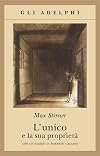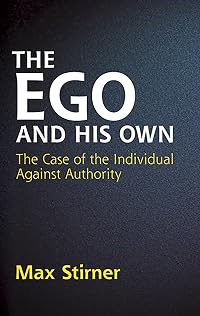
The Ego and Its Own
by Max Stirner
On This Page
Description
Max Stirner's The Ego and Its Own is striking and distinctive in both style and content. First published in 1844, Stirner's distinctive and powerful polemic sounded the death-knell of left Hegelianism, with its attack on Ludwig Feuerbach, Bruno and Edgar Bauer, Moses Hess and others. It also constitutes an enduring critique of both liberalism and socialism from the perspective of an extreme eccentric individualism. Karl Marx was only one of many contemporaries provoked into a lengthy show more rebuttal of Stirner's argument. Stirner has been portrayed, variously, as a precursor of Nietzsche (both stylistically and substantively), a forerunner of existentialism and as an individualist anarchist. This edition of his work comprises a revised version of Steven Byington's much praised translation, together with an introduction and notes on the historical background to Stirner's text. show lessTags
Recommendations

























Member Reviews
I first read The Ego and His Own as an edgelord LaVeyan Satanist who enjoyed trolling philosophy professors who were only equipped to stunt on the average freshman. At that time I considered myself a defender of (Psychological) Egoism and often attributed to Thomas Hobbes what I had actually learned from Stirner. Oops.
Reading this book years later I am proud to say that I am more annoyed with Stirner than impressed. One could read this book as a metaphysical exercise of the self versus the environment. How the microcosmic principles are at odds with the macrocosmic and glean quite a bit of wisdom from this exercise. I say "could" because every other page Stirner likes to remind the reader that this is absolutely not his intent.
That's show more not to say that this book is without merit. Stirner brings some strong arguments to the table, and like I mentioned before, even seasoned philosophers often fail to refute them easily. Often Stirner will repeat an argument from logical, wordplay, or even theological perspectives. The annotations by James J. Martin are especially helpful by pointing out the wordplay from the original German, as such nuances are often lost in translation.
Now reduced to memes that miss the point, Stirner's concept of spooks deserves to be grappled with. With the onset of Artificial Intelligence, the sale of personal data, and an ever encroaching surveillance state; going against the author's wishes and extrapolating outside of his intended scope is also illuminating, if maybe quite necessary. Social Media seems to thrive on bending us against our wills by presenting the most attractive spooks to possess us; for just one example.
Stirner targets all forms of collectivism as his favorite spooks to tear apart, often by using extreme examples that may have been laughable at the time of writing but have become all too normal now. Our media bombardment of the atrocities of the rich take Stirner's arguments from the hypothetical to the biography of Epstein. This may have always been the case but never reported so widely in the past. The veil of naivety has been torn apart for all to see.
Stiner eventually proposes his own spook, the Union of Egoists, as a utopian and voluntary organization that dissolves as soon as one member does not benefit. Like most utopias of philosophers it stands on very shaky ground and appears from several angles to be contradictory to his central thesis. Perhaps this was some sort of compromise of concession, but it is by far one of the weakest arguments in the book.
Love him or hate him, Stirner deserves to be read. His work serves as the shadow, or dark night of the modern soul, that only grows larger and repeats the more we ignore it. These are not concepts that you can ignore and make them go away, they are forever right behind you. His visceral writing may be off putting for many, but an avoidance of his arguments only speaks to an unwillingness to step outside the comfort of your own personal prejudices. A behavior that does nothing to dismiss his stance, and instead reinforces it. show less
Reading this book years later I am proud to say that I am more annoyed with Stirner than impressed. One could read this book as a metaphysical exercise of the self versus the environment. How the microcosmic principles are at odds with the macrocosmic and glean quite a bit of wisdom from this exercise. I say "could" because every other page Stirner likes to remind the reader that this is absolutely not his intent.
That's show more not to say that this book is without merit. Stirner brings some strong arguments to the table, and like I mentioned before, even seasoned philosophers often fail to refute them easily. Often Stirner will repeat an argument from logical, wordplay, or even theological perspectives. The annotations by James J. Martin are especially helpful by pointing out the wordplay from the original German, as such nuances are often lost in translation.
Now reduced to memes that miss the point, Stirner's concept of spooks deserves to be grappled with. With the onset of Artificial Intelligence, the sale of personal data, and an ever encroaching surveillance state; going against the author's wishes and extrapolating outside of his intended scope is also illuminating, if maybe quite necessary. Social Media seems to thrive on bending us against our wills by presenting the most attractive spooks to possess us; for just one example.
Stirner targets all forms of collectivism as his favorite spooks to tear apart, often by using extreme examples that may have been laughable at the time of writing but have become all too normal now. Our media bombardment of the atrocities of the rich take Stirner's arguments from the hypothetical to the biography of Epstein. This may have always been the case but never reported so widely in the past. The veil of naivety has been torn apart for all to see.
Stiner eventually proposes his own spook, the Union of Egoists, as a utopian and voluntary organization that dissolves as soon as one member does not benefit. Like most utopias of philosophers it stands on very shaky ground and appears from several angles to be contradictory to his central thesis. Perhaps this was some sort of compromise of concession, but it is by far one of the weakest arguments in the book.
Love him or hate him, Stirner deserves to be read. His work serves as the shadow, or dark night of the modern soul, that only grows larger and repeats the more we ignore it. These are not concepts that you can ignore and make them go away, they are forever right behind you. His visceral writing may be off putting for many, but an avoidance of his arguments only speaks to an unwillingness to step outside the comfort of your own personal prejudices. A behavior that does nothing to dismiss his stance, and instead reinforces it. show less
This is a work of unabashed egoism, the sort of unrestrained self-interest that makes Ayn Rand look like a 'pinko hippie'. It's fascinating, even if you want to hate Stirner's guts afterwards. He cites Ancient Greek and ecclesiastic history, and uses puns and quotations as much as logical arguments.
The Ego and Its Own starts with a polemic on all collective institutions, all dogmas, all beliefs, all religions, all political philosophies. One of his most astonishing (and perhaps correct) assertions is that modern ideologies take the place of what religion was in the ancient world - see Communism, Fascism setting themselves up as semi-divine cults of a fundamentalist nature. All dying for an idea, a spirit, a dogma - which he dismisses show more as 'spooks'. Spooks which alienate the person from themselves.
He even attacks the most basic of social customs - whether or not it is right to marry your sister, and praising the benefits of lying. It is the ethical code of either superhumans or sociopaths.
Marx and Engels devoted some 300 pages to refuting him in The German Ideology. Stirner remains relatively unknown, but influential, being the precursor to modern nihilism, existentialism
How exactly would interpersonal relationships and society exist in an entirely egoistic world? He tenderly submits a few suggestions on love based on mutual interest - a step above the quasi-rape fantasies of Atlas Shrugged. Although there is a nagging thought that anarcho-capitalism might work in the same way - a billion weasels trying to screw each other.
And so both anarchists and Marxists can consider him an influence. He's fascinating enough to grapple with, and thus worth your time. show less
The Ego and Its Own starts with a polemic on all collective institutions, all dogmas, all beliefs, all religions, all political philosophies. One of his most astonishing (and perhaps correct) assertions is that modern ideologies take the place of what religion was in the ancient world - see Communism, Fascism setting themselves up as semi-divine cults of a fundamentalist nature. All dying for an idea, a spirit, a dogma - which he dismisses show more as 'spooks'. Spooks which alienate the person from themselves.
He even attacks the most basic of social customs - whether or not it is right to marry your sister, and praising the benefits of lying. It is the ethical code of either superhumans or sociopaths.
Marx and Engels devoted some 300 pages to refuting him in The German Ideology. Stirner remains relatively unknown, but influential, being the precursor to modern nihilism, existentialism
How exactly would interpersonal relationships and society exist in an entirely egoistic world? He tenderly submits a few suggestions on love based on mutual interest - a step above the quasi-rape fantasies of Atlas Shrugged. Although there is a nagging thought that anarcho-capitalism might work in the same way - a billion weasels trying to screw each other.
And so both anarchists and Marxists can consider him an influence. He's fascinating enough to grapple with, and thus worth your time. show less
Stirner's leap from pedantic cynicism (his infamous spooks) to patronizing cynicism (mine mine mine) is not one I can get behind. He falls into the same hole that most "immanent" philosophies fall into, creating his own ideal Man to idolize right after tearing down all other ideals, just as Feuerbach did. It just happens that Stirner's Man is kind of a petty dickhead.
As an aside, his thoughts on Jews, "negroids," and "mongoloids" are pretty uncomfortable. I wish he hadn't picked up on the worst trends in Hegelian history there.
As an aside, his thoughts on Jews, "negroids," and "mongoloids" are pretty uncomfortable. I wish he hadn't picked up on the worst trends in Hegelian history there.
Well, hot damn this book took me a long time to read, and never have I reread so many passages. Stirner, like just about all philosophers I've read, takes the long route to get where he's going, but he gets there. I haven't been swayed towards egoism but I'd love to have more conversations about this book and read more Stirner.
Anarcho-nihilism at its most cynical and fun, when you get over the Hegelian world. It has contributed to the thinking of Marcel Duchamp, Max Ernst and other artists.
$350-400 on Abe.
387 Pp Catalog At End. First Published In London In 1912, This Is An Early Modern Library Edition, 1919, Wth Toledano's Spine #1 (1917-1919), Brodzky Endpapers (1919-1925, And Catalog C5 (First Issued Fall 1918). First Published In Germany In The 1840'S, "This Book Contains The Most Revolutionary Philosophy Ever Written, Its Purpose Being To Totally Destroy The Idea Of Duty And To Assert The Supremacy Of The Will, And From This Standpoint To Effect A Transvaluation Of All Values And Displace The State By A Union Of Conscious Egoists" (From The English Edition's Dj Cover)
387 Pp Catalog At End. First Published In London In 1912, This Is An Early Modern Library Edition, 1919, Wth Toledano's Spine #1 (1917-1919), Brodzky Endpapers (1919-1925, And Catalog C5 (First Issued Fall 1918). First Published In Germany In The 1840'S, "This Book Contains The Most Revolutionary Philosophy Ever Written, Its Purpose Being To Totally Destroy The Idea Of Duty And To Assert The Supremacy Of The Will, And From This Standpoint To Effect A Transvaluation Of All Values And Displace The State By A Union Of Conscious Egoists" (From The English Edition's Dj Cover)
Goh, ik kan hier weinig over zeggen of evengoed een heel boek vol. Laten we eerlijk zijn: dit is absoluut geen gemakkelijke lectuur: breedvoerig, omslachtig, hoogdravend, bezwerend en vooral heel stellig (in de zin dat het een bombardement is van proposities). Ik snap de vergelijking met Nietzsche, die andere beeldenstormer, dus wel. En dan zeker als het om het eigenzinnig karakter van Stirner’s denken gaat: je moet voortdurend omschakelen, want hij heeft de gewoonte woorden en begrippen heel anders in te vullen dan we nu zouden doen, en vermoedelijk ook al in zijn tijd. Neem nu het egoïsme dat hij zo ophemelt, of het geestelijke waarmee hij ook het rationalisme bedoelt, enzovoort. Je moet er dus behoorlijk je gedachten bij houden. show more Maar als dat lukt, dan blijkt dit een bijzonder rijk boek, dat voortdurend evidente en algemeen verspreide aannames op de helling zet (daar is Nietzsche weer). Prikkelend, en soms ook ergerlijk. In feite kan je hem een van de eerste kritieken op de moderniteit noemen (ik ga hier even voorbij aan Joseph De Maistre, die tot een heel andere strekking behoort); vooral zijn kritiek op het protestantisme vond ik erg lucide (ik vermoed dat Charles Taylor hier de mosterd gehaald heeft). Maar wat uiteindelijk te denken van het door hem verdedigde tijdperk van het ego? Ik zie wel wat hij bedoelt, en ook dat dat in onze westerse liberale maatschappij grotendeels gerealiseerd is: het vrijgevochten individu dat via complete zelfbeschikking zijn maximale vervulling tot stand kan brengen. Mooi, op papier, alleen: ten koste van wat? Denk maar aan het doorgeslagen individualisme, amoreel consumptiegedrag, of extreme ongelijkheid? Stirner’s beeldenstormerij heeft zeker zijn verdienste, maar hij is duidelijk blind gebleven voor de keerzijden van zijn bejubeld egoïsme.
PS. Ik weet niet of er ooit op gewezen is, maar dit boek verscheen (1845) kort voor de eerste (nog niet zo omvangrijke editie) van Leaves of Grass van Walt Whitman. Toevallig? show less
PS. Ik weet niet of er ooit op gewezen is, maar dit boek verscheen (1845) kort voor de eerste (nog niet zo omvangrijke editie) van Leaves of Grass van Walt Whitman. Toevallig? show less
Mar 29, 2025Dutch
Members
- Recently Added By
Lists

Philosophy, Politics and Economics
61 works; 1 member

el
1,139 works; 1 member
Author Information

Some Editions
Series
Belongs to Publisher Series
Work Relationships
Is contained in
Inspired
Common Knowledge
- Canonical title
- The Ego and Its Own
- Original title
- Der Einzige und sein Eigentum
- Alternate titles
- The Unique and Its Property
- Original publication date
- 1845; 1899 (French) (French); 1901 (Spanish) (Spanish); 1902 (Italian) (Italian); 1907 (English) (English)
- Quotations*
- La censura prussiana giudicò questo libro «troppo assurdo per essere pericoloso». Marx e Engels, invece, lo considerarono sufficientemente pericoloso per dedicargli più di trecento pagine persecutorie della "Ideologia ted... (show all)esca". Nietzsche non lo nominò mai, ma confessò a un’amica di temere che un giorno lo avrebbero accusato di aver plagiato Stirner. Da più di un secolo le storie della filosofia lo definiscono «famigerato». In breve: "L’unico" è l’opera più scandalosa e inaccettabile della filosofia moderna.
Quando apparve, a Berlino, nel 1844, suscitò per alcuni mesi reazioni febbrili e appassionate, soprattutto nell’ambiente del radicalismo di sinistra, da cui nasceva, fra quei discendenti di Hegel che si apprestavano a diventare sovvertitori dell’ordine. Poi seguì un lungo silenzio. Infine una riscoperta vorace, negli ultimi anni dell’Ottocento, quando Stirner apparve da una parte come precursore di Nietzsche e dall’altra come profeta dell’anarchismo individualista. Ma anche se Stirner ha avuto una grande influenza sotterranea, che ha agito sui personaggi più disparati, da Dostoevskij a Traven, il mondo della cultura ufficiale lo ha sempre evitato. Non era chiaro se Stirner fosse da considerare un filosofo, un pazzo o un criminale. Ma nell’"Unico" queste voci parlano insieme, e questa irrevocabile, beffarda confusione dei soggetti e dei livelli è la prima peculiarità del libro.
L’"Unico" sviluppa ‘sino alle estreme conseguenze’ quella «critica» corrosiva che era stata, da Kant in poi, la parola magica della filosofia; articola un sistema paranoico; fonda le ragioni del delitto. Commistione che non è un capriccio di Stirner, ma rivela, finalmente senza coperture eufemistiche, un processo operante in tutto il pensiero moderno. Con le sue argomentazioni stridule, martellanti, ossessive, Stirner fa ruotare vorticosamente la macchina della metafisica: ne risulta una grandiosa parodia, preludio alla mutezza dell’«indicibile» unico. Ma l’attacco al pensiero discorsivo va insieme, per Stirner, a un micidiale attacco al «sussistente», alla società che lo circonda.
Provocatore e vagabondo della metafisica, Stirner osò vedere il mondo della secolarizzazione trionfante, che è anche il nostro, come un mondo profondamente bigotto. Il sacro, scacciato dai templi, si vendica caricando le più laiche categorie di una violenza devastatrice. La Società, l’Uomo, l’Umanità giustificano ora ogni tortura sul singolo che non si adegui al modello ‘giusto’. E il sarcasmo stirneriano, che oppone l’egoista singolo, marchiato come «mostro inumano», al santo egoismo della Società, trafigge anche le società ‘giuste’, promesse dai miglioratori dell’umanità (siano essi reazionari, progressisti, liberali o socialisti) con frecce che appaiono ancora oggi perfettamente appuntite. (Anzi, spesso si ha l’impressione che colpiscano fatti accaduti nel nostro secolo). Che la sua critica sfoci poi in un nominalismo assoluto, e manifestamente insostenibile, non sembra preoccupare Stirner. In certo modo è ciò che voleva: tutto l’"Unico" è un solo, immane paradosso su cui il pensiero continua a inciampare.
Roberto Capasso: "Cento lettere a uno sconosciuto", Adelphi - Original language
- German
*Some information comes from Common Knowledge in other languages. Click "Edit" for more information.
Classifications
- Genres
- Philosophy, Nonfiction, General Nonfiction, Politics and Government
- DDC/MDS
- 302.54 — Society, government, & culture Social sciences, sociology & anthropology Mass Communication & Media Relation of individual to society Response of individuals
- LCC
- HM136 .S7413 — Social sciences Sociology (General) Sociology These are obsolete numbers no longer used
- BISAC
Statistics
- Members
- 962
- Popularity
- 27,606
- Reviews
- 11
- Rating
- (4.01)
- Languages
- 13 — Catalan, Czech, Danish, Dutch, English, French, German, Italian, Polish, Portuguese, Spanish, Swedish, Turkish
- Media
- Paper, Audiobook, Ebook
- ISBNs
- 80
- ASINs
- 18