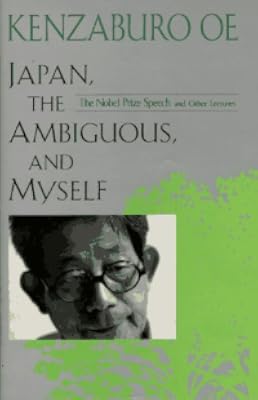
Japan, the Ambiguous, and Myself: The Nobel Prize Speech and Other Lectures
by Kenzaburō Ōe
On This Page
Description
"In December 1994, on the acceptance of only the second Nobel Prize awarded to a Japanese writer, Kenzaburo Oe gave a speech that was a message for mankind: one that pledged his own faith in tolerance and human decency; in the renunciation of war; and in the healing power of art - the power to calm and purify." "Other key addresses he has given elsewhere join the Nobel lecture in this volume, giving a wider view of the work of a literary activist who sees himself as one of a dying breed in show more the intellectual life of his own country."--BOOK JACKET. show lessTags
Recommendations






Member Reviews
The text of Kenzaburo Ōe's acceptance speech for the Nobel Prize from 1994, as well as two lectures given at US universities in 1986 and 1990, and a short series of lectures on Japanese literature "before a Scandinavian audience" (whatever that means) from 1992.
The themes all overlap somewhat: Ōe talks about the romantic affection for Scandinavia he got from reading The marvellous adventures of Nils as a child, and about what he sees as the important moral thread in Japanese literature, from Murasaki Shikibu through Soseki Natsume to himself and the other socially-critical writers who came to prominence in the post-war years.
Ōe talks about the themes that have particularly concerned him: the memory of Japan's aggression in the war show more and the need for reconciliation and demilitarisation, the need to recognise the importance of peripheral cultures in Japan, especially that of Okinawa, and his own experience as the father of a mentally-handicapped child.
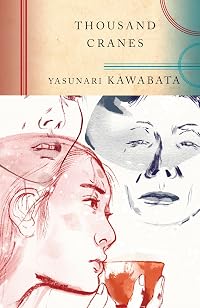
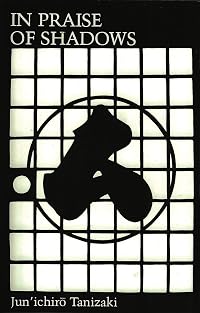
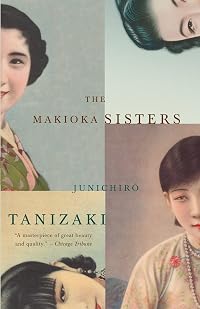
He identifies a similar moral imperative (but coupled with deeply-flawed politics) in Mishima, but he obviously doesn't have much time for the more aesthetic, mystical approach of Tanizaki and Kawabata, who hardly get a mention apart from an acknowledgment of the latter in the Nobel speech — whose title is a play on Kawabata's speech "Japan, the beautiful and myself". (He's also rather dismissive of the "consumer-culture literature" of manga, Banana Yoshimoto and Haruki Murakami — I wonder what he thinks about the way Murakami is regularly mentioned now as a Nobel candidate?)
It's notable that in Stockholm he draws his cultural references from Yeats, Auden, Orwell and his own teacher, Kazuo Watanabe, rather than from great Japanese writers. An interesting little collection, and it makes Ōe come across as a very sympathetic sort of character. show less
The themes all overlap somewhat: Ōe talks about the romantic affection for Scandinavia he got from reading The marvellous adventures of Nils as a child, and about what he sees as the important moral thread in Japanese literature, from Murasaki Shikibu through Soseki Natsume to himself and the other socially-critical writers who came to prominence in the post-war years.
Ōe talks about the themes that have particularly concerned him: the memory of Japan's aggression in the war show more and the need for reconciliation and demilitarisation, the need to recognise the importance of peripheral cultures in Japan, especially that of Okinawa, and his own experience as the father of a mentally-handicapped child.
He identifies a similar moral imperative (but coupled with deeply-flawed politics) in Mishima, but he obviously doesn't have much time for the more aesthetic, mystical approach of Tanizaki and Kawabata, who hardly get a mention apart from an acknowledgment of the latter in the Nobel speech — whose title is a play on Kawabata's speech "Japan, the beautiful and myself". (He's also rather dismissive of the "consumer-culture literature" of manga, Banana Yoshimoto and Haruki Murakami — I wonder what he thinks about the way Murakami is regularly mentioned now as a Nobel candidate?)
It's notable that in Stockholm he draws his cultural references from Yeats, Auden, Orwell and his own teacher, Kazuo Watanabe, rather than from great Japanese writers. An interesting little collection, and it makes Ōe come across as a very sympathetic sort of character. show less
Pretty interesting set of speeches about the nature of post-war Japanese literature from Oe.
Ratings
Members
- Recently Added By
Author Information

140+ Works 8,415 Members
Kenzaburo Oe was born on January 31, 1935. He was born in a small village on the island of Shikoku, Japan. A winner of numerous Japanese literary prizes, Oe came to manhood during World War II and the occupation. At Tokyo University, Oe studied Jean-Paul Sartre and absorbed many popular leftist ideas. These influences appear in his early writings, show more which often deal with contemporary issues. With the birth of his deformed son, father and son became the new focus of his work. In his two books, A Personal Matter (1964) and A Healing Family (1996), Oe describes the pain involved with accepting his brain-damaged son and the small victories involved their lives as his son progressed. In 1994, Oe won the Nobel Prize for Literature. (Bowker Author Biography) show less
Series
Belongs to Publisher Series
Classifications
- Genres
- Fiction and Literature, Literature Studies and Criticism
- DDC/MDS
- 895.6 — Literature & rhetoric Literatures of other languages Literatures of East and Southeast Asia Japanese
- LCC
- PL858 .E14 .A6 — Language and Literature Languages and literatures of Eastern Asia, Africa, Oceania Languages of Eastern Asia, Africa, Oceania Japanese language and literature Japanese literature Individual authors and works
Statistics
- Members
- 61
- Popularity
- 507,307
- Reviews
- 2
- Rating
- (3.69)
- Languages
- English, French, Japanese
- Media
- Paper
- ISBNs
- 3