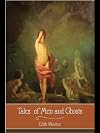
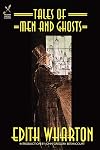
Tales of Men and Ghosts
by Edith Wharton
On This Page
Description
The best of ghost stories from Edith Wharton, including: The Bolted Door, His Father's Son, The Daunt Diana, The Debt, Full Circle, The Legend, The Eyes, The Blond Beast, Afterward, The Letters.Tags
Recommendations

















Member Reviews
It took me quite a while to finish Tales of Men and Ghosts and not because I wasn’t interested in the book. It is because I had to read the stories very carefully in order to grasp their inner meanings. And was I successful? I don’t know. But it was quite an experience.
Tales of Men and Ghosts is a collection of short stories by Edith Wharton. It was published in 1910. These stories were previously published in Scribner's Magazine and The Century in the years 1909 and 1910.
The book consists of ten stories, The Bolted Door, His Father's Son, The Daunt Diana, The Debt, Full Circle, The Legend, The Eyes, The Blond Beast, Afterward and The Letters.
In The Bolted Door, a man goes slowly insane while trying to prove his own guilt.
His show more Father's Son tells the story of a father who dotes on his son, a son who is beginning to doubt his own origins.
A collector finds out that the thrill lies in the ‘chase’ and not in ‘possession' in the The Daunt Diana.
In The Debt a protégé shows what it means to be a true successor to his mentor.
In Full Circle, a complacently successful writer feels uneasy after hiring a down on his luck writer to oversee his fan mails.
The Legend tells the story of a legendary author and his mysterious disappearance from society.
An ever watchful pair of eyes keeps a man awake in The Eyes.
In The Blond Beast an ambitious young man has the perfect plan to climb the ladder of success.
Afterward is the story of an unsuspecting couple who move in to a supposedly haunted house.
And finally, The Letters is a story of love and the almost inevitable disillusionment it brings.
A majority of the stories are about ordinary men trying to do something, anything, to get out of the circumstances that bind them. They are mostly commonplace everyday men, grasping at happiness or what they perceive to be happiness and chasing the illusion of greatness.
But most of them end up going nowhere and often returning to where they had begun is no longer an option. Even if success does come, they often find that the fruits of success may leave a bitter after taste. Some make peace with their lives and some plummet into the gloomy void of misery.
There are no heroes or villains per se in most of the stories. The adversaries most of them face are their own inner demons.
I loved The Debt and The Eyes. The Daunt Diana and Full Circle are close seconds. I found The Bolted Door, The Legend and The Blond Beast kind of long drawn out.
Except for the last one or two stories, most of the protagonists are male.
Wharton makes the characters so fascinatingly intricate despite their ordinariness. You can actually feel their desperations and frustrations.
Edith Wharton’s writing is wonderful but complex. It kind of reminds me of the experience I had last year while reading E.M. Forster, another brilliantly complex writer.
Tales of Men and Ghosts is the first Edith Wharton book I’ve read and it has turned out to be a fascinating experience. I was held captivated by these ten shining literary gems. My love for short stories mingled with my love for classics made this a good read. Definitely recommended. show less
Tales of Men and Ghosts is a collection of short stories by Edith Wharton. It was published in 1910. These stories were previously published in Scribner's Magazine and The Century in the years 1909 and 1910.
The book consists of ten stories, The Bolted Door, His Father's Son, The Daunt Diana, The Debt, Full Circle, The Legend, The Eyes, The Blond Beast, Afterward and The Letters.
In The Bolted Door, a man goes slowly insane while trying to prove his own guilt.
His show more Father's Son tells the story of a father who dotes on his son, a son who is beginning to doubt his own origins.
A collector finds out that the thrill lies in the ‘chase’ and not in ‘possession' in the The Daunt Diana.
In The Debt a protégé shows what it means to be a true successor to his mentor.
In Full Circle, a complacently successful writer feels uneasy after hiring a down on his luck writer to oversee his fan mails.
The Legend tells the story of a legendary author and his mysterious disappearance from society.
An ever watchful pair of eyes keeps a man awake in The Eyes.
In The Blond Beast an ambitious young man has the perfect plan to climb the ladder of success.
Afterward is the story of an unsuspecting couple who move in to a supposedly haunted house.
And finally, The Letters is a story of love and the almost inevitable disillusionment it brings.
A majority of the stories are about ordinary men trying to do something, anything, to get out of the circumstances that bind them. They are mostly commonplace everyday men, grasping at happiness or what they perceive to be happiness and chasing the illusion of greatness.
But most of them end up going nowhere and often returning to where they had begun is no longer an option. Even if success does come, they often find that the fruits of success may leave a bitter after taste. Some make peace with their lives and some plummet into the gloomy void of misery.
There are no heroes or villains per se in most of the stories. The adversaries most of them face are their own inner demons.
I loved The Debt and The Eyes. The Daunt Diana and Full Circle are close seconds. I found The Bolted Door, The Legend and The Blond Beast kind of long drawn out.
Except for the last one or two stories, most of the protagonists are male.
Wharton makes the characters so fascinatingly intricate despite their ordinariness. You can actually feel their desperations and frustrations.
Edith Wharton’s writing is wonderful but complex. It kind of reminds me of the experience I had last year while reading E.M. Forster, another brilliantly complex writer.
Tales of Men and Ghosts is the first Edith Wharton book I’ve read and it has turned out to be a fascinating experience. I was held captivated by these ten shining literary gems. My love for short stories mingled with my love for classics made this a good read. Definitely recommended. show less
And then his success began to submerge him: he gasped under the thickening shower of letters. His admirers were really unappeasable. And they wanted him to do such preposterous things—to give lectures, to head movements, to be tendered receptions, to speak at banquets, to address mothers, to plead for orphans, to go up in balloons, to lead the struggle for sterilized milk. They wanted his photograph for literary supplements, his autograph for charity bazaars, his name on committees, literary, educational, and social; above all, they wanted his opinion on everything: on Christianity, Buddhism, tight lacing, the drug-habit, democratic government, female suffrage and love.
By the half-way point there had been lots of men but no ghosts, show more although some of the men could be said to be haunted metaphorically rather than literally. There were, however, some actual ghosts in the second half of the book. show less
By the half-way point there had been lots of men but no ghosts, show more although some of the men could be said to be haunted metaphorically rather than literally. There were, however, some actual ghosts in the second half of the book. show less
Read: October-November 2016
Overall rating: 3/5 stars
This was a real mix of good, bad and mediocre. The standout stories for me were The Bolted Door and Afterward while His Father's Son and Full Circle were also worth a read. I wouldnt recommend this collection unless you are already a fan of Edith Wharton.
The individual ratings for each tale is as follows:
The Bolted Door - 4/5 stars
His Father's Son - 3.5/5 stars
The Daunt Diana - 2.5/5 stars
The Debt - 1/5 stars
Full Circle- 3/5 stars
The Legend- 1.5/5 stars
The Eyes- 1/5 stars
The Blond Beast - DNF
Afterward - 4/5 stars
The Letters - 2/5 stars
Overall rating: 3/5 stars
This was a real mix of good, bad and mediocre. The standout stories for me were The Bolted Door and Afterward while His Father's Son and Full Circle were also worth a read. I wouldnt recommend this collection unless you are already a fan of Edith Wharton.
The individual ratings for each tale is as follows:
The Bolted Door - 4/5 stars
His Father's Son - 3.5/5 stars
The Daunt Diana - 2.5/5 stars
The Debt - 1/5 stars
Full Circle- 3/5 stars
The Legend- 1.5/5 stars
The Eyes- 1/5 stars
The Blond Beast - DNF
Afterward - 4/5 stars
The Letters - 2/5 stars
The collection was fine, nothing really scary or spooky. Overall, I my favorites were the couple of stories that had a ghostly element.
Ratings
Members
- Recently Added By
Lists

Scary October reads
58 works; 3 members

Books Read in 2010
631 works; 11 members
Author Information

378+ Works 63,690 Members
Edith Wharton was a woman of extreme contrasts; brought up to be a leisured aristocrat, she was also dedicated to her career as a writer. She wrote novels of manners about the old New York society from which she came, but her attitude was consistently critical. Her irony and her satiric touches, as well as her insight into human character, show more continue to appeal to readers today. As a child, Wharton found refuge from the demands of her mother's social world in her father's library and in making up stories. Her marriage at age 23 to Edward ("Teddy") Wharton seemed to confirm her place in the conventional role of wealthy society woman, but she became increasingly dissatisfied with the "mundanities" of her marriage and turned to writing, which drew her into an intellectual community and strengthened her sense of self. After publishing two collections of short stories, The Greater Inclination (1899) and Crucial Instances (1901), she wrote her first novel, The Valley of Decision (1902), a long, historical romance set in eighteenth-century Italy. Her next work, the immensely popular The House of Mirth (1905), was a scathing criticism of her own "frivolous" New York society and its capacity to destroy her heroine, the beautiful Lily Bart. As Wharton became more established as a successful writer, Teddy's mental health declined and their marriage deteriorated. In 1907 she left America altogether and settled in Paris, where she wrote some of her most memorable stories of harsh New England rural life---Ethan Frome (1911) and Summer (1917)---as well as The Reef (1912), which is set in France. All describe characters forced to make moral choices in which the rights of individuals are pitted against their responsibilities to others. She also completed her most biting satire, The Custom of the Country (1913), the story of Undine Spragg's climb, marriage by marriage, from a midwestern town to New York to a French chateau. During World War I, Wharton dedicated herself to the war effort and was honored by the French government for her work with Belgian refugees. After the war, the world Wharton had known was gone. Even her Pulitzer Prize-winning novel, The Age of Innocence (1920), a story set in old New York, could not recapture the former time. Although the new age welcomed her---Wharton was both a critical and popular success, honored by Yale University and elected to The National Institute of Arts and Letters---her later novels show her struggling to come to terms with a new era. In The Writing of Fiction (1925), Wharton acknowledged her debt to her friend Henry James, whose writings share with hers the descriptions of fine distinctions within a social class and the individual's burdens of making proper moral decisions. R.W.B. Lewis's biography of Wharton, published in 1975, along with a wealth of new biographical material, inspired an extensive reevaluation of Wharton. Feminist readings and reactions to them have focused renewed attention on her as a woman and as an artist. Although many of her books have recently been reprinted, there is still no complete collected edition of her work. (Bowker Author Biography) show less
Awards and Honors
Awards
Series
Belongs to Publisher Series
Work Relationships
Common Knowledge
- Canonical title
- Tales of Men and Ghosts
- Original publication date
- 1910
- First words
- HUBERT GRANICE, pacing the length of his pleasant lamp-lit library, paused to compare his watch with the clock on the chimney-piece. (The Bolted Door)
- Quotations
- Granice, at the idea, broke into an audible laugh--a queer stage-laugh, like the cackle of a baffled villain in a melodrama. The absurdity, the unnaturalness of the sound abashed him, and he compressed his lips angrily. Would... (show all) he take to soliloquy next? (The Bolted Door)
He was as inexpressive as he is to-day, and yet oddly obtrusive: one of those uncomfortable presences whose silence is an interruption. (The Debt)
"Not a bit of it! You're out again. We don't love him, either of us. But we feel him--the air's charged with him. You'll see." (The Legend)
She yearned to be admired, and feared to be insulted; and yet seemed tragically conscious that she was destined to miss both these extremes of sensation, or to enjoy them only at second hand in the experiences of her more pri... (show all)vileged friends. (The Letters) - Last words
- (Click to show. Warning: May contain spoilers.)"Oh, poor Andora, you don't know anything--you don't know anything at all!" she said. (The Letters)
Classifications
Statistics
- Members
- 99
- Popularity
- 324,867
- Reviews
- 4
- Rating
- (3.38)
- Languages
- English, German, Italian, Turkish
- Media
- Paper, Audiobook, Ebook
- ISBNs
- 58
- ASINs
- 19