

Let Your Life Speak: Listening for the Voice of Vocation
by Parker J. Palmer
On This Page
Description
Finding one's calling is not just about finding something we can do-it is about finding what we can't not do. "Let your life speak" is a time-honored Quaker admonition to live one's life as witness to the deepest truths one knows. But as Parker Palmer explains, those words can also mean "listen to your life, and let it tell you what your truth is." Vocation, he writes, comes not from external demands but from listening to the true self, a listening that will always call us into some form of show more service to others. Though the details of our journey are singular, we draw from it that which is universal. This book is a moving and illuminating guide for anyone who seeks not just a job but a calling and companionship along the way. show lessTags
Recommendations








Member Reviews
UPDATE: Nearly two years ago, I read this one back to back. Apparently I like short books... and it's wonderful! It was just as good as I remembered. So much to chew on and savor!
This time, the section I wrote down came from chapter 5 - the "5 Monsters to ride all the way down" so as to lead from within:
1. Insecurity about identity and worth
2. Belief that the universe is a battleground
3. Functional Atheism - believing that ultimate responsibility rests on us.
4. Fear - of natural chaos of life, which leads to rigidity and rules.
5. Denial and death (and fear of failure).
This section is easy to overlook, but provides good insight in understanding the inner journey / "inner work" needed for maturity.
---
ORIGINAL REVIEW:
For me, at this show more point in my life right now, Let Your Life Speak was wonderful. It's my favorite kind of book - concise, poetic, whimsical in only the best ways, engaging. Parker's exploration emphasizes the mystery of life and God, frequently noting paradoxes and curiosities, which I loved.
Let Your Life Speak is a reflection on vocation, how we hear from God as we determine the course of our lives. Palmer is an honest writer, reflecting on his own journey in discerning his calling and included many unforgettable stories from his life, sometimes memoir-esk, of both the dark times and humorous, yet learning, ones as well.
"Before you tell your life what you intend to do with it, listen for what it intends to do with you." Why do we decide what we do? What motivations go into big decisions? No doubt they can be tinged with selfishness. For me, (like Palmer) I have lived almost exclusively from the "oughts" of life - doing life as I "should" and following the instruction / guidance of others, rarely pausing for the briefest of moments to stop and attempt listening to my own heart or soul. For that I am impoverished.
However, Palmer does not write this book as a treatise explaining the nuances and details and reasons for his conclusions. He writes it like a song, focused on the truth in beauty buried deep within our hearts, melodiously pulling our true self out of hiding. This concept - the "true self" - though is hard to find in scripture, rarely if ever explicit. I wished he referenced scripture more, and despite falling in head over heels for this idea of the "true self," where is it in scripture?
Another frustration (or perhaps consequence of such a short book) was that he danced around the brokenness of work, but didn't fully address it. What would the single mother stuck earning minimum wage say if she read this book? "Nice idea, but impractical?" Is this idea - that your life pulls you somewhere - just a reminder for the poor that they lack the luxuries of the privileged? Genesis 3 is abundantly clear - work involves thorns and thistles - it is never perfect. Are we simply emboldening idealism? How many of us actually have the opportunity to make a living fulfilling our soul's desired vocation? Won't there always be heart-breaking disappointments? When do we recognize the thistles and press on or when do we move on, determining it as another "way closed?" He did touch on this, but I wanted more. And I guess some of those questions are just part of the listening process.
Like I said, it was a great read for me. This impetus to listening within is profound - that sometimes our deepest truth is within rather than without. This idea sounds quite a lot to me like the Holy Spirit. And yet, I have no doubt, it can easily become an arrogant practice of self-absorption, which is partly why his emphasis on community and communal discernment is fundamental. When we individualists hear these ideas, we usually apply them to myself, not ourselves. Wisdom, I believe, is usually found corporately.
If you're struggling to know what to do with yourself, whether just graduated or going through a mid-life crisis, it is highly recommended. It's a thought-provoking, insightful read.
---
REFLECTIONS ON FIRST REVIEW: Since 2018, I've read quite a bit on the "true self" Palmer frequently references. (Ps. This is written in 2020.) And - the phrase commonly is attributed to Thomas Merton in reference to Jesus' oft repeated "you must deny yourself," namely the false self so the true self can emerge. This idea has become important for my understanding of faith and identifying the idols and ways my ego damage things. That said, Palmer, as far as I can remember, fails to reference scripture or Jesus at all in the book, omissions assumedly intentional, for better or worse. show less
This time, the section I wrote down came from chapter 5 - the "5 Monsters to ride all the way down" so as to lead from within:
1. Insecurity about identity and worth
2. Belief that the universe is a battleground
3. Functional Atheism - believing that ultimate responsibility rests on us.
4. Fear - of natural chaos of life, which leads to rigidity and rules.
5. Denial and death (and fear of failure).
This section is easy to overlook, but provides good insight in understanding the inner journey / "inner work" needed for maturity.
---
ORIGINAL REVIEW:
For me, at this show more point in my life right now, Let Your Life Speak was wonderful. It's my favorite kind of book - concise, poetic, whimsical in only the best ways, engaging. Parker's exploration emphasizes the mystery of life and God, frequently noting paradoxes and curiosities, which I loved.
Let Your Life Speak is a reflection on vocation, how we hear from God as we determine the course of our lives. Palmer is an honest writer, reflecting on his own journey in discerning his calling and included many unforgettable stories from his life, sometimes memoir-esk, of both the dark times and humorous, yet learning, ones as well.
"Before you tell your life what you intend to do with it, listen for what it intends to do with you." Why do we decide what we do? What motivations go into big decisions? No doubt they can be tinged with selfishness. For me, (like Palmer) I have lived almost exclusively from the "oughts" of life - doing life as I "should" and following the instruction / guidance of others, rarely pausing for the briefest of moments to stop and attempt listening to my own heart or soul. For that I am impoverished.
However, Palmer does not write this book as a treatise explaining the nuances and details and reasons for his conclusions. He writes it like a song, focused on the truth in beauty buried deep within our hearts, melodiously pulling our true self out of hiding. This concept - the "true self" - though is hard to find in scripture, rarely if ever explicit. I wished he referenced scripture more, and despite falling in head over heels for this idea of the "true self," where is it in scripture?
Another frustration (or perhaps consequence of such a short book) was that he danced around the brokenness of work, but didn't fully address it. What would the single mother stuck earning minimum wage say if she read this book? "Nice idea, but impractical?" Is this idea - that your life pulls you somewhere - just a reminder for the poor that they lack the luxuries of the privileged? Genesis 3 is abundantly clear - work involves thorns and thistles - it is never perfect. Are we simply emboldening idealism? How many of us actually have the opportunity to make a living fulfilling our soul's desired vocation? Won't there always be heart-breaking disappointments? When do we recognize the thistles and press on or when do we move on, determining it as another "way closed?" He did touch on this, but I wanted more. And I guess some of those questions are just part of the listening process.
Like I said, it was a great read for me. This impetus to listening within is profound - that sometimes our deepest truth is within rather than without. This idea sounds quite a lot to me like the Holy Spirit. And yet, I have no doubt, it can easily become an arrogant practice of self-absorption, which is partly why his emphasis on community and communal discernment is fundamental. When we individualists hear these ideas, we usually apply them to myself, not ourselves. Wisdom, I believe, is usually found corporately.
If you're struggling to know what to do with yourself, whether just graduated or going through a mid-life crisis, it is highly recommended. It's a thought-provoking, insightful read.
---
REFLECTIONS ON FIRST REVIEW: Since 2018, I've read quite a bit on the "true self" Palmer frequently references. (Ps. This is written in 2020.) And - the phrase commonly is attributed to Thomas Merton in reference to Jesus' oft repeated "you must deny yourself," namely the false self so the true self can emerge. This idea has become important for my understanding of faith and identifying the idols and ways my ego damage things. That said, Palmer, as far as I can remember, fails to reference scripture or Jesus at all in the book, omissions assumedly intentional, for better or worse. show less
This is probably the first stage in my life when I have the patience for a book like this. Not only am I in the midst of a mid-life process of discerning whether to dust off one of the career paths I set aside to raise children or to try something totally new, I've also been hanging out with seminarians more this year than ever before. The seminarians I've been hanging out with love Parker Palmer. So, after hearing them talk him up for months, I decided to give one of his books a go.
In this little volume of essays, Palmer speaks familiar (to me) insights in a new voice---a calm, honest, voice neither self-aggrandizing nor falsely self-deprecating. Palmer addresses the feelings that result from a mismatch between our skills and gifts and show more those asked for by our chosen path, including the nature of burnout, which was pretty timely for me. I also appreciate the gentle, largely ego-free way he describes his experience with depression. The book didn't blow my mind, but I did dog-ear some pages (don't rat me out to my librarian), and I suspect that I will be thinking and looking back on Palmer's words in the days ahead.
I don't find this book overly full of very quotable quotes (it seems to be more of book of concepts than of quotes), but here's one that I like:
"The insight we receive on the inner journey is that chaos is the precondition to creativity: as every creation myth has it, life itself emerged from the void. Even what has been created needs to be returned to chaos from time to time so that it can be regenerated in a more vital form." show less
In this little volume of essays, Palmer speaks familiar (to me) insights in a new voice---a calm, honest, voice neither self-aggrandizing nor falsely self-deprecating. Palmer addresses the feelings that result from a mismatch between our skills and gifts and show more those asked for by our chosen path, including the nature of burnout, which was pretty timely for me. I also appreciate the gentle, largely ego-free way he describes his experience with depression. The book didn't blow my mind, but I did dog-ear some pages (don't rat me out to my librarian), and I suspect that I will be thinking and looking back on Palmer's words in the days ahead.
I don't find this book overly full of very quotable quotes (it seems to be more of book of concepts than of quotes), but here's one that I like:
"The insight we receive on the inner journey is that chaos is the precondition to creativity: as every creation myth has it, life itself emerged from the void. Even what has been created needs to be returned to chaos from time to time so that it can be regenerated in a more vital form." show less
In some ways this reader feels like the mortician at a birthday gig: the reviews of Parker Palmer's Let Your Life Speak are almost to a person adulatory - and so, to a point, they should be. In a US world of achieverism - to coin a word - Palmer's self-confessedly Mertonesque call to the journey and the voice within (the influence of a spirituality of Inner Light) would surely be oasis in a desert landscape.
But Palmer writes for the extrovert (79). Strangely, in the ecclesiastical circles in which I move, extroversion is a minority perspective. Despite experiencing a vocation to leadership, the leaders of faith communities with whom I introspectively and all but apologetically rub shoulders are predominately introverts. This may be a show more fundamental difference between the US and my spheres of OZ/NZ, or it may be a difference between Palmer's sphere of origin and my introspective Anglicanism/Episcopalianism: who knows? But his world is very different to mine.
Palmer's call to the interior life therefore leave me cold. Get me out of there! Teach me instead to strive for the stars, teach me to dance, teach me to yell from the rooftop of my quivering faith! This book was not written for this wallflower faith with which I struggle day by day.
But it was written and written well for someone I am not. It may not, if I may grasp at one of the world's worst cliches, scratch where I itch, but I am not despite my ego the Universal Man. It clearly touches those in a skin vastly different to mine - and yes I hear the egotism of my decrials! And, when at last I turn to the final chapter, I hear at last a voice that speaks to me.
So no: not my book. But yes, a good book. But one that somehow passes this reader by - trapped in all the arrogance of that observation. show less
But Palmer writes for the extrovert (79). Strangely, in the ecclesiastical circles in which I move, extroversion is a minority perspective. Despite experiencing a vocation to leadership, the leaders of faith communities with whom I introspectively and all but apologetically rub shoulders are predominately introverts. This may be a show more fundamental difference between the US and my spheres of OZ/NZ, or it may be a difference between Palmer's sphere of origin and my introspective Anglicanism/Episcopalianism: who knows? But his world is very different to mine.
Palmer's call to the interior life therefore leave me cold. Get me out of there! Teach me instead to strive for the stars, teach me to dance, teach me to yell from the rooftop of my quivering faith! This book was not written for this wallflower faith with which I struggle day by day.
But it was written and written well for someone I am not. It may not, if I may grasp at one of the world's worst cliches, scratch where I itch, but I am not despite my ego the Universal Man. It clearly touches those in a skin vastly different to mine - and yes I hear the egotism of my decrials! And, when at last I turn to the final chapter, I hear at last a voice that speaks to me.
So no: not my book. But yes, a good book. But one that somehow passes this reader by - trapped in all the arrogance of that observation. show less
Certain books prove that it takes depth of experience and a lot of contemplation in order to be both profound and concise. Parker Palmer is one such case. If his experiences haven't been as harrowing as Frankl's or as isolated as Merton's, they are in some ways more directly relevant to the modern experience of career's as a quest for fulfillment. Palmer has been an academic, a social worker, a teacher, and a writer, not to mention what can only be described as a Quaker-monastic. The summary sentence is: "Our deepest calling is to grow into our own authentic self-hood, whether or not it conforms to some image of who we ought to be." The full work is elegant, and every chapter will give you a thought that merits reflection. I recommend it.
The full title of the book includes the phrase, "Listening to the Voice of Vocation," which could mislead one (such as me) into thinking the book was about careers. But the book is really not about carreers, but about hearing and responding to your personal calling.. In spite of its short length, it is full of ideas and observations about connecting to our inner selves, the inner core of our being that helps give meaning and fulfillment in our lives.
An example of the kind of thinking found in this book comes from this question it poses, "Do you waste time on anger, or invest it in hope?"
The book is about growth and change, realizing that change is neither easy not fast, but instead recommends, "Changing as slowly as ripening fruit." show more The kind of personal change that is like ripening fruit is usually called "growth," and this book presents some excellent ideas about the change that develops only through growth.
In short, it is a wonderful and insightful read and I am very glad to have experienced it. show less
An example of the kind of thinking found in this book comes from this question it poses, "Do you waste time on anger, or invest it in hope?"
The book is about growth and change, realizing that change is neither easy not fast, but instead recommends, "Changing as slowly as ripening fruit." show more The kind of personal change that is like ripening fruit is usually called "growth," and this book presents some excellent ideas about the change that develops only through growth.
In short, it is a wonderful and insightful read and I am very glad to have experienced it. show less
I ran across this book at work - they have adopted the Blue Zone Project and this title was on the extended reading list. It is a small book about 120 pages and I couldn't put it down. It explained God's purpose in creating us as individuals and how he gave us passion from the beginning that people and life tend to drill out of us thus causing us to doubt who we are and what we were made to do. -- There is a section about the author's bout with depression and ties it back into denying who we are.
There was also a new concept introduced that is used by the Quakers called a Clearness Committee which is a small group of trusted friends that help clarify your real problems by asking simple questions to direct you to a solution of your own show more making (read on pages 44-45).
Great read for college ages and above - it helped me remember what my true love is and now i'm finding ways to use it as a vocation.
Vocation does not come from a voice "out there" calling me to become something I am not. It comes from a voice "in here" calling me to be the person I was born to be, to fulfill the original selfhood given me at birth by God. (p10)
From the beginning, our lives lay down clues to selfhood and vocation,though the clues may be hard to decode. But trying to interpret them is profoundly worthwhile - especially when we are in our twenties or thirties or forties, feeling profoundly lost, having wandered, or been dragged far away from our birthright gifts. (p15)
DEPRESSION - ...many young people today journey in the dark as the young always have, and we elders do them a disservice when we withhold the shadowy parts of our lives. When I was young, there were very few elders willing to talk about the darkness; most of them pretended that success was all they had ever known. (p17)
By surviving passages of doubt and depression on the vocational journey, I have become clear about at least one thing; self-care is never a selfish act - it is simply good stewardship of the only gift I have, the gift I was put on earth to offer to others. (p30) show less
There was also a new concept introduced that is used by the Quakers called a Clearness Committee which is a small group of trusted friends that help clarify your real problems by asking simple questions to direct you to a solution of your own show more making (read on pages 44-45).
Great read for college ages and above - it helped me remember what my true love is and now i'm finding ways to use it as a vocation.
Vocation does not come from a voice "out there" calling me to become something I am not. It comes from a voice "in here" calling me to be the person I was born to be, to fulfill the original selfhood given me at birth by God. (p10)
From the beginning, our lives lay down clues to selfhood and vocation,though the clues may be hard to decode. But trying to interpret them is profoundly worthwhile - especially when we are in our twenties or thirties or forties, feeling profoundly lost, having wandered, or been dragged far away from our birthright gifts. (p15)
DEPRESSION - ...many young people today journey in the dark as the young always have, and we elders do them a disservice when we withhold the shadowy parts of our lives. When I was young, there were very few elders willing to talk about the darkness; most of them pretended that success was all they had ever known. (p17)
By surviving passages of doubt and depression on the vocational journey, I have become clear about at least one thing; self-care is never a selfish act - it is simply good stewardship of the only gift I have, the gift I was put on earth to offer to others. (p30) show less
Astonishing. This is my field, I read a lot about vocation for work, and this is quiet simply the best book on the topic I have ever read. If the bad poetry were excised it would be perfect, but its as close as can be as is. For anyone who wants to think about their place the world, the essence of community and leadership this is a must read.
Members
- Recently Added By
Lists

Mo's Reading List
218 works; 1 member

Mo's Reading List (Abridged)
75 works; 1 member
Author Information

40+ Works 7,800 Members
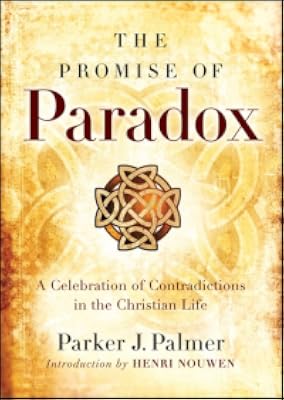
Parker J. Palmer was born in 1939 in Chicago. He attended Carleton College where he studied Philosophy and Sociology and graduated in 1961. He then went on to complete his Phd in Sociology at UC Berkeley. After graduation, he took a teaching position at Georgetown University and became involved with the Religious Society of Friends at Pendle Hill. show more He is the founder and Senior Partner of the Center for Courage and Renewal which operates the "Courage to Teach" program for K-12 educators across the country. He has published over one hundred essays and eight books. He has also been recognized with thirteen honorary degrees, two Distinguished Achievement Awards from the National Educational Press Association, and grants from the Danforth Foundation and the Lilly Endowment. Parker Palmer's title's include: The Promise of Paradox: A Celebration of Contradictions in the Christian Life, To Know As We Are Known: Education as a Spiritual Journey, and On the Brink of Everything: Grace, Gravity, and Getting Old. (Bowker Author Biography) show less
Common Knowledge
- Dedication
- For Heather Marie Palmer, my granddaughter. May you always treasure true self . . .
- First words
- Ask me whether what I have done is my life.
- Last words
- (Click to show. Warning: May contain spoilers.)Summer is a reminder that our faith is not nearly as strong as the things we profess to have faith in - a reminder that for this single season, at least, we might cease our anxious machinations and give ourselves to the abiding and abundant grace of our common life.
Classifications
- Genres
- Religion & Spirituality, Nonfiction, General Nonfiction
- DDC/MDS
- 248.4 — Religion Christian practice & observance Christian experience, practice, life Christian Living
- LCC
- BV4740 .P35 — Philosophy, Psychology and Religion Practical Theology Practical Theology Practical religion. The Christian life Moral theology Precepts of the Church. Commandments of the Church
- BISAC
Statistics
- Members
- 2,000
- Popularity
- 10,482
- Reviews
- 23
- Rating
- (4.09)
- Languages
- Chinese, English, French, Korean
- Media
- Paper, Audiobook, Ebook
- ISBNs
- 22
- UPCs
- 1
- ASINs
- 10