The Return of the Prodigal Son: A Story of Homecoming
by Henri J. M. Nouwen
On This Page
Description
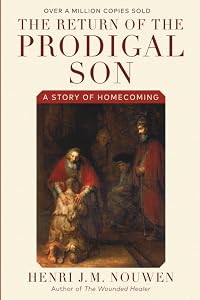
This powerful meditation illuminates the parable of the prodigal son found in Luke's Gospel. Nouwen discovers anew the reality that God's love is unconditional and shares his own spiritual journey with us. After an exhausting lecture circuit, Nouwen says he felt "anxious, lonely, restless and very needy." When he chanced upon a reproduction of Rembrandt's Return of the Prodigal Son, the masterpiece was so powerful that he felt embraced by God's love as if he had "come home." He traveled to show more see the original painting in Russia and was profoundly inspired by the encounter. In this audiobook, Nouwen shares his own experience as the wayward son as well as the vengeful older brother and the compassionate father. He speaks to all who have known loneliness, dejection, jealousy or anger, and invites us to homecoming, affirmation and reconciliation. show lessTags
Recommendations





Member Reviews
Henri Nouwen, from the depths of his own struggles, is able to draw from Rembrandt's famous painting, "The Return of the Prodigal Son," many valuable lessons for the reader. After hours of examination of and meditation upon the painting, Nouwen was able to see how he, himself, was not only the younger and the elder brother, but in the end called to be the father. The younger brother was immature and made foolish choices, but the father welcomed him home with joy and without conditions or scolding. The elder brother did everything right, but in a wrong spirit, and yet the father went to him in deep love and generosity. We see here the love of our Heavenly Father who accepts and forgives us in the same way--a love that Nouwen was so show more desperately searching for. And finally, Nouwen saw how we are called to move on from being children to display the characteristics of a father, "who has transcended the ways of his children" and can be of use in a world hungry for love and acceptance. show less
Probably THE BEST SPIRITUAL BOOK I have ever read. Had to read it numerous times, because there was always something new I had missed in previous readings. I love the premise -- the detailed analysis of Rembrandt's "Return of the Prodigal Son," which shares deeply moving insights into the Nature of God, writ large. In so doing, the book also shows us ourselves -- in ways that are part reassurance and part wake-up call.
I carry in my heart a mental snapshot of Rembrandt's rendering of the father (God's) hands -- one gnarled from manual labor, large, and masculine -- the other with its long, delicate fingers, much more feminine. A life-changing book.
Audience: People of faith -- and lovers of Rembrandt! -- who seek to broaden their concept show more of God and open the apertures of their personal theologies onto the expansiveness of God. This book is so accessible (readers of all ages, teen and on) but is at the same time so beautifully faceted and nuanced that it's one of those books that can be read numerous times and always reveal a new insight or discovery. show less
I carry in my heart a mental snapshot of Rembrandt's rendering of the father (God's) hands -- one gnarled from manual labor, large, and masculine -- the other with its long, delicate fingers, much more feminine. A life-changing book.
Audience: People of faith -- and lovers of Rembrandt! -- who seek to broaden their concept show more of God and open the apertures of their personal theologies onto the expansiveness of God. This book is so accessible (readers of all ages, teen and on) but is at the same time so beautifully faceted and nuanced that it's one of those books that can be read numerous times and always reveal a new insight or discovery. show less
“I have to let the rebellious younger son and the resentful elder son [inside me] step up on the platform to receive the unconditional, forgiving love that the Father offers me, and to discover there the call to be home as my Father is home” (133).
Nouwen’s The Return of the Prodigal Son offers a clear picture of the spiritual life. A meditation on both Jesus’s parable of the Prodigal Son and Rembrandt’s painting depicting the reunion narrated in that parable, Nouwen’s book is comprised of three sections: the younger son, the elder son, and the Father. And each section focuses on two aspects of the character’s personality—each son’s departure and return and the Father’s welcome and celebration.
Nouwen begins with the show more younger son’s departure, saying that to leave “is a denial of the spiritual reality” of belonging to the father (37). We can act like the younger son too, forgetting the Father’s desire to be with, not needing proof to love. Stated simply, we forget that unconditional love is found with God. We forget God’s unconditional love, God’s unconditional welcome because we live in a world of conditional love, a love that fosters addiction through “trying, failing, and trying again” things that do not fulfill us (42). Nouwen notes that “The addicted life can aptly be designated a life lived in ‘a distant country.’ It is from there that our cry for deliverance rises up” (43).
Meditating on the painting, Nouwen sees the return as an end of rebellion. The painting shows that the younger son has lost his familial identifiers (his red robe, for example), has been living in rags, and has returned a shell of his former self. “The only remaining sign of dignity is the short sword hanging from his hips—the badge of his nobility. . . . The sword is there to show me that . . . he had not forgotten that he still was the son of his father. It was this remembered and valued sonship that finally persuaded him to return back” (46). The challenge for us, too, is to claim our valued sonship/daughtership. And the love of the father, again, is unconditional. As in the parable, we need no explanation at our return; we simply fall into embrace. We don’t need to beg for the status as a slave, as the younger son was prepared to do; we are waiting to be welcomed as children of the forgiving father. Yet,
“One of the greatest challenges of the spiritual life is to receive God’s forgiveness. . . . Receiving forgiveness requires a total willingness to let God be God and do all the healing, restoring, and reviewing. As long as I want to do even a part of that myself, I end up with partial solutions, such as becoming a hired servant. As a hired servant, I can still keep my distance, still revolt, reject, strike, run away, or complain about my pay. As the beloved son, I have to claim my full dignity and begin preparing myself to become the father” (53).
This dignity allows us to live in heaven, yes, but also now on earth, free of self-aware “obsessions and compulsions” (54).
Nouwen closes with a meditation on Jesus as “the true prodigal.” Jesus is the obedient Son who leaves his glorious home to show us sinners a way to return to the Father.
According to Nouwen, the elder son experienced a leaving too—despite his having stayed at home physically—because he was living in resentment. The elder son’s “obedience and duty have become a burden, and service has become slavery” (70). Nouwen writes,
“The lostness of the elder son . . . is much harder to identify. After all, he did all the right things. . . . But when confronted by his father’s joy at the return of the younger brother, a dark power erupts in him and boils to the surface. Suddenly, there becomes glaringly visible a resentful, proud, unkind, selfish person, one that had remained deeply hidden . . .” (71).
This resentment comes from feeling unappreciated and uncelebrated, as evidenced by the elder son’s complaint that he’d never even received a kid to cook for a celebration with his friends.
For the elder son to make a return to the father, he needed to learn that “the joy at the dramatic return of the younger son in no way means that the elder son was less favored. The father does not compare the two sons. He loves them both with a complete love and expresses that love according to their individual journeys” (80). The elder son needs to learn trust and gratitude, according to Nouwen. “Trust is that deep inner conviction that the Father wants me home” (84). “Gratitude . . . claims the truth that all of life is a pure gift. . . . The discipline of gratitude is the explicit effort to acknowledge that all I am and have is given to me as a gift of love, a gift to be celebrated with joy” (85). To trust and have gratitude require overcoming fear and resentment; it is a leap of faith.
“And every time I make a little leap, I catch a glimpse of the One who runs out to me and invites me into his joy, the joy in which I can find not only myself, but also my brothers and sisters. Thus the disciplines of trust and gratitude reveal the God who searches for me, burning with desire to take away all my resentments and complaints and to let me sit at his side at the heavenly banquet” (86).
Nouwen also finishes this chapter with a section on Jesus as “the true elder son.” Nouwen observes, “All that Jesus says about himself reveals him as the Beloved Son, the one who lives in complete communion with the Father. There is no distance, fear, or suspicion between Jesus and the Father” (87). Jesus shows us the way to the Father by being one with the Father.
Nouwen concludes his book with a section on the loving father. He notes that the painting portrays the father’s hands in different ways: one seems rough and masculine, while the other seems smooth and feminine. Nouwen suggests that Rembrandt wanted to portray “not only a father who ‘clasps his son in his arms,’ but also [as] a mother who caresses her child, surrounds him with the warmth of her body, and holds him against the womb from which he sprang. Thus,” Nouwen continues, “the ‘return of the prodigal son’ becomes the return to God womb, the return to the very origins of being and again echoes Jesus’ exhortation to Nichodemus, to be reborn from above” (100).
For Nouwen, this love of the father goes out, seeking as much as it is sought.
“It might sound strange, but God wants to find me as much as, if not more than, I want to find God. . . . [H]e leaves the house, ignoring his dignity by running toward [his children], pays no heed to apologies and promises of change, and brings them to the table richly prepared for them.
“I am beginning now to see how radically the character of my spiritual journey will change when I no longer think of God as hiding out and making it as difficult as possible for me to find him, but, instead, as the one who is looking for me while I am doing the hiding. When I look through God’s eyes at my lost self and discover God’s joy at my coming home, then my life may become less anguished and more trusting” (106–107).
Nouwen concludes with the observation “that my final vocation is indeed to become life the Father and to live out his divine compassion in my daily life. Though I am both the younger son and the elder son, I am not to remain them, but to become the Father” (121). Nouwen helpfully points out that sentimentalism is not at play here (or in the gospels), but rather the concrete notion of sonship/daughtership. “[A]s son and heir I am to become successor. I am destined to step into my Father’s place and offer to others the same compassion that he has offered me. The return to the Father is ultimately the challenge to become the Father” (123).
Nouwen offers three ways to compassionate fatherhood: grief, forgiveness, and generosity (128). He notes grief because one must become aware of the “waywardness of God’s children, our lust, our greed, our violence, our anger, our resentment” (128–129). Grief, according to Nouwen, requires both sorrow over this state of our lostness and preparation to receive anyone and forgive them. Nouwen defines forgiveness as “the way to step over the wall [of injury that separates persons] and welcome others into my heart without expecting anything in return” (130). Generosity involves giving oneself; “this giving of self is a discipline because it is something that does not come spontaneously” (131). We must live our lives as witnesses to the love of the Father so to live into the love of the Father, being able to love with the same love. show less
Nouwen’s The Return of the Prodigal Son offers a clear picture of the spiritual life. A meditation on both Jesus’s parable of the Prodigal Son and Rembrandt’s painting depicting the reunion narrated in that parable, Nouwen’s book is comprised of three sections: the younger son, the elder son, and the Father. And each section focuses on two aspects of the character’s personality—each son’s departure and return and the Father’s welcome and celebration.
Nouwen begins with the show more younger son’s departure, saying that to leave “is a denial of the spiritual reality” of belonging to the father (37). We can act like the younger son too, forgetting the Father’s desire to be with, not needing proof to love. Stated simply, we forget that unconditional love is found with God. We forget God’s unconditional love, God’s unconditional welcome because we live in a world of conditional love, a love that fosters addiction through “trying, failing, and trying again” things that do not fulfill us (42). Nouwen notes that “The addicted life can aptly be designated a life lived in ‘a distant country.’ It is from there that our cry for deliverance rises up” (43).
Meditating on the painting, Nouwen sees the return as an end of rebellion. The painting shows that the younger son has lost his familial identifiers (his red robe, for example), has been living in rags, and has returned a shell of his former self. “The only remaining sign of dignity is the short sword hanging from his hips—the badge of his nobility. . . . The sword is there to show me that . . . he had not forgotten that he still was the son of his father. It was this remembered and valued sonship that finally persuaded him to return back” (46). The challenge for us, too, is to claim our valued sonship/daughtership. And the love of the father, again, is unconditional. As in the parable, we need no explanation at our return; we simply fall into embrace. We don’t need to beg for the status as a slave, as the younger son was prepared to do; we are waiting to be welcomed as children of the forgiving father. Yet,
“One of the greatest challenges of the spiritual life is to receive God’s forgiveness. . . . Receiving forgiveness requires a total willingness to let God be God and do all the healing, restoring, and reviewing. As long as I want to do even a part of that myself, I end up with partial solutions, such as becoming a hired servant. As a hired servant, I can still keep my distance, still revolt, reject, strike, run away, or complain about my pay. As the beloved son, I have to claim my full dignity and begin preparing myself to become the father” (53).
This dignity allows us to live in heaven, yes, but also now on earth, free of self-aware “obsessions and compulsions” (54).
Nouwen closes with a meditation on Jesus as “the true prodigal.” Jesus is the obedient Son who leaves his glorious home to show us sinners a way to return to the Father.
According to Nouwen, the elder son experienced a leaving too—despite his having stayed at home physically—because he was living in resentment. The elder son’s “obedience and duty have become a burden, and service has become slavery” (70). Nouwen writes,
“The lostness of the elder son . . . is much harder to identify. After all, he did all the right things. . . . But when confronted by his father’s joy at the return of the younger brother, a dark power erupts in him and boils to the surface. Suddenly, there becomes glaringly visible a resentful, proud, unkind, selfish person, one that had remained deeply hidden . . .” (71).
This resentment comes from feeling unappreciated and uncelebrated, as evidenced by the elder son’s complaint that he’d never even received a kid to cook for a celebration with his friends.
For the elder son to make a return to the father, he needed to learn that “the joy at the dramatic return of the younger son in no way means that the elder son was less favored. The father does not compare the two sons. He loves them both with a complete love and expresses that love according to their individual journeys” (80). The elder son needs to learn trust and gratitude, according to Nouwen. “Trust is that deep inner conviction that the Father wants me home” (84). “Gratitude . . . claims the truth that all of life is a pure gift. . . . The discipline of gratitude is the explicit effort to acknowledge that all I am and have is given to me as a gift of love, a gift to be celebrated with joy” (85). To trust and have gratitude require overcoming fear and resentment; it is a leap of faith.
“And every time I make a little leap, I catch a glimpse of the One who runs out to me and invites me into his joy, the joy in which I can find not only myself, but also my brothers and sisters. Thus the disciplines of trust and gratitude reveal the God who searches for me, burning with desire to take away all my resentments and complaints and to let me sit at his side at the heavenly banquet” (86).
Nouwen also finishes this chapter with a section on Jesus as “the true elder son.” Nouwen observes, “All that Jesus says about himself reveals him as the Beloved Son, the one who lives in complete communion with the Father. There is no distance, fear, or suspicion between Jesus and the Father” (87). Jesus shows us the way to the Father by being one with the Father.
Nouwen concludes his book with a section on the loving father. He notes that the painting portrays the father’s hands in different ways: one seems rough and masculine, while the other seems smooth and feminine. Nouwen suggests that Rembrandt wanted to portray “not only a father who ‘clasps his son in his arms,’ but also [as] a mother who caresses her child, surrounds him with the warmth of her body, and holds him against the womb from which he sprang. Thus,” Nouwen continues, “the ‘return of the prodigal son’ becomes the return to God womb, the return to the very origins of being and again echoes Jesus’ exhortation to Nichodemus, to be reborn from above” (100).
For Nouwen, this love of the father goes out, seeking as much as it is sought.
“It might sound strange, but God wants to find me as much as, if not more than, I want to find God. . . . [H]e leaves the house, ignoring his dignity by running toward [his children], pays no heed to apologies and promises of change, and brings them to the table richly prepared for them.
“I am beginning now to see how radically the character of my spiritual journey will change when I no longer think of God as hiding out and making it as difficult as possible for me to find him, but, instead, as the one who is looking for me while I am doing the hiding. When I look through God’s eyes at my lost self and discover God’s joy at my coming home, then my life may become less anguished and more trusting” (106–107).
Nouwen concludes with the observation “that my final vocation is indeed to become life the Father and to live out his divine compassion in my daily life. Though I am both the younger son and the elder son, I am not to remain them, but to become the Father” (121). Nouwen helpfully points out that sentimentalism is not at play here (or in the gospels), but rather the concrete notion of sonship/daughtership. “[A]s son and heir I am to become successor. I am destined to step into my Father’s place and offer to others the same compassion that he has offered me. The return to the Father is ultimately the challenge to become the Father” (123).
Nouwen offers three ways to compassionate fatherhood: grief, forgiveness, and generosity (128). He notes grief because one must become aware of the “waywardness of God’s children, our lust, our greed, our violence, our anger, our resentment” (128–129). Grief, according to Nouwen, requires both sorrow over this state of our lostness and preparation to receive anyone and forgive them. Nouwen defines forgiveness as “the way to step over the wall [of injury that separates persons] and welcome others into my heart without expecting anything in return” (130). Generosity involves giving oneself; “this giving of self is a discipline because it is something that does not come spontaneously” (131). We must live our lives as witnesses to the love of the Father so to live into the love of the Father, being able to love with the same love. show less
I read this book the first time over a decade ago and recently reread it. This is vintage Nouwen. In this book, Nouwen reflects on Rembrandt's painting The Return of the Prodigal Son and uses it as a window to look deeper into Jesus's favorite parable. Nouwen helps us examine in the lost younger son, in the judgmental older son, and in the loving embrace of the father. Each of the sons are recapitulated in Jesus--the true younger son who leaves his home with the Father to welcome us back; and the true elder brother who loves and welcomes his wayward sibling. Ultimately we are called to be like the Father.
A chance encounter with a reproduction of Rembrandt’s The Return of the Prodigal Son catapulted Henri Nouwen on an unforgettable spiritual adventure. Here he shares the deeply personal and resonant meditation that led him to discover the place within where God has chosen to dwell.
Moving and beautiful spiritual devotions on Rembrandt's "Return of the Prodigal", painted in the artist's old age after a lifetime of suffering. In limpid and simple prose the author analyzes this group portrait, then meditates on the two sons--younger and elder--and the father. He tells us how much he personally has grown spiritually. Each of us has some negative emotions of each young man within and must struggle to become like the father, who forgives and loves unconditionally and compassionately, like God. There is also a fascinating page on the Parable of the Laborers in the Fields. The wages of everyone is the same no matter how long they worked is another instance of God's loving everyone the same.
An interesting book, reflecting on Rembrandt's painting of the return of the Prodigal Son. Nouwen reflects on his spiritual journey, thinking of himself in turn as younger son, older son, and finally father. Quite thought-provoking in places.
Members
- Recently Added By
Lists

Church Times 100 Best Christian Books
106 works; 26 members

Favourite Books
1,820 works; 308 members
25 Books Every Christian Should Read
27 works; 4 members

Henri Nouwen, All Inclusive
100 works; 1 member
Author Information

He was born in the Netherlands in 1932. An ordained priest and gifted teacher, he taught at several universities including Notre Dame, Harvard and Yale. He was a missionary in Peru. He died of a heart attack in 1996. (Publisher Provided) Henri J. M. Nouwen was born in Nijkerk, The Netherlands on January 24, 1932. He was ordained a priest in 1957. show more He taught theology at Yale University Divinity School from 1971 to 1981 and at Harvard Divinity School from 1983 to 1985. He was the pastor at Daybreak, the L'Arche community for the mentally handicapped in Toronto, Canada from 1986 to 1996. He wrote over 30 books on spirituality, healing, and ministry including Reaching Out, The Genesee Diary, The Wounded Healer, The Road to Daybreak, The Return of the Prodigal Son, and Can You Drink the Cup? He died of a heart attack on September 21, 1996 at the age of 64. (Bowker Author Biography) show less
Some Editions
Awards and Honors
Work Relationships
Common Knowledge
- Canonical title
- The Return of the Prodigal Son: A Story of Homecoming
- Original title
- Canvas of love
- Alternate titles*
- 浪子回頭 : 一個歸家的故事; 浪子回頭 : 一個歸家的故事. English; 靈修日誌
- Original publication date
- 1992
- People/Characters
- Rembrandt, Harmenszoon van Rijn, 1606-1669; Prodigal Son; Henri Nouwen
- Important places
- Hermitage, St. Petersburg, Russia; The Netherlands
- Dedication
- To my father Laurent Jean Marie Nouwen for his ninetieth birthday
- First words
- There was a man who had two sons.
- Last words
- (Click to show. Warning: May contain spoilers.)As I look at my own aging hands, I know that they have been given to me to stretch out toward all who suffer , to rest upon the shoulders of all who come, and to offer the blessing that emerge from the immensity of God's love.
- Original language
- English
- Canonical DDC/MDS
- 248.482
- Canonical LCC
- BX2350.2.N667 1993
*Some information comes from Common Knowledge in other languages. Click "Edit" for more information.
Classifications
- Genres
- Religion & Spirituality, Nonfiction, Art & Design, General Nonfiction
- DDC/MDS
- 248.482 — Religion Christian practice & observance Christian experience, practice, life Christian Living By Denomination Catholic
- LCC
- BX2350.2 .N667 — Philosophy, Psychology and Religion Christian Denominations Christian Denominations Catholic Church Practical religion. Christian life
- BISAC
Statistics
- Members
- 4,134
- Popularity
- 3,747
- Reviews
- 38
- Rating
- (4.21)
- Languages
- 16 — Catalan, Chinese, Czech, Danish, Dutch, English, Finnish, French, German, Italian, Norwegian (Bokmål), Farsi/Persian, Portuguese, Slovenian, Spanish, Swedish
- Media
- Paper, Audiobook, Ebook
- ISBNs
- 47
- UPCs
- 1
- ASINs
- 13