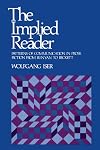
The Implied Reader: Patterns of Communication in Prose Fiction from Bunyan to Beckett
by Wolfgang Iser
114 Members (4.50)
On This Page
Description
Like no other art form, the novel confronts its readers with circumstances arising from their own environment of social and historical norms and stimulates them to assess and criticize their surroundings. By analyzing major works of English fiction ranging from Bunyan, Fielding, Scott, and Thackeray to Joyce and Beckett, renowned critic Wolfgang Iser here provides a framework for a theory of such literary effects and aesthetic responses. Iser's focus is on the theme of discovery, whereby the show more reader is given the chance to recognize the deficiencies of his own existence and the suggested solutions to counterbalance them. The content and form of this discovery is the calculated response of the reader -- the implied reader. In discovering the expectations and presuppositions that underlie all his perceptions, the reader learns to read himself as he does the text. show lessTags
Recommendations





















Member Reviews
Members
- Recently Added By
Author Information

33+ Works 665 Members
Wolfgang Iser is professor of comparative literature at the University of Konstanz, Germany, and professor of English at the University of California, Irvine.
Classifications
- Genres
- Literature Studies and Criticism, Nonfiction, Fiction and Literature
- DDC/MDS
- 809.3 — Literature & rhetoric Literature, rhetoric & criticism History, description, critical appraisal of more than two literatures Fiction
- LCC
- PN3491 .I813 — Language and Literature Literature (General) Literature (General) Prose. Prose fiction History
- BISAC
Statistics
- Members
- 114
- Popularity
- 286,527
- Rating
- (4.50)
- Languages
- English, German
- Media
- Paper
- ISBNs
- 5