On This Page
Description
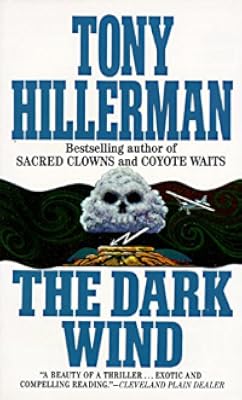
Fiction. Literature. Mystery. For Sergeant Jim Chee of the Navajo Tribal Police, the case begins when he finds a pair of boots in the rabbit brush beside a wilderness trail. The boots' owner lies nearby, his palms and soles "scalped" in what appears to be a witch's scavenging. The federal investigators tell Chee to mind his own business. But a series of disturbing events draws Chee into a dangerous web of intrigue spun by Navajo sorcery and white greed.Tags
Recommendations







Member Reviews
This series continues to delight me. The reason - all of the information about the Navajo, Hopi, and other Native American religions and cultures in the Four Corners area. It seems to me that the mystery part of this novel is secondary to the informative part about all the folk beliefs and religions and how they intersect and the impact these beliefs have on the people in the story. This is also the first of the five books I have read in this series in which the protagonist is smacked in the face with racial prejudices from those higher up in the food chain than he. It was so sudden and unexpected that as a reader it shocked me. This becomes part of the story as well. One other thing that the author does well is set up the character of show more all the characters - the good and the bad. This is important, because in order for Chee to make sense of his cases he has to find the "reason" behind them. Once he has that the pieces of the puzzle begin to come together for him. That is why the descriptions of the Navajo Way have to be in the book and are so integral to the story. Those parts are what makes these novels so timeless and have helped them to age well. I can't wait to read more about Chee and hope to soon be far enough in the series that Chee and Leaphorn work together. show less
One of the best for plot development and the mysterious method of the crime. Jim Chee is a strong character in this novel. Lost a star due to a serious flaw at the end. [Spoiler alert]: a glaring omission in the dénouement when two dealers turn up at a rendezvous, and one sneaks off presumably to cover eventualities as the heayweight. Except that's all that we ever hear of this character. He never reappears when the bust happens. The final scene was very Tony Hillerman, though, which always pleases me in its irony.
A nighttime plane crash, a shipment of cocaine gone missing, and an attack on a windmill coincide with the finding of a mutilated body and Sergeant Jim Chee tries to figure out how it all ties together. The mysteries in this series are good, but what I really enjoy about them is the insight into the various Native American cultures that is presented and this installment has a lot of that, so it's one of my favorites. I especially liked how Hillerman, who knows a lot about Navajo culture, introduces a little bit of Hopi culture as well, via the "Cowboy" Dashee character, but doesn't make any claims on being an expert - it's a good storytelling device to have one character being educated on a topic so that the reader can find out at the show more same time. I loved this series the first time I read it and am finding it equally interesting the second time around. show less
This was all Jim Chee, and he spent most of the book prowling the desert alone, defying his boss's orders, trying to solve a mystery that wasn't their jurisdiction, and getting crosswise of the DEA agents whose case it was. Naturally, he was frequently in peril of losing his job, or his life, and it was all terribly convoluted, but much of the action was in Chee's head as he attempted to apply concentration techniques taught to him since childhood by a respected elder. The best parts of this book for me were the details of Hopi and Navajo culture (differences abound, and members of the two tribes go about things differently...also, they do not look alike, a point made more than once!), and the fine points of tracking, at which Chee is show more better than the Feds by several orders of magnitude. For anyone who has watched the excellent Robert Redford/George R. R. Martin production by the same name, featuring Leaphorn, Chee and Manuelito, there is virtually no connection between this particular Hillerman entry and that mini-series. show less
A nighttime plane crash, a shipment of cocaine gone missing, and an attack on a windmill coincide with the finding of a mutilated body and Sergeant Jim Chee tries to figure out how it all ties together. The mysteries in this series are good, but what I really enjoy about them is the insight into the various Native American cultures that is presented and this installment has a lot of that, so it's one of my favorites. I especially liked how Hillerman, who knows a lot about Navajo culture, introduces a little bit of Hopi culture as well, via the "Cowboy" Dashee character, but doesn't make any claims on being an expert - it's a good storytelling device to have one character being educated on a topic so that the reader can find out at the show more same time. I loved this series the first time I read it and am finding it equally interesting the second time around. show less
The typical Hillerman mystery involves Navajo culture; either an action meant to look Navajo or something which disturbs the Navajo Way of harmony with the universe.
There’s always conflict between the White people (men) who have strict rules and believe they know what’s best for everyone, especially the Native Americans. They are usually portrayed as arrogant buffoons who know absolutely nothing about the case or the people against whom the crime was committed.
Sometimes, there’s conflict between two Indian tribes, which is usually resolved by being respectful.
In The Dark Wind, Jim Chee is handed three cases, which all become entwined with a fourth. The fourth is a small plane crash right in front of Chee while he’s on stakeout show more waiting for the vandal of the windmill, part of a complicated political gesture by the BLM towards the Hopi Nation.
The plane crash is most decidedly not assigned to Chee, the white FBI, and his captain, make that clear. He is to stay away from it. So as he goes about his days driving long distances to chase down clues, he does his best to not get involved in the crash and what turns out to be missing cocaine worth about $15M.
It becomes obvious that the federal agents are up to no good and keep trying to set Chee up for the fall over the missing drugs. The brutality of these thugs made me wince as they tossed Chee’s small travel trailer he calls home and smack him around. At first, I thought they were just stupid, prejudiced white men. Later, it’s revealed that’s only part of their makeup.
While trying to identify a Navajo John Doe discovered by some Hopi men gathering sacred spruce for a ceremonial, Chee encounters the trading post’s owner, Jake West. West performs magic tricks, which Chee mulls over throughout the book, trying to solve how they’re done. This proves to be a crucial key to the solution of the missing drugs and the dead bodies which keep piling up.
What keeps me re-reading Hillerman’s mysteries (this is at least my second time through) is the use of Navajo culture and sensibilities to solve the crimes which are jurisdictionally complex. I read them to re-visit a part of my life in which I was surrounded by Native Americans of several nations, and maybe for a better understanding of my own life.
I also read them because they expose me to other ways of thinking, relating and solving problems. The Navajo Way is explained as keeping in harmony with the universe, and making course adjustments as necessary. show less
There’s always conflict between the White people (men) who have strict rules and believe they know what’s best for everyone, especially the Native Americans. They are usually portrayed as arrogant buffoons who know absolutely nothing about the case or the people against whom the crime was committed.
Sometimes, there’s conflict between two Indian tribes, which is usually resolved by being respectful.
In The Dark Wind, Jim Chee is handed three cases, which all become entwined with a fourth. The fourth is a small plane crash right in front of Chee while he’s on stakeout show more waiting for the vandal of the windmill, part of a complicated political gesture by the BLM towards the Hopi Nation.
The plane crash is most decidedly not assigned to Chee, the white FBI, and his captain, make that clear. He is to stay away from it. So as he goes about his days driving long distances to chase down clues, he does his best to not get involved in the crash and what turns out to be missing cocaine worth about $15M.
It becomes obvious that the federal agents are up to no good and keep trying to set Chee up for the fall over the missing drugs. The brutality of these thugs made me wince as they tossed Chee’s small travel trailer he calls home and smack him around. At first, I thought they were just stupid, prejudiced white men. Later, it’s revealed that’s only part of their makeup.
While trying to identify a Navajo John Doe discovered by some Hopi men gathering sacred spruce for a ceremonial, Chee encounters the trading post’s owner, Jake West. West performs magic tricks, which Chee mulls over throughout the book, trying to solve how they’re done. This proves to be a crucial key to the solution of the missing drugs and the dead bodies which keep piling up.
What keeps me re-reading Hillerman’s mysteries (this is at least my second time through) is the use of Navajo culture and sensibilities to solve the crimes which are jurisdictionally complex. I read them to re-visit a part of my life in which I was surrounded by Native Americans of several nations, and maybe for a better understanding of my own life.
I also read them because they expose me to other ways of thinking, relating and solving problems. The Navajo Way is explained as keeping in harmony with the universe, and making course adjustments as necessary. show less
Like most of Hillerman's reads this was also enjoyable to me simply because he captures the southwest in prose so succinctly making his novels a quick read yet perfectly escapist. He gives Sgt. Jim Chee a profound insight into native american traditions and culture as well as a keen knowledge of his natural world and a sharp sense of humor. These are just a few reasons why I return to Jim Chee and Tony Hillerman again and again.
Members
- Recently Added By
Lists

Crime and Mysteries to Read
746 works; 31 members

Carole's List
445 works; 13 members

Books that don't know they belong in a bathroom
41 works; 3 members
Author Information

121+ Works 45,265 Members
Tony Hillerman was born in Sacred Heart, Oklahoma on May 27, 1925. During World War II, he enlisted in the Army and was awarded the Silver Star, the Bronze Star and the Purple Heart after being severely injured during a raid behind German lines. He received a bachelor's degree from the University of Oklahoma in 1948. From 1948 to 1962, he covered show more crime and politics for newspapers in Texas, Oklahoma, and New Mexico, eventually working his way up to the position of editor of the Santa Fe New Mexican. He taught at the University of Mexico and went on to chair the journalism department for more than 20 years. He retired in 1985. His first novel, The Blessing Way, was published in 1971. During his lifetime, he wrote 29 books, including the popular 18-book mystery series featuring Navajo police officers Jim Chee and Joe Leaphorn, two non-series novels, two children's books, and nonfiction works. He received numerous awards during his lifetime including the Edgar Allan Poe Award for Best Mystery Novel for Dance Hall of the Dead in 1974, the Western Writers of America's Golden Spur Award for Skinwalkers in 1987, the Mystery Writers of America's Grand Master Award in 1991, the Navajo tribe's Special Friend Award, France 's Grand Prix de Litterature Policiere, the 2002 Malice Domestic Lifetime Achievement Award, the Agatha Award for Best Nonfiction Book for Seldom Disappointed, and the Wister Award for Lifetime achievement in 2008. He died from pulmonary failure on October 26, 2008 at the age of 83. (Bowker Author Biography) show less
Some Editions
Awards and Honors
Notable Lists
Series

Belongs to Publisher Series
rororo thriller (2849)
Mirabilia (145)
Work Relationships
Is contained in
Joe Leaphorn and Jim Chee Mystery Series Complete Set by Tony Hillerman, Volumes 1-18. Also known as the Navajo Tribal Police Mystery Novels. (Titles include: The Blessing Way / Dance Hall of the Dead / Listening Woman / People of Darkness / The Darkwind / The Ghostway / Skinwalkers / A Theif of Time / Talking God / Coyote Waits, / Sacred Clowns / The Fallen Man / The First Eagle / Hunting Badger / The Walking Wind / The Sinister Pig / Skeleton Man / Shape Shifter) by Tony Hillerman
Common Knowledge
- Canonical title
- The Dark Wind
- Original title
- The Dark Wind
- Original publication date
- 1982
- People/Characters
- Jim Chee; Captain Howard Largo; DEA T. E. Johnson; Cowboy Dashee; Jake West; Thomas West (show all 7); Joseph Musket ('Ironfingers')
- Important places
- Navajo Nation, USA; New Mexico, USA
- Related movies
- The Dark Wind (1991 | IMDb)
- Dedication
- This book is dedicated to the good people of Coyote Canyon, Navajo Mountain, Littlewater, Two Gray Hills, Heart Butte, Borrego Pass, and most of all to those who are being uprooted from the ancestral homes in the Navajo-Hopi ... (show all)Joint Use country.
- First words
- The Flute Clan boy was the first to see it.
- Last words
- (Click to show. Warning: May contain spoilers.)When he turned to look, it had already been lost in the darkness.
- Publisher's editor
- François Guérif
- Original language*
- inglise
*Some information comes from Common Knowledge in other languages. Click "Edit" for more information.
Classifications
Statistics
- Members
- 1,867
- Popularity
- 11,536
- Reviews
- 40
- Rating
- (3.86)
- Languages
- 12 — Danish, Dutch, English, Estonian, Finnish, French, German, Italian, Norwegian (Bokmål), Norwegian, Spanish, Swedish
- Media
- Paper, Audiobook, Ebook
- ISBNs
- 47
- UPCs
- 1
- ASINs
- 14