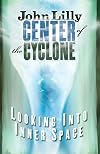
Center of the Cyclone: Looking into Inner Space
by John C. Lilly
On This Page
Description
In this long-out-of-print counterculture classic, Dr. John C. Lilly takes readers behind the scenes into the inner life of a scientist exploring inner space, or "far-out spaces," as Lilly called them. The book explains how he derived his theory of the operations of the human mind and brain from his personal experiences and experiments in solitude, isolation, and confinement; LSD; and other methods of mystical experience. It also includes glimpses into Lilly's friendship with such1960s' show more notables as Oscar Ichazo, Ram Dass, Timothy Leary, Albert Hofmann, Fritz Perls, and Claudio Narajo. Written for the non-specialist,Center of the Cyclone shows an important, modern thinker at his most personal and profound. show lessTags
Recommendations













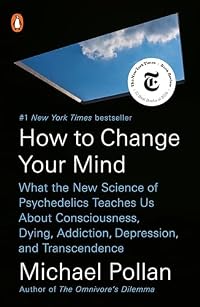
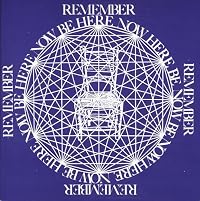
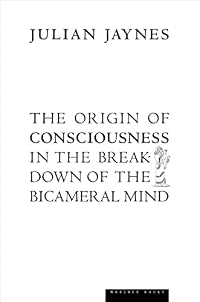
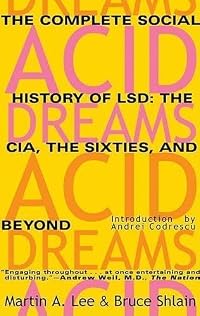






Member Recommendations

Member Reviews
Lilly was an intelligent scientist who was well known for his dolphin communication studies and research until efforts to force his research center to do military research (turning dolphins into "smart bombs").
He also began experimenting with LSD and Ketamine and using himself as a research subject to explore the inner mind.
Eventually he arrived at the idea of building isolation tanks where one could float in salt water in a dark enclosed space and the sensory deprivation and lack of sound and light supposedly created an effect very similar to LSD. Isolation tanks became a bit trendy for a while and some places rented access to them.
Lilly's personal journal took him to extremes with drug abuse with Ketamine that nearly killed him. show more When I was in high school this book made a good pair with the Electric Kool-Aid Acid Test. Kesey at one point suggested it was time for the hippies to evolve beyond LSD and suggested that once someone had experienced a psychedelic experience they could do so again without drugs. Lilly seemed to have come up with a practical device to allow drug free experiences, though I think Lilly also used drugs in the tanks and it's arguable whether the effects wold be similar one was not already familiar with a psychedelic experience.
It's been almost 30 years since I read this but I seem to recall his grasp on reality became challenged. Lilly was seen by some as similar to Timothy Leary as an advocate of use of psychedelics, though I think Lilly's tale was partly a cautionary one.
In any case, I found Lilly's book fascinating as a teen, and was a bit wary of LSD and Ketamine because of this, though I always wanted to try an isolation tank.
The book and movie Altered States was a romanticized fictional adaption supposed to have been based largely to Lilly's life and this book. show less
He also began experimenting with LSD and Ketamine and using himself as a research subject to explore the inner mind.
Eventually he arrived at the idea of building isolation tanks where one could float in salt water in a dark enclosed space and the sensory deprivation and lack of sound and light supposedly created an effect very similar to LSD. Isolation tanks became a bit trendy for a while and some places rented access to them.
Lilly's personal journal took him to extremes with drug abuse with Ketamine that nearly killed him. show more When I was in high school this book made a good pair with the Electric Kool-Aid Acid Test. Kesey at one point suggested it was time for the hippies to evolve beyond LSD and suggested that once someone had experienced a psychedelic experience they could do so again without drugs. Lilly seemed to have come up with a practical device to allow drug free experiences, though I think Lilly also used drugs in the tanks and it's arguable whether the effects wold be similar one was not already familiar with a psychedelic experience.
It's been almost 30 years since I read this but I seem to recall his grasp on reality became challenged. Lilly was seen by some as similar to Timothy Leary as an advocate of use of psychedelics, though I think Lilly's tale was partly a cautionary one.
In any case, I found Lilly's book fascinating as a teen, and was a bit wary of LSD and Ketamine because of this, though I always wanted to try an isolation tank.
The book and movie Altered States was a romanticized fictional adaption supposed to have been based largely to Lilly's life and this book. show less
I have mixed feelings about this book. On the one hand I really respect Lilly as an individual who pushed the boundaries in many areas. He had a lot of guts to do the research he did and was a true scientist in his quest to understand, record, and communicate his ideas. On the other hand I don’t think the book is all that well written. It doesn’t have a strong focus and wanders about quite a bit. This was actually my second attempt at reading it. Many years ago I got about half way through it and lost interest. This time I was able to finish it. I’m glad I stuck with it the second time since the last third of the book was the most interesting to me. He discusses the different states of consciousness based on the Gurdjieffian show more vibrational numbers. The first two thirds cover his research with isolation tanks, with LSD, and with LSD in the tanks. He also covers his time in Chile with Oscar Ichazo and some interesting stories about Esalen. This book will be pretty ‘far out’ for some. I enjoyed parts but it didn’t leave me with a strong desire to read his other books. show less
I only read about half of this because I find it is more interesting to have an LSD experience yerself rather than read about someone else's trip.
I only read about half of this because I find it is more interesting to have an LSD experience yerself rather than read about someone else's trip.
What I would consider one my "hippie days" classics. This book had a profound influence on my development as a person. That a real *doctor* was talking about opening up new worlds was an eye-opener for me at the time.
Ratings
Members
- Recently Added By
Lists

The Joe Rogan Experience Library
254 works; 3 members
Author Information

16+ Works 1,428 Members
John C. Lilly, M.D., has studied and conducted research in the fields of biophysics, neurophysiology, electronics, and neuroanatomy.
Common Knowledge
- Original publication date
- 1972
Classifications
Statistics
- Members
- 395
- Popularity
- 78,506
- Reviews
- 5
- Rating
- (3.64)
- Languages
- 5 — Danish, Dutch, English, German, Italian
- Media
- Paper
- ISBNs
- 19
- ASINs
- 12