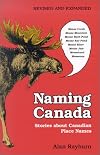
Naming Canada: Stories about Canadian Place Names
by Alan Rayburn, Canadian Geographic
On This Page
Description
This wonderful collection of 76 essays explores the fascinating origin and meaning of the names of some of the towns, villages, cities, islands, mountains, and rivers that make up one of the world's largest countries. This new edition includes fifteen more essays, and updates the previous essays to include changes, corrections and new names to the year 2000. Discover how some of Canada's most unusual place names came to be; unearth the Aboriginal roots of names such as Miramichi, Klondike, show more Iqaluit, Toronto, and Ottawa; learn the origin of such playful and mellifluous names as Medicine Hat, Twillingate, Flin Flon, Cupids, or Saint-Louis-du-Ha! Ha! From Bonavista and Port au Choix in the east, to Malaspina Strait and Port Alberni in the west, this book also reveals the rich Portuguese, Spanish, and Basque contributions to Canada's toponymic heritage. Naming Canada tells us about place names that became undesirable and had to be changed for reasons of perceived political impropriety. The former Stalin Township, for example, was renamed after Rick Hansen, the renowned Man in Motion, who promoted research in spinal cord injuries. The book also discusses Canadian names that have been exported abroad, such as Quebec in England and Toronto in Australia. One new essay explores the nicknames used for Canadian places, and focuses on Hogtown as an alternative for Toronto. This collection is the best single source, in an engaging essay format, on the origin and meaning of hundreds of Canadian place names. Alan Rayburn has had over 35 years' experience in researching Canada's toponymic roots and in writing about the authentic backgrounds behind thousands of names, from Toronto in the south to Tukyoyaktuk in the north, and from Labrador in the east to Juan de Fuca Strait in the west. show lessTags
Recommendations























Member Reviews
This book looks at the various names given to Canada's geography, from Indigenous names to explorers and politicians with explanations on Canada's geographical features. It reads like a list but there are lots of fun trivia, from the number of names that contain the word Moose, to what an ha!ha! and a coulee are. Laurier is the most common Canadian name used and Queen Victoria the most honoured person. By going through all those names, we learn about our history (native people, followed by all the various waves of Europeans from Portuguese to English), our unique geography and contributors. This It has an index which makes it a useful reference tool.
Ratings
Members
- Recently Added By
Author Information
10 Works 112 Members
20 Works 115 Members
Common Knowledge
- Original publication date
- 1994 ; 2001 (Revised and Expanded ed.) (Revised and Expanded ed.)
- Important places
- Canada
- Original language
- English
Classifications
Statistics
- Members
- 43
- Popularity
- 687,298
- Reviews
- 1
- Rating
- (2.50)
- Languages
- English
- Media
- Paper, Ebook
- ISBNs
- 6