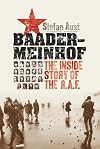
The Baader-Meinhof Complex
by Stefan Aust (Author), Rote Armee Fraktion, (Associated Name)
On This Page
Description
Germany 1967: murderous bomb attacks, the threat of terrorism, and the fear of the enemy inside are rocking the very foundations of the still-fragile German democracy. The radicalized children of the Nazi generation, led by Andreas Baader, Ulrike Meinhof, and Gudrun Ensslin, are fighting a violent war against what they perceive as the new face of fascism. The man who understands them is also their hunter, the head of the German police force, Horst Herold.Tags
Recommendations
















































Member Reviews
The German avant-garde group Einstürzende Neubauten's name means "collapsing new buildings" in English; it points to a couple of relevant things as far as the RAF is concerned:
1. They were young, they collapsed.
2. The name can refer to the state of Germany - and/or its youths - to youths growing up just after the Second World War.
The RAF - also referred to as the Baader-Meinhof group - seems to me a desperate yet affectionate bunch of terrorists. They had strong political beliefs, wanted to topple the imperialist establishment with their theological basis lifted from hard-core leftist/anarchist believers who thought theory was of little use; "the gun speaks" is one of their axioms.
In short, a very charismatic leader - Andreas Baader - show more met Gudrun Ensslin - a preacher's daughter - and gelled together politically and as lovers. They adopted the feel of the changing times and extreme frustration over the fact that a lot of people talked but did nothing. They started fires in German department stores and conspired further.
I think the very moment they recruited Ulrike Meinhof, at the time a respected and well-known political reporter and documentary film-maker, as she helped to spring Baader from custody and in the process killing a security guard, is the breaking-point where all was let loose for the RAF. Everything must go. The gun spake.
From there, they went underground. And they went abroad, making sure that Baader-Ensslin could rule the band and that very little that was critique against them could escape unhurt - and that went both for people on the inside and the outside.
The RAF assassinated, kidnapped, robbed and created propaganda and terror all throughout their maintenance; against popular belief, the group existed even after the suicides/murders in the Stannheim prison in 1978, when the founding members and additional members were found dead - except for one survivor.
The author does a splendid job at remaining fairly objective while binding facts to the RAF's belief-system, thus creating a bird's-eye view of the entire matter. The book is mostly chronologically written, but starts off with the Stannheim deaths in a very strong way.
Did the German government wire-tap the prisoners' cells during the night of their deaths? Did they in fact allow the guns that killed some of the prisoners to be imported? Did they know of a suicide pact and totally failed to prevent it? Were the prisoners in fact murdered or did they commit suicide? We'll probably never know.
Aust has also been involved with the screenwriting for the film with the same name as this book, which I think is very good too. The book, however, delves a lot deeper and especially exposes Baader as a more two-faced and hypocritical person than I think the film did.
The RAF did do something, which was their forté; the fact that they killed people at all is despicable, but didn't the government do the same in the process?
All in all, this is a thoroughly interesting book which could be considered great company with Olivier Assayas' great three-piece documentary on Carlos Sanchez, titelled "Carlos". show less
1. They were young, they collapsed.
2. The name can refer to the state of Germany - and/or its youths - to youths growing up just after the Second World War.
The RAF - also referred to as the Baader-Meinhof group - seems to me a desperate yet affectionate bunch of terrorists. They had strong political beliefs, wanted to topple the imperialist establishment with their theological basis lifted from hard-core leftist/anarchist believers who thought theory was of little use; "the gun speaks" is one of their axioms.
In short, a very charismatic leader - Andreas Baader - show more met Gudrun Ensslin - a preacher's daughter - and gelled together politically and as lovers. They adopted the feel of the changing times and extreme frustration over the fact that a lot of people talked but did nothing. They started fires in German department stores and conspired further.
I think the very moment they recruited Ulrike Meinhof, at the time a respected and well-known political reporter and documentary film-maker, as she helped to spring Baader from custody and in the process killing a security guard, is the breaking-point where all was let loose for the RAF. Everything must go. The gun spake.
From there, they went underground. And they went abroad, making sure that Baader-Ensslin could rule the band and that very little that was critique against them could escape unhurt - and that went both for people on the inside and the outside.
The RAF assassinated, kidnapped, robbed and created propaganda and terror all throughout their maintenance; against popular belief, the group existed even after the suicides/murders in the Stannheim prison in 1978, when the founding members and additional members were found dead - except for one survivor.
The author does a splendid job at remaining fairly objective while binding facts to the RAF's belief-system, thus creating a bird's-eye view of the entire matter. The book is mostly chronologically written, but starts off with the Stannheim deaths in a very strong way.
Did the German government wire-tap the prisoners' cells during the night of their deaths? Did they in fact allow the guns that killed some of the prisoners to be imported? Did they know of a suicide pact and totally failed to prevent it? Were the prisoners in fact murdered or did they commit suicide? We'll probably never know.
Aust has also been involved with the screenwriting for the film with the same name as this book, which I think is very good too. The book, however, delves a lot deeper and especially exposes Baader as a more two-faced and hypocritical person than I think the film did.
The RAF did do something, which was their forté; the fact that they killed people at all is despicable, but didn't the government do the same in the process?
All in all, this is a thoroughly interesting book which could be considered great company with Olivier Assayas' great three-piece documentary on Carlos Sanchez, titelled "Carlos". show less
Historien om den första RAF-generationen som Aust berättar från deras uppväxt som barn, via deras engagemang i proteströrelser (främst inom studentrörelser), övergången till stadsgerilla fram till Baader, Enslin och Raspes död och de efterföljande utredningarna av desamma. Boken är kritisk, men inte särskilt moraliserande. Många med en mer positiv inställning till RAF kommer troligen att sakna en diskussion och analys av deras politiska teorier och texter, men då jag själv avfärdat dem som strunt hade jag nog själv troligen mest bara blivit frustrerad.
Det jag saknar i boken är historia och analys kring den andra generationen (och tredje) av RAF. Detta är till viss del för att den historien inte var avslutad när show more Aust skrev boken, men då han skriver en hel del om andra generationens aktioner men undviker att göra samma djupdykning i de individernas karaktärer är det också ett val.
Anhängare till RAF lär tycka boken är alltför kritisk mot gruppen, medan konservativa lär tycka att Aust smeker gruppen medhårs och finna jämförelser med nazistiska krigsförbrytares straff efter kriget osmaklig. show less
Det jag saknar i boken är historia och analys kring den andra generationen (och tredje) av RAF. Detta är till viss del för att den historien inte var avslutad när show more Aust skrev boken, men då han skriver en hel del om andra generationens aktioner men undviker att göra samma djupdykning i de individernas karaktärer är det också ett val.
Anhängare till RAF lär tycka boken är alltför kritisk mot gruppen, medan konservativa lär tycka att Aust smeker gruppen medhårs och finna jämförelser med nazistiska krigsförbrytares straff efter kriget osmaklig. show less
For anyone alive in the 1970s and 80s the phrase "Baader-Meinhof Gang" has a certain ring to it. The particular melody might be terrorism for some, activism for others. At the time I was too young to understand what Baader-Meinhof stood for or purported to stand for and the press, at the time and later, never succeeded in putting their actions in context. Possibly because the press was too busy either demonizing or glamorizing them as the whim struck. Over the years I've read a number of books on the radical groups of the Sixties and Seventies and most aren't much more illuminating.
Stefan Aust's newly update Baader-Meinhof (The Baader-Meinhof Complex), however, is that rare effort that brings the immediacy of journalism and the unbiased show more examination of academia to the subject. Aust tells the story of the group and its leaders in a step-by-step fashion that focuses on events rather than analysis. Its a tricky technique, especially when a lot of the events involve people hiding out in apartments for weeks on end, but in this case it was the right choice. Aust lets the reader see the events play out in all their claustrophobic inevitability; he also lets the reader judge the events and the actors on their own.
Successful journalist Ulrike Meinhof, minister's daughter Gudrun Ensslin, and all-around-jerk Andreas Baader formed the leadership of the self-christened Red Army Faction . It's noted early in the book that "You either loved or loathed" Andreas Baader. The loathing part I understand but then I've never had a soft spot for misogynist drug-addicted petty thieves. Either Andreas had loads of personal charisma or the rest of the "Gang" had serious masochism issues because it sure wasn't the clarity of Baader's political believes that drew people in. The most one can say for Baader is that he was willing to break the law for his beliefs - that must have seemed impressive to nice middle-class German youths looking for a way to change the world. What Baader wasn't willing to do was do any prison time for breaking the law. Nearly all of the violence and other crimes committed by the RAF revolve around either breaking Baader out of jail, keeping him out of jail, or otherwise getting him out of jail.
And that's the main problem for me. I've long been fascinated by extremist groups - from the ancient to modern times - by what motivates them to step outside of society to achieve their aims. The Baader-Meinhof aims are barely comprehensible. Yes, they wanted to end the war in Vietnam, eliminate poverty and do something for Palestine. I can't tell you much more about their believes because a lot of what they said and wrote was very much like this mind-bending sentence:
"It also means, that is, it is the premise of the decisions - that whatever the Government may decide no longer has the same meaning for us as that from which they proceed."
This is what prolonged isolation in a prison will do, it will make you write sentences that no one can decipher. The German prison system was a revelation to me. Apparently prisoners could self-prescribe any legal pharmaceutical of their choice - uppers, downers, cough medicine. Actual medical care, on the other hand, was a bit more ad hoc. And security can only be described as something special.
During their trial Meinhof, Ensslin and Baader all claim that the prison conditions were driving them crazy. Not likely, since these three were seriously crazy all on their own. When Gudrun wasn't coming up with code names for the group from Moby Dick and Ulrike wasn't penning RAF manifestos they were playing mind games with one another. Sometimes Andreas would join in the fun by declaring the two "grotesque madwomen." All the while Gudrun and Ulrike look up to Andreas as somehow the most politically pure of the group even as he declares hunger strikes that he himself will secretly break while costing the life of another group member. The sanest comment made is by a government agent who asks Baader "Don't you think these ideas of yours are out of touch with reality?"
Gudrun seems to have been hell on wheels but Ulrike Meinhof comes across as a sadder story. The most disturbing aspect of her story was her relationship with her twin daughters. After her plan to have them spirited away to an orphanage in Jordan to be trained as Palestinian freedom fighters is thwarted, Meinhof writes them motherly chatty letters from prison. She seems to take real joy in their visits to her until one day she abruptly ceases all communication with them. Her motives aren't explained and I was left with the image of her 10 year old daughters suffering yet another abandonment. Early in the book there's a vignette of Meinof jumping up and screaming "I won't let them do this to me" after seeing news footage of the war in Vietnam. On the one hand I was impressed by Meinhof's strong feelings for the suffering caused by war, on the other hand, "to me"? No one was dropping napalm on Ulrike's house. But Meinhof clearly felt that she was being put in a position of tacitly or passively supporting a war she was against. That feeling of being party to an atrocity not by action but by inaction had a deeper meaning for a German in 1965 than an American in 2009 can probably ever understand.
But that reaction, so out of proportion as to be downright bizarre, is emblematic of the entire group. As one former RAF member puts it, "The lack of proportion is barbarism. for years, everything revolved around the release of the prisoners." Twenty-eight people in one year (1977) lost their lives not to create a more just world or end poverty (and the Vietnam War was already over) but just trying to get Andreas Baader and his gang out of jail. That's one pathetic dialectic.
This is a very readable book that goes a long way to explaining what Aust calls the Baader-Meinhof complex. As Aust says in the preface, this is neither an indictment nor a plea for the defense. It is a record that requires readers to decide for themselves what the lessons are. Highly recommended for anyone interested in the specific subject or the times. show less
Stefan Aust's newly update Baader-Meinhof (The Baader-Meinhof Complex), however, is that rare effort that brings the immediacy of journalism and the unbiased show more examination of academia to the subject. Aust tells the story of the group and its leaders in a step-by-step fashion that focuses on events rather than analysis. Its a tricky technique, especially when a lot of the events involve people hiding out in apartments for weeks on end, but in this case it was the right choice. Aust lets the reader see the events play out in all their claustrophobic inevitability; he also lets the reader judge the events and the actors on their own.
Successful journalist Ulrike Meinhof, minister's daughter Gudrun Ensslin, and all-around-jerk Andreas Baader formed the leadership of the self-christened Red Army Faction . It's noted early in the book that "You either loved or loathed" Andreas Baader. The loathing part I understand but then I've never had a soft spot for misogynist drug-addicted petty thieves. Either Andreas had loads of personal charisma or the rest of the "Gang" had serious masochism issues because it sure wasn't the clarity of Baader's political believes that drew people in. The most one can say for Baader is that he was willing to break the law for his beliefs - that must have seemed impressive to nice middle-class German youths looking for a way to change the world. What Baader wasn't willing to do was do any prison time for breaking the law. Nearly all of the violence and other crimes committed by the RAF revolve around either breaking Baader out of jail, keeping him out of jail, or otherwise getting him out of jail.
And that's the main problem for me. I've long been fascinated by extremist groups - from the ancient to modern times - by what motivates them to step outside of society to achieve their aims. The Baader-Meinhof aims are barely comprehensible. Yes, they wanted to end the war in Vietnam, eliminate poverty and do something for Palestine. I can't tell you much more about their believes because a lot of what they said and wrote was very much like this mind-bending sentence:
"It also means, that is, it is the premise of the decisions - that whatever the Government may decide no longer has the same meaning for us as that from which they proceed."
This is what prolonged isolation in a prison will do, it will make you write sentences that no one can decipher. The German prison system was a revelation to me. Apparently prisoners could self-prescribe any legal pharmaceutical of their choice - uppers, downers, cough medicine. Actual medical care, on the other hand, was a bit more ad hoc. And security can only be described as something special.
During their trial Meinhof, Ensslin and Baader all claim that the prison conditions were driving them crazy. Not likely, since these three were seriously crazy all on their own. When Gudrun wasn't coming up with code names for the group from Moby Dick and Ulrike wasn't penning RAF manifestos they were playing mind games with one another. Sometimes Andreas would join in the fun by declaring the two "grotesque madwomen." All the while Gudrun and Ulrike look up to Andreas as somehow the most politically pure of the group even as he declares hunger strikes that he himself will secretly break while costing the life of another group member. The sanest comment made is by a government agent who asks Baader "Don't you think these ideas of yours are out of touch with reality?"
Gudrun seems to have been hell on wheels but Ulrike Meinhof comes across as a sadder story. The most disturbing aspect of her story was her relationship with her twin daughters. After her plan to have them spirited away to an orphanage in Jordan to be trained as Palestinian freedom fighters is thwarted, Meinhof writes them motherly chatty letters from prison. She seems to take real joy in their visits to her until one day she abruptly ceases all communication with them. Her motives aren't explained and I was left with the image of her 10 year old daughters suffering yet another abandonment. Early in the book there's a vignette of Meinof jumping up and screaming "I won't let them do this to me" after seeing news footage of the war in Vietnam. On the one hand I was impressed by Meinhof's strong feelings for the suffering caused by war, on the other hand, "to me"? No one was dropping napalm on Ulrike's house. But Meinhof clearly felt that she was being put in a position of tacitly or passively supporting a war she was against. That feeling of being party to an atrocity not by action but by inaction had a deeper meaning for a German in 1965 than an American in 2009 can probably ever understand.
But that reaction, so out of proportion as to be downright bizarre, is emblematic of the entire group. As one former RAF member puts it, "The lack of proportion is barbarism. for years, everything revolved around the release of the prisoners." Twenty-eight people in one year (1977) lost their lives not to create a more just world or end poverty (and the Vietnam War was already over) but just trying to get Andreas Baader and his gang out of jail. That's one pathetic dialectic.
This is a very readable book that goes a long way to explaining what Aust calls the Baader-Meinhof complex. As Aust says in the preface, this is neither an indictment nor a plea for the defense. It is a record that requires readers to decide for themselves what the lessons are. Highly recommended for anyone interested in the specific subject or the times. show less
This is an excellent history of the Red Army Faction, or the Baader-Meinhof Gang. Aust has taken a strictly chronological approach to the events leading up to the 'German Autumn', which does fracture the narrative, in one chapter the reader may reading about the inmates of Stammheim prison, the next chapter the reader is with the hostages on the hijacked Lufthansa plane. But this is not a criticism, Aust in not writing the book as 'a judgement, in either the legal or the historical sense.' and his approach captures this fractured, incomprehensible, egotistical bunch, who, apart from a desire to destroy 'the system' didn't seem to have a coherent or united motivation, other than the need to free Baader and the others from prison - 'Once show more they had stifled all doubts by asking: "Do you want the prisoner's freed or not?"' as they pursued their 'deranged crusade'. show less
Baader-Meinhoff: The Inside Story of the R.A.F., Stefan Aust's book about the Red Army Faction a terrorist group active in West Germany during the 1970's, offers an interesting counterpoint to John Berger's From A to X reviewed here yesterday. While Mr. Berger's novel asks readers to sympathize with a romantic vision of his characters, Mr. Aust's non-fiction account of an actual terrorist organization makes sympathy for those involved nearly impossible.
Andreas Baader and Ulrike Meinhoff, the two 'leaders' of the Red Army Faction, were not romatically linked but they did form the nexus of a group of young radicals determined to undermine the political/social system of West Germany in the late 1960's. As was the case with the movements show more that became Al-Qaeda, the Red Army Faction was radicalized by government corruption and violence-- Al-Qaeda by the torture their early leaders experienced in Egyptian prisons as covered in The Looming Tower by Lawrence Wright, the Red Army Faction by the violent attack on a peaceful anti-Shah demonstration that ended with one demostrator shot to death by the police and by the attempted assasination of fellow radical Rudi Dutschke. However, soon the means become the end as far as the RAF was concerned. They did not seem to have a coherant political philosophy they were trying to advance; blowing up buildings and robbing banks appears to be the RAF's sole purpose. Whatever deeper goal they may have had is not discussed in Mr. Aust's book.
That is the only fault I can find with it and it may be a fault with the RAF rather than with Mr. Aust's account. Mr. Aust covers the history of the Red Army Faction from it's early inception to it's heyday and it's eventual collapse. The story is as hard to put down as it is to believe. Today terrorism is thought of exclusively in terms of radical Islam, but in the 1970's it was embraced by western radical groups as well. The RAF was responsible for multiple bank robberies, several bombings, kidnappings, assasinations and eventually the hi-jacking of a Luftansa airline. They worked with the PLO and with the East German Stasi over the course of two decades going through three generations of members. That the RAF became celebrated as radical icons does not speak well for the left.
After arresting the first generation of R.A.F. members, the West German government built a special courthouse just to hold the trials of the leadership including Ulrike Meinhof and Andreas Baader. As the U.S. approaches moving terrorist suspects to U.S. prisons in order to put them on trial, we would all do well to consider what happened with the RAF leadership. Things did not go well during the three-year-long trial.
In the end, Baader-Meinhof: The Inside Story of the R.A.F. does not provide the answers I wanted, namely why did they all do it. In the final analysis, those involved were nothing more than common criminals, spoiled rich kids who used the war in Vietnam as an excuse to wreck havoc on their country. They would steal a car saying their actions protest a corrupt system, but the car they'd steal could easily be yours or mine and the act of stealing it did nothing to better the lives of anyone in Vietnam. In retrospect, the RAF members seem to be little more than dupes, easily manipulated into lives of crime by eachother, by Palestinain terrorists, by the East German Stasi. How anyone could conclude the capitalist system is corrupt and then embrace the government of East Germany as liberating is beyond me.
But it makes for very interesting reading. show less
Andreas Baader and Ulrike Meinhoff, the two 'leaders' of the Red Army Faction, were not romatically linked but they did form the nexus of a group of young radicals determined to undermine the political/social system of West Germany in the late 1960's. As was the case with the movements show more that became Al-Qaeda, the Red Army Faction was radicalized by government corruption and violence-- Al-Qaeda by the torture their early leaders experienced in Egyptian prisons as covered in The Looming Tower by Lawrence Wright, the Red Army Faction by the violent attack on a peaceful anti-Shah demonstration that ended with one demostrator shot to death by the police and by the attempted assasination of fellow radical Rudi Dutschke. However, soon the means become the end as far as the RAF was concerned. They did not seem to have a coherant political philosophy they were trying to advance; blowing up buildings and robbing banks appears to be the RAF's sole purpose. Whatever deeper goal they may have had is not discussed in Mr. Aust's book.
That is the only fault I can find with it and it may be a fault with the RAF rather than with Mr. Aust's account. Mr. Aust covers the history of the Red Army Faction from it's early inception to it's heyday and it's eventual collapse. The story is as hard to put down as it is to believe. Today terrorism is thought of exclusively in terms of radical Islam, but in the 1970's it was embraced by western radical groups as well. The RAF was responsible for multiple bank robberies, several bombings, kidnappings, assasinations and eventually the hi-jacking of a Luftansa airline. They worked with the PLO and with the East German Stasi over the course of two decades going through three generations of members. That the RAF became celebrated as radical icons does not speak well for the left.
After arresting the first generation of R.A.F. members, the West German government built a special courthouse just to hold the trials of the leadership including Ulrike Meinhof and Andreas Baader. As the U.S. approaches moving terrorist suspects to U.S. prisons in order to put them on trial, we would all do well to consider what happened with the RAF leadership. Things did not go well during the three-year-long trial.
In the end, Baader-Meinhof: The Inside Story of the R.A.F. does not provide the answers I wanted, namely why did they all do it. In the final analysis, those involved were nothing more than common criminals, spoiled rich kids who used the war in Vietnam as an excuse to wreck havoc on their country. They would steal a car saying their actions protest a corrupt system, but the car they'd steal could easily be yours or mine and the act of stealing it did nothing to better the lives of anyone in Vietnam. In retrospect, the RAF members seem to be little more than dupes, easily manipulated into lives of crime by eachother, by Palestinain terrorists, by the East German Stasi. How anyone could conclude the capitalist system is corrupt and then embrace the government of East Germany as liberating is beyond me.
But it makes for very interesting reading. show less
Stefan Aust's Baader-Meinhof: The Inside Story of the R.A.F. is probably as good a narrative of these confusing events as we are ever going to get. Using a journalistic and chronological fact-driven approach, Aust delivers the core points of the narrative without dwelling on excessive historical analysis - that task is largely left to the reader (and quite correctly so).
In the end, the point of the story is illuminating, depressing, and still quite relevant to the contemporary world. In an age when violent solutions to global problems still have their share of romantic appeal, the story of Baader, Ensslin et al remains a potent warning against adopting the strategies of the enemy in seeking solutions to human problems.
In the end, the point of the story is illuminating, depressing, and still quite relevant to the contemporary world. In an age when violent solutions to global problems still have their share of romantic appeal, the story of Baader, Ensslin et al remains a potent warning against adopting the strategies of the enemy in seeking solutions to human problems.
This book gives a great view into post war Germany. For me the most amazing thing about RAF is that it's history is so near, and so recent; it's a story about one generation before me.
Members
- Recently Added By
Lists

Read the book and saw the movie
1,170 works; 195 members
Author Information

Some Editions
Awards and Honors
Notable Lists
Series
Belongs to Publisher Series
Knaur Taschenbuch (3874)
Common Knowledge
- Canonical title
- The Baader-Meinhof Complex
- Original title
- Der Baader Meinhof Komplex
- Alternate titles
- The Baader-Meinhof Group: The Inside Story of a Phenomenon (1987, UK) (1987, UK); The Baader-Meinhof Complex (2008, UK) (2008, UK); Baader-Meinhof: The Inside Story of the R.A.F. (2009, US) (2009, US)
- Original publication date
- 1985; 1987 (English) (English); 2008 (English, revised) (English, revised)
- People/Characters
- Andreas Baader; Ulrike Meinhof; Gudrun Esslin; Horst Mahler
- Important places
- Berlin, Germany
- Important events
- Hijacking of Lufthansa jet (1977); Kidnap and murder of Hanns-Martin Schleyer (1977)
- Related movies
- The Baader Meinhof Complex (2008 | IMDb)
- First words
- 'Thirty-eight minutes past midnight.'
- Last words
- (Click to show. Warning: May contain spoilers.)The horrors that had begun with the springing of Andreas Baader from jail on 14 May 1970 had come to an end twenty-eight years later.
- Original language
- German
- Disambiguation notice
- Originally published in the UK in 1987 as 'The Baader-Meinhof Group: The Inside Story of a Phenomenon', 2008 version has been revised and updated.
Classifications
- Genres
- History, Nonfiction, General Nonfiction
- DDC/MDS
- 363.3250943 — Society, government, & culture Social problems and social services Public Safety - Police, Crime Investigation Terrorism, Disasters, Civil Defense Social conflict Terrorism Biography; History By Place Europe
- LCC
- HX279 .A77 — Social sciences Socialism. Communism. Anarchism Socialism. Communism. Anarchism
- BISAC
Statistics
- Members
- 651
- Popularity
- 44,532
- Reviews
- 13
- Rating
- (4.11)
- Languages
- 8 — Danish, Dutch, English, German, Italian, Multiple languages, Norwegian (Bokmål), Swedish
- Media
- Paper, Audiobook, Ebook
- ISBNs
- 24
- UPCs
- 1
- ASINs
- 12