On This Page
Description
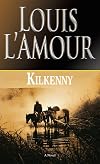
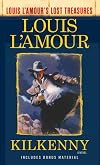
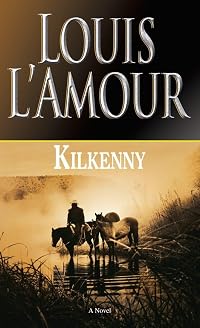
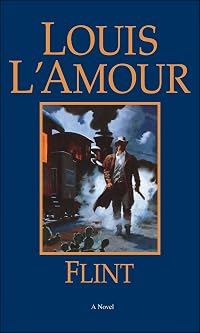
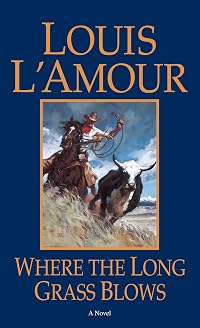
Kilkenny wasn't looking for trouble when he entered the Clifton House stage station, but trouble found him when a reckless youngster named Tetlow challenged him, drew his gun, and paid for it with his life.Looking to escape a reputation that he never wanted, Kilkenny settles in the lonely mountain country of Utah, planning to ranch a high, lush valley. But the past is on his trail. Jared Tetlow is a powerful rancher determined to run his vast herd on the limited grasslands there--whether show more he has to buy out the local ranchers, run them out, or kill them. He'll cut down anyone who stands in his way, especially a man he already despises: the gunman named Kilkenny--the man who killed his son.
From the Paperback edition.
. show less
Tags
Recommendations









Member Reviews
This isn't four-star writing by any means. I spent a lot of inward sighs on the adverb mania, the head-hopping, the uncertain antecedents ... I could go on, but I don't even want to, because Kilkenny's back, and apparently that's all this Western-loving girl needs to give a book four stars.
Happily (the adverbs are contagious), this trilogy has actually (oh my) grown the characters from the first book to this one--or more accurately, grown their circumstances around them so that each book isn't a repeat of the last. Well, other than the Range War Drags Kilkenny Into Trouble trope, and the Why Can't Everyone Let The Tired Gunfighter Live His Life Peacefully trope. Ah, contented reader sigh. These stories are my brain candy, and they hold show more my heart by default. L'Amour would have to work hard to dissatisfy me. I love the love he had for the great old American West, and I love the love between Kilkenny and Nita. I love the steel-nerved gunfighter claiming himself a home at last and giving it a (halfway sentimental) name.
Now I'm off to watch some Gunsmoke (and you think I'm kidding). show less
Happily (the adverbs are contagious), this trilogy has actually (oh my) grown the characters from the first book to this one--or more accurately, grown their circumstances around them so that each book isn't a repeat of the last. Well, other than the Range War Drags Kilkenny Into Trouble trope, and the Why Can't Everyone Let The Tired Gunfighter Live His Life Peacefully trope. Ah, contented reader sigh. These stories are my brain candy, and they hold show more my heart by default. L'Amour would have to work hard to dissatisfy me. I love the love he had for the great old American West, and I love the love between Kilkenny and Nita. I love the steel-nerved gunfighter claiming himself a home at last and giving it a (halfway sentimental) name.
Now I'm off to watch some Gunsmoke (and you think I'm kidding). show less
This is the third and final book in an entertaining series about a character I have come to know and appreciate. Lance is looking for a place to finally settle down, to be left alone, but another cattle baron with delusions of grandeur forces Kilkenny take up his guns for the defense of settlers. It sounds corny, but it's not, and the author makes the familiar plot less monotonous, more absorbing.
Kilkenny doesn't want to fight. He is trying to find a remote location to settle so people will leave him alone. He just cannot seem to find that place. He's minding his own business and get a meal when he is challenged to a gunfight. He wins. He finds the solitude that he's craving and then finds the father of the young man he killed has come to the area he's chosen. And of course starts a range war, which Kilkenny must win to be left alone.
I've read this book before, it is one of my top twenty L'Amour's.
I've read this book before, it is one of my top twenty L'Amour's.
The quality of the prose is quite bad. For the first chapter or two, it's so terrible that you can hardly tell what's going on, and if it didn't rely so heavily on predictable western tropes, it would be incomprehensible. The writing smooths out pretty soon, though, and although it's always bad, it's at least readable. The plot, on the other hand, is good, with a fair amount of excitement and a handful of very cool scenes. Unfortunately the ending is not one of those scenes; it's just a standard shootout like you'd expect from a B movie - pretty disappointing. This is only the second Louis L'Amour book (and the second western) I've read. The other, Last Stand at Papago Wells, is a much better book, so much so that I have a hard time show more believing they were both written by the same person. show less
A competent gunman who desires to live in peace has a difficult goal, since he is naturally inclined to stand up for the weak, and has the skill and leadership ability to do so. Kilkenny is educated and kind, respectful toward women and those in authority. Does Kilkenny have any faults? Maybe too eager to kill when provoked, but I think a weakness of the Kilkenny series that this man is fairly one dimensional. On the other hand, the story line is good: the bad guys are strong, but the good guys are stronger. Not a bad one for teenagers.
Terrific western that walks through northern NM, near the Philmont Scout Ranch. Fast pace, typical for this wonderful author.
Members
- Recently Added By
Author Information

870+ Works 100,032 Members
Born in Jamestown, North Dakota on March 22, 1908, Louis L'Amour's adventurous life could have been the subject of one of his novels. Striking out on his own in 1923, at age 15, L'Amour began a peripatetic existence, taking whatever jobs were available, from skinning dead cattle to being a sailor. L'Amour knew early in life that he wanted to be a show more writer, and the experiences of those years serve as background for some of his later fiction. During the 1930s he published short stories and poetry; his career was interrupted by army service in World War II. After the war, L'Amour began writing for western pulp magazines and wrote several books in the Hopalong Cassidy series using the pseudonym Tex Burns. His first novel, Westward the Tide (1950), serves as an example of L'Amour's frontier fiction, for it is an action-packed adventure story containing the themes and motifs that he uses throughout his career. His fascination with history and his belief in the inevitability of manifest destiny are clear. Also present and typical of L'Amour's work are the strong, capable, beautiful heroine who is immediately attracted to the equally capable hero; a clear moral split between good and evil; reflections on the Native Americans, whose land and ways of life are being disrupted; and a happy ending. Although his work is somewhat less violent than that of other western writers, L'Amour's novels all contain their fair share of action, usually in the form of gunfights or fistfights. L'Amour's major contribution to the western genre is his attempt to create, in 40 or more books, the stories of three families whose histories intertwine as the generations advance across the American frontier. The novels of the Irish Chantry, English Sackett, and French Talon families are L'Amour's most ambitious project, and sadly were left unfinished at his death. Although L'Amour did not complete all of the novels, enough of the series exists to demonstrate his vision. L'Amour's strongest attribute is his ability to tell a compelling story; readers do not mind if the story is similar to one they have read before, for in the telling, L'Amour adds enough small twists of plot and detail to make it worth the reader's while. L'Amour fans also enjoy the bits of information he includes about everything from wilderness survival skills to finding the right person to marry. These lessons give readers the sense that they are getting their money's worth, that there is more to a L'Amour novel than sheer escapism. With over 200 million copies of his books in print worldwide, L'Amour must be counted as one of the most influential writers of westerns in this century. He died from lung cancer on June 10, 1988. (Bowker Author Biography) Louis L'Amour, truly America's favorite storyteller, was the first fiction writer ever to receive the Congressional Gold Medal from the United States Congress in honor of his life's work, & was also awarded the Medal of Freedom. There are over 260 million copies of his books in print worldwide. (Publisher Provided) show less
Series

Common Knowledge
- Original publication date
- 1954
- People/Characters
- Tom Stockton; Lance Kilkenny aka Trent; Nita Riordan; Eli Putnam; Robert Early; Doc Blaine (show all 35); Dolan; Leal Macy; Pierre Ernleven; Laurie Webster; Dan Marable; Harry Lott; Hammett; Dee Havalik; Jared Tetlow; Jamie Brigo; Phineas Tetlow; Andy Tetlow; Ben Tetlow; Bud Tetlow; Free Carpenter; Cain Brockman; Root; Red Swilling; Grat; Swede Carson; Pete; Maria; Jack Harrow; Savory; Woolrich; Lee Jaeger; Spade Woolley; Carl Hadley; Jess Baker
- Important places
- Horsehead, Utah, USA; Clifton House Stage Station, Canadian River, New Mexico, USA; KR Ranch, Horsehead, Utah, USA; Valley of the Whispering Winds, Blue Mountains, Utah, USA
- Related movies
- Blackjack Ketchum, Desperado (1956 | IMDb)
- First words
- To Clifton House on the Canadian came a lone rider on a long-legged buckskin.
- Last words
- (Click to show. Warning: May contain spoilers.)Only the wind itself, whispering words of endearment to its first people.
Classifications
Statistics
- Members
- 659
- Popularity
- 44,021
- Reviews
- 9
- Rating
- (3.93)
- Languages
- English, German
- Media
- Paper, Ebook
- ISBNs
- 18
- ASINs
- 11