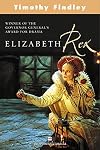
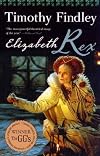
Elizabeth Rex
by Timothy Findley
On This Page
Description
In this daring original production of Timothy Findley's Governor-General Award winning play, William Shakespeare and the formidable Virgin Queen, Elizabeth I, are brought together in a remarkable encounter on the night of April 22, 1616.This play was produced in the CBC Broadcast Centre's Glenn Gould Theatre. It features professional actors, sound effects, and original music and is performed in front of a live audience.Tags
Recommendations


















Member Reviews
A surprisingly well written entry into this genre. This play does not read like that of a person who needs to promote one view or another, but rather like someone playing with history, and taking two interesting historical characters along for the ride. It is set in a royal barn the night before the execution of the Earl of Essex, and Elizabeth takes refuge in the barn to spend the night talking with the players in Shakespeare's company, who have just been performing Much Ado about Nothing. The conversation veers into philosophical places at times, and the play definitely shows its roots in England. In America, this play would have been kicked around the development process until there were some "stakes" or someone "wanted" show more something...as it is, we have an interesting piece about people interacting as people do. Definitely worth the time. show less
This is a CBC Radio production of the play that asks the not-at-all musical question: "Does a gay guy who plays women on stage really know more about being a woman than an actual woman?" The answer, of course, is heck, no! Gay men are not transsexuals; they are men, and they understand as men. This play is actually rather a good illustration of this.
I once saw this on CBC television. Well, glimpsed actually, it was done with an all-male cast and bored me to tears. This production, directed by the distinguished Canadian actor Martha Henry, has the plus of featuring three roles for older female actors, rare indeed.
Set in a barn, the dying Shakespeare recalls another barn back in 1603 on the night between Shrove Tuesday and Ash Wednesday. show more A younger Shakespeare and a not-so-merry band of players spend the hours after a performance of Twelfth Night in the company of the ancient Queen Elizabeth I, awaiting the cannon-fire that will signal the execution of the Earl of Essex.
My elder daughter studied this as part of her AP Grade Twelve literature course. Times have changed. There is no way I would have been permitted to study something like this in high school. Full of death, dying, sexual innuendo and ambiguity, I wonder what a class of seventeen-year-olds was able to make of the tale, told by and about much older people who, unlike teenagers (no matter how jaded), have done much and seen more. Much of the play concerns a confrontation between Elizabeth and player-of-female-roles Ned Lowenscroft who is dying of the pox. It's a clash of arrogance against arrogance. Elizabeth believes she knows about being a man (hence "Elizabeth Rex") and Lowenscroft thinks he can instruct Elizabeth in being a woman.
It's a bit over-the-top, but that's an acting community for you. It is cleverly done and not soon forgotten. show less
I once saw this on CBC television. Well, glimpsed actually, it was done with an all-male cast and bored me to tears. This production, directed by the distinguished Canadian actor Martha Henry, has the plus of featuring three roles for older female actors, rare indeed.
Set in a barn, the dying Shakespeare recalls another barn back in 1603 on the night between Shrove Tuesday and Ash Wednesday. show more A younger Shakespeare and a not-so-merry band of players spend the hours after a performance of Twelfth Night in the company of the ancient Queen Elizabeth I, awaiting the cannon-fire that will signal the execution of the Earl of Essex.
My elder daughter studied this as part of her AP Grade Twelve literature course. Times have changed. There is no way I would have been permitted to study something like this in high school. Full of death, dying, sexual innuendo and ambiguity, I wonder what a class of seventeen-year-olds was able to make of the tale, told by and about much older people who, unlike teenagers (no matter how jaded), have done much and seen more. Much of the play concerns a confrontation between Elizabeth and player-of-female-roles Ned Lowenscroft who is dying of the pox. It's a clash of arrogance against arrogance. Elizabeth believes she knows about being a man (hence "Elizabeth Rex") and Lowenscroft thinks he can instruct Elizabeth in being a woman.
It's a bit over-the-top, but that's an acting community for you. It is cleverly done and not soon forgotten. show less
This is a play that imagines an encounter between the Queen and Will near the end of her reign. The night before her beloved Robert Devereux, Earl of Essex, is to be beheaded for treason, Queen Elizabeth commands the Lord Chamberlain's Men to perform a play at her palace. The Queen has sentenced Essex to death—and only she can pardon him. With the threat of rioting in the streets, a curfew is imposed and the actors must be lodged that night in the royal stables. Desperately needing distraction from the fateful night's events, Elizabeth seeks out the company of Shakespeare and the actors. But it is not Shakespeare who commands her attention as much as does Ned Lowenscroft, the actor she has seen portray Shakespeare's leading female show more roles. Covered in bruises and sores, Ned is dying of syphilis—giving him a fool's license as he engages the Queen in verbal combat through the night while she awaits the morning.
The play is filled with wit and wordplay, and Findley's characters, in addition to Will and the Queen, include a sort of a fool in the person of Luddy Beddoes and the troupe of which Ned is the most important member. show less
The play is filled with wit and wordplay, and Findley's characters, in addition to Will and the Queen, include a sort of a fool in the person of Luddy Beddoes and the troupe of which Ned is the most important member. show less
didn't like this one. had a chance to see it in nyc but it didn't work out. it was an interesting idea but didn't like the way it was done. i see that others really liked it.?????
Ratings
Members
- Recently Added By
Lists

Books about Elizabeth I
22 works; 8 members
Author Information

34+ Works 7,329 Members
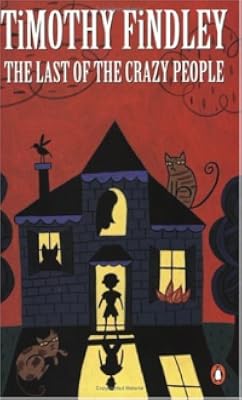
Timothy Findley was born in 1930. A native of Toronto, Canada, novelist and playwright Timothy Findley initially embarked upon an acting career. Findley worked for the Canadian Stratford Festival and later, after study at London's Central School of Speech and Drama, he toured Britain, Europe, and the United States as a contract player. While show more performing in The Matchmaker by Thornton Wilder, Findley was encouraged by the playwright to write fiction. Influenced by film techniques, Findley's first novel, The Last of the Crazy People (1967) is a penetrating look at a family of "emotional cripples" from a child's perspective. With his character Hooker, Findley captures the irrational logic of a child's mind without treating childhood sentimentally.The Butterfly Plague followed in 1969. The Wars (1978), Findley's most successful novel, has been translated into numerous languages and was made into a film. The Wars uses the device of a story-within-a-story to illustrate how a personality transcends elemental forces even while being destroyed by them. In 1981 Famous Last Words was published. This fictionalization of Hugh Selwyn Mauberley by Ezra Pound, a work that was already a "fictional fact," examines fascism. In Not Wanted on the Voyage (1984), Findley rewrites the story of Noah's Ark by giving voices to women, children, workers, animals, and folklore creatures, all of whom question Noah's authority. The novel turns into a parable that seems to challenge imperialism, eugenics, fascism, and any other force that endangers human survival. Again repeating an earlier text, Findley turns to Thomas Mann's Death in Venice to write The Telling of Lies (1986). This novel draws parallels between World War II atrocities and contemporary North America, which Findley sees as a metaphoric concentration camp. Findley died on June 20, 2002 in Provence, France (Bowker Author Biography) show less
Awards and Honors
Awards
Common Knowledge
- Canonical title
- Elizabeth Rex
Classifications
Statistics
- Members
- 68
- Popularity
- 459,520
- Reviews
- 4
- Rating
- (3.64)
- Languages
- English
- Media
- Paper, Audiobook
- ISBNs
- 5
- UPCs
- 1
- ASINs
- 1