On This Page
Description
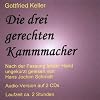
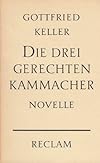
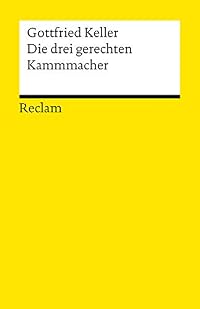
Gottfried Keller (1819 - 1890) gilt als Schweizer Pendant zu Theodor Fontane. Weltberühmt ist vor allem sein Novellenzyklus 'Die Leute aus Seldwyla'.Die Leute von Seldwyla haben bewiese, dass eine ganze Stadt von Ungerechten oder Leichtsinnigen zur Not fortbestehen kann im Wechsel der Zeiten und des Verkehrs; die drei Kammmacher aber, dass nicht drei Gerechte lang unter einem Dache leben können, ohne sich in die Haare zu geraten.Tags
Recommendations












































Member Reviews
The novella was first published in 1856 in a collection of stories about the imaginary but totally Swiss little town called Seldwyla at which Keller pokes fun in a more or less (mostly less) loving manner. Three poor journeymen work for a master combmaker and compete, in silent torment, to be the one who'll buy the shop off him when he retires. The poor sods work non-stop, sleep three to a bed and subsist mostly on cabbage, and yet rather than think to organise and present a united front to their outrageous exploiter, they suffer ever-longer hours with ever-decreasing pay. As the prospects for the shop get worse--they have enriched the master so much he decides to fire them all--they start competing for the one eligible girl within show more their reach, the town washerwoman's somewhat oldish and bizarre daughter.
The story is contemporary but the work system looks medieval--the journeymen are hired on a temporary basis and expected to take off in spring--skilled migrant labour then as now. They carry little ledgers with good conduct testimonies and references that they present in each new town. Completely at the mercy of the town authorities, the masters, and the weather.
The story ends with the youngest journeyman getting the insufferable girl, while the other two end up one a suicide and the other a lunatic. Almost to the end it still reads as a protracted joke, and then--bam! Swiss Realismus painting the need for Socialismus! show less
The story is contemporary but the work system looks medieval--the journeymen are hired on a temporary basis and expected to take off in spring--skilled migrant labour then as now. They carry little ledgers with good conduct testimonies and references that they present in each new town. Completely at the mercy of the town authorities, the masters, and the weather.
The story ends with the youngest journeyman getting the insufferable girl, while the other two end up one a suicide and the other a lunatic. Almost to the end it still reads as a protracted joke, and then--bam! Swiss Realismus painting the need for Socialismus! show less
Ratings
Members
- Recently Added By
Author Information

This Swiss German-language poet and novelist, born in Zurich, is known for his widely read realistic short stories of Swiss provincial life.The Saturday Review wrote of his autobiographical Green Henry (1854-55), "The book's instantly captivating quality is the charm with which a quietly sequential life of curiosity and perception is narrated in show more the pellucid recollection of the mature poet. Keller's eye for the colorful scene and his skill in endowing the concrete particular with something like archetypal significance make him an artist of rare integrity." His best work, A Village Romeo and Juliet (1876), "tells of the tragic fate of two youthful lovers who are prevented from making an honest marriage by the sins of their fathers" (Ernst Rose). (Bowker Author Biography) show less
Awards and Honors
Notable Lists
Series

Belongs to Publisher Series
Gute Schriften (43)
Reclams Universal-Bibliothek (6173)
Work Relationships
Is contained in
Der grüne Heinrich / Die Leute von Seldwyla / Züricher Novellen.: 3 Bände by Gottfried Keller (indirect)
Werke II (Die Leute von Seldwyla; Sieben Legenden; Das Sinngedicht; Martin Salander) by Gottfried Keller (indirect)
Goldmann Klassiker mit Erläuterungen : Keller : Die Leute von Seldwyla by Gottfried Keller (indirect)
Franz von Gaudy, Ludwig Tieck,Georg Weerth, Theodor Storm, F. W. Hackländer, Gottfried Keller, Friedrich Gerstäcker, Friedrich Hebbel, Wilhelm Raabe, Ludwig Anzengruber by Karl Heinz Berger
Die drei gerechten Kammacher / Frau Regel Amrain und ihr Jüngster / Kleider machen Leute : Drei Erzählungen by Gottfried Keller
Has as a student's study guide
Common Knowledge
- Canonical title*
- Die drei gerechten Kammacher
- Original title
- Die drei gerechten Kammacher
- Original publication date
- 1856
- Important places*
- Seldwyla, Schweiz
- First words*
- Die Leute von Seldwyla haben bewiesen, dass eine ganze Stadt von Ungerechten oder Leichtsinnigen zur Not fortbestehen kann im Wechsel der Zeiten und des Verkehrs; die drei Kammmacher aber, dass nicht drei Gerechte lang unter ... (show all)einem Dache leben können, ohne sich in die Haare zu geraten.
Nachwort (Thomas Koebner): Gottfried Kellers (1819-90) Erzählung "Die drei gerechten Kammmacher" erschien 1856 im ersten Band der Sammlung Die Leute von Seldwyla, umrahmt von "Romeo und Julia auf dem Dorfe" und "Spiegel, da... (show all)s Kätzchen". - Last words*
- (Click to show. Warning: May contain spoilers.)Dietrich der Schwabe allein blieb ein Gerechter und hielt sich oben in dem Städtchen; aber er hatte nicht viel Freude davon; denn Züs liess ihm gar nicht den Ruhm, regierte und unterdrückte ihn und betrachtete sich selbst als die alleinige Quelle alles Guten.
(Click to show. Warning: May contain spoilers.)Nachwort (Thomas Koebner): Tatsächlich ist der entlarvende und sozusagen unerbittliche Realismus, der in der Erzählung "Die drei gerechten Kammmacher" vorherrscht, auch in dieser Epoche recht ungewöhnlich, in der generell - nach den verlorenen Aufständen der Jahre 1848/49 - die Wende zum realpolitischen Verständnis der Welt und die Abkehr von allen verstiegenen oder als verstiegen geltenden Idealen proklamiert wird. - Original language
- German
- Disambiguation notice
- The Hamburger Leseheft edition should not have been combined here.
It is a study guide, a separate work with ISBN 3872910469.
*Some information comes from Common Knowledge in other languages. Click "Edit" for more information.
Classifications
Statistics
- Members
- 63
- Popularity
- 490,250
- Reviews
- 1
- Rating
- (3.13)
- Languages
- German, Swedish
- Media
- Paper, Audiobook
- ISBNs
- 5
- ASINs
- 6